Lot 97 AN INDO-PERSIAN CELESTIAL GLOBE, SIGNED BY AL-ISKANDARANI AND DATED 1157 AH/1744-45 AD
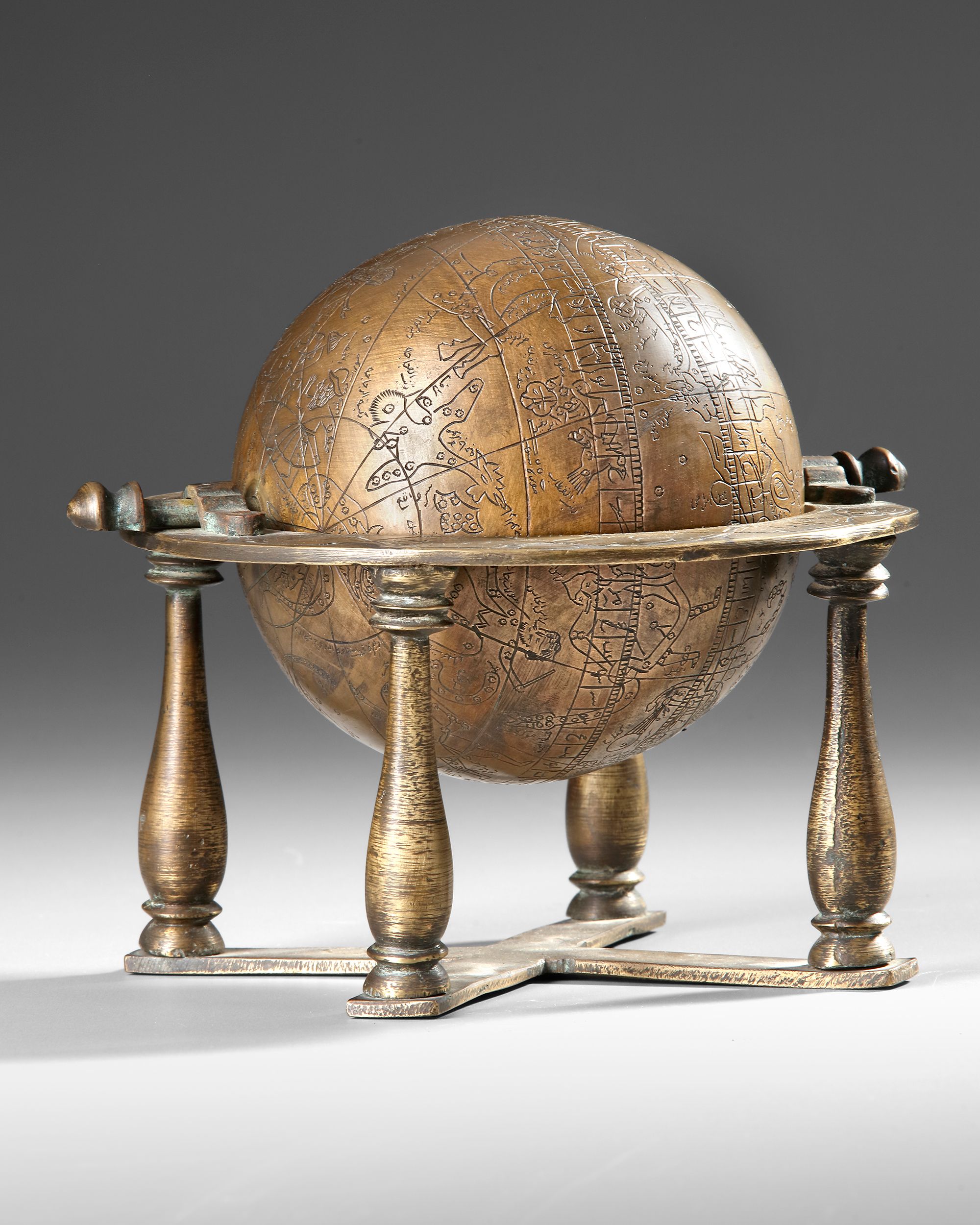
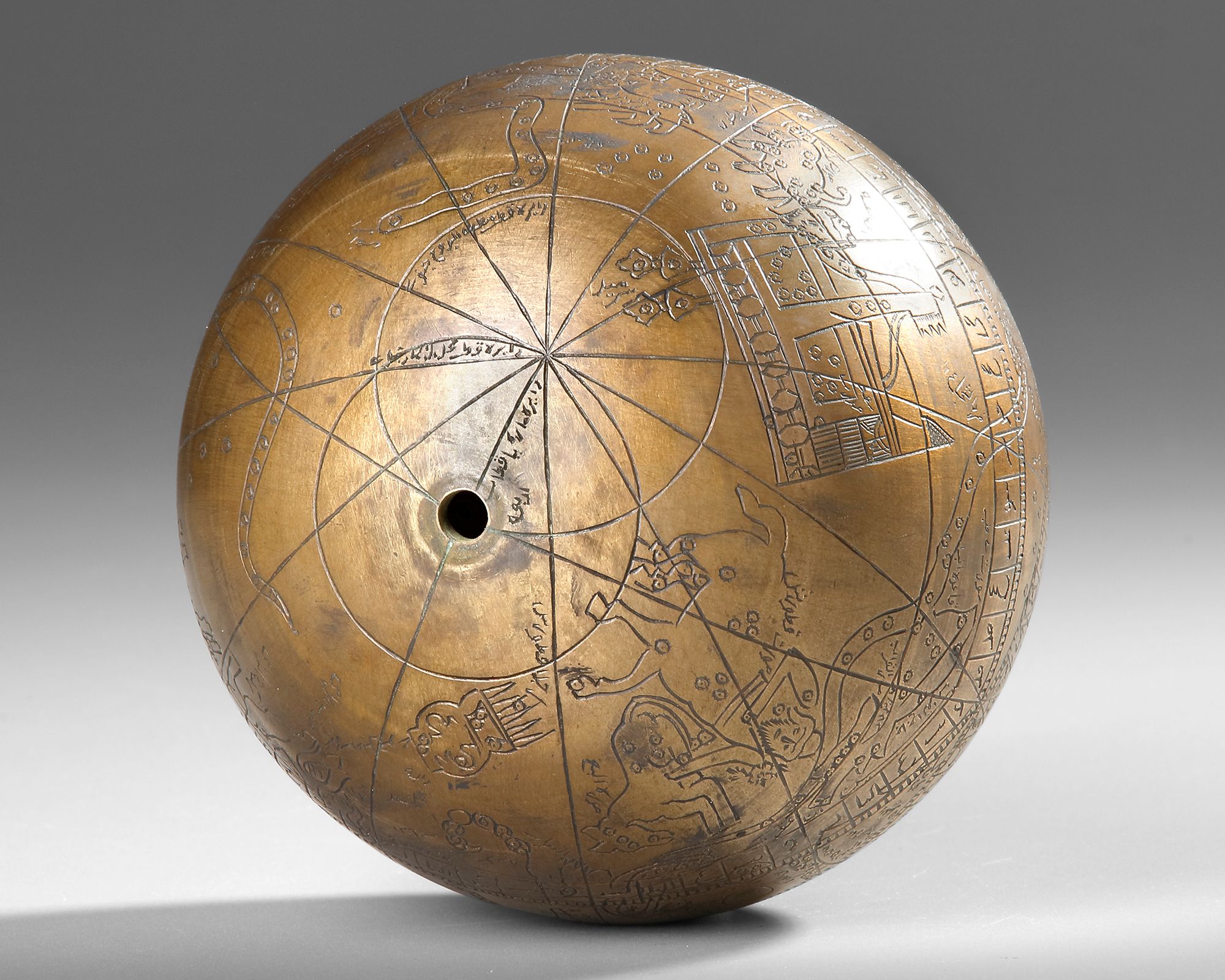
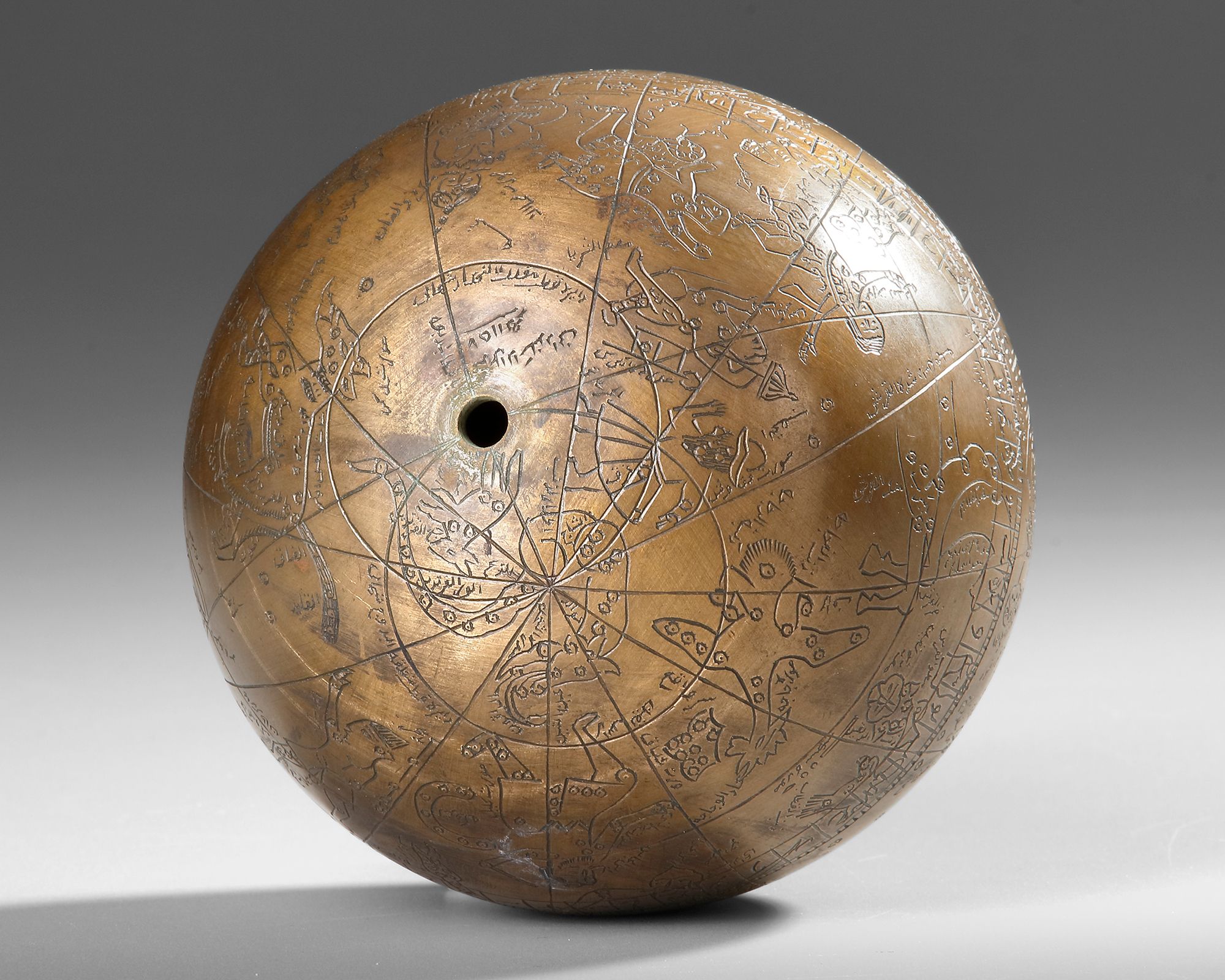
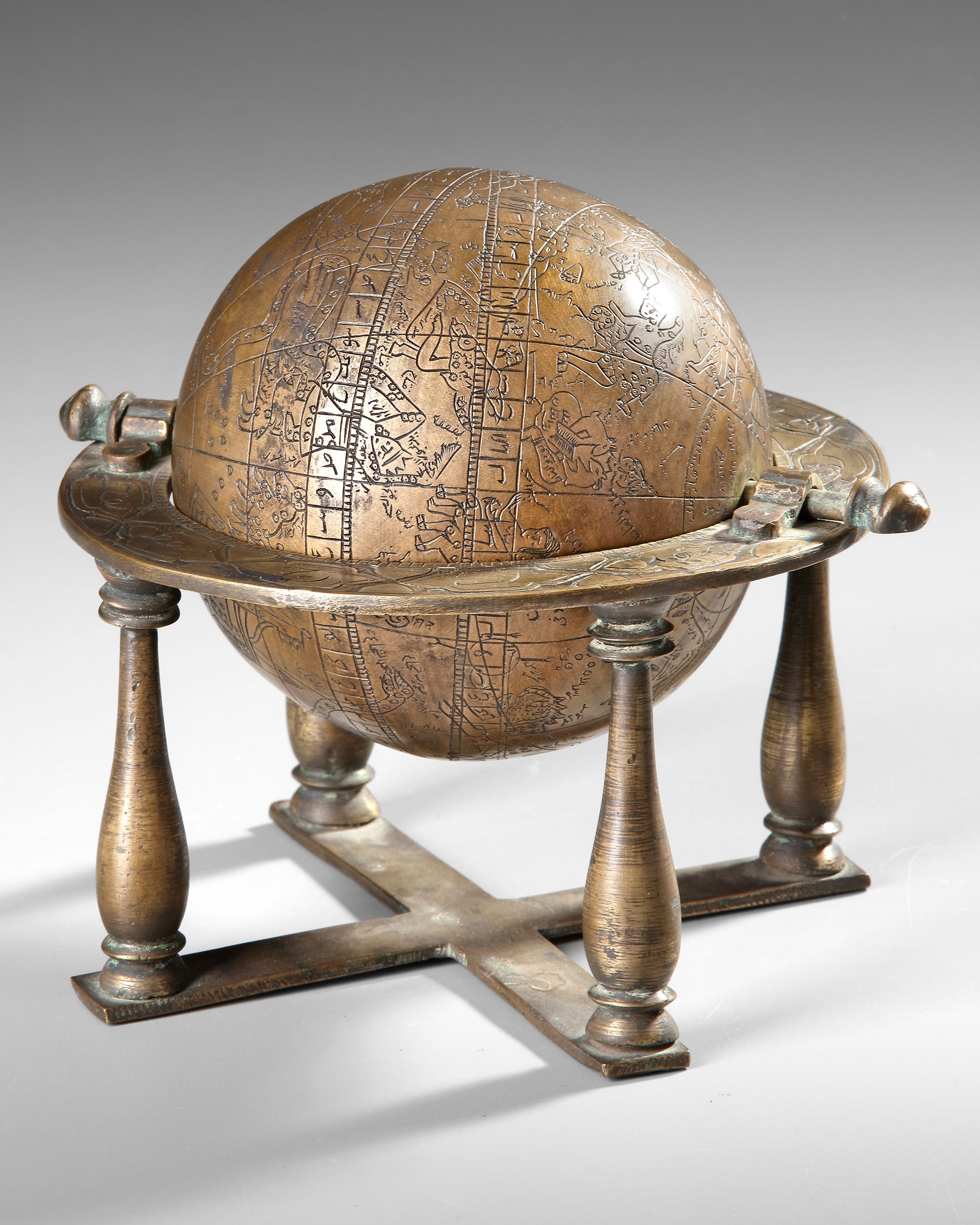
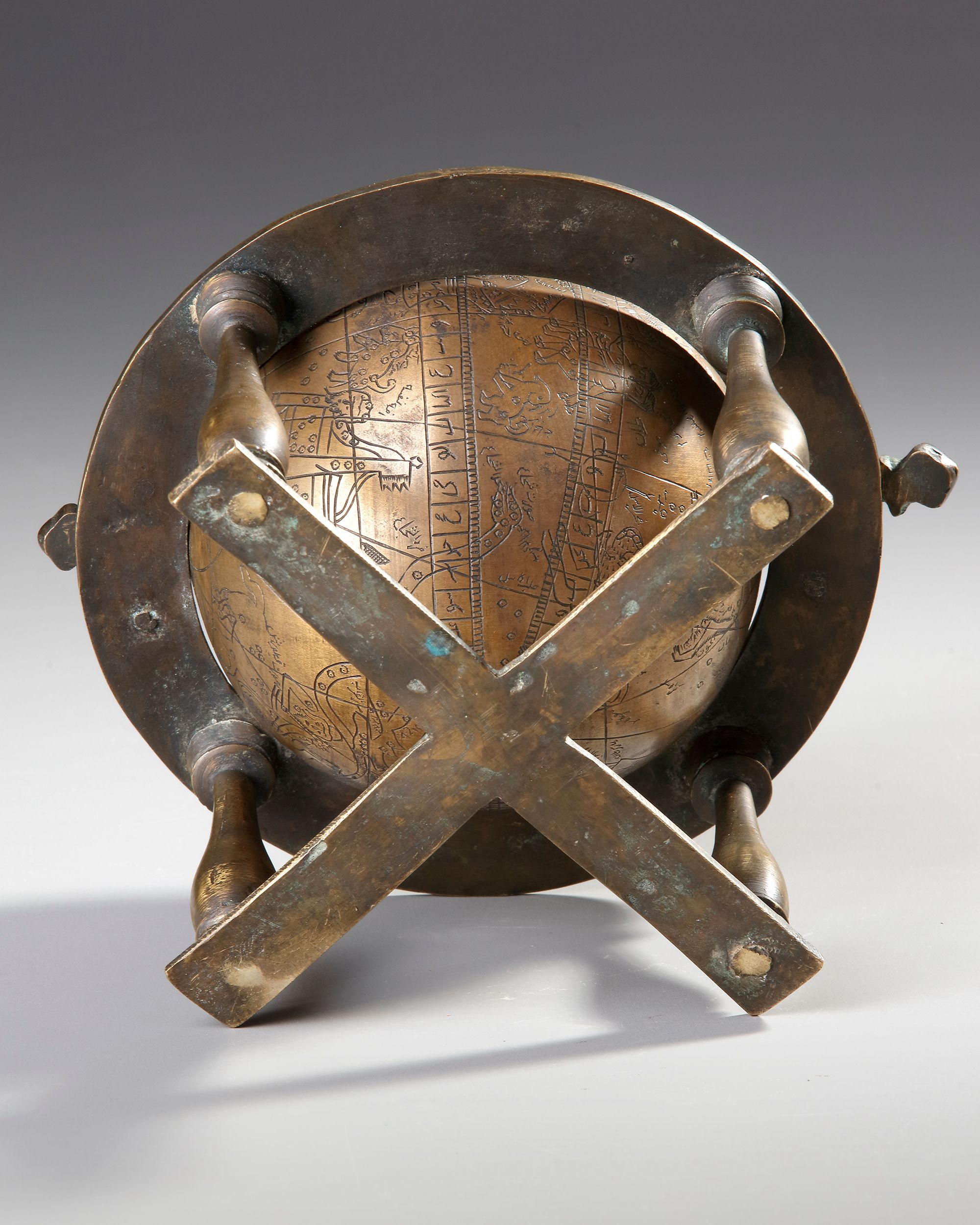
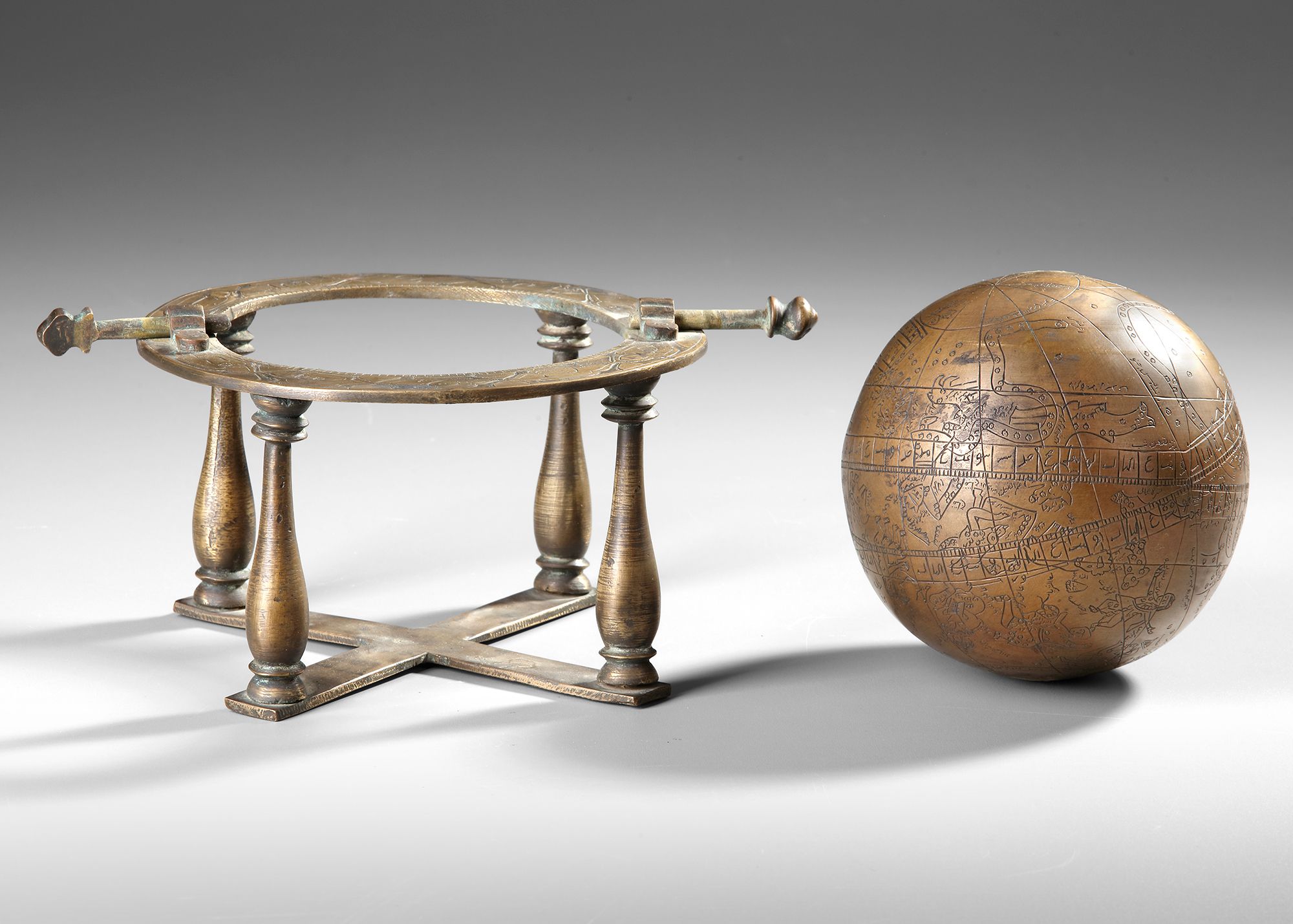
A finely cast and expertly engraved brass celestial globe of spherical form, the surface divided by an engraved celestial coordinate grid incorporating the equator, ecliptic, meridians and parallels. The sphere is richly decorated with the forty-eight classical Ptolemaic constellations, each rendered as finely executed figural engravings and identified by elegant Arabic-Persian inscriptions naming the constellations and principal stars. The zodiacal band is prominently delineated, while additional inscriptions record astronomical coordinates and celestial divisions.
The globe is signed by the maker al-Iskandarani and dated 1157 AH (1744–45 AD), placing it within the flourishing tradition of scientific instrument making in Mughal India during the mid-eighteenth century. Combining mathematical precision with refined artistic engraving, it exemplifies the enduring legacy of Islamic astronomy, itself rooted in the astronomical traditions of Ptolemy and enriched by centuries of Persian and Indian scholarship.
The sphere is preserved with its original engraved brass horizon ring, mounted on a four-column turned brass stand with a cruciform base, allowing the globe to rotate freely about its polar axis.
1495 gr.
Diameter ca. 16 cm.
Height 16 cm.