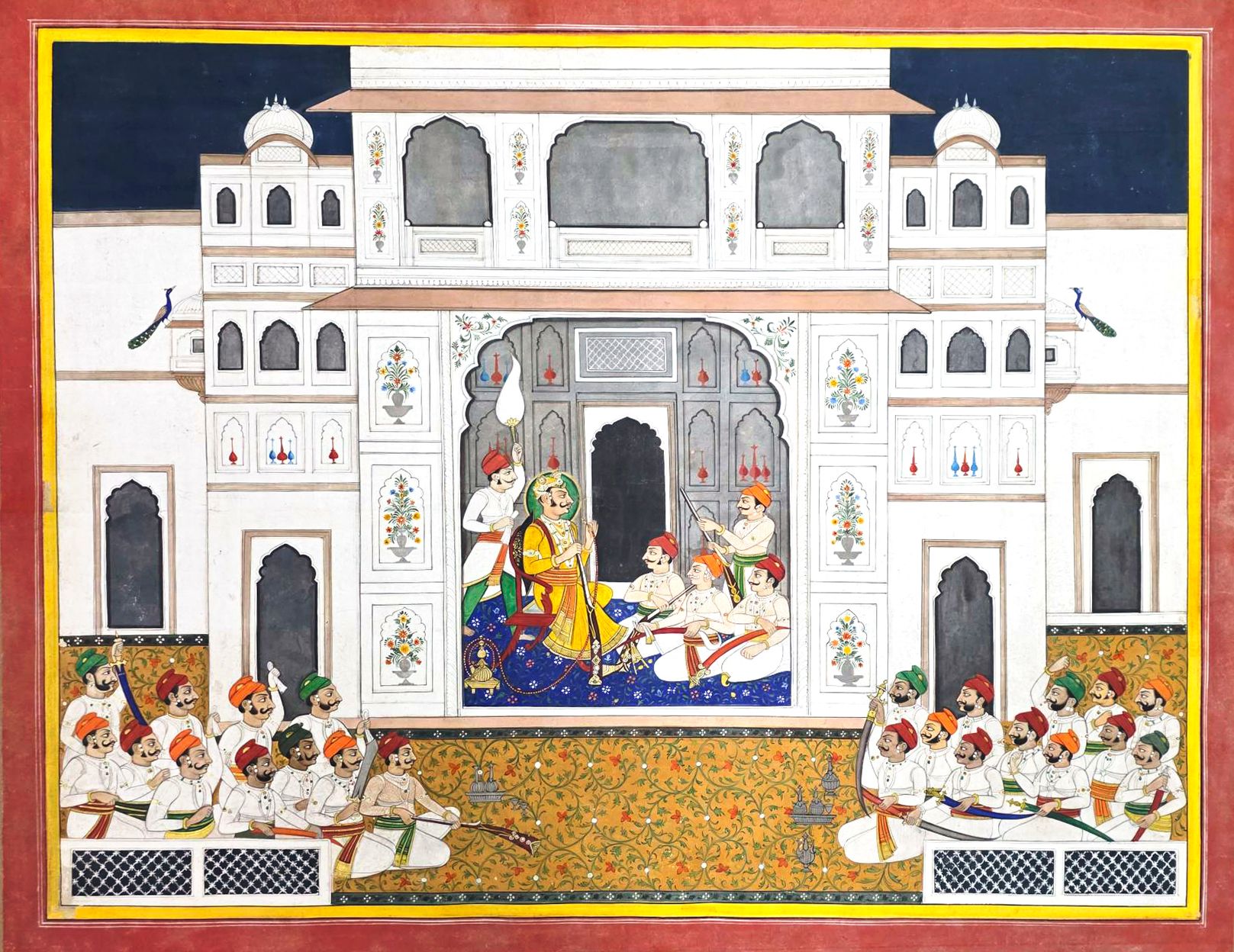
Lot 296 MAHARAO IN DURBAR KOTA, RAJASTHAN, CIRCA 19TH CENTURY
Watercolor heightened with gold on paper. 58 by 45 cm.
Catalogue Note:
In this characteristic example of Kota school painting, a crowned ruler—distinguished by his green turban, yellow garments, and regal posture—sits enthroned in the central pavilion, holding a staff or sceptre while attended by a flywhisk (chauri) bearer in white. The scene unfolds within a grand, multi-tiered white palace featuring arched windows, floral friezes, and domed pavilions set against deep blue sky panels. Two peacocks perch on the upper ledges, a recurring motif in Rajasthani art symbolizing beauty, royalty, and auspiciousness.To the right and below, rows of courtiers and attendants in white robes and brightly colored turbans (red, orange, green) sit or stand in attentive poses, many holding weapons or ceremonial items, evoking the hierarchical order and martial ethos of a Rajput court. The composition employs the bold lines, flat perspective, and intense yet harmonious color palette typical of the Kota tradition—strong reds and yellows in borders, intricate floral detailing, and architectural elements drawn with architectural precision. The golden patterned carpet on the right adds opulence to the assembly.Kota painting, a sub-style of the broader Hadoti (Bundi-Kota) school, often blended Mughal-influenced portraiture and court scenes with indigenous Rajput vitality. While Kota artists gained fame for dynamic hunting scenes set in lush landscapes, they also produced refined durbar depictions that celebrated the authority and daily pomp of the Maharaos of Kota. This work exemplifies the school’s strength in architectural rendering and group portraiture, where the ruler appears as the serene focal point amid a lively yet ordered retinue.The painting’s red and yellow borders, detailed costumes, and integration of decorative motifs (such as the flowering vases and latticed screens) reflect the opulent yet disciplined aesthetic of 18th–19th century Kota ateliers, which flourished under royal patronage in the Hadoti region of Rajasthan.