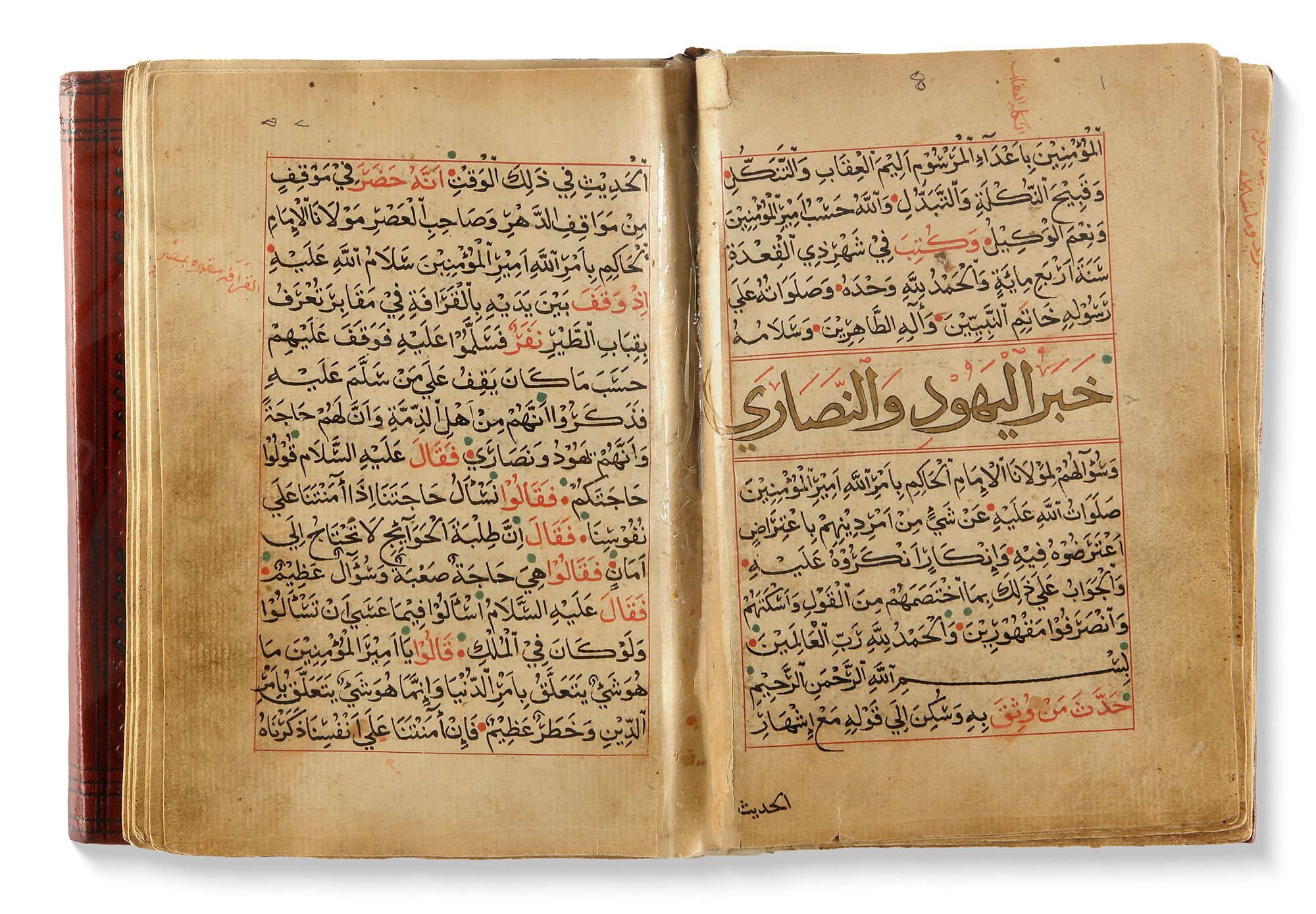
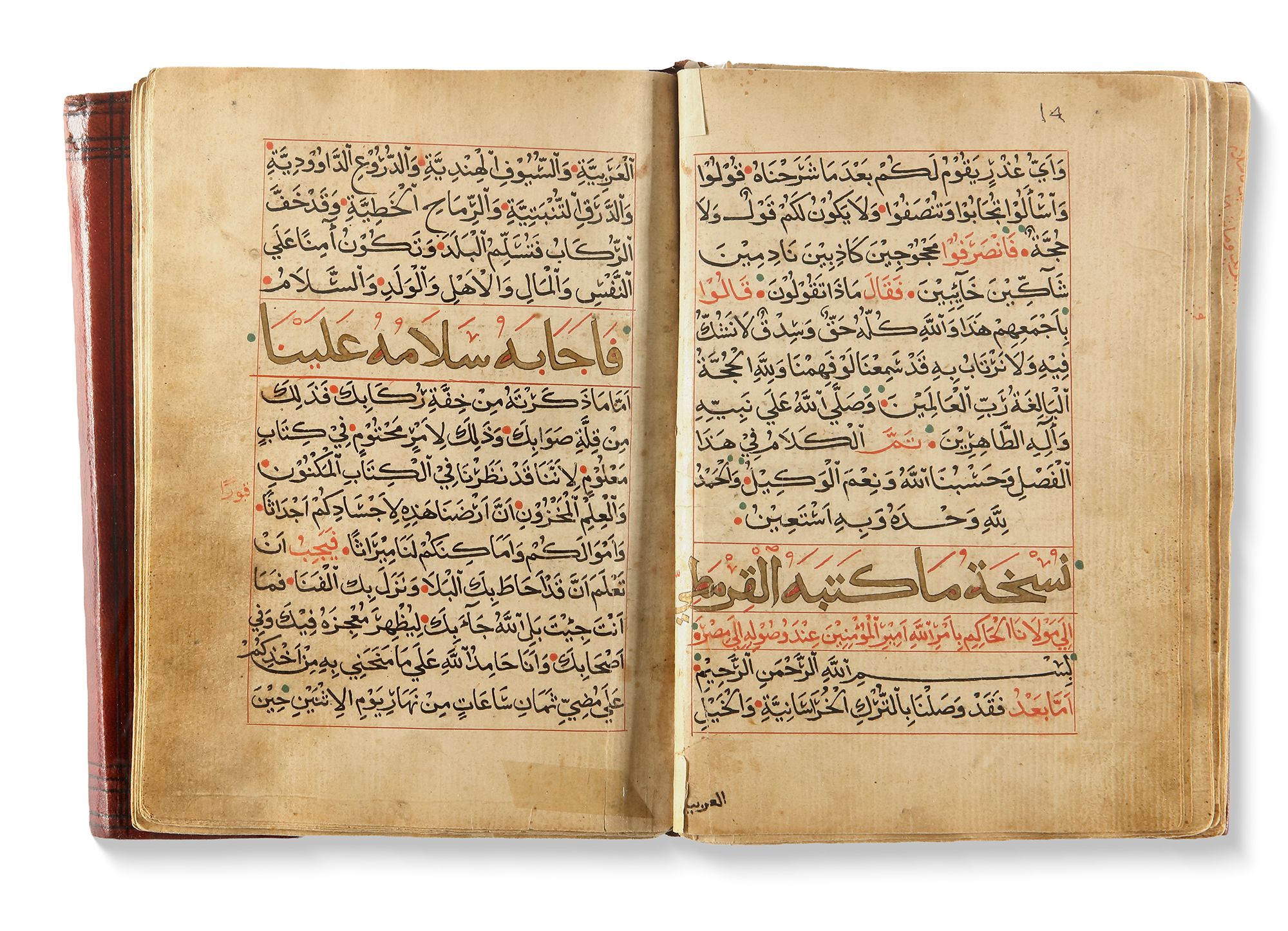
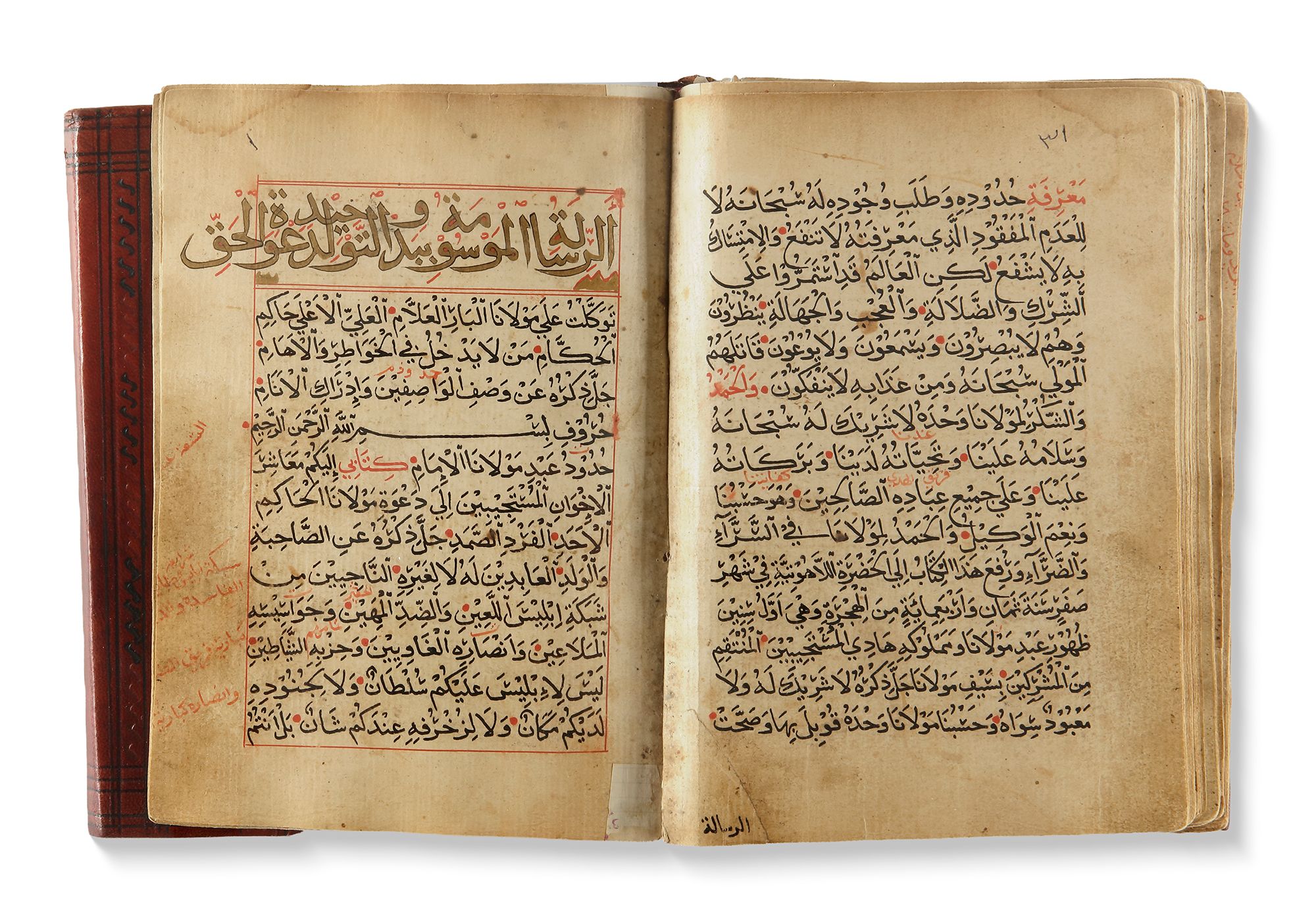
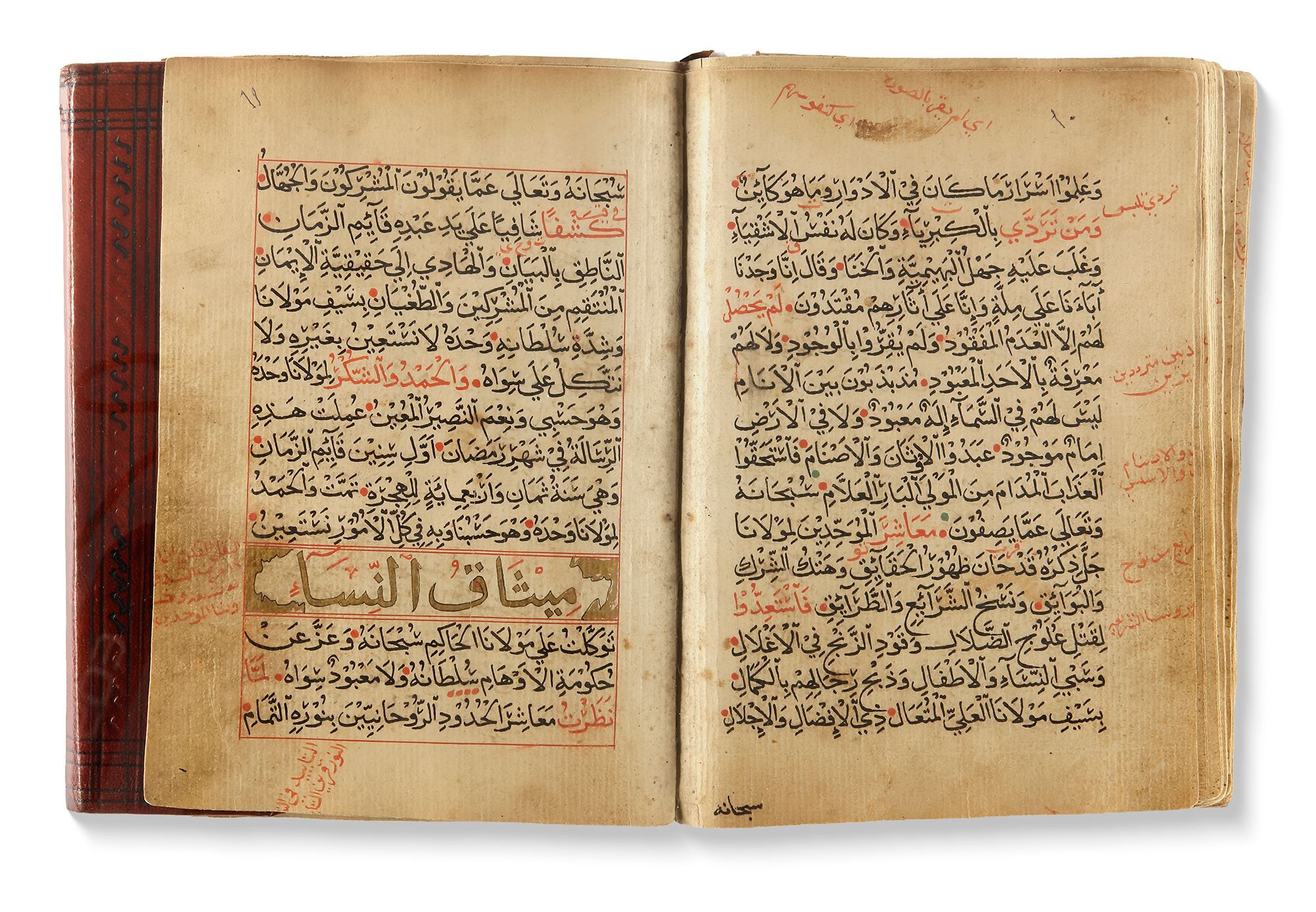
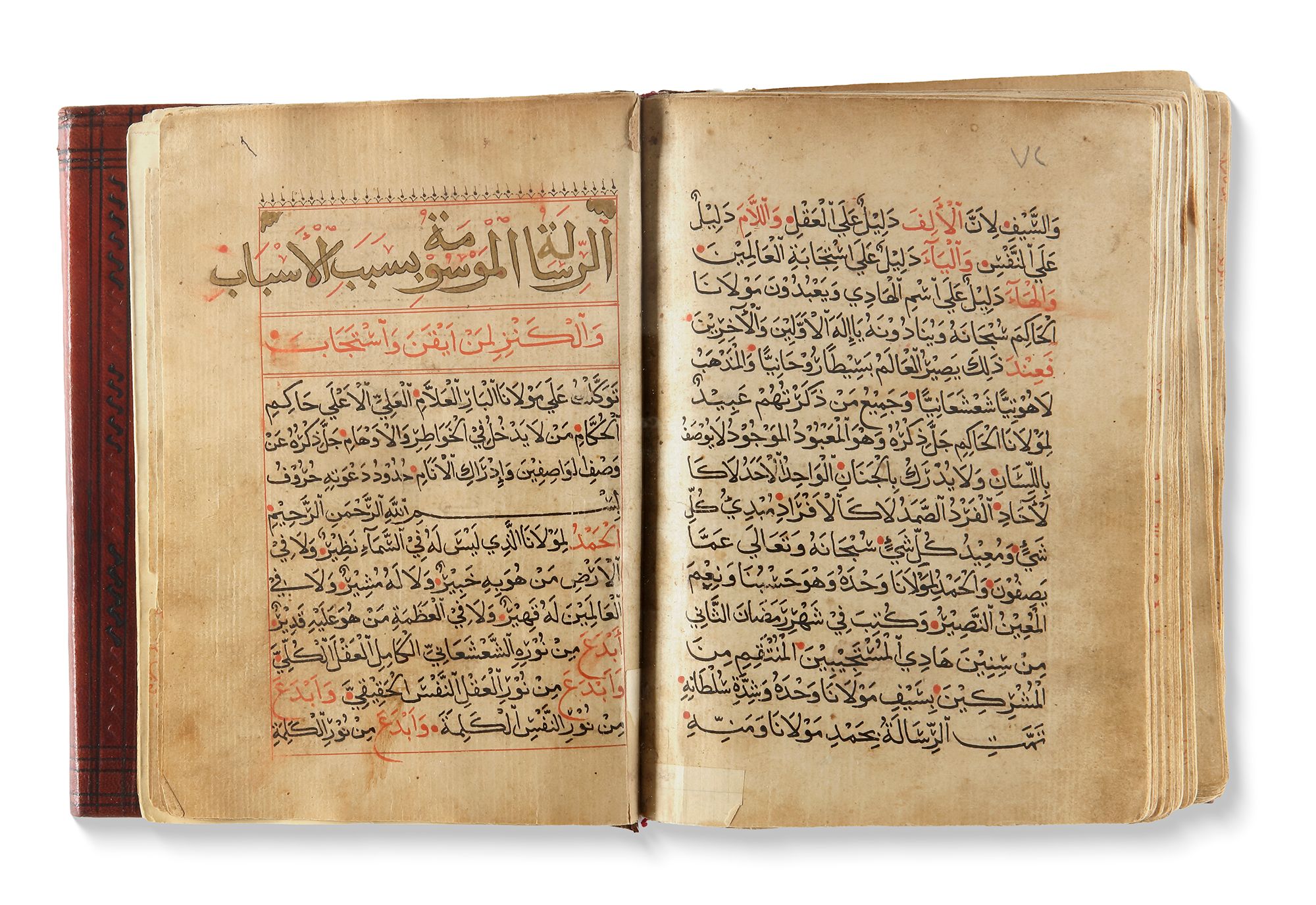
Lot 65 THE EPISTLES OF WISDOM (RASAʾIL AL-HIKMA), VOLUME I, NEAR EAST 18TH CENTURY
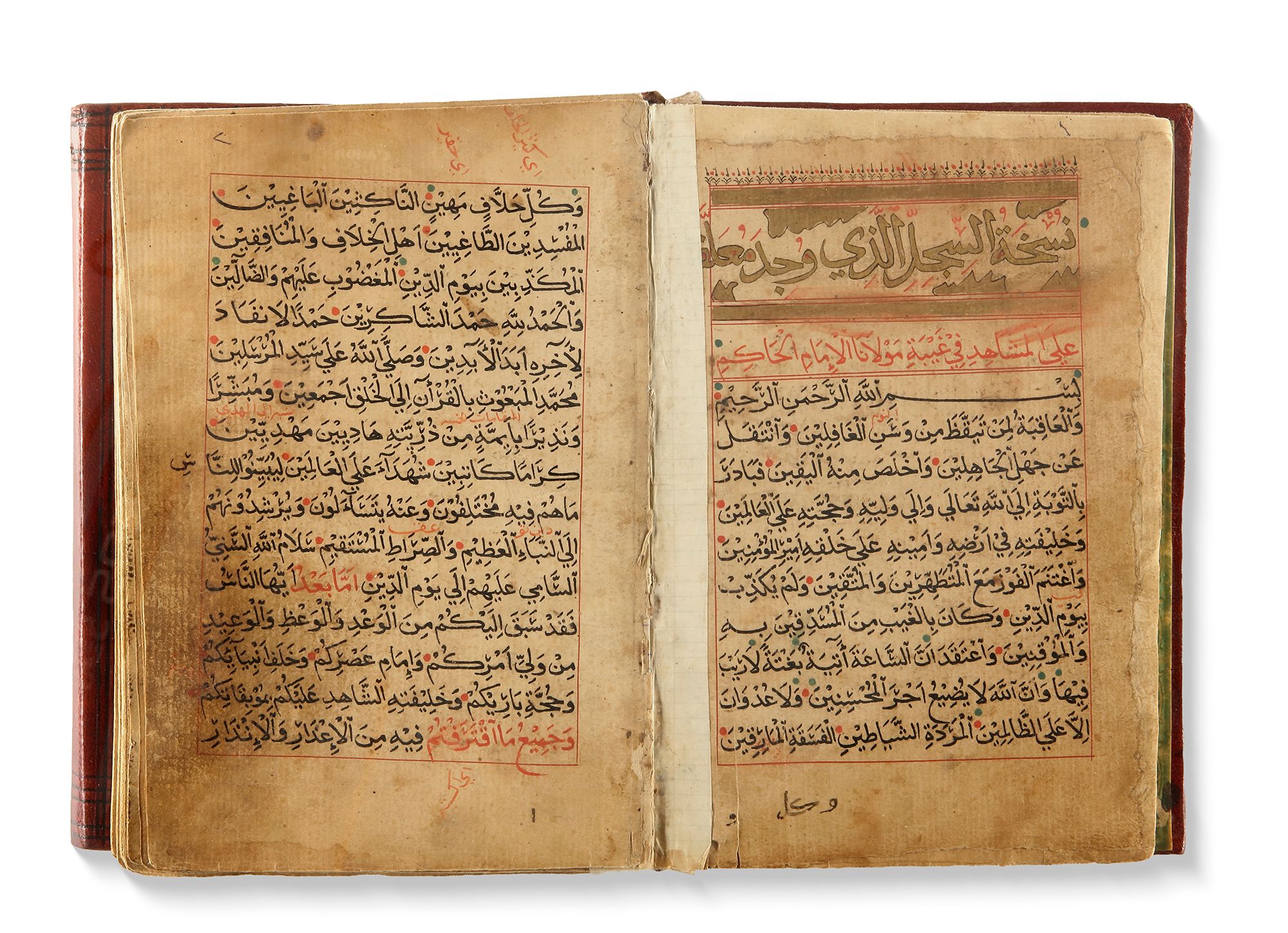
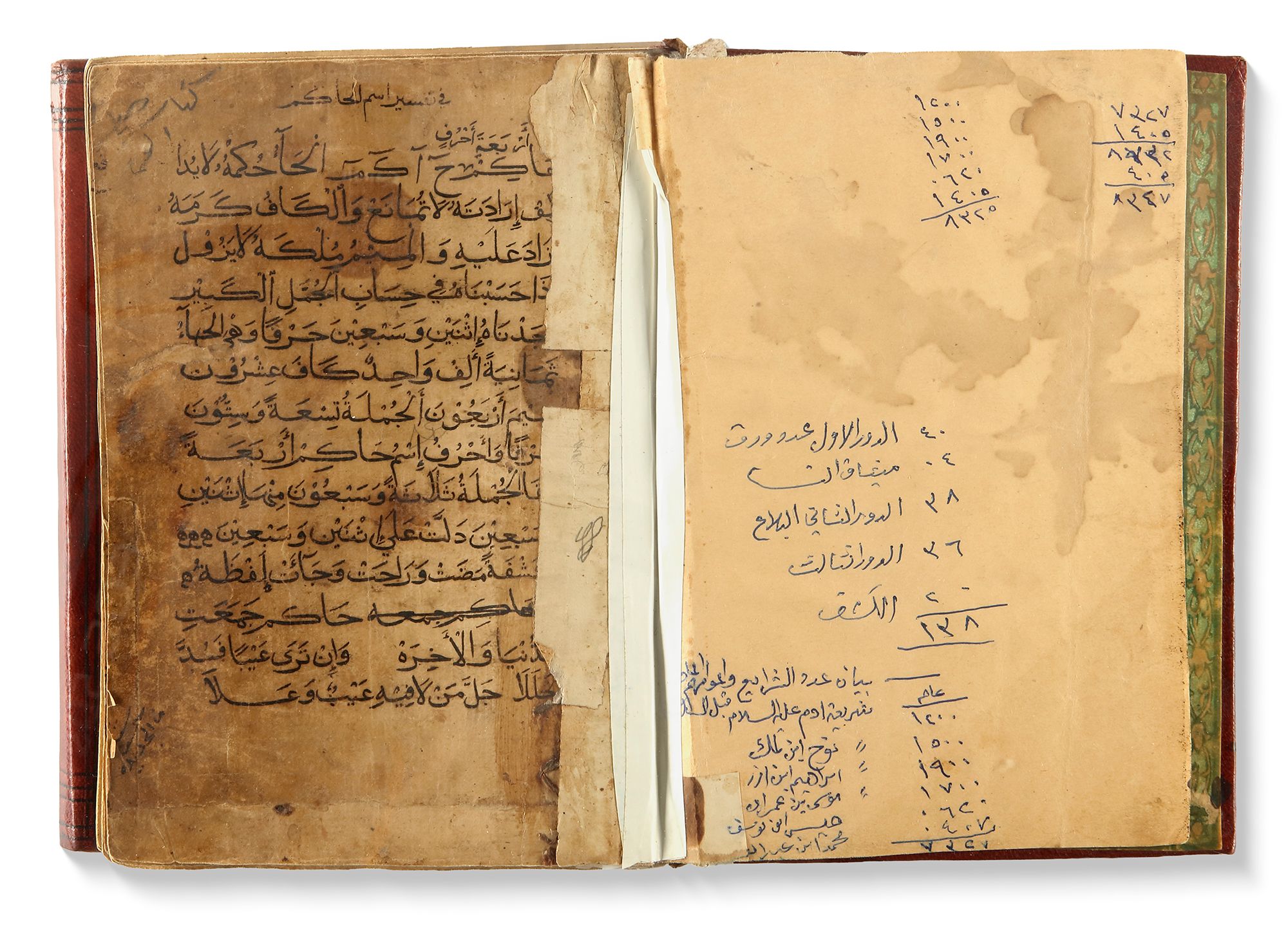
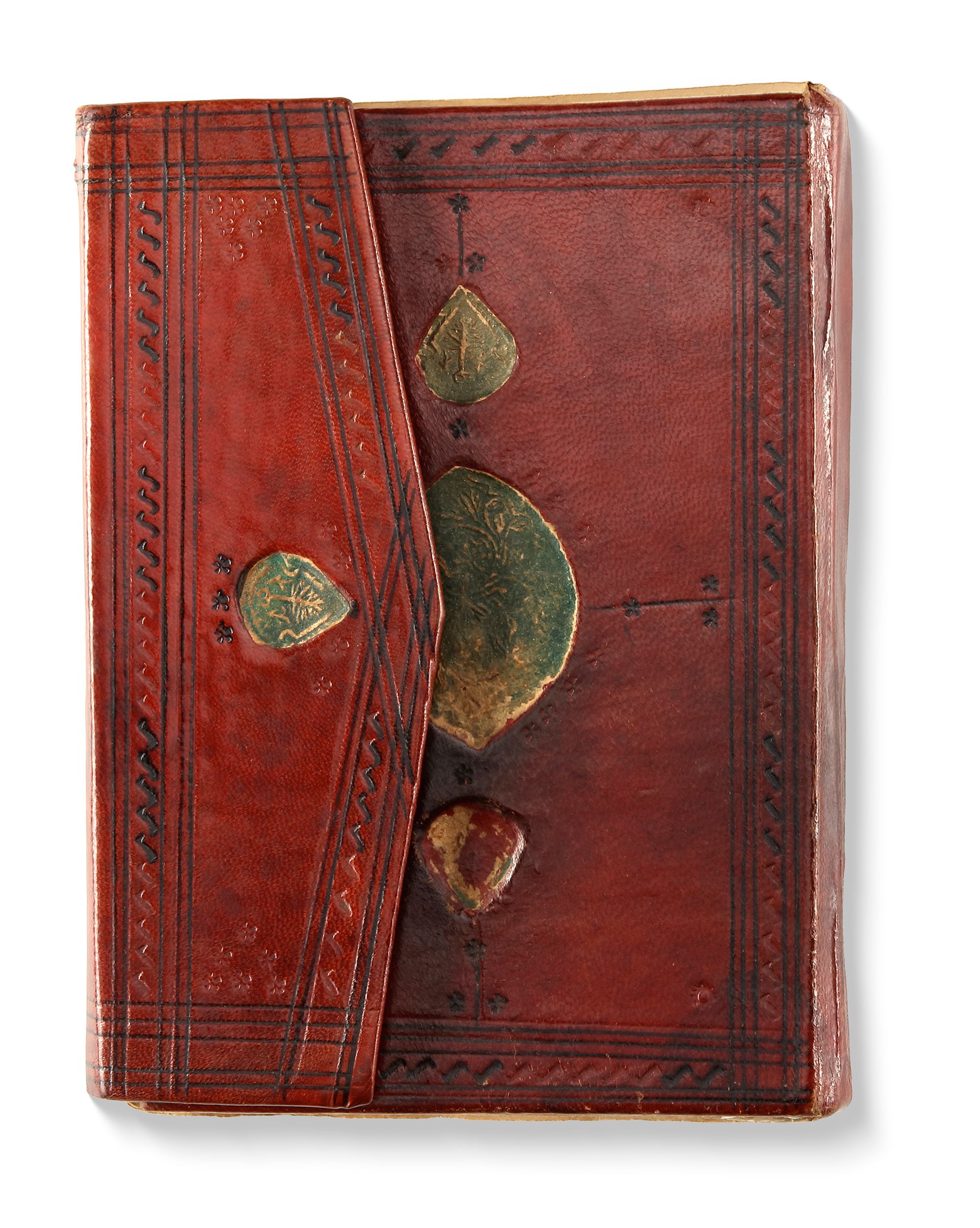
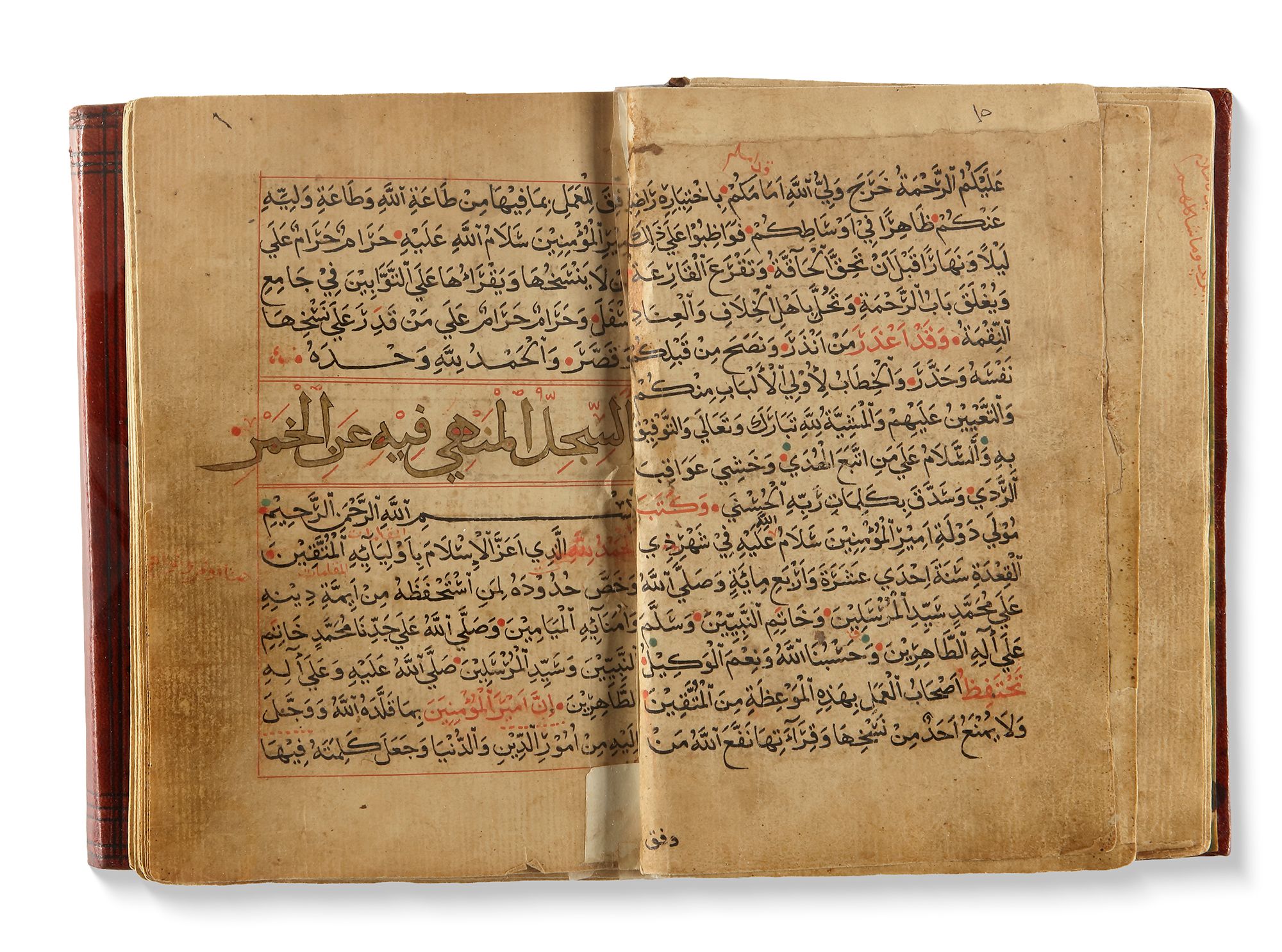
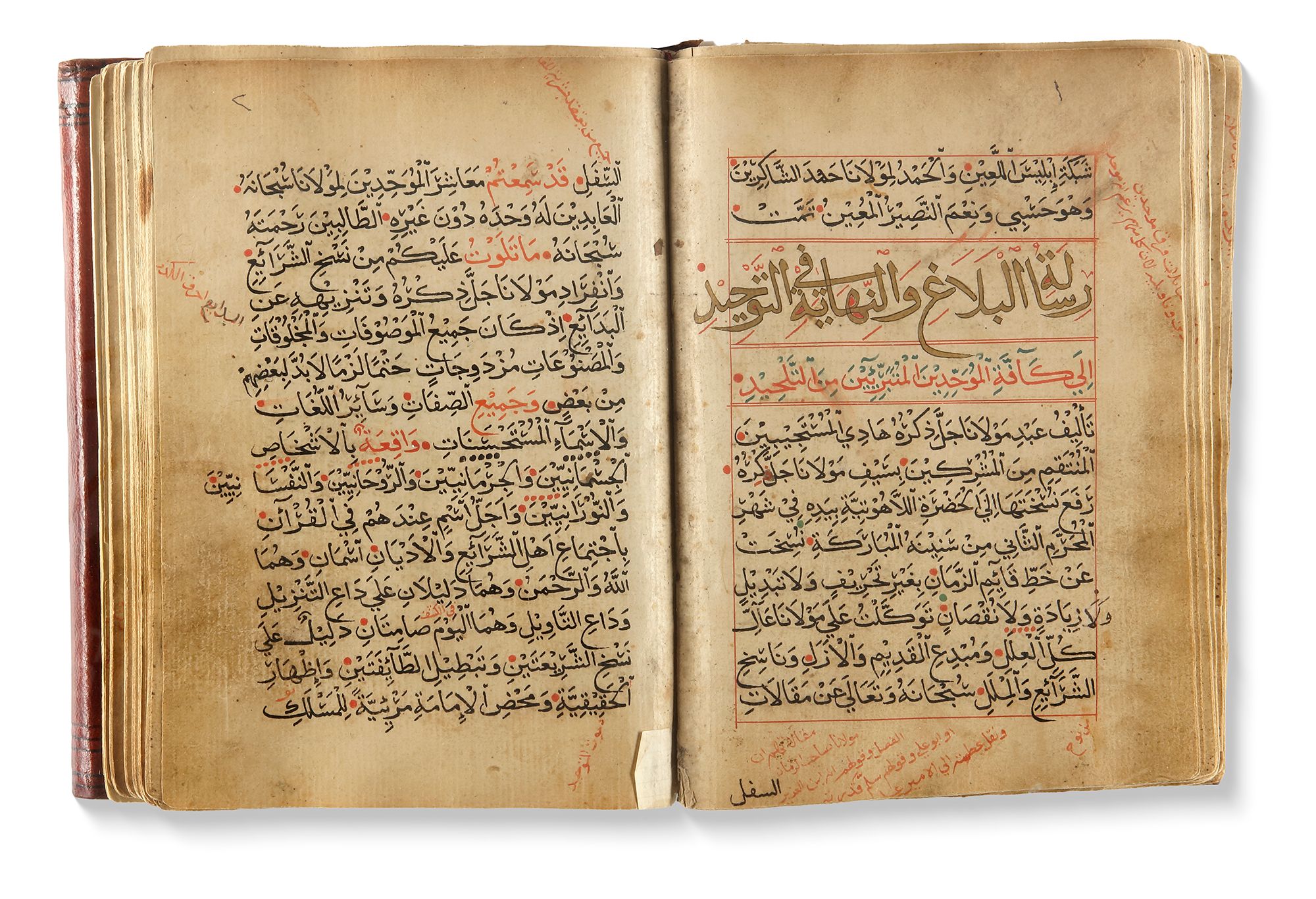
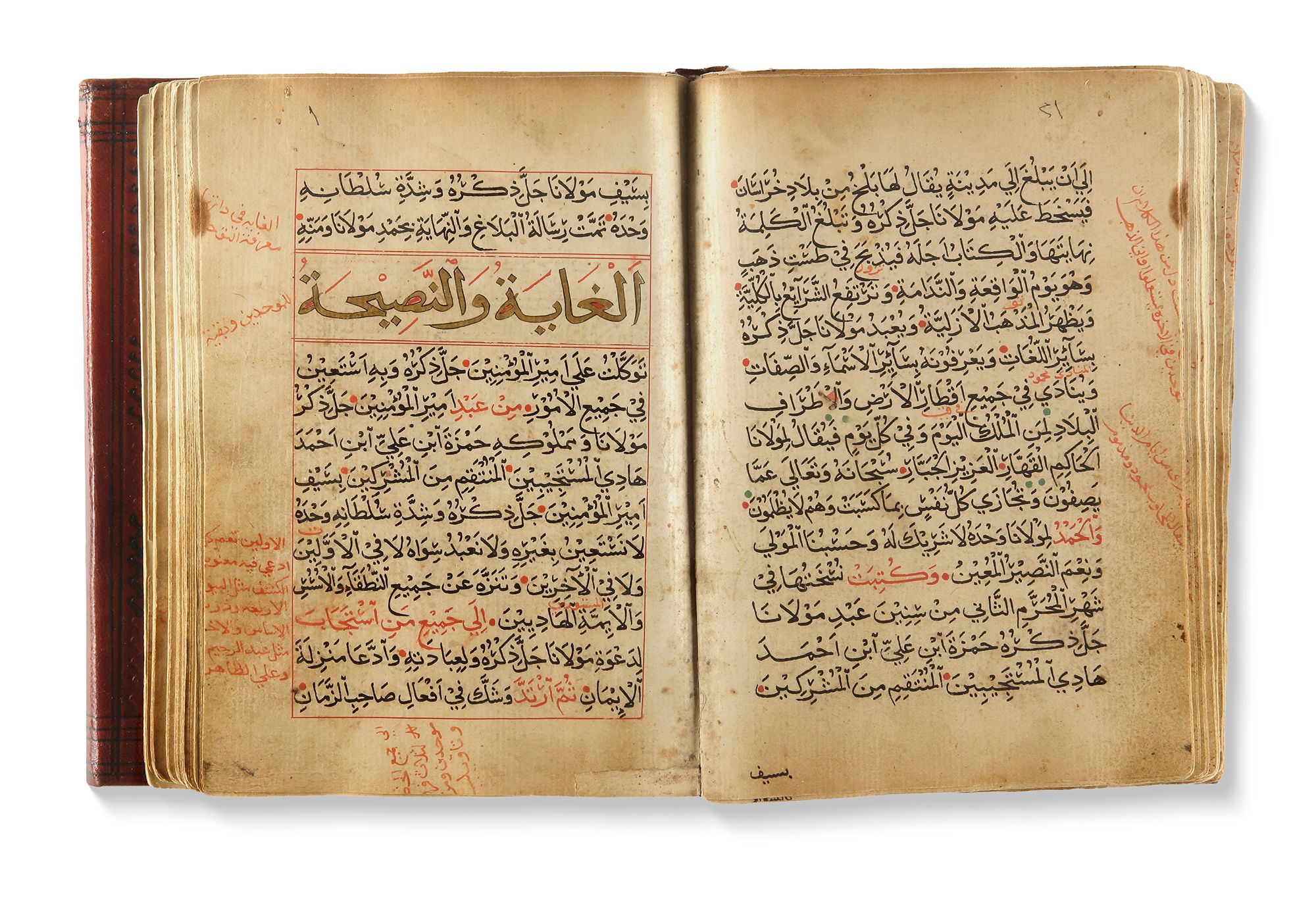
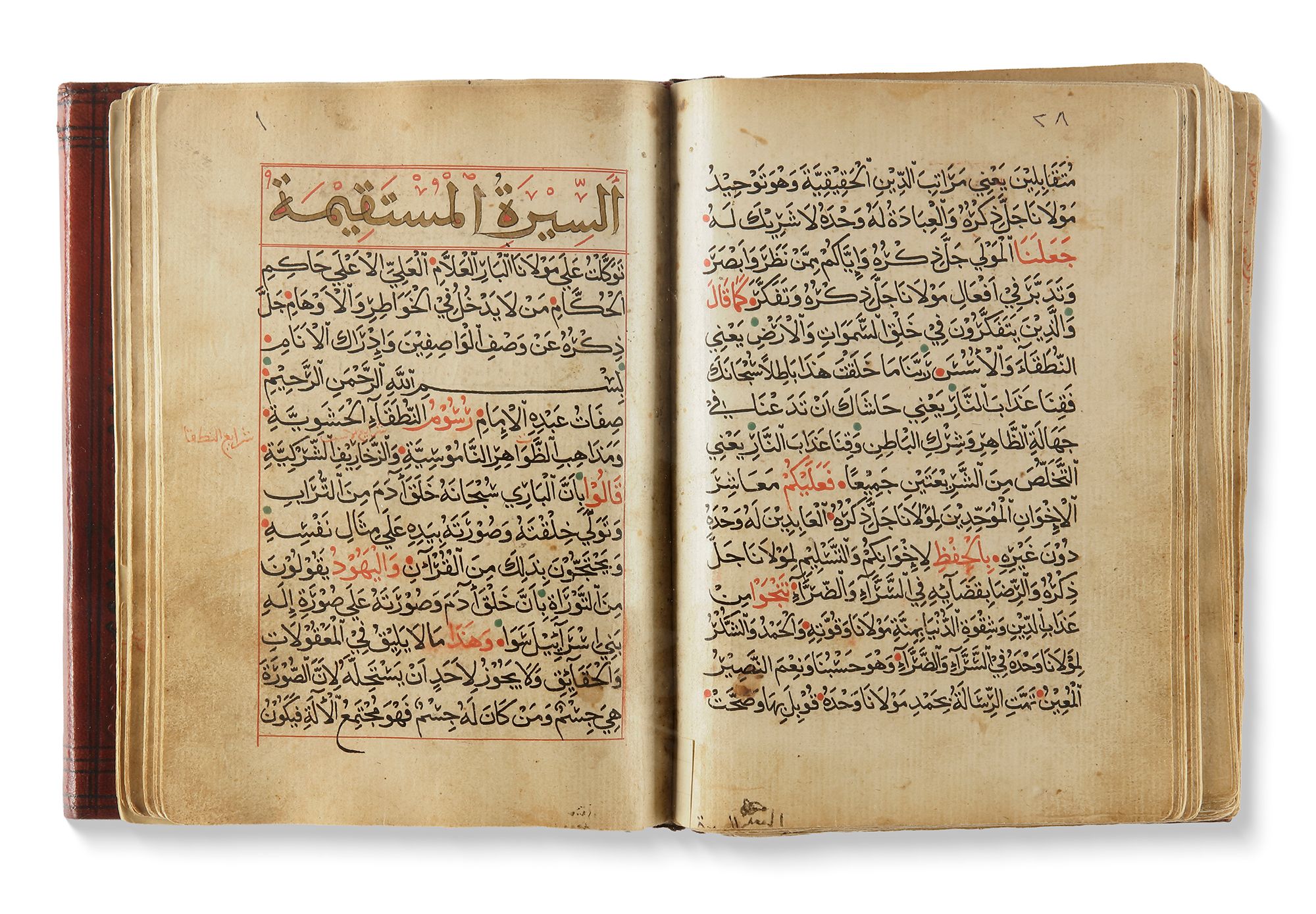
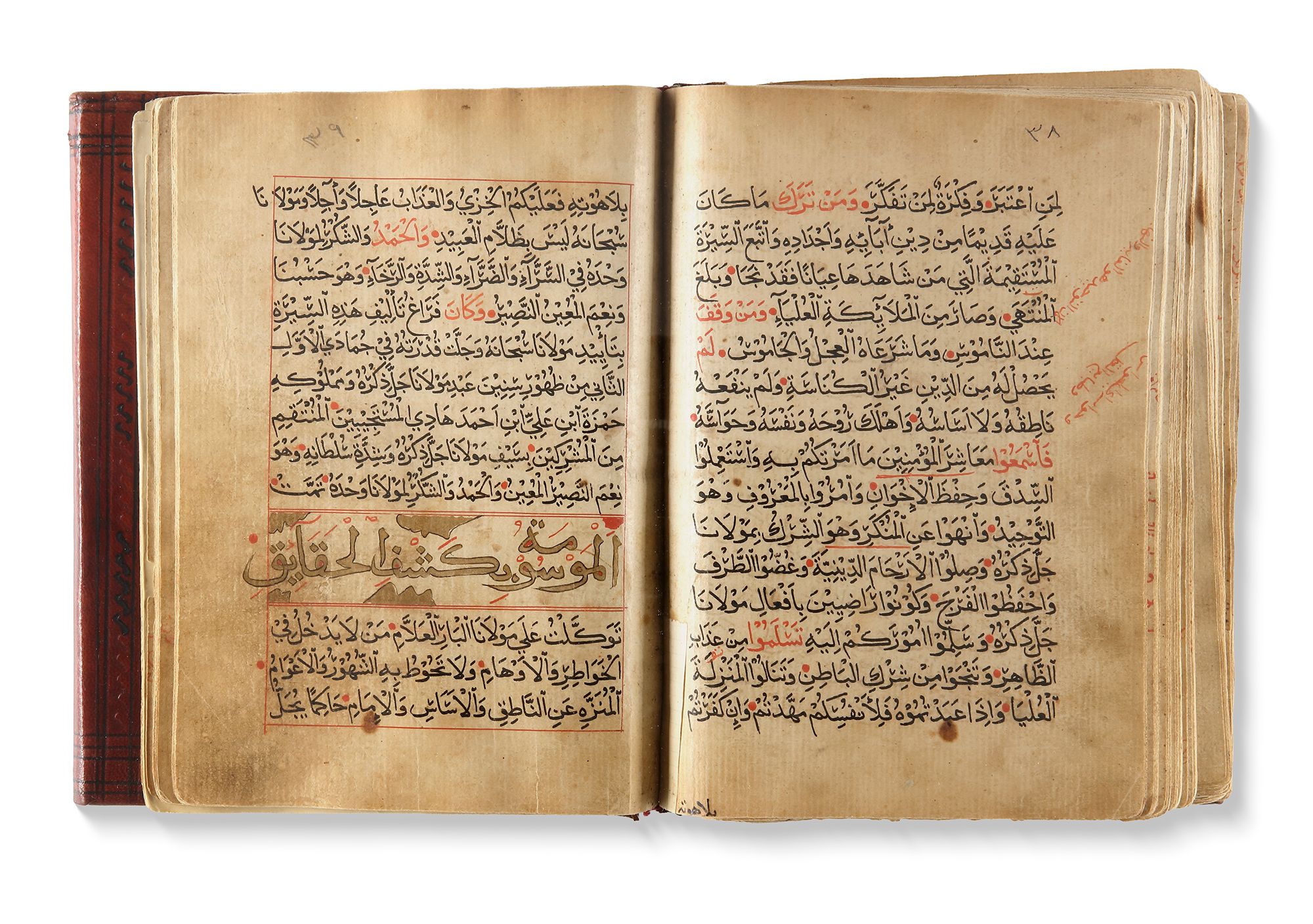
Arabic manuscript on paper, comprising 135 folios with three flyleaves; each page with 15 lines written in an elegant black naskh hand. Catchwords and significant terms are rubricated in red, while the titles of the epistles are heightened in gold, outlined in black and reserved within delicate cloud bands. The manuscript is bound in deep red leather. 14 by 20 cm.
This volume represents a rich collection of epistles, including: a copy of the decree posted in the mihrab of Imam al-Hakim; the decree prohibiting wine; an account concerning the Jews and Christians; a copy of what was written by the Qurmati, the covenant of the Guardian of the Age; the work known as The Hidden Refutation; the beginning of the call to the Epistle of Truth and Unity; the Covenant of Women; the Epistle of Proclamation and the Ultimate Goal in Unity; The Goal and the Admonition; a book containing unrevealed truths; The Unveiling of Truths; and The Cause of Causes.
The opening epistle, a copy of the decree posted in the mihrab of Imam al-Hakim, composed in 411 AH by an unknown author, stands out in both style and content from the rest of the Epistles of Wisdom. It does not present al-Hakim as possessing a divine nature; rather, it describes him as a friend of God, His deputy, and Commander of the Faithful. It calls for adherence to the rulings and obligations of the Sharia, employing a style and language strongly marked by Qur’anic influence. It is acceptable within the broader Islamic framework and can be circulated without difficulty, even though it contains subtle esoteric hints.
This manuscript represents the first volume of the Epistles of Wisdom, which form the foundational corpus of Druze doctrine. It contains a collection of texts that present, with notable intellectual and spiritual depth, the doctrine of divine unity and the path of unveiling the sacred truth.
The volume moves fluidly between proclamation and instruction, combining theological exposition with practical guidance. For example, texts such as The Beginning of the Call to the Epistle of Truth and Unity and The Epistle of Proclamation and the Ultimate Goal in Unity lay out the essential foundations of the religious vision, while covenantal texts—such as the decree prohibiting wine, the Covenant of Women, and the Covenant of the Guardian of the Age—present a vision of the ethical and social order upon which this structure rests. Interspersed within this collection are texts of a polemical and intellectual nature, such as the account concerning the Jews and Christians and the copy of what was written by the Qarmatian, reflecting the vitality of theological debates in their time. The esoteric dimension emerges in works such as The Hidden Refutation, A Book Containing Unrevealed Truths, The Unveiling of Truths, and The Cause of Causes, where the language moves from the outward meaning of revelation to its inner significance and metaphysical inquiries. Together, these texts form a coherent and compelling structure—doctrinal, ethical, and mystical—offering a rare window into a tradition that consciously and profoundly balances the outward law (Sharia) with the inward truth (haqiqa).
Catalogue note: The Epistles of Wisdom constitute the principal text of Druze doctrine, presenting a complex vision of divine unity, the cosmic order, and the spiritual destiny. They address themes of creation, the nature of the soul, its transmigration, and its return to divine judgment, within a framework that combines intellectual precision with deep symbolism. These traditions emerged within the intellectual horizon of medieval Islam—while retaining their distinctiveness—engaging with the Quran, the Gospel, and the Torah from an esoteric perspective, reinterpreting inherited revelation in light of a deeper, hidden truth. They also draw on broad philosophical horizons, influenced by Greek thought—with reverence for figures such as Pythagoras, Plato, Aristotle, and Plotinus—as well as echoes of Eastern spiritual traditions and the works of Muslim philosophers such as al-Farabi and the Brethren of Purity (Ikhwan al-Safa). The concept of cyclical time is central to Druze cosmology, manifesting through seventy-two cycles (adwar), each marked by a divine manifestation in human form. This process reaches its culmination in the figure of al-Hakim bi-Amr Allah (d. 996–1021 CE), the sixth Fatimid caliph, who is regarded as the final and supreme manifestation of the divine presence. At the origin of existence stands the First Intellect (al-‘Aql al-Awwal), from which emanate successive metaphysical ranks—the Soul, the Word, the Preceder, and the Follower—which are successively embodied through cycles of time. In the present cycle, these principles are associated with specific historical figures, forming a sacred lineage that unites metaphysical doctrine with lived history.
رسائل الحكمة: مخطوط درزي من القرن الثامن عشر (المجلد الأول)
مخطوط عربي على الورق، يشتمل على 135 ورقة مع ثلاث ورقات تمهيدية؛ في كل صفحة 15 سطراً بخط نسخي أسود أنيق. الكلمات اللاحقة وعلامات الضبط وبعض الألفاظ المهمة مُحبَّرة بالأحمر، بينما عناوين الرسائل مذهَّبة، محددة بالأسود، ومحفوظة ضمن تشكيلات سحابية دقيقة. التجليد من الجلد الأحمر الداكن. الأبعاد: 14 × 20 سم.
يمثل هذا المجلد مجموعة غنية من الرسائل، منها: نسخة من السجل المعلّق في محراب الإمام الحاكم؛ سجل تحريم الخمر؛ خبر اليهود والنصارى؛ نسخة مما كتبه القرامطي؛ عهد وليّ الزمان؛ الكتاب المعروف بالردّ الخفي؛ بدء الدعوة إلى رسالة الحق والتوحيد؛ عهد النساء؛ رسالة الإعلان والغاية القصوى في التوحيد؛ الغاية والنصيحة؛ كتاب فيه حقائق غير مكشوفة؛ كشف الحقائق؛ علّة العلل.
وتأتي الرسالة الافتتاحية، نسخة من السجل المعلّق في محراب الإمام الحاكم، المؤلفة سنة 411هـ لكاتب مجهول، متميزة في أسلوبها ومضمونها عن سائر رسائل الحكمة. فهي لا تقدّم الحاكم بوصفه ذا طبيعة إلهية، بل تصفه وليًّا لله وخليفةً له وأميرًا للمؤمنين، وتدعو إلى الالتزام بأحكام الشريعة وفرائضها، مع اعتماد أسلوب ولغة يغلب عليهما الطابع القرآني. وهي مقبولة في الإطار الإسلامي العام، ويمكن تداولها دون حرج، وإن لم تخلُ من إشارات باطنية لطيفة.
يمثل هذا المخطوط المجلد الأول من رسائل الحكمة، وهي المتن التأسيسي للعقيدة الدرزية. ويضم مجموعة من النصوص التي تعرض، بعمق فكري وروحي لافت، عقيدة التوحيد ومسار انكشاف الحقيقة المقدسة.
ويتنقل هذا المجلد بسلاسة بين الإعلان والتعليم، جامعًا بين العرض اللاهوتي والتوجيه العملي. فمثلًا، تضع نصوص مثل بدء الدعوة إلى رسالة الحق والتوحيد ورسالة الإعلان والغاية القصوى في التوحيد الأسس الجوهرية للرؤية الدينية، في حين تقدم النصوص العهدية—ومنها سجل تحريم الخمر وعهد النساء وعهد وليّ الزمان—تصورًا للنظام الأخلاقي والاجتماعي الذي يقوم عليه هذا البناء.
وتتخلل هذه المجموعة نصوص ذات طابع جدلي وفكري، مثل خبر اليهود والنصارى ونسخة مما كتبه القرامطي، مما يعكس حيوية النقاشات اللاهوتية في عصرها. أما البعد الباطني فيبرز في أعمال مثل الردّ الخفي وكتاب فيه حقائق غير مكشوفة وكشف الحقائق وعلّة العلل، حيث تنتقل اللغة من ظاهر الوحي إلى معانيه الداخلية وأسئلته الميتافيزيقية.
وتكوّن هذه النصوص مجتمعةً بناءً متماسكًا وجذابًا—عقائديًا وأخلاقيًا وصوفيًا—يقدم نافذة نادرة على تقليد يوازن بوعي وعمق بين ظاهر الشريعة وباطن الحقيقة.
ملاحظة فهرسية
تُعدّ رسائل الحكمة النصّ الرئيس في العقيدة الدرزية، إذ تقدّم تصورًا مركّبًا للوحدة الإلهية والنظام الكوني والمصير الروحي. وتتناول موضوعات الخلق، وطبيعة النفس، وتناسخها، وعودتها إلى الحساب الإلهي، ضمن رؤية تجمع بين الدقة الفكرية والرمزية العميقة.
وقد نشأت هذه التقاليد ضمن الأفق الفكري للإسلام الوسيط—مع احتفاظها بخصوصيتها—حيث تتعامل مع القرآن والإنجيل والتوراة من منظور باطني، معيدةً تأويل الوحي الموروث في ضوء حقيقة أعمق مستورة. كما تستند إلى آفاق فلسفية واسعة، متأثرة بالفكر اليوناني—مع توقير شخصيات مثل فيثاغورس وأفلاطون وأرسطو وأفلوطين—إلى جانب أصداء من تقاليد روحية شرقية وأعمال فلاسفة مسلمين مثل الفارابي وإخوان الصفا.
ويُعد مفهوم الزمن الدوري محورًا في الكوسمولوجيا الدرزية، حيث يتجلى عبر اثنين وسبعين دورًا (أدوار)، يتميز كل منها بظهور إلهي في صورة بشرية. ويبلغ هذا المسار ذروته في شخصية الحاكم بأمر الله (ت. 996–1021م)، الخليفة الفاطمي السادس، الذي يُنظر إليه بوصفه التجلي النهائي والأسمى للحضور الإلهي.
وفي أصل الوجود يقف العقل الأول (العقل الأول)، الذي تصدر عنه مراتب ميتافيزيقية متعاقبة—النفس، والكلمة، والسابق، والتالي—تتجسد تباعًا عبر دورات الزمن. وفي الدورة الحالية، ترتبط هذه المبادئ بشخصيات تاريخية محددة، لتشكّل نسبًا مقدسًا يجمع بين العقيدة الميتافيزيقية والتاريخ الحي.