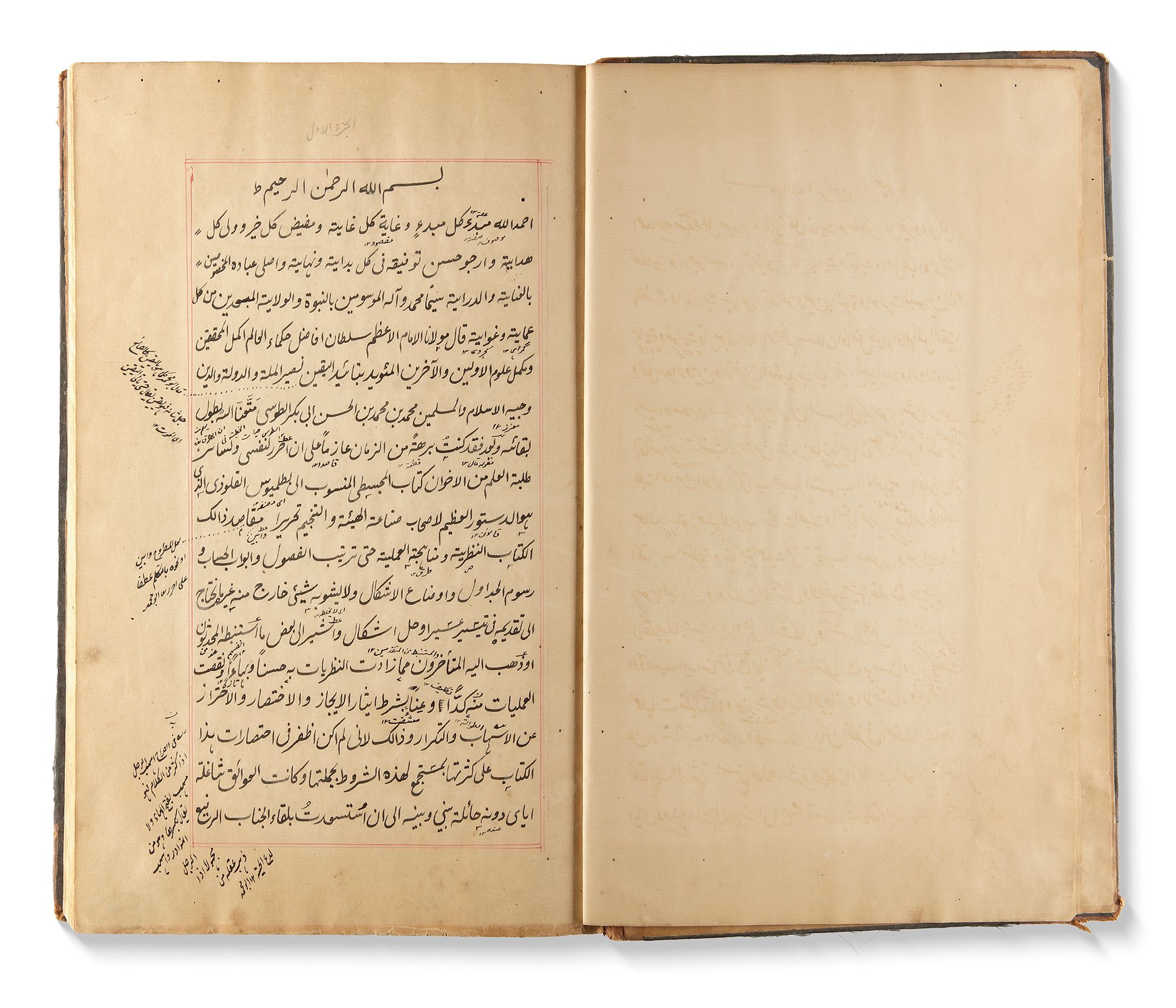
Lot 233 TAHRIR AL-MAJISTI: AN ARABIC ASTRONOMICAL MANUSCRIPT AFTER AL-TUSI, 18TH-19TH CENTURY
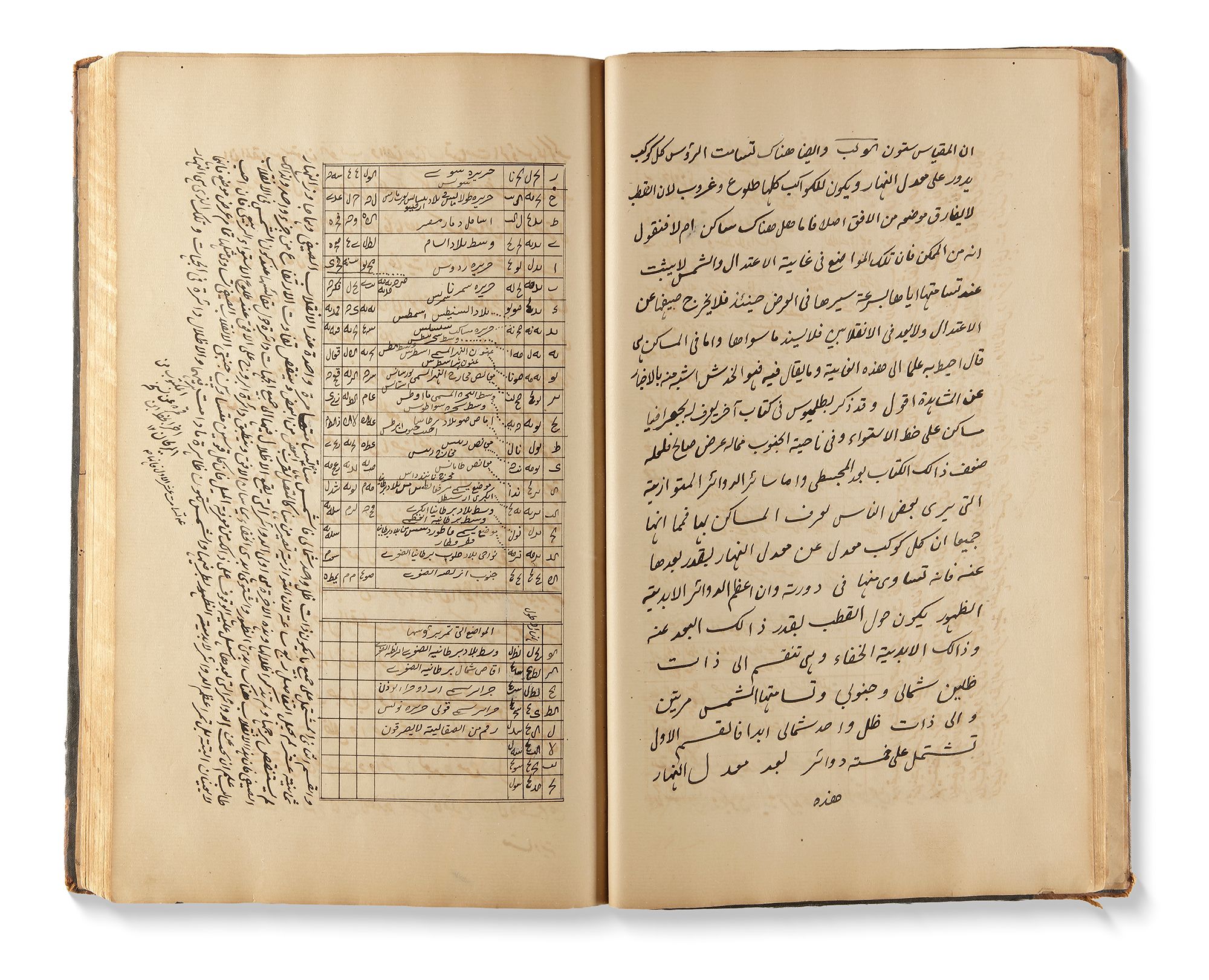
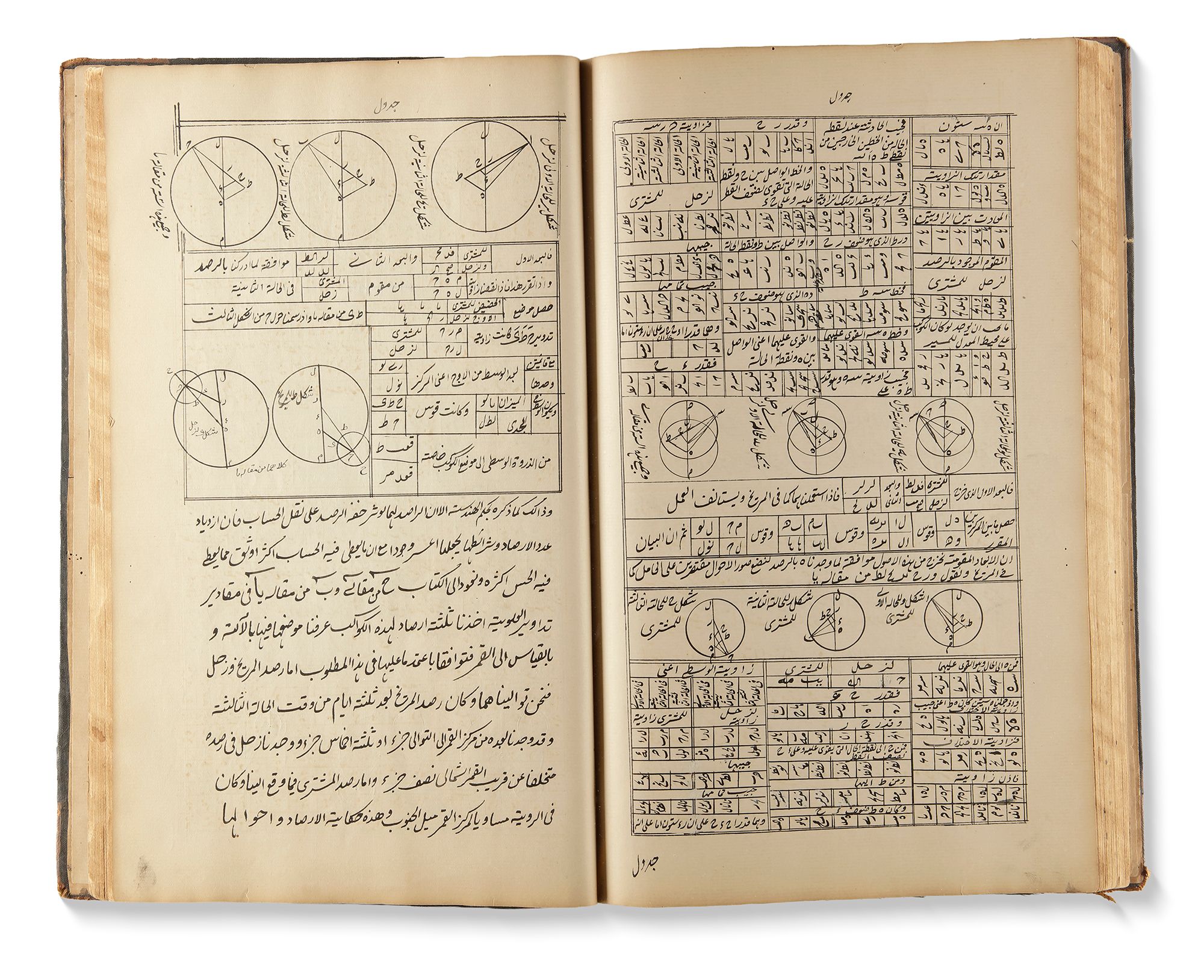
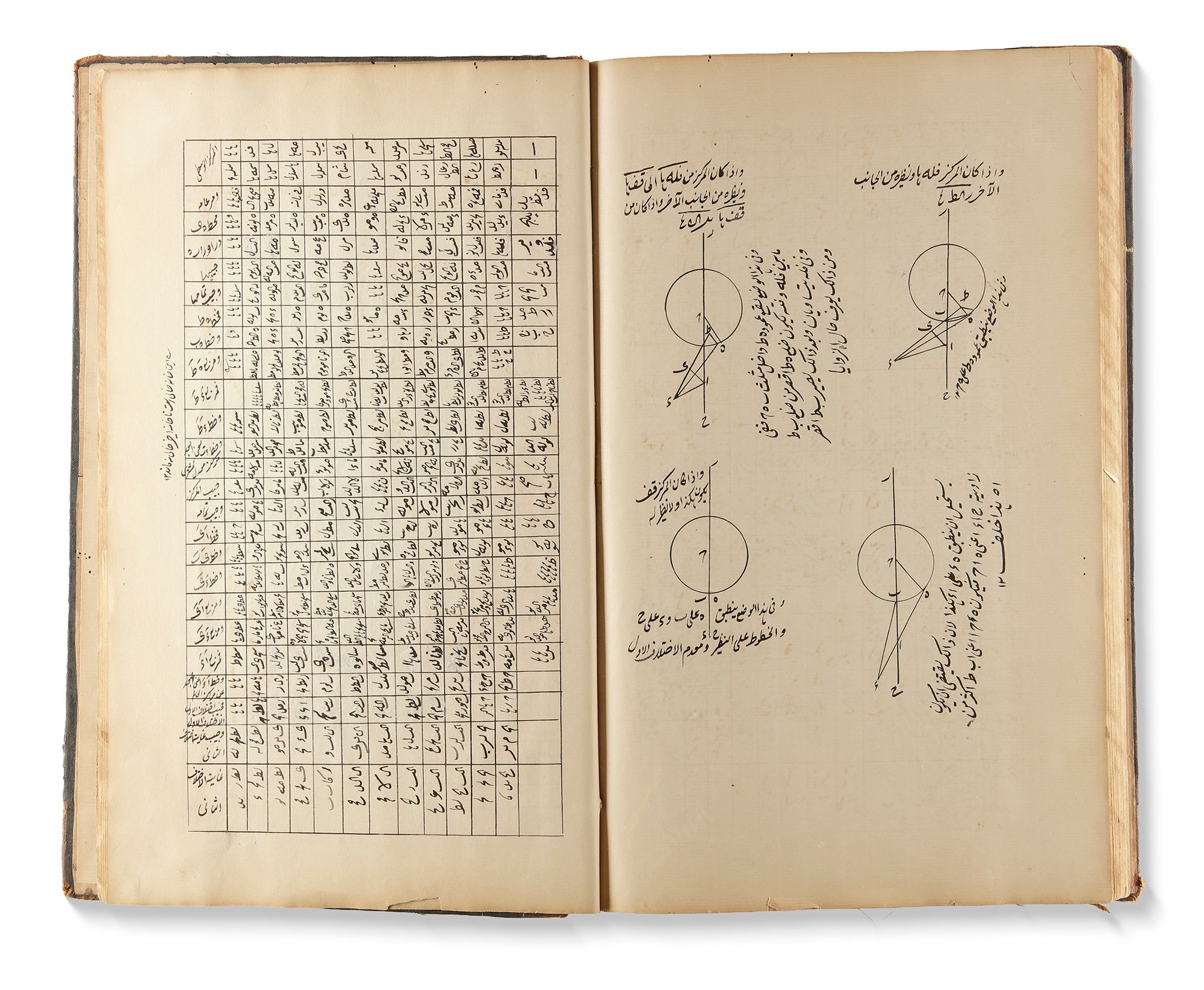
Arabic manuscript on paper, each page with 19 lines in a clear black naskh script, illustrated with numerous geometrical figures, diagrams, and tables; 21 × 35 cm.
A manuscript of remarkable intellectual ambition and visual clarity, this copy of Tahrir al-Majisṭi embodies the synthesis of scientific rigor and aesthetic discipline characteristic of the Arabic manuscript tradition. Composed by Naṣir al-Dīn al-Ṭusi (1201–1274), the work represents a masterful recension of Almagest by Claudius Ptolemy, the foundational text of geocentric astronomy.
Al-Tusis redaction transcends mere commentary. With a lucid and methodical hand, he reorganises Ptolemy’s complex arguments, resolving inherited difficulties (ḥall al-ashkāl) while integrating the insights of later astronomers. The result is a text at once didactic and innovative—designed to guide the reader through the intricacies of celestial theory with precision and coherence.
Particularly striking is the manuscript’s visual programme: its carefully executed diagrams translate abstract astronomical models into elegant geometric forms, reinforcing the intimate relationship between scientific thought and artistic expression. The measured layout of the page, with its balanced script and ordered figures, reflects a deep concern for legibility and harmony.
Retaining the thirteen books (maqalat) of the Almagest, the work is further articulated into finely structured sections (fuṣul) and accompanied by an extensive corpus of diagrams (ashkal), underscoring its pedagogical purpose.
Both a scientific instrument and a work of art, this manuscript stands as a testament to the enduring vitality of the Islamic astronomical tradition and its commitment to clarity, order, and intellectual beauty.
تحرير المجسطي: مخطوطة فلكية عربية على نهج الطوسي، القرن الثامن عشر–التاسع عشر مخطوطة عربية على الورق، في كل صفحة 19 سطرًا مكتوبة بخط نسخي واضح بالمداد الأسود، مزودة بعدد كبير من الأشكال الهندسية والرسوم البيانية والجداول؛ الأبعاد: 21 × 35 سم. تُعد هذه النسخة من تحرير المجسطي مخطوطة ذات طموح فكري لافت ووضوح بصري متميز، إذ تجسّد التلاقي بين الصرامة العلمية والانضباط الجمالي الذي يميز تقاليد المخطوطات العربية. ألّفها نصير الدين الطوسي (1201–1274)، وتمثل صياغة محققة لكتاب المجسطي لبطليموس، النص التأسيسي لعلم الفلك القائم على مركزية الأرض. ولا يقتصر عمل الطوسي على الشرح فحسب، بل يتجاوز ذلك إلى إعادة تنظيم حجج بطليموس المعقدة بأسلوب واضح ومنهجي، مع معالجة الإشكالات الموروثة (حلّ الأشكال) ودمج إسهامات الفلكيين اللاحقين. والنتيجة نص تعليمي مبتكر في آن واحد، يوجّه القارئ عبر تعقيدات النظرية الفلكية بدقة واتساق. ومن أبرز سمات هذه المخطوطة برنامجها البصري الغني، حيث تحوّل الرسوم المنفذة بعناية النماذج الفلكية المجردة إلى أشكال هندسية أنيقة، مؤكدة العلاقة الوثيقة بين الفكر العلمي والتعبير الفني. كما يعكس تنسيق الصفحة المتوازن—بخطه المنظم وأشكاله المرتبة—عناية كبيرة بالوضوح والتناغم. ويحتفظ العمل بالبنية الأصلية للمجسطي المؤلفة من ثلاث عشرة مقالة، مع تقسيمات دقيقة إلى فصول، وإرفاقه بمجموعة واسعة من الأشكال التوضيحية، مما يبرز هدفه التعليمي. وهكذا، تجمع هذه المخطوطة بين كونها أداة علمية وعملًا فنيًا، وتشهد على الحيوية المستمرة للتقليد الفلكي الإسلامي والتزامه بالوضوح والنظام والجمال الفكري.