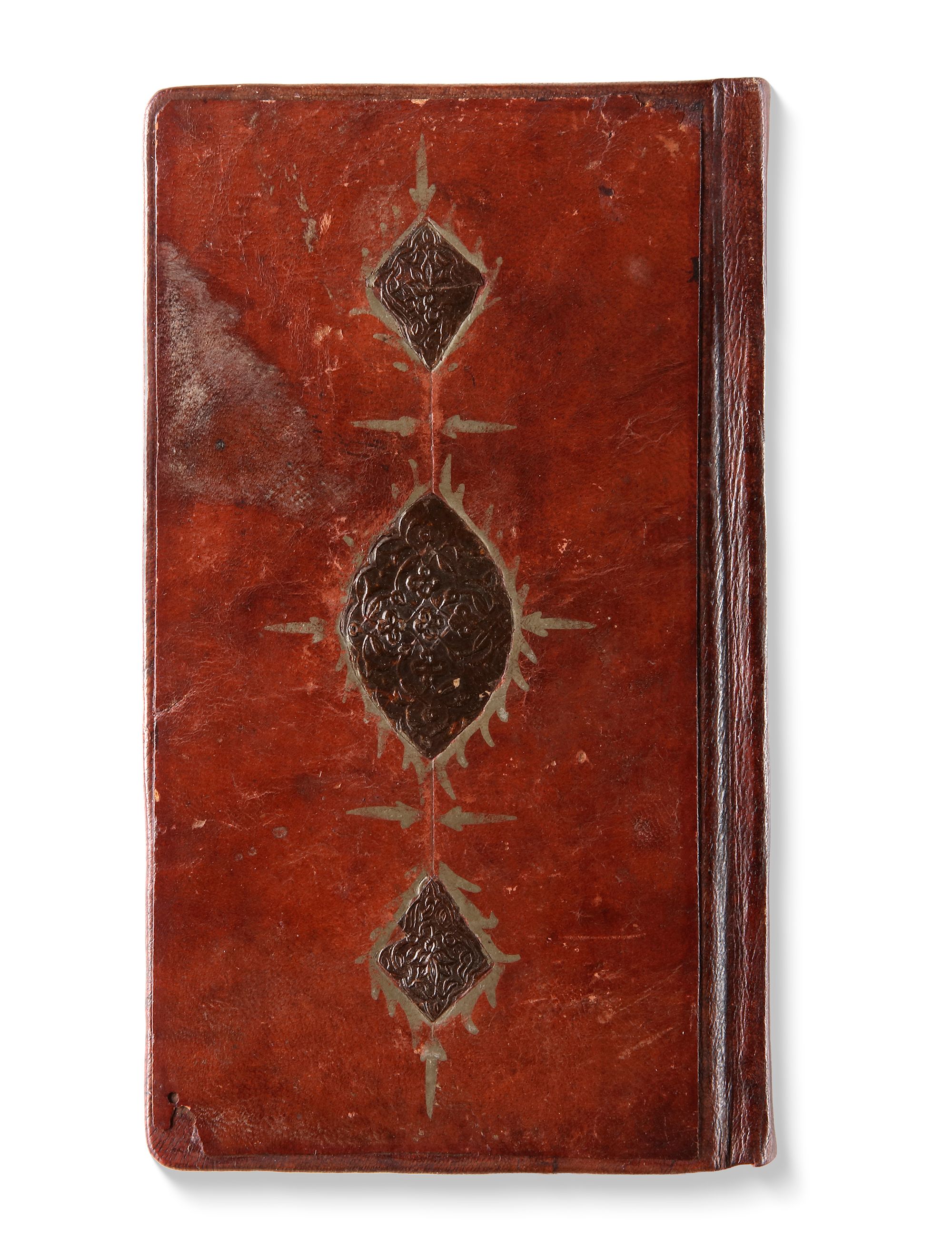
Lot 240 A TREATISE ON SPIRITUAL AND BODILY HEALING THROUGH DEVOTIONAL RECITATION, PERSIA AND DATED 1075 AH/1664–1665 AD
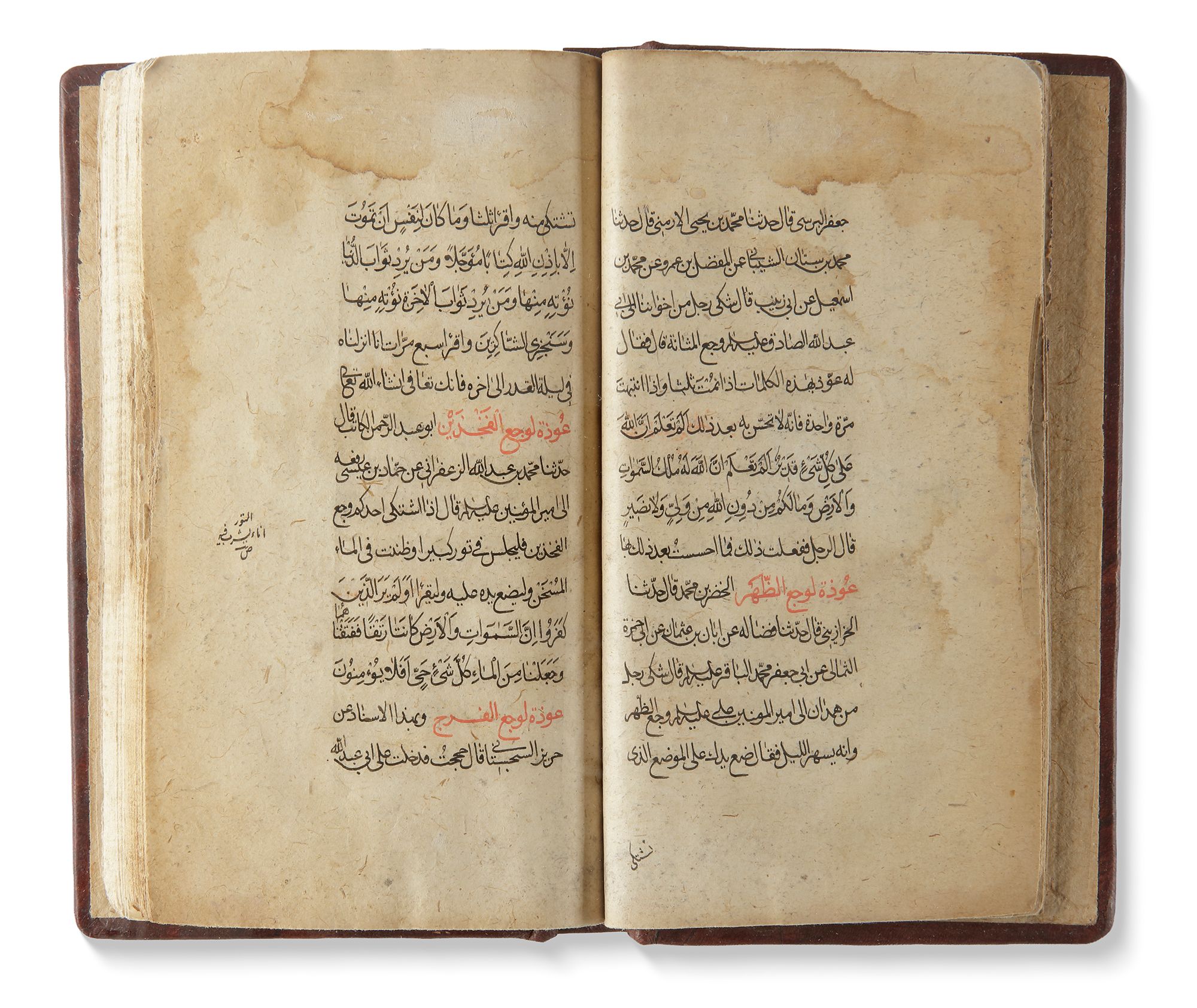
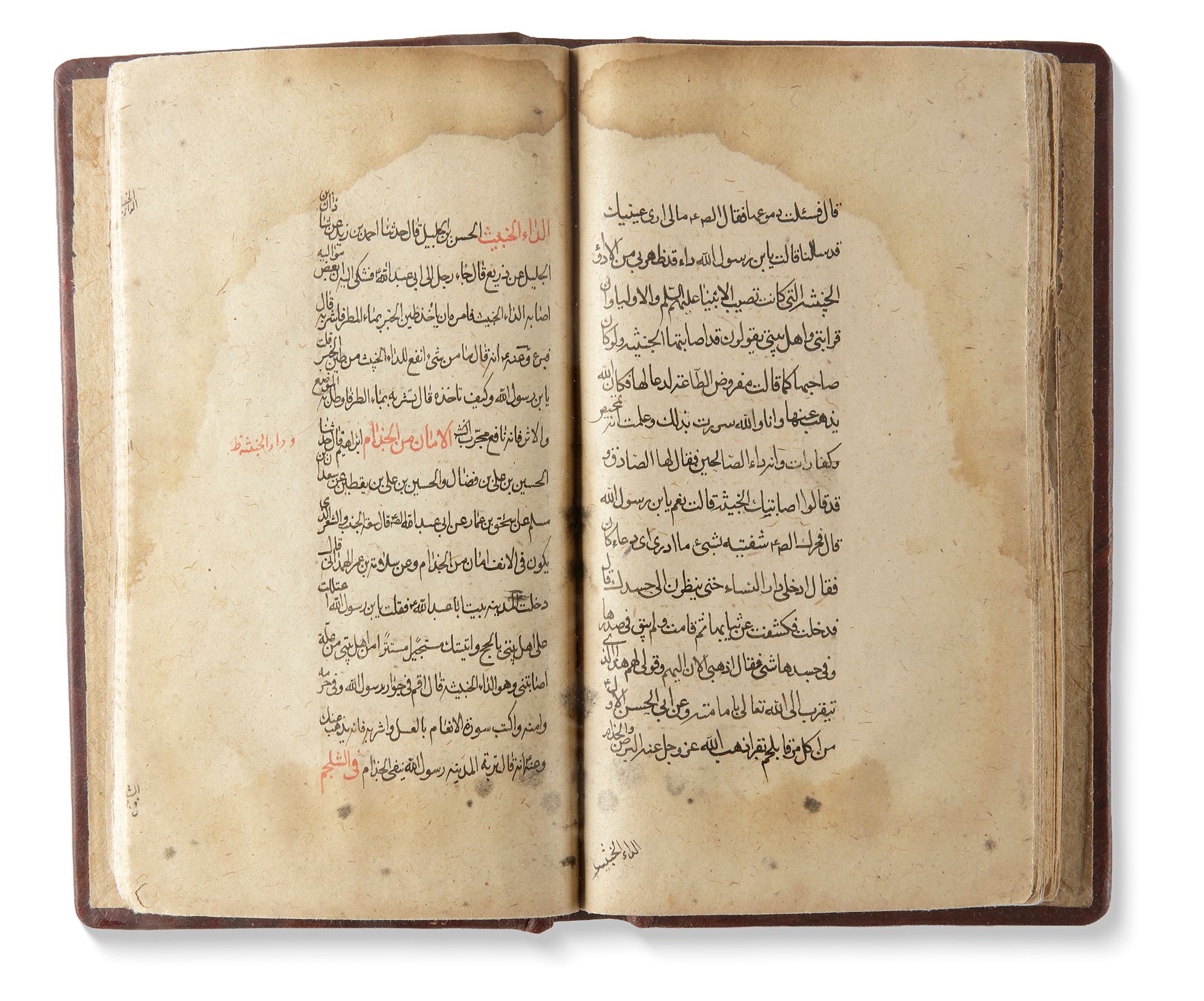
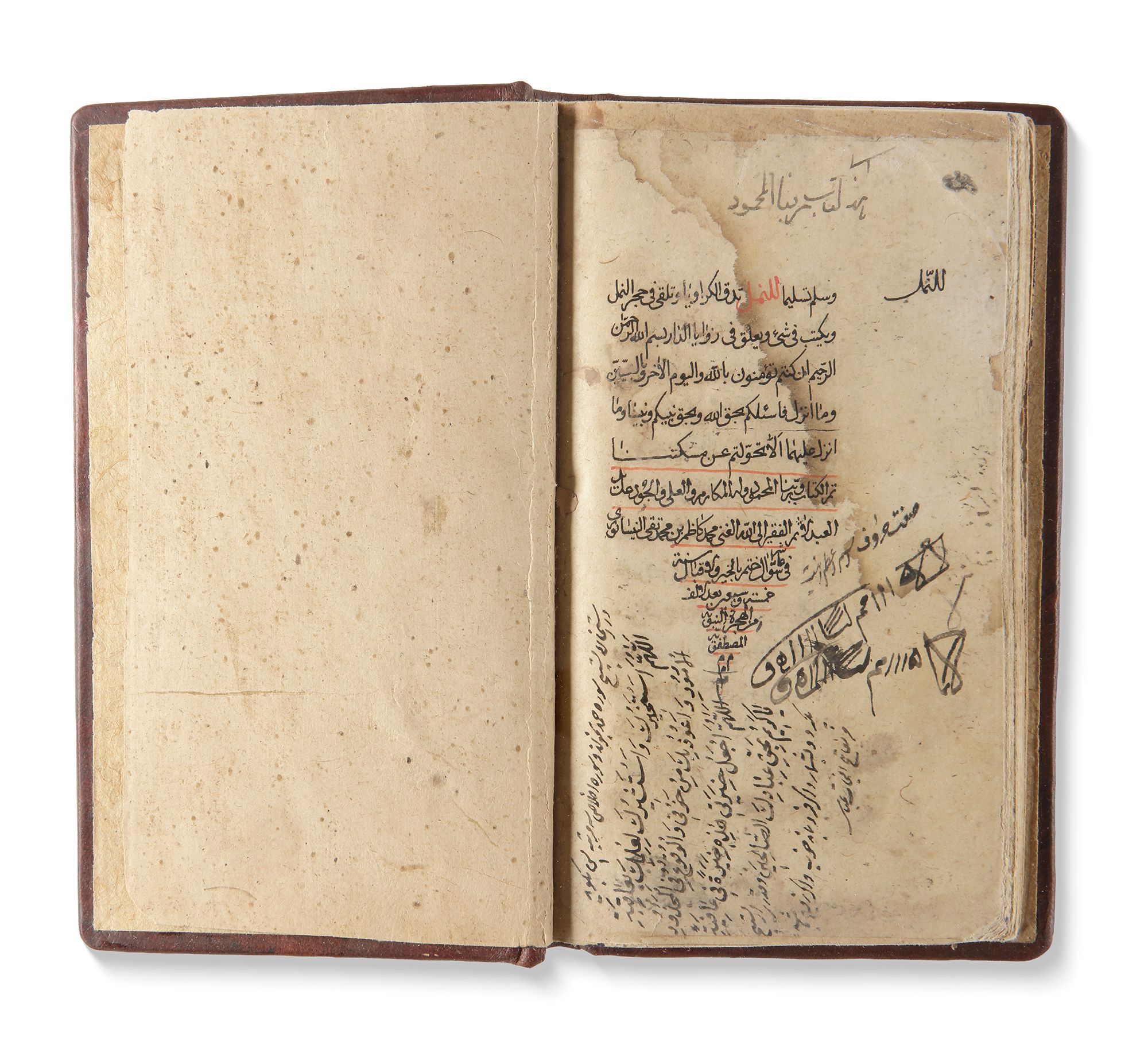
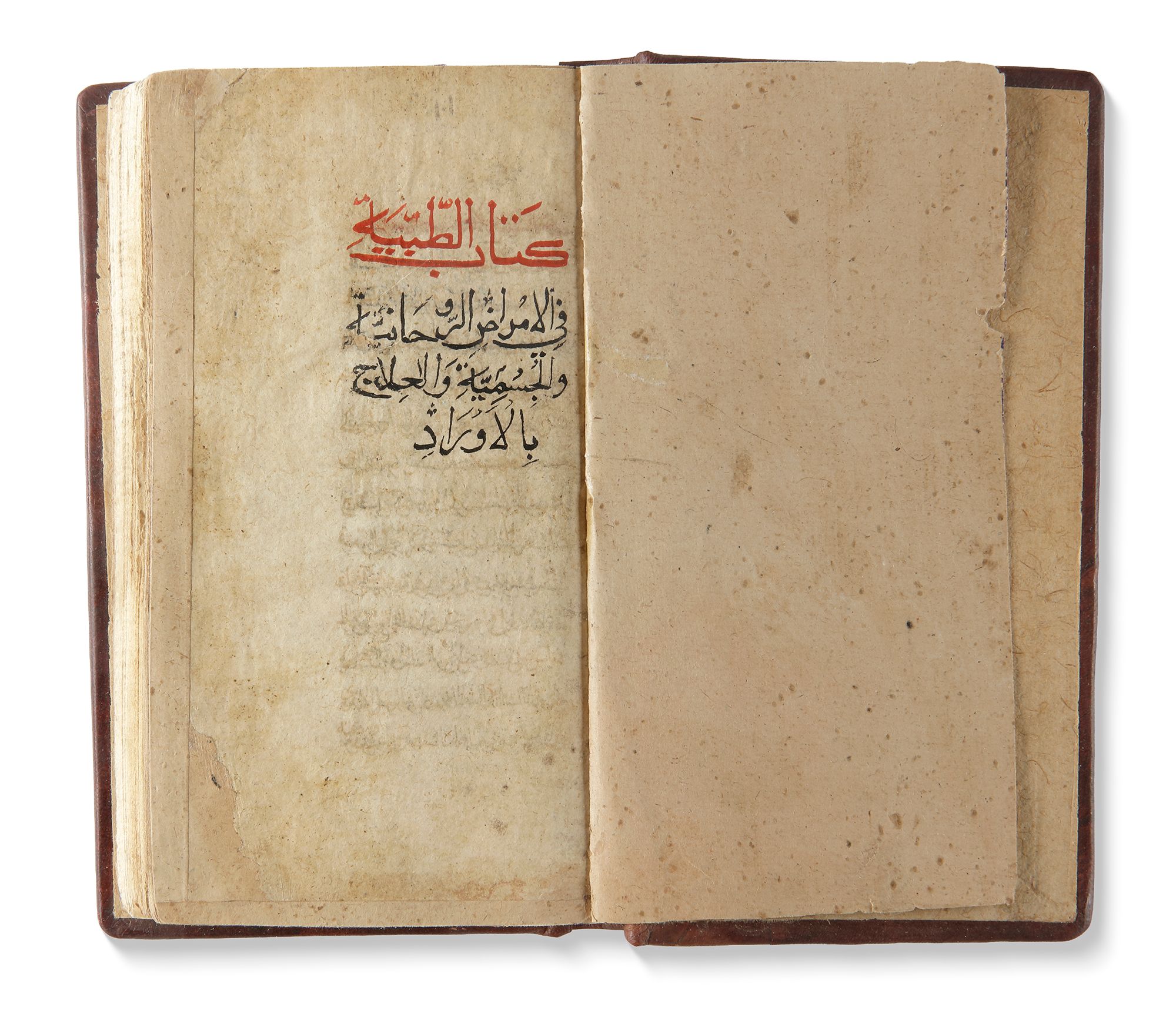
An Arabic manuscript on paper, 10 by 17.5 cm, composed of neatly written pages in elegant naskh script, each containing 14 lines. Catchwords and section titles are rubricated in red ink, enhancing both navigation and visual appeal. The manuscript concludes with a signed colophon stating it was written by Muhammad Kazim bin Muhammad Taqi al-Nisaburi and dated 1075 AH/1664–1665 AD.
It is bound in a deep brown leather cover, indicative of traditional Islamic manuscript craftsmanship.
The work is devoted to the diagnosis and treatment of both spiritual and bodily ailments, reflecting a holistic understanding of health in which the physical and metaphysical are deeply interconnected. Rooted in the tradition of ruqyah (spiritual healing), the text prescribes specific Qur’anic verses and devotional prayers as remedies for a wide spectrum of conditions.
Among the ailments addressed are headaches; pain affecting the ears and eyes; disorders of the teeth and mouth; abdominal and kidney complaints; and issues related to the feet and colon etc..
The manuscript emphasizes that these remedies are not merely textual instructions but are inherently performative—intended to be recited, repeated, and physically embodied as acts of healing.
رسالة في العلاج الروحي والبدني بالتلاوة التعبدية ، مؤرخة بسنة 1075هـ / 1664–1665م مخطوطة عربية على الورق، أبعادها 10 × 17.5 سم، تتكوّن من صفحات مكتوبة بعناية بخط نسخي أنيق، في كل صفحة 14 سطرًا. الكلمات الختامية وعناوين الأقسام مميزة بالحبر الأحمر، مما يعزز سهولة التصفح وجمال العرض. وتختتم المخطوطة بخاتمة موقّعة تنص على أنها كُتبت بيد محمد كاظم بن محمد تقي النيسابوري، ومؤرخة بسنة 1075هـ / 1664–1665م. وهي مجلّدة بجلد بني داكن، بما يعكس تقاليد صناعة المخطوطات الإسلامية. يتناول هذا العمل تشخيص وعلاج الأمراض الروحية والبدنية، في إطار فهم شمولي للصحة يربط بين الجانبين الجسدي والميتافيزيقي. ويندرج ضمن تقاليد الرُّقية الشرعية، حيث يورد آيات قرآنية وأدعية مخصوصة تُستخدم علاجًا لطيف واسع من الحالات. ومن بين الأمراض التي يعالجها: الصداع، وآلام الأذنين والعينين، واضطرابات الأسنان والفم، ومشكلات البطن والكلى، إضافة إلى أمراض القدمين والقولون وغيرها. وتؤكد المخطوطة أن هذه العلاجات ليست مجرد تعليمات نصية، بل هي ممارسات أدائية بطبيعتها، يُقصد بها التلاوة والتكرار والتجسيد العملي بوصفها أفعالًا علاجية.