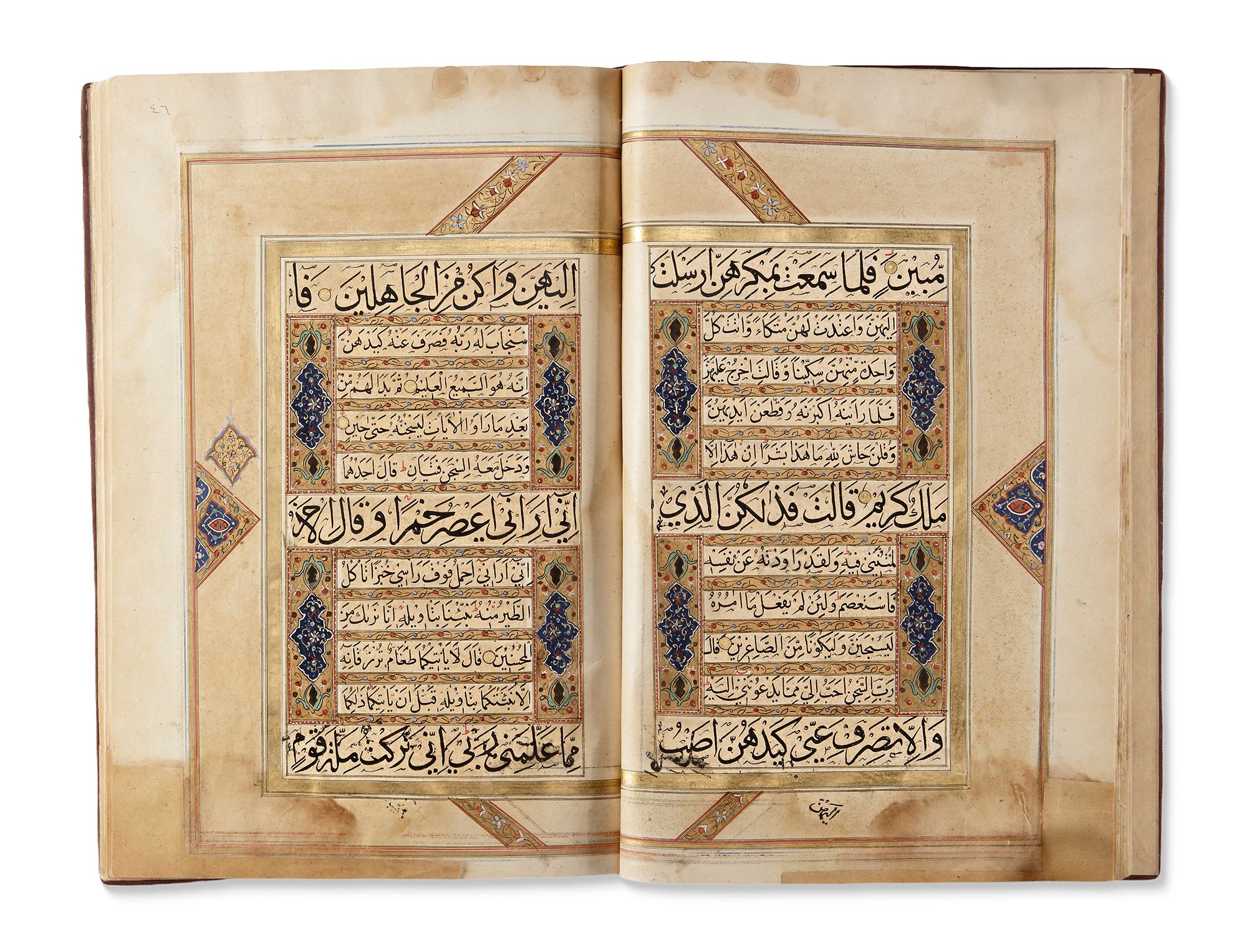
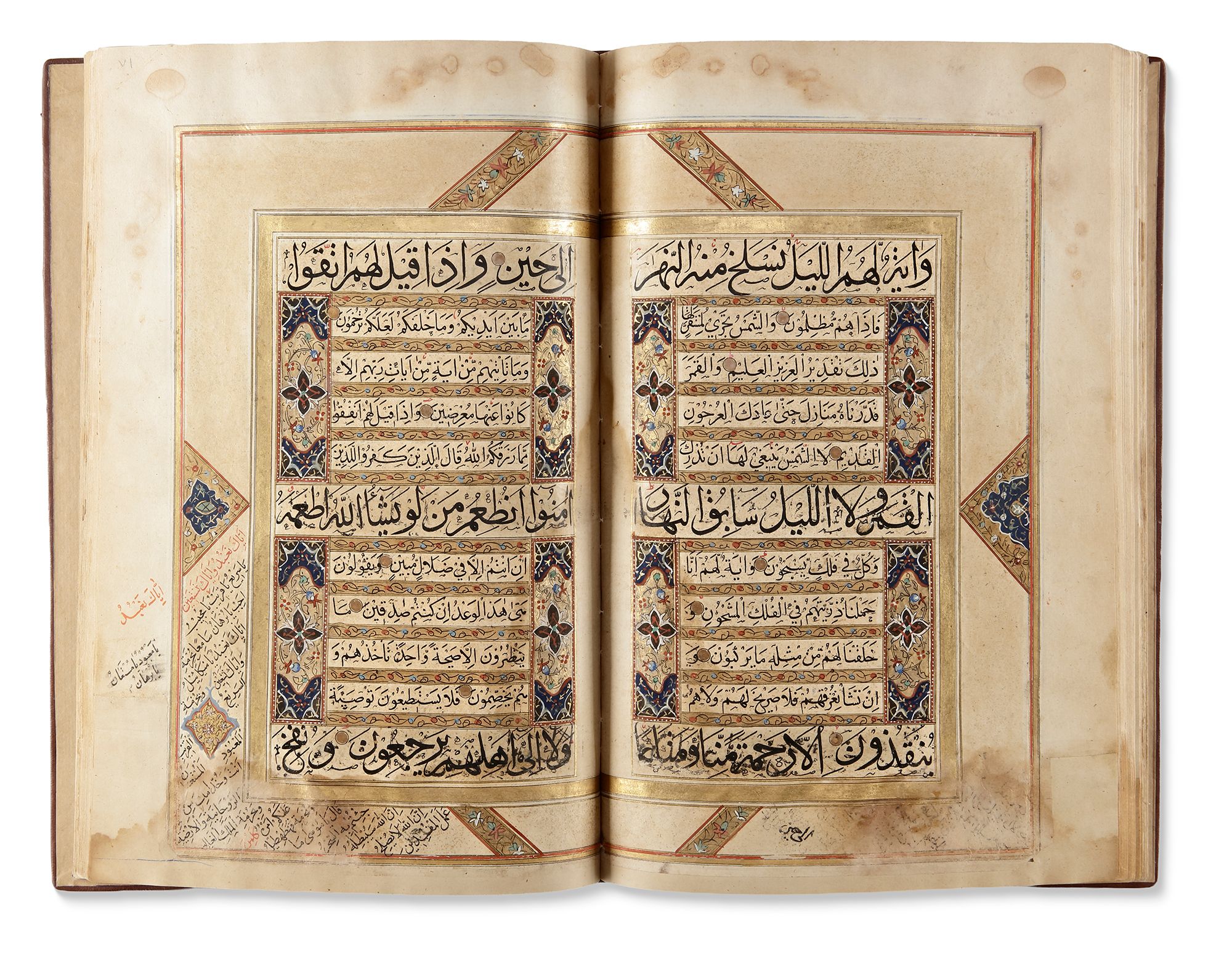
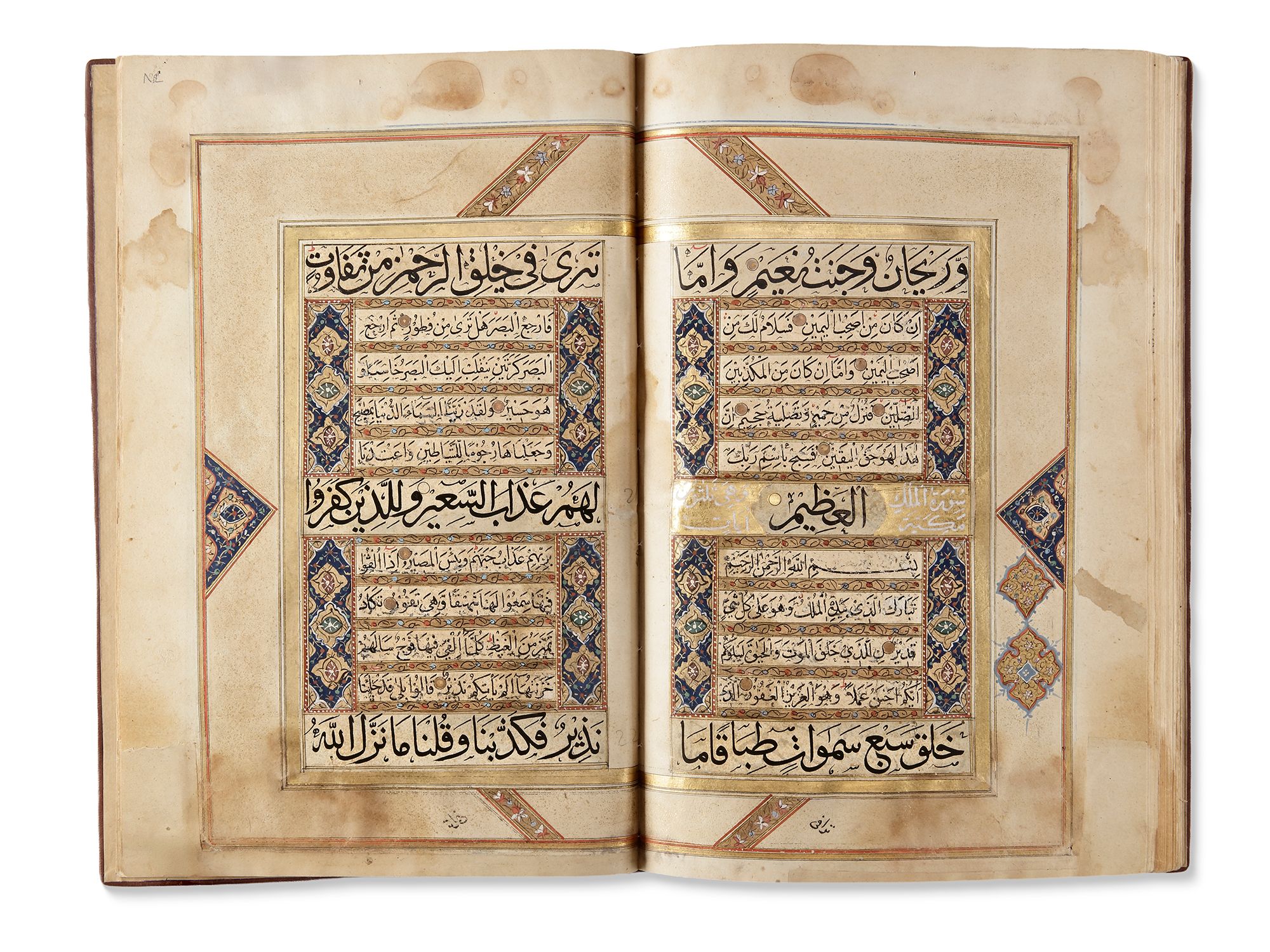
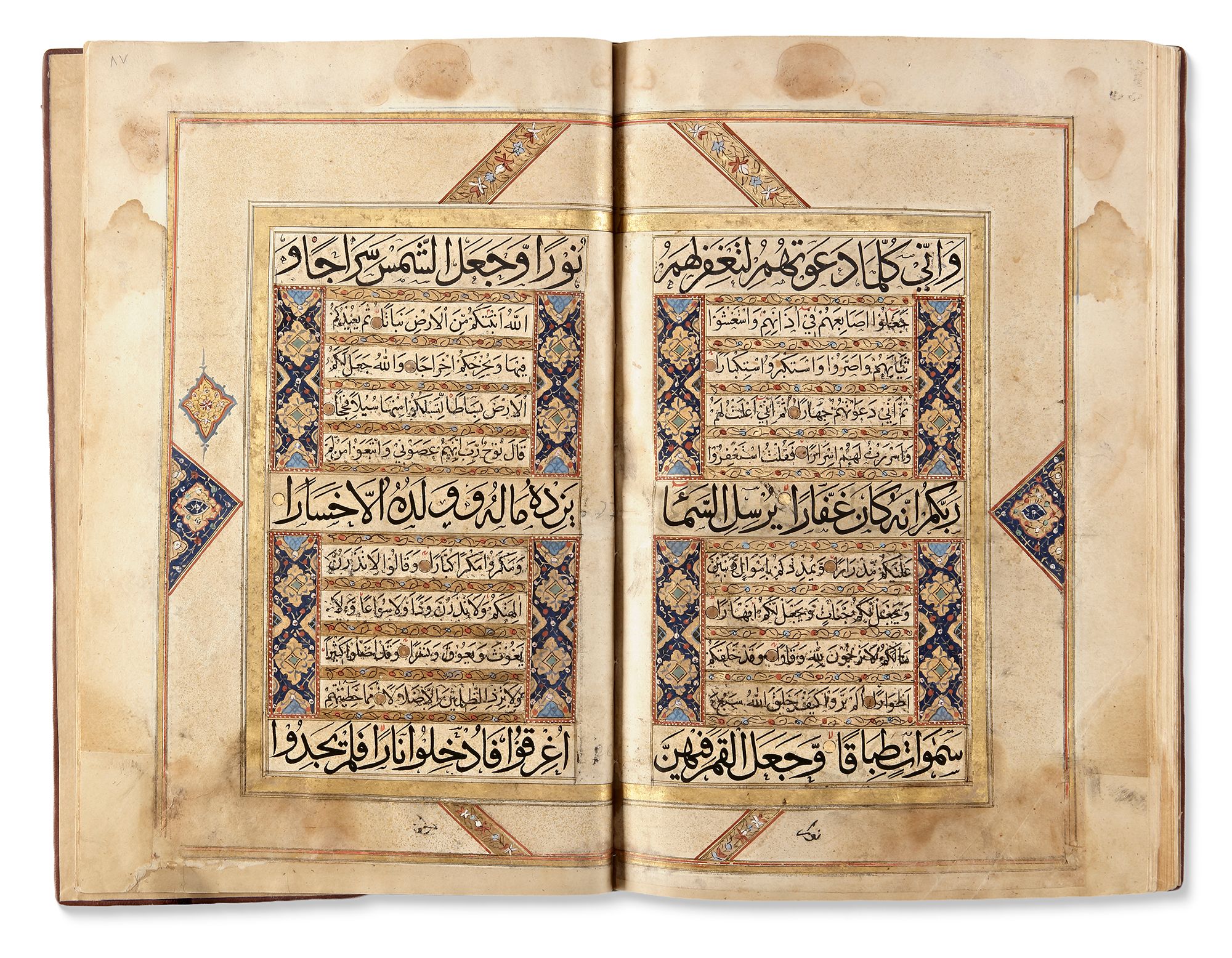
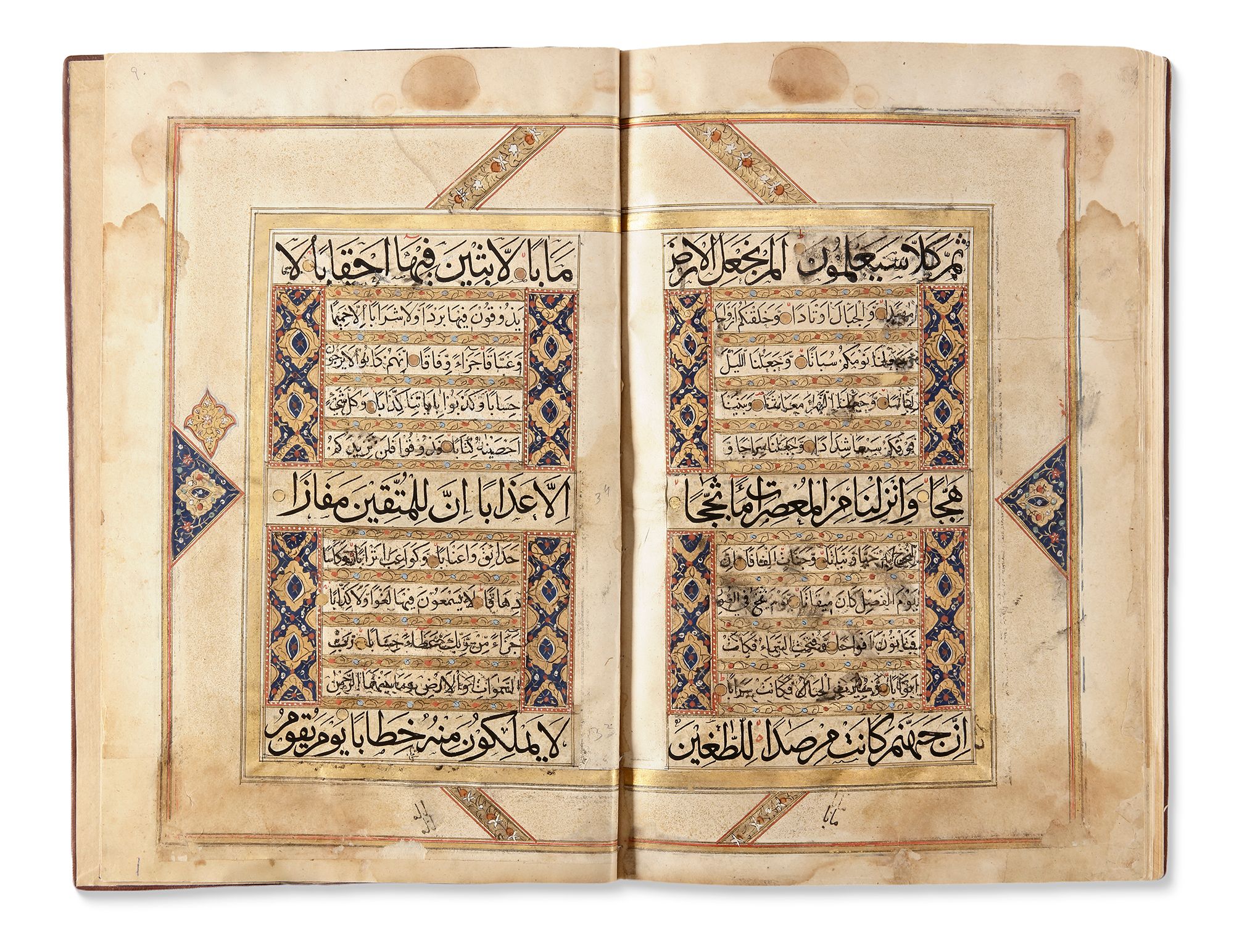
Lot 122 AN ILLUMINATED DEVOTIONAL MANUSCRIPT, TURKEY OR SYRIA, 18TH CENTURY
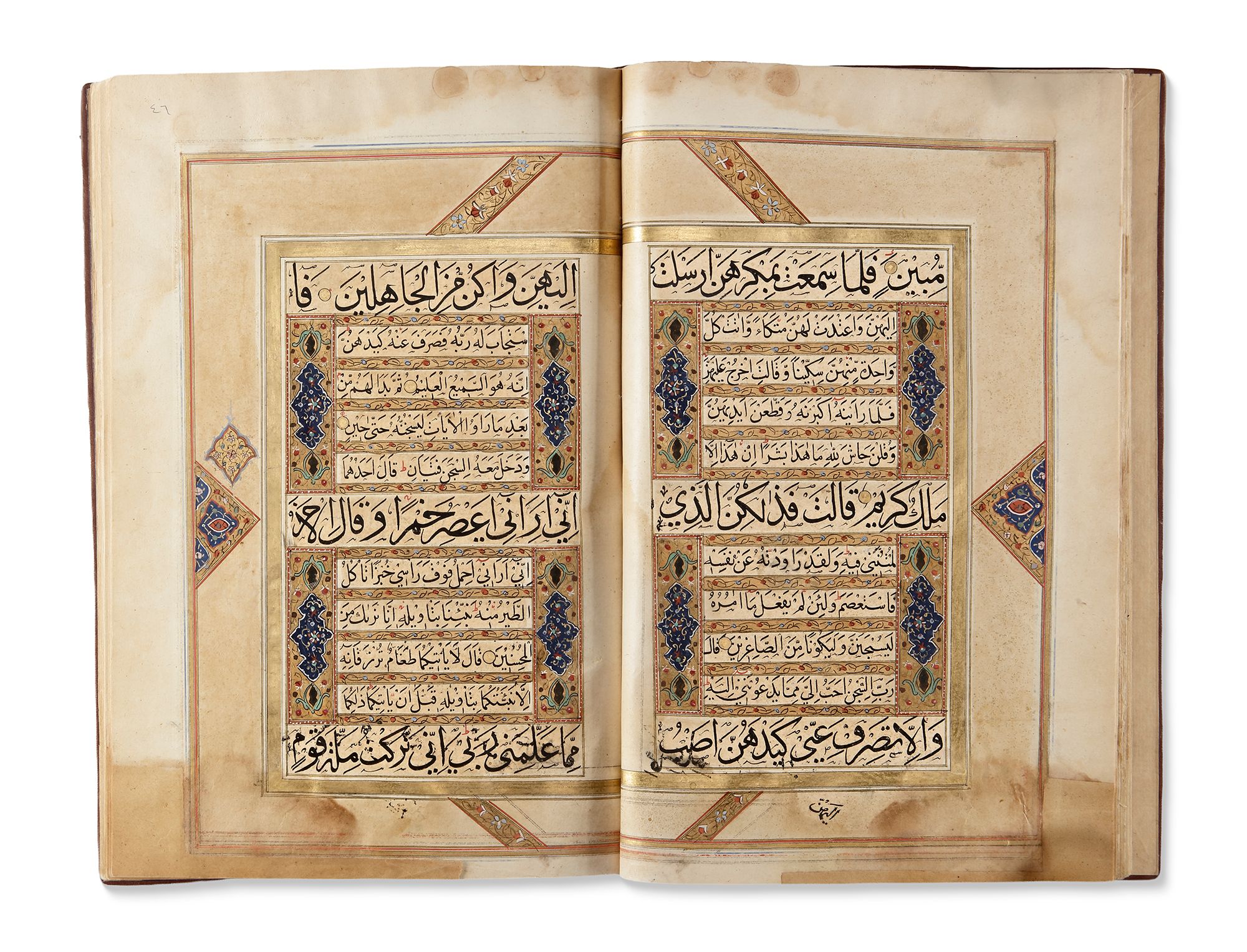
Arabic manuscript on paper, comprising 54 leaves, each page arranged in two panels of 13 lines, executed in an elegant black naskh script, with selected opening, medial, and closing lines emphasized in bold black thuluth. The written surface is enclosed within finely ruled gilt borders outlined in black, each line carefully executed in gold and interspersed with delicate polychrome floral panels. Gold verse roundels, finely outlined in black, articulate and punctuate the text throughout.
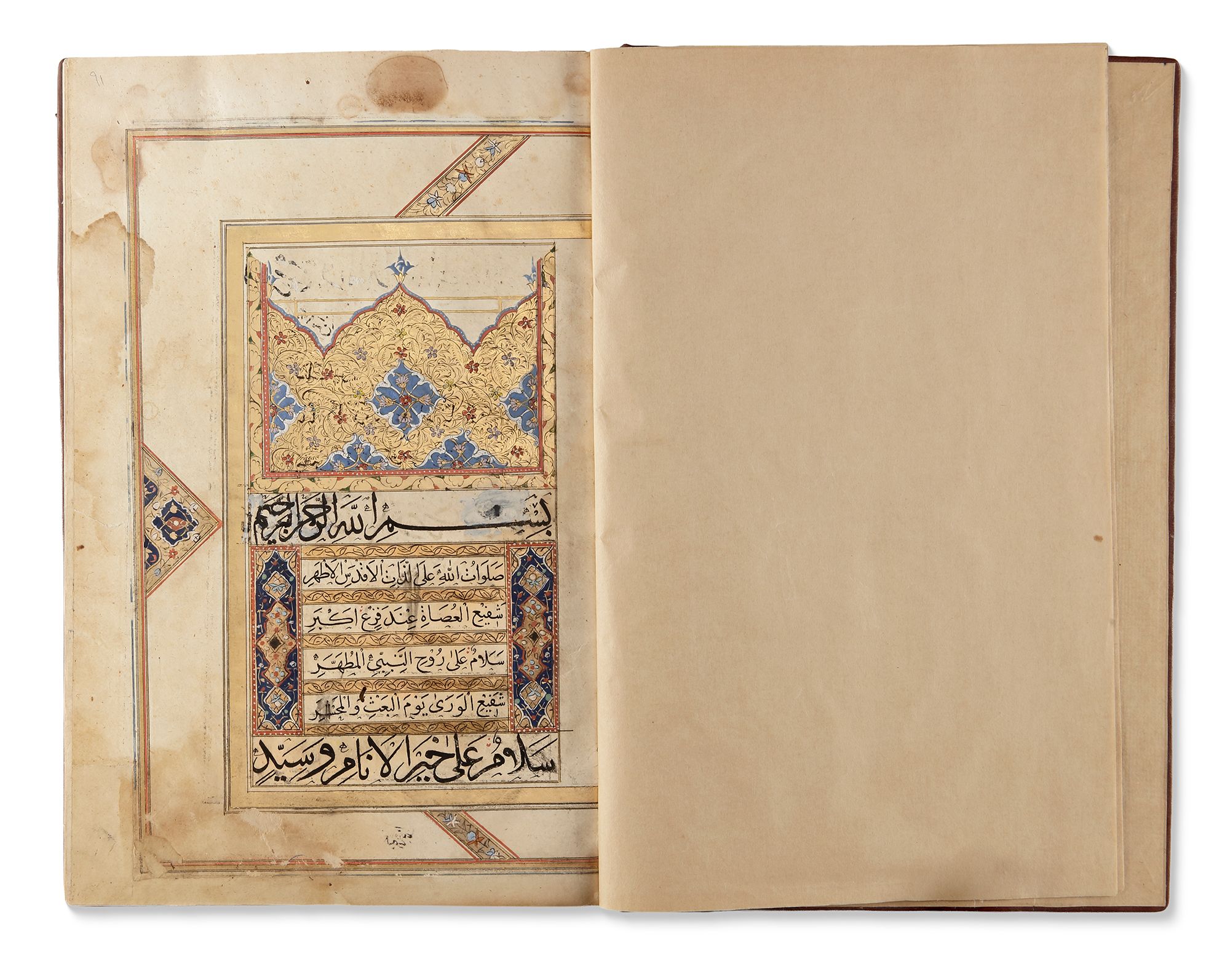
The margins are lavishly illuminated with gilt and cobalt-blue triangular devices, accompanied by polychrome and gilt rosettes marking the divisions of juz' and hizb, together with occasional marginal annotations. Surah headings are rendered in large, refined white thuluth script, providing a striking visual contrast against the darker ground and enhancing the manuscript’s hierarchical clarity.
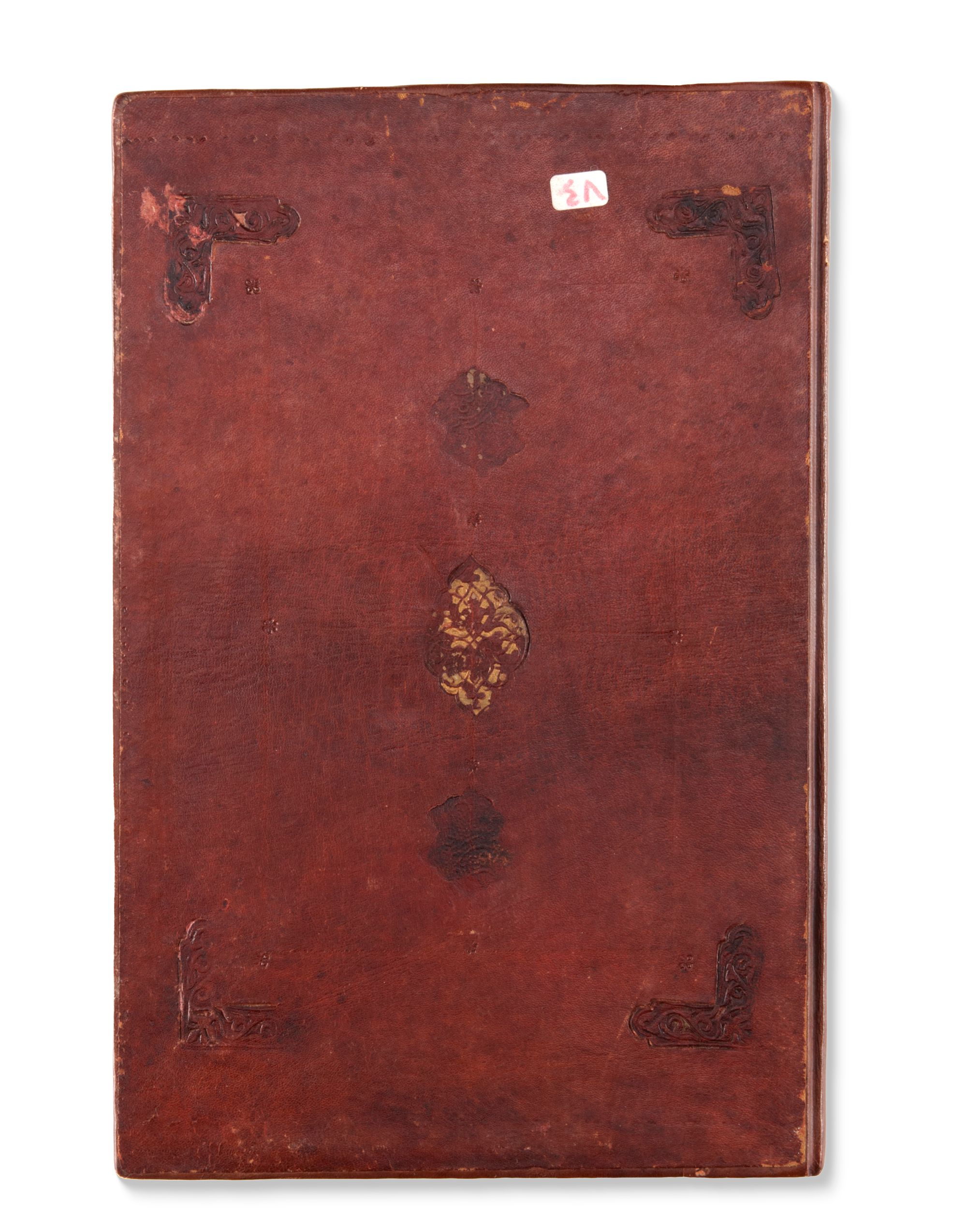
Bound in deep brown morocco leather, likely later but in keeping with the manuscript’s refined character.
20.5 by 31 cm.
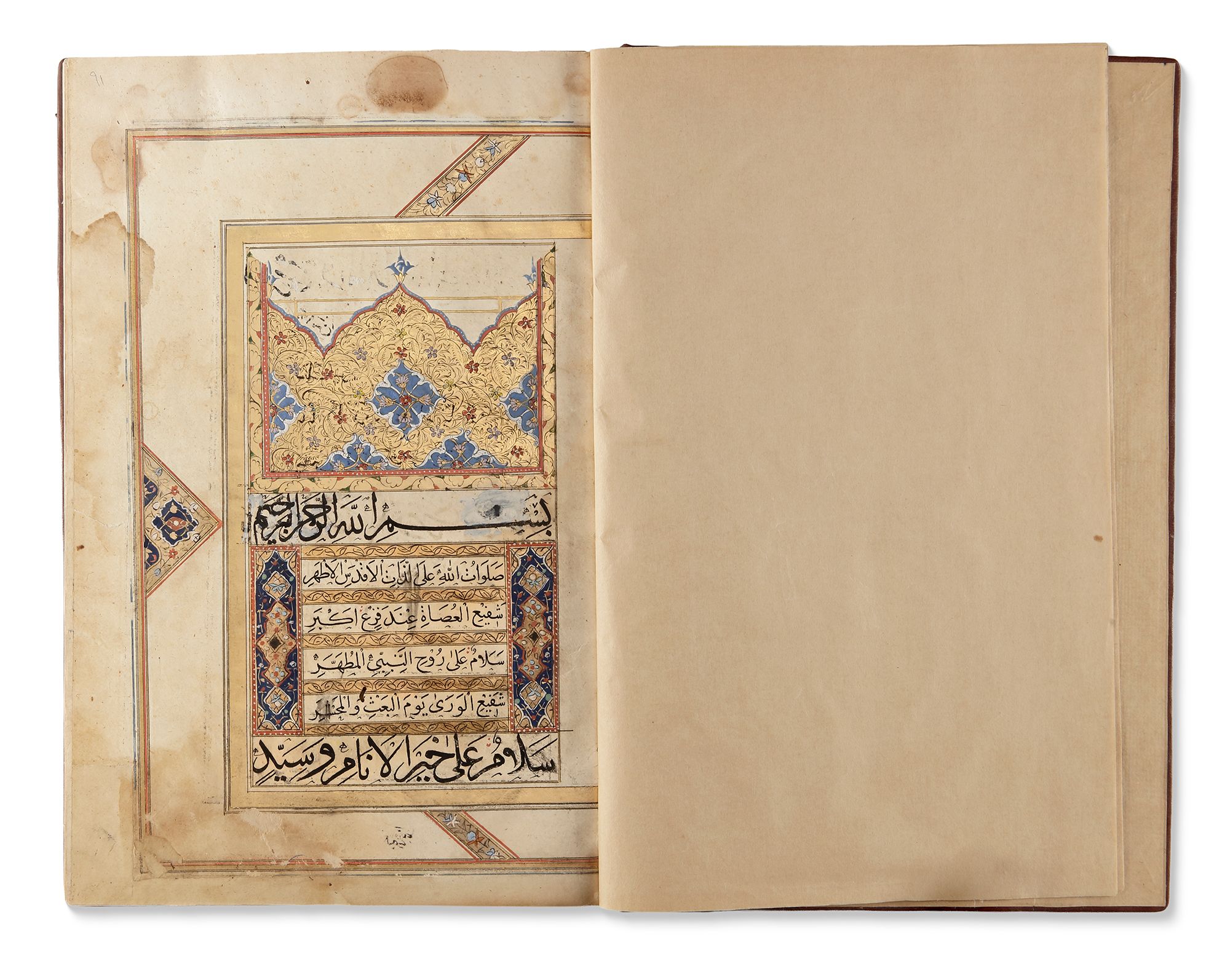
The manuscript opens with a devotional prayer upon the Prophet, followed by poetic compositions in his praise, reflecting the pious and liturgical function of the volume. It continues with a carefully curated selection of Quran surahs, including surah Yasin, al-Fatḥ, al-Rahman, al-Waqi'a, al-Mulk, al-Muzzammil, and al-Naba', among others, surahs traditionally
associated with protection, blessing, and regular recitation.
Catalogue note: Such manuscripts, combining selected Quranic texts with devotional material, were widely produced in the Ottoman world for private use, often commissioned by cultivated patrons for daily recitation and spiritual reflection. The refined calligraphy, balanced layout, and controlled yet rich illumination suggest production in a professional workshop, most likely within an Ottoman artistic milieu, possibly Turkey or Syria, during the 18th century. The harmonious integration of naskh and thuluth scripts, together with the restrained yet luminous palette of gold and cobalt, exemplifies the mature aesthetic of later Ottoman manuscript production, where clarity of reading and decorative elegance are held in careful balance.