Lot 247 AL-TUHFAH AL-SHAHIYYA FI AL-HAY'AH (THE ROYAL GIFT), 17TH CENTURY
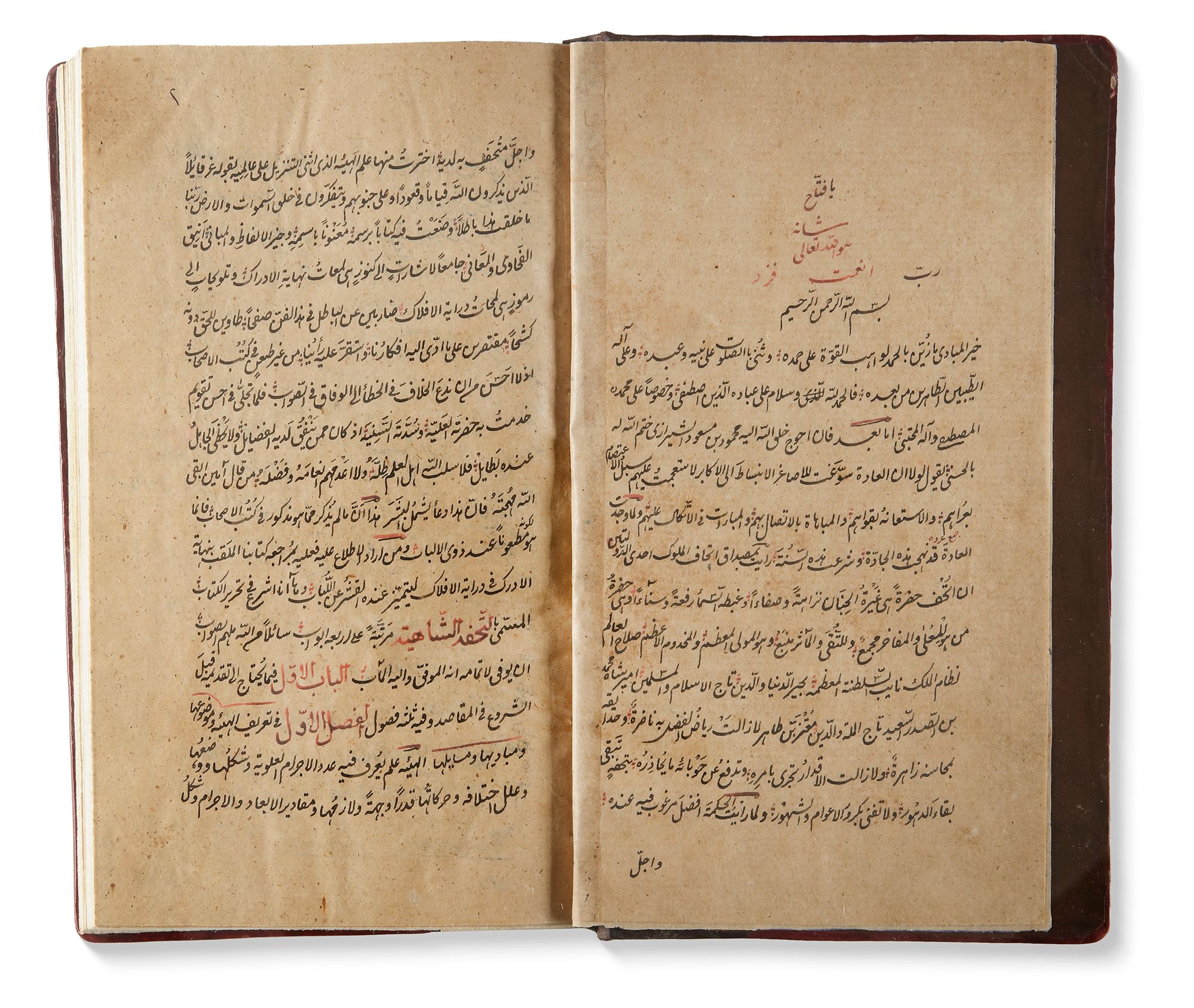
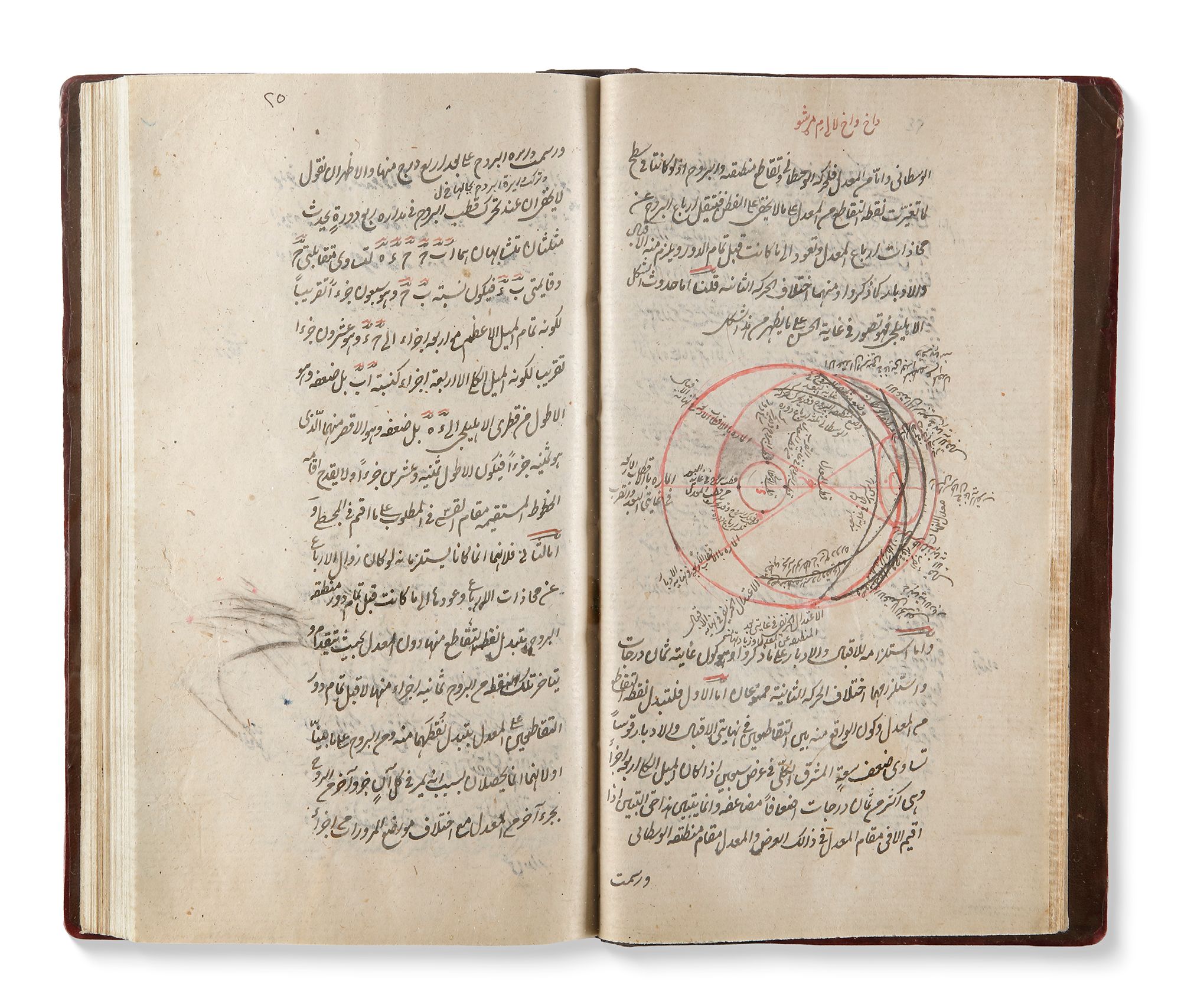
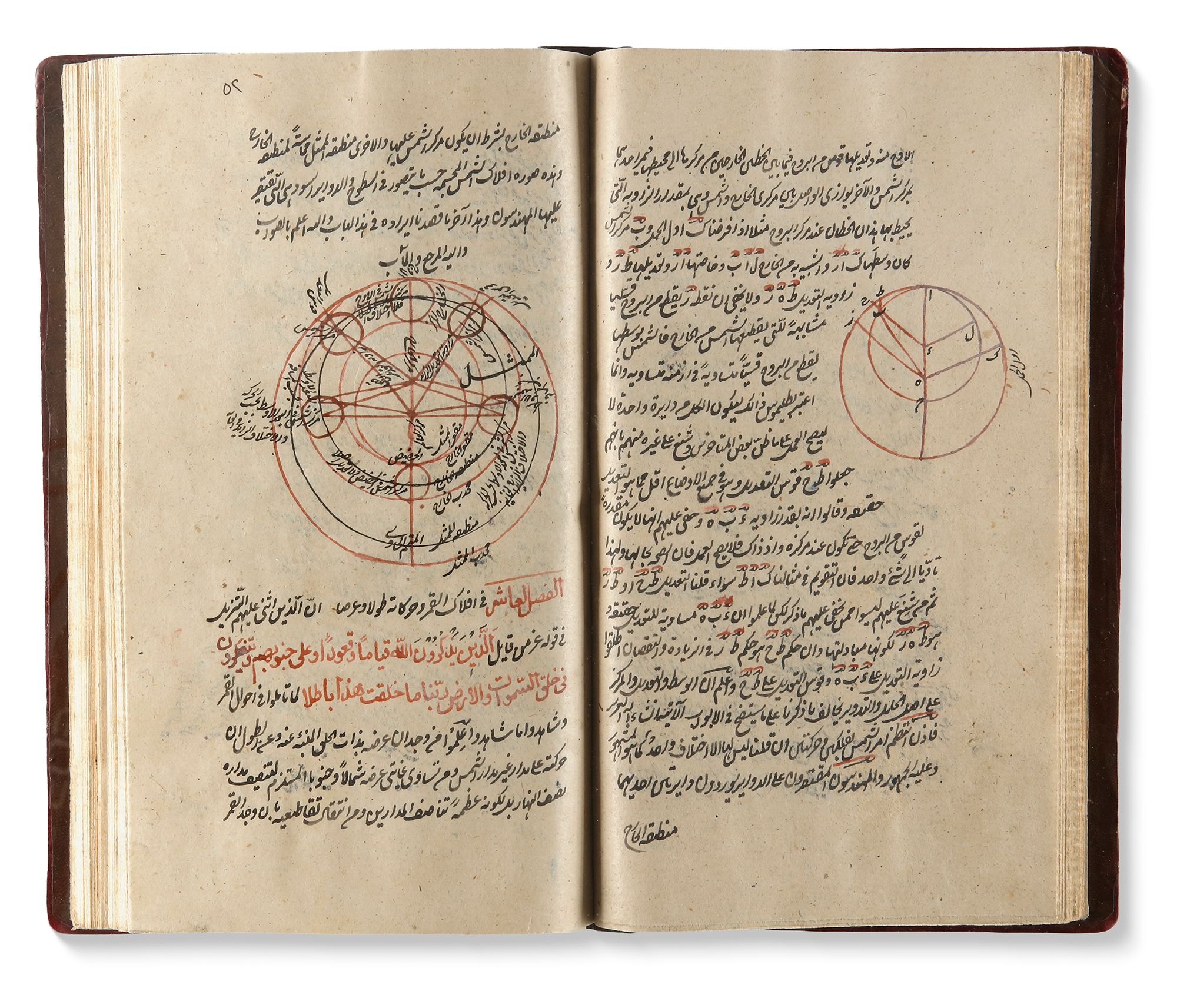
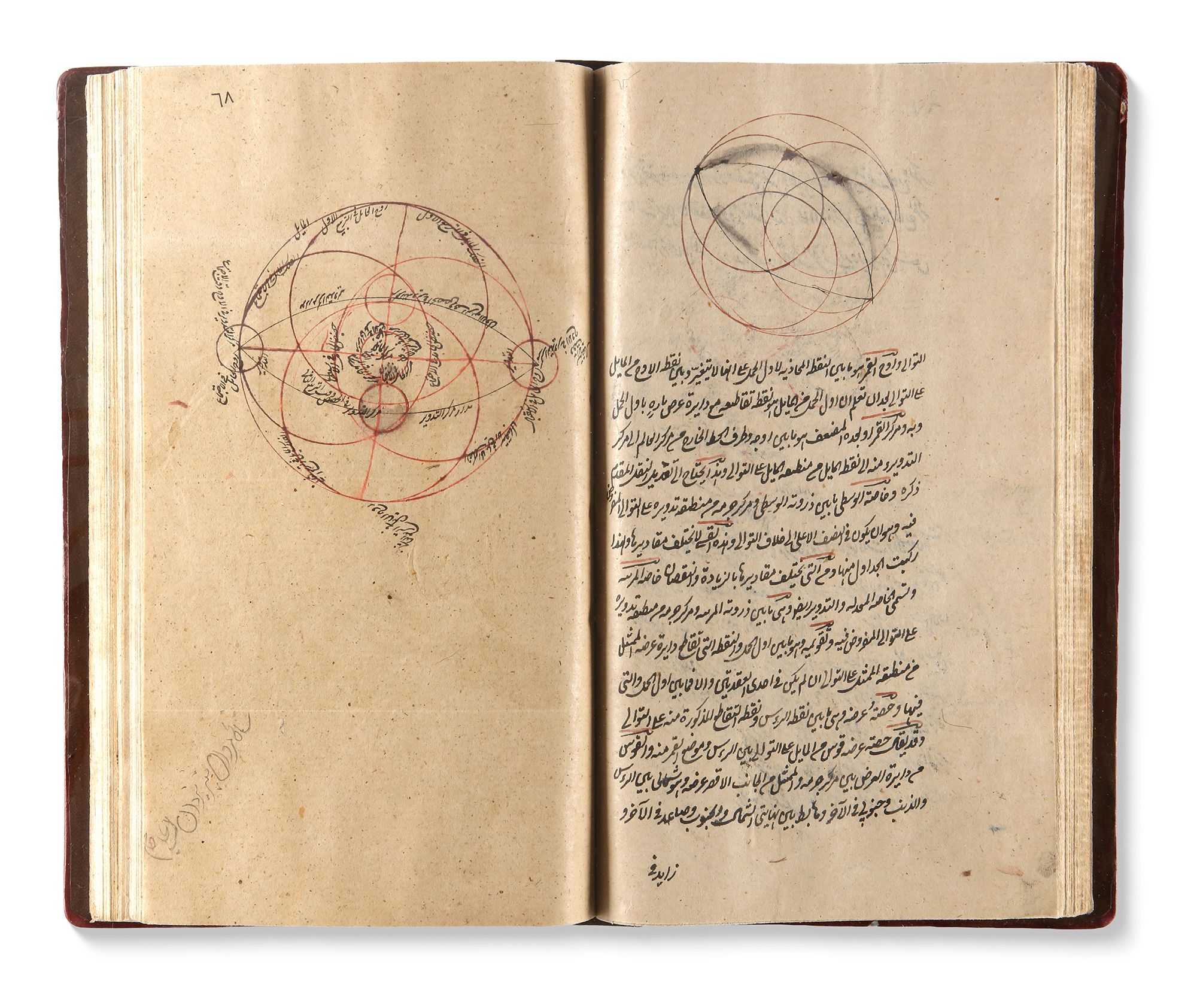
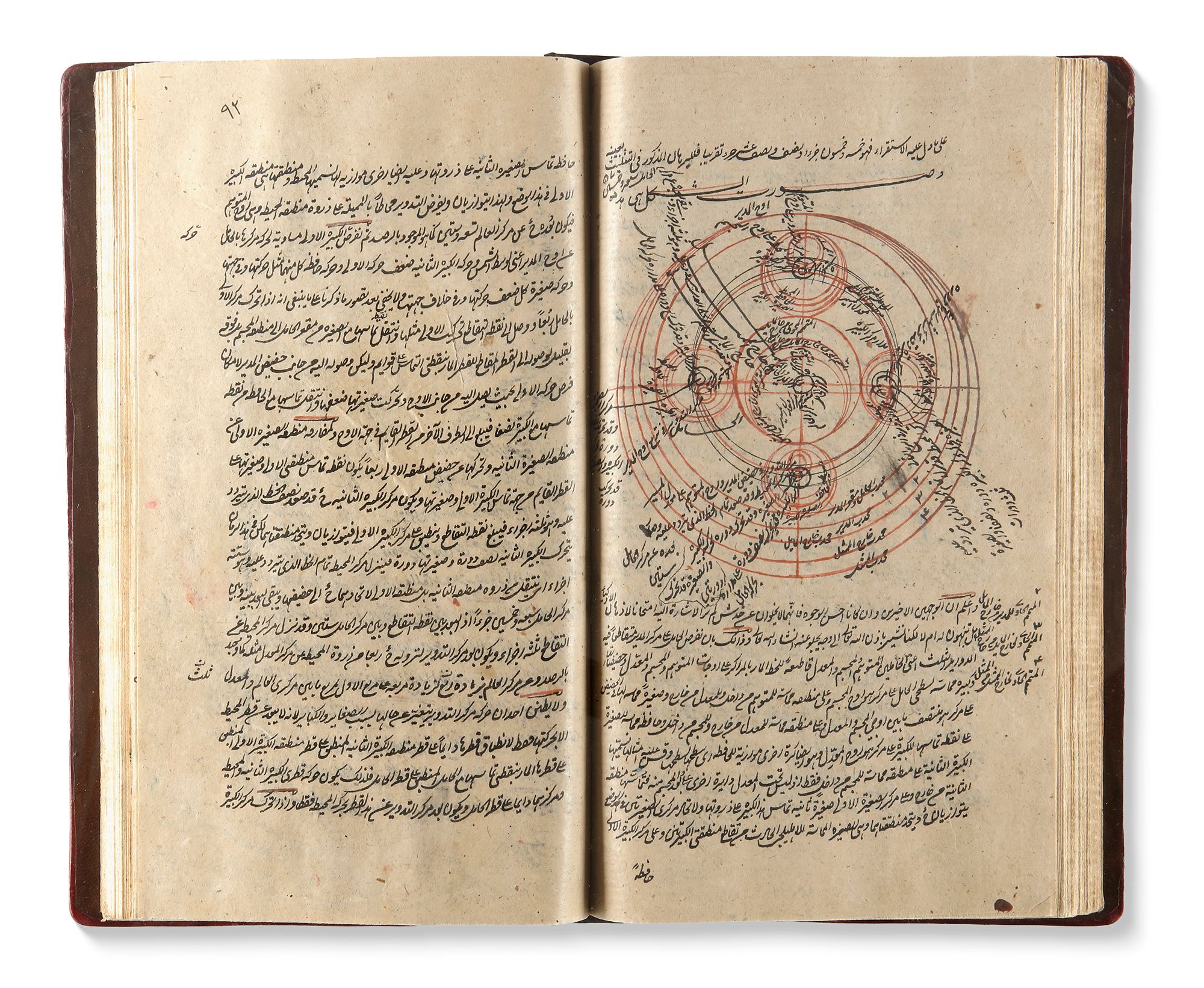
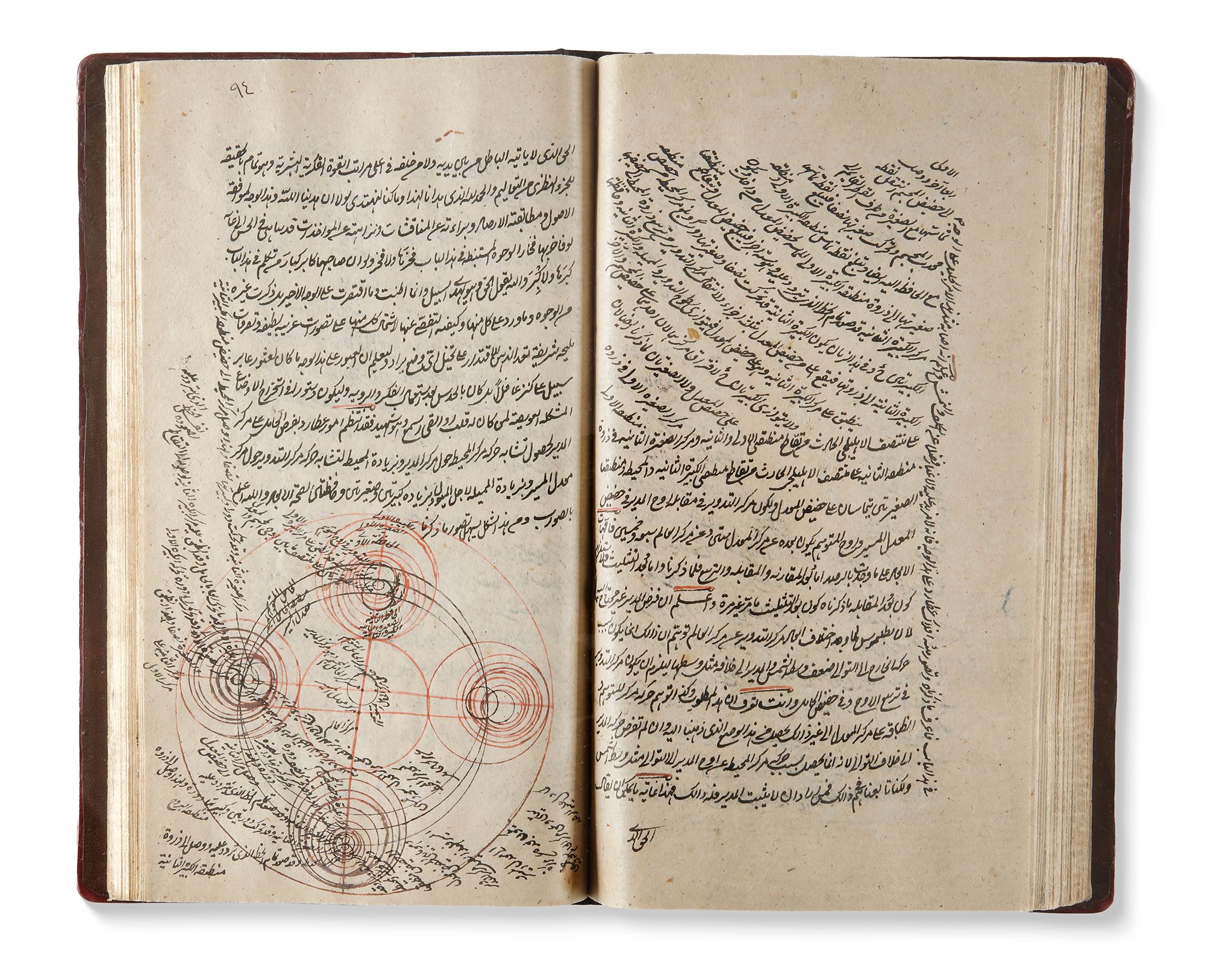
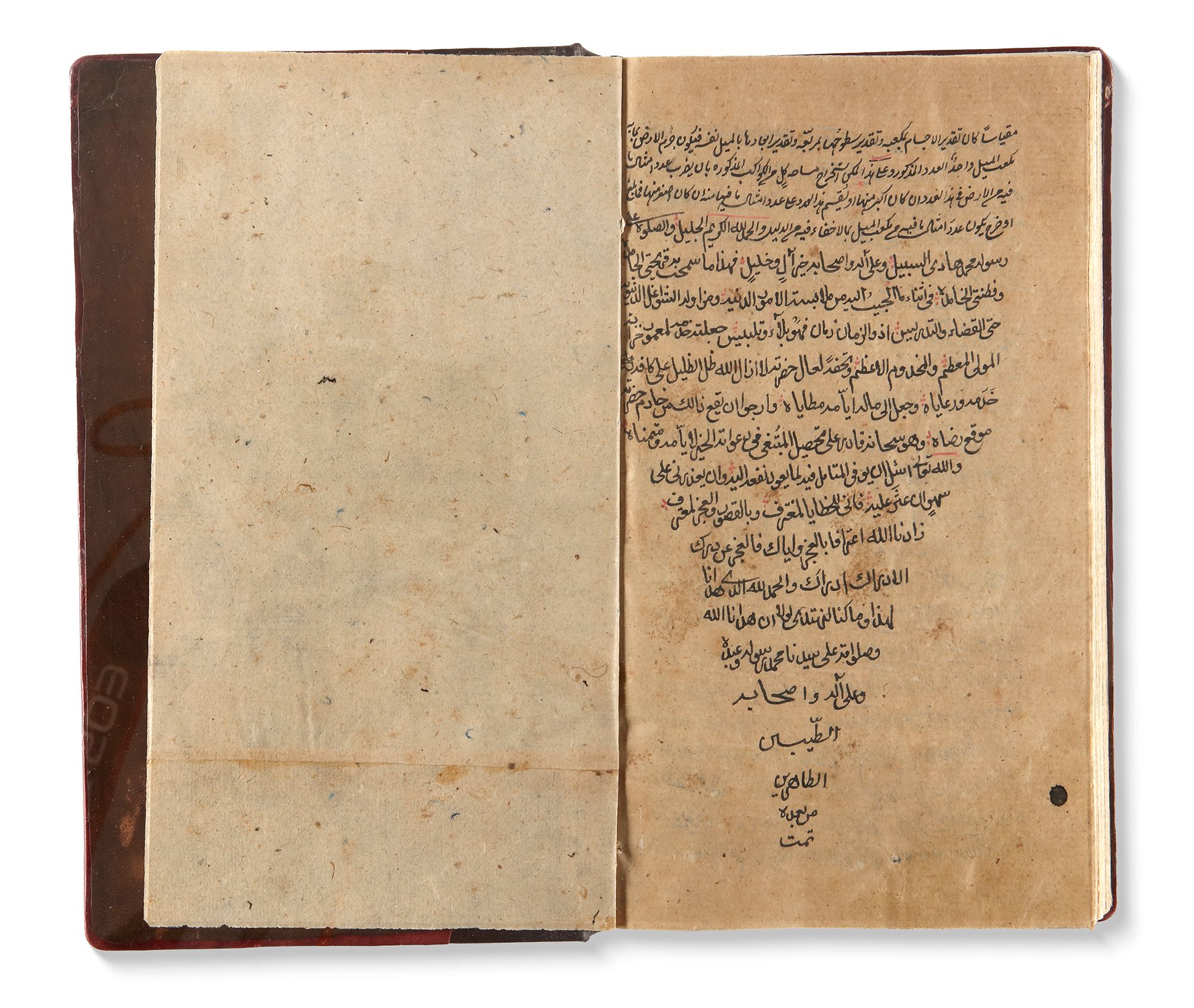
Arabic manuscript on paper, 154 leaves, each page with 23 lineswritten in black script; important words and titles in red ink; various drawings and tables.
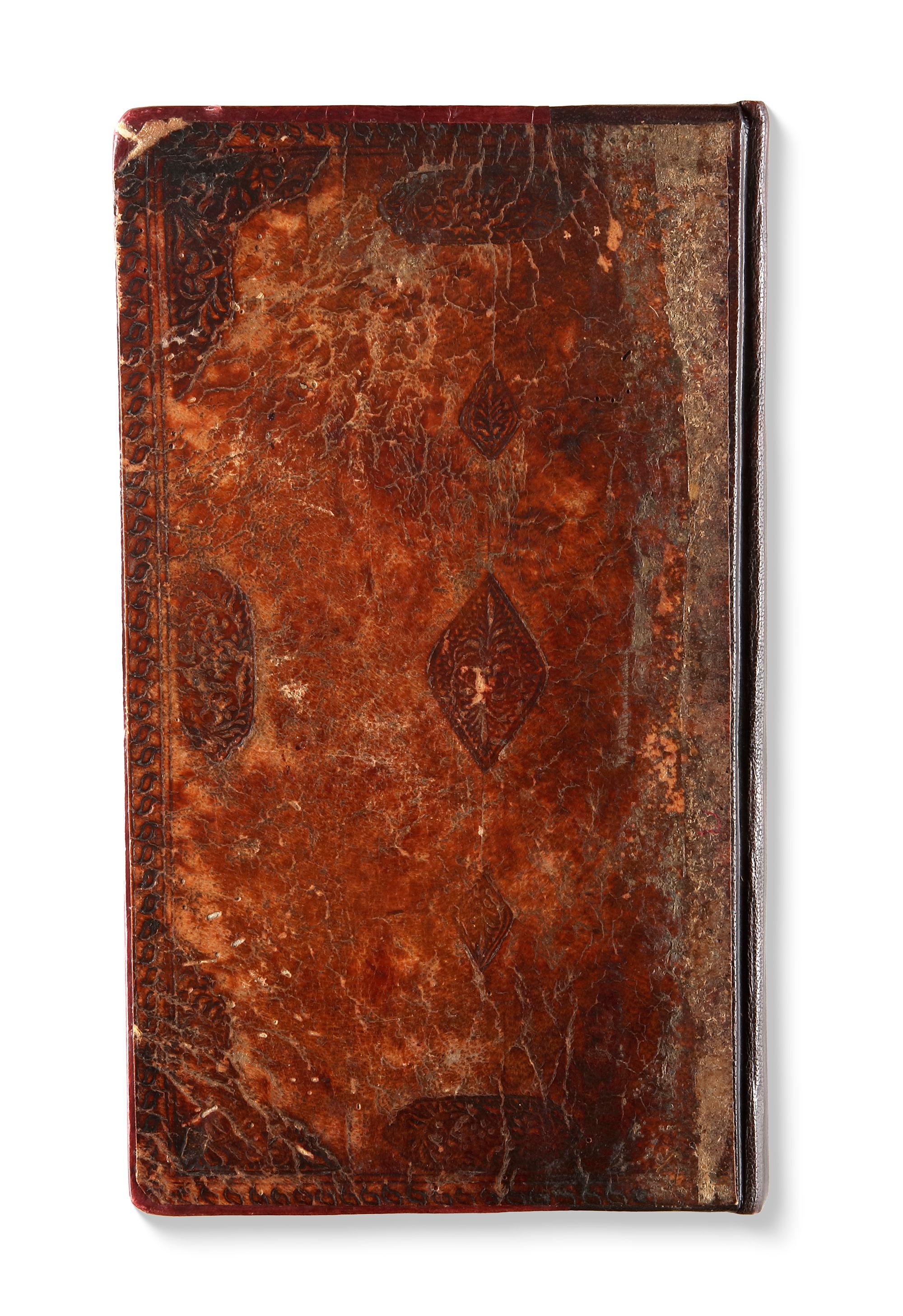
In a deep leather binding.
15 by 25 cm.
Al-Tuhfa al-Shahiyya (The Royal Gift), completed around 1285 by Qutb al-Din al-Shirazi, stands as one of the most important achievements of the Maragha School of astronomy—a tradition dedicated to refining and correcting ancient Greek cosmological models. This work represents both a culmination of earlier efforts and a major step toward a more physically coherent understanding of the universe.
At its core, the treatise seeks to improve planetary modeling. Building upon his earlier work, Nihayat al-idrak, al-Shirazi developed more advanced mathematical frameworks that eliminated problematic elements in Claudius Ptolemy’s system, particularly the “equant,” which, although mathematically effective, conflicted with the principle of uniform circular motion. Al-Shirazi aimed to construct models that were not only mathematically accurate but also physically plausible.
One of the most notable contributions of the book is its treatment of Mercury’s motion—historically one of the most difficult problems in astronomy. Al-Shirazi devised an intricate system of nested spheres, employing the Tusi-couple technique, to produce a more precise representation of Mercury’s orbit than had previously been achieved.
The significance of Al-Tuhfa al-Shahiyya extends far beyond its time. Modern historians of science, including Noel Swerdlow and George Saliba, have demonstrated that its planetary models are mathematically equivalent to those later used by Nicolaus Copernicus. This striking similarity suggests that al-Shirazi’s ideas may have reached Europe—possibly through Byzantine intermediaries—and contributed to the foundations of the heliocentric revolution.
Structurally, the book is highly systematic and reflects a rigorous scholarly method. It is divided into four main parts (abwab), each further subdivided into chapters (fusul), with additional layers of sections, investigations, and rules that guide the reader through increasingly detailed analysis.
The first part serves as an introduction, presenting the essential mathematical and physical principles required for astronomical study. Through three chapters, it establishes the conceptual groundwork for the entire work.
The second part, the most extensive section, examines the configuration of the celestial bodies. Across sixteen chapters, it explores the positions, motions, and observable phenomena of the Sun, Moon, and the five known planets, offering refined models that embody the author’s scientific innovations.
The third part turns attention to the Earth, discussing its shape, its division into inhabited and uninhabited regions, and the relationship between celestial phenomena and terrestrial conditions. Comprising thirteen chapters, it effectively bridges astronomy with geography.
The fourth and final part addresses the sizes and distances of celestial bodies. In three chapters, al-Shirazi provides quantitative estimates and calculations that complete his vision of a structured and measurable universe.
Taken as a whole, Al-Tuhfa al-Shahiyya offers a comprehensive and coherent account of the cosmos—progressing from foundational principles, through detailed celestial modeling, to the study of the Earth and the measurement of the universe—making it one of the most sophisticated astronomical works of the medieval period.
التحفة الشاهية في الهيئة لقطب الدين الشيرازي، محمود بن مسعود يُعَدّ كتاب التحفة الشاهية من أهم مؤلفات قطب الدين الشيرازي، وقد أُنجز نحو سنة 1285م، ويمثّل ذروة إنجازات مدرسة مراغة الفلكية التي سعت إلى إصلاح النماذج اليونانية القديمة للكون وتنقيحها. ويجمع هذا العمل بين الدقة الرياضية والسعي إلى بناء تصور كوني منسجم مع المبادئ الفيزيائية. يهدف الكتاب أساسًا إلى تطوير نماذج حركة الكواكب. فبعد أن وضع الشيرازي الأسس في عمله السابق نهاية الإدراك، قدّم هنا حلولًا رياضية أكثر تقدّمًا، ساعيًا إلى تجاوز إشكالات نموذج بطليموس، ولا سيما مفهوم «المعدل» (equant) الذي كان ناجحًا حسابيًا لكنه غير مقبول من الناحية الفيزيائية. لذلك عمل الشيرازي على بناء نماذج تحقق الدقة الرياضية والاتساق الطبيعي في آنٍ واحد. ومن أبرز إنجازات الكتاب معالجته الدقيقة لحركة كوكب عطارد، وهي من أعقد المسائل الفلكية في التراث القديم. فقد استخدم الشيرازي نظامًا معقدًا من الأفلاك المتداخلة، معتمدًا على تقنية «زوج الطوسي»، لتمثيل حركة عطارد بصورة أدق مما كان متاحًا قبله. ولا تقتصر أهمية التحفة الشاهية على عصرها، بل تمتد إلى تاريخ العلم العالمي؛ إذ بيّن مؤرخو العلم مثل نويل سويردلو وجورج صليبا أن النماذج الرياضية الواردة في هذا الكتاب تتطابق مع تلك التي استخدمها لاحقًا نيكولاس كوبرنيكوس. ويشير ذلك إلى احتمال انتقال هذه الأفكار إلى أوروبا، ربما عبر المخطوطات البيزنطية، مما أسهم في تمهيد الطريق للثورة الكوبرنيكية. يمتاز الكتاب ببنية منهجية دقيقة، إذ قُسّم إلى أربعة أبواب رئيسة، يتفرع كل منها إلى فصول، مع تقسيمات إضافية تشمل مسائل وبحوث وقواعد، مما يعكس أسلوبًا علميًا منظمًا في عرض المادة. يتناول الباب الأول المبادئ التمهيدية، حيث يعرض الأسس الرياضية والطبيعية اللازمة لفهم علم الفلك، وذلك في ثلاثة فصول تُمهّد لما يليها من مباحث. أما الباب الثاني، وهو أطول أجزاء الكتاب، فيبحث في هيئة الأجرام السماوية، وحركاتها، والظواهر المرتبطة بها. ويضم ستة عشر فصلًا تتناول نماذج الشمس والقمر والكواكب الخمسة المعروفة، مع عرض تفصيلي للإصلاحات التي أدخلها المؤلف. وينتقل الباب الثالث إلى دراسة الأرض، فيناقش شكلها، وتقسيمها إلى مناطق معمورة وغير معمورة، وتأثير الظواهر السماوية في الأحوال الأرضية. ويضم هذا القسم ثلاثة عشر فصلًا، جامعًا بين الفلك والجغرافيا. ويختتم الكتاب بـ الباب الرابع، الذي يتناول مقادير الأجرام السماوية ومسافاتها، حيث يقدّم تقديرات وحسابات كمية دقيقة في ثلاثة فصول، مكمّلًا بذلك صورة الكون من حيث القياس والحجم. وبهذا، يقدّم كتاب التحفة الشاهية عرضًا متكاملًا للكون، يبدأ بالمبادئ الأساسية، ويمرّ بتحليل دقيق لحركات الأجرام السماوية، ثم ينتقل إلى دراسة الأرض، وينتهي بتحديد أبعاد العالم ومقاديره، مما يجعله أحد أكثر الأعمال الفلكية نضجًا في العصور الوسطى.