Lot 248 SULLAM AL-AFLAK, ALIMUDDIN HUSEYIN AL-ANSARI WRITTEN IN 1284 AH/1867 AD
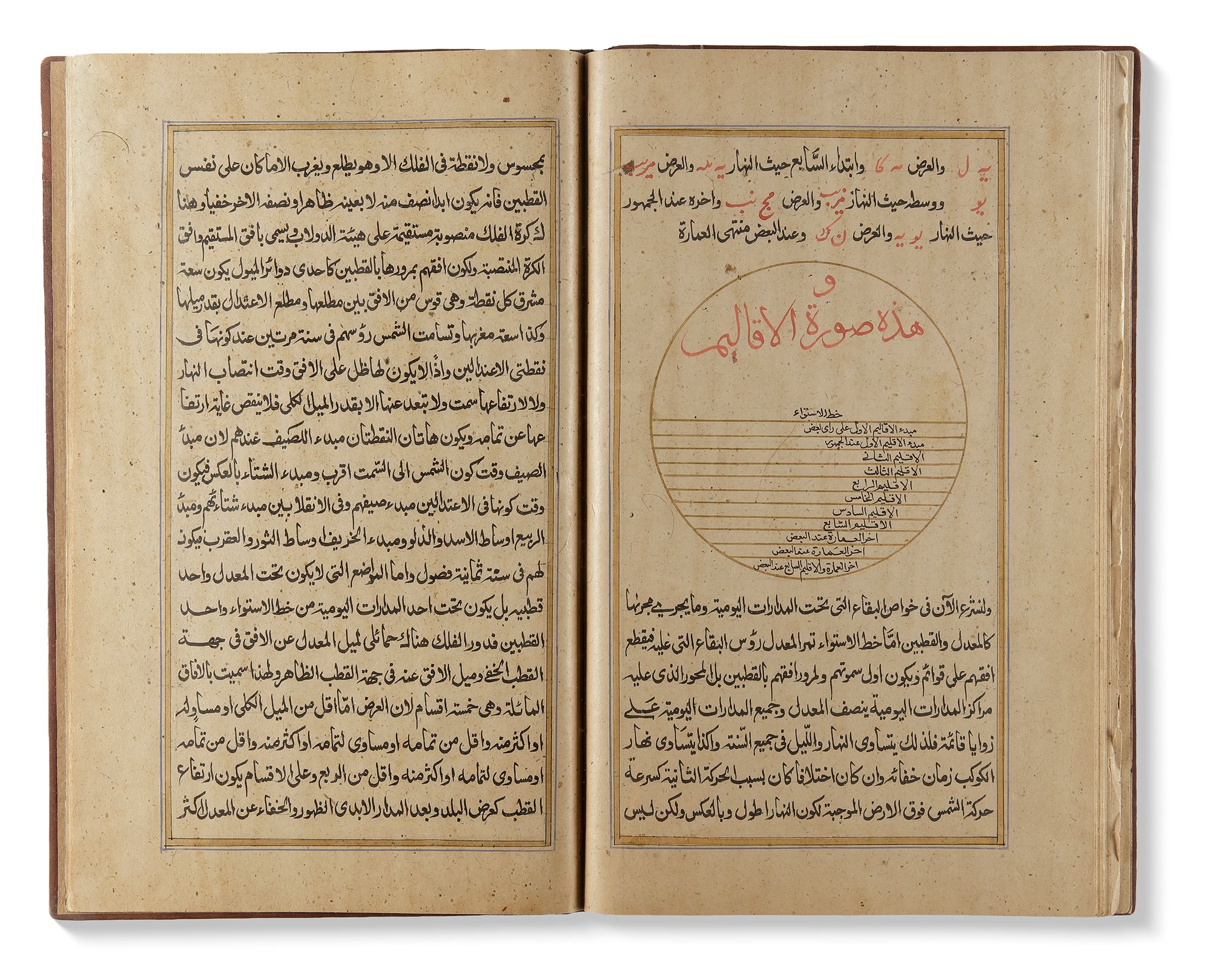
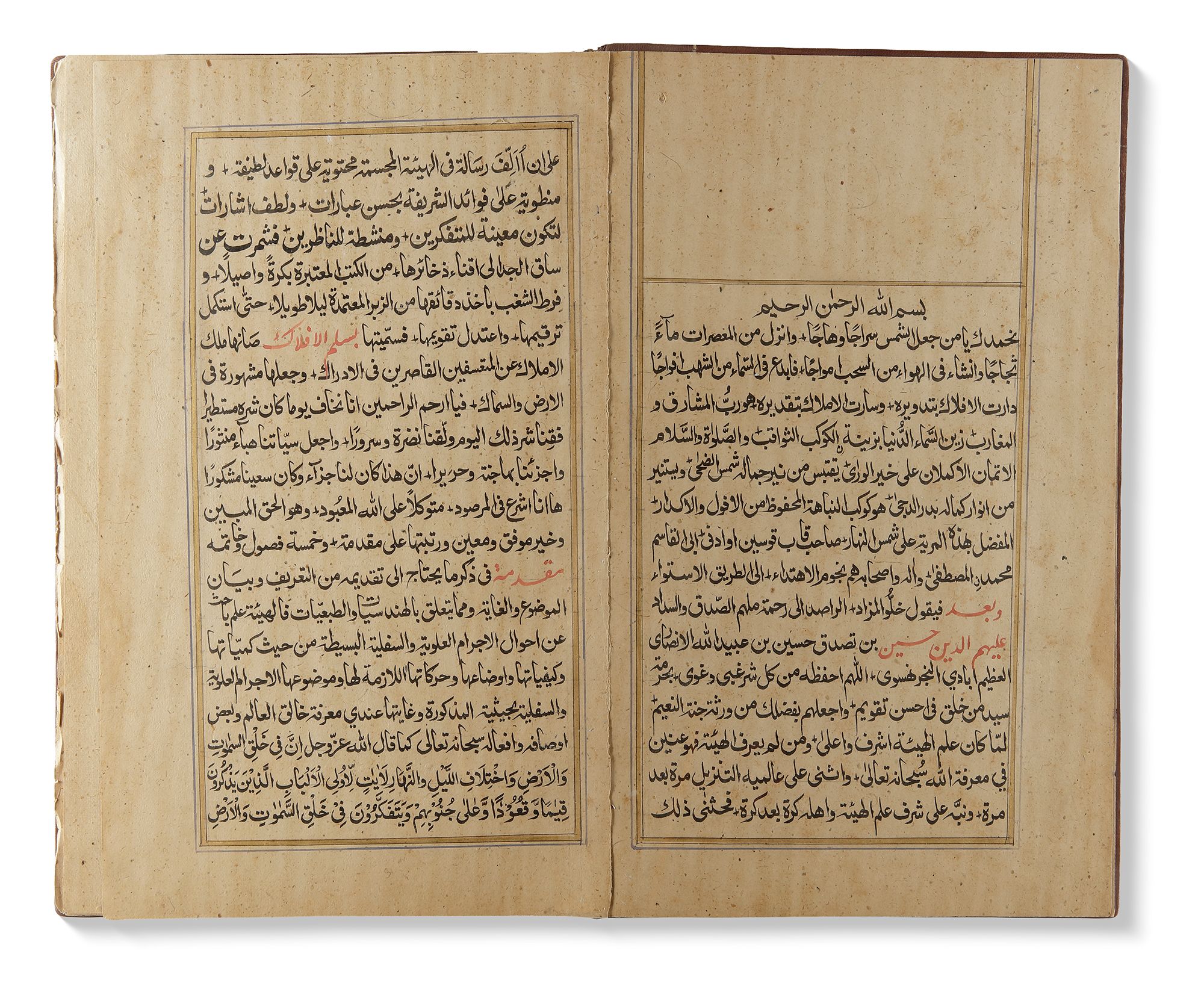
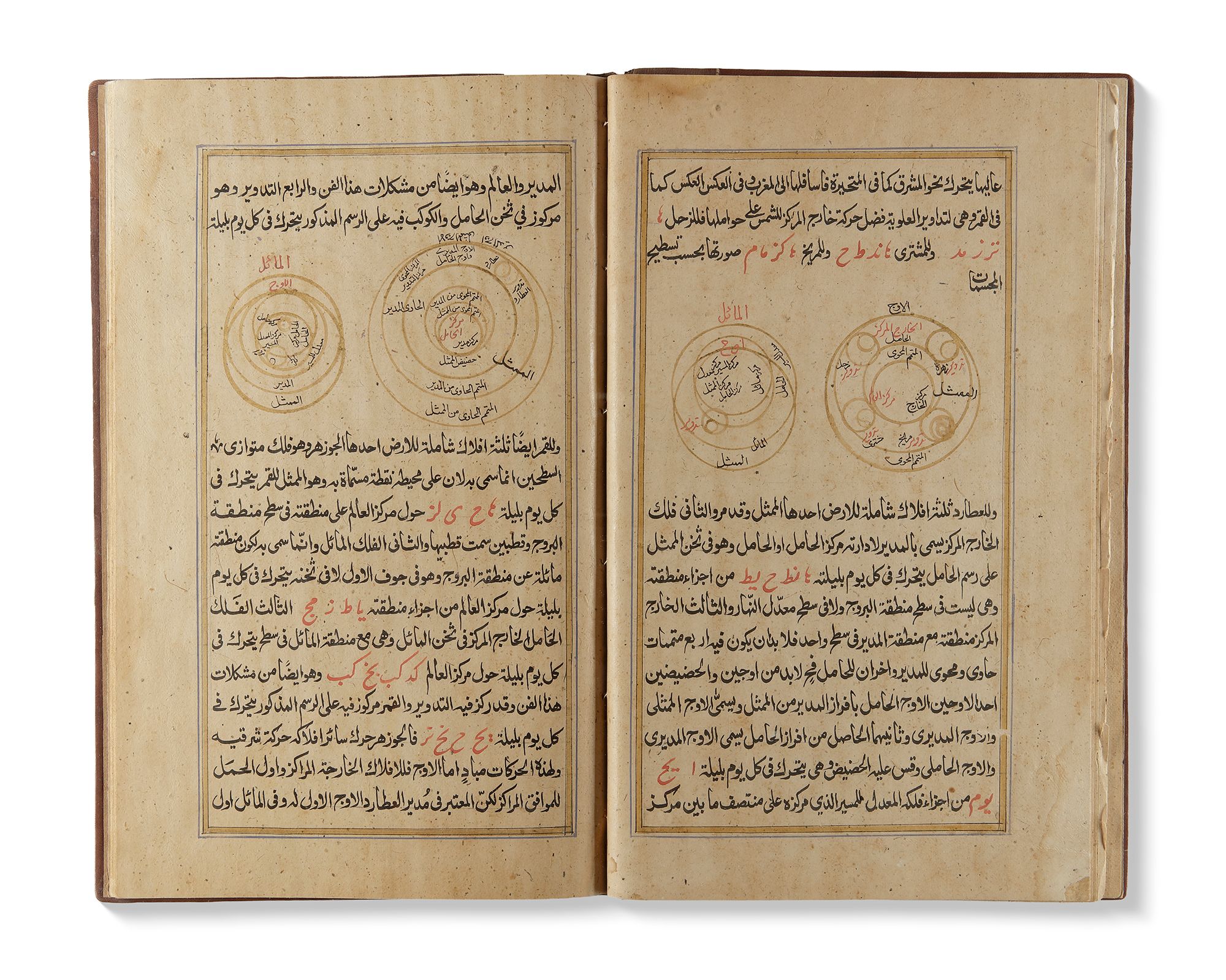
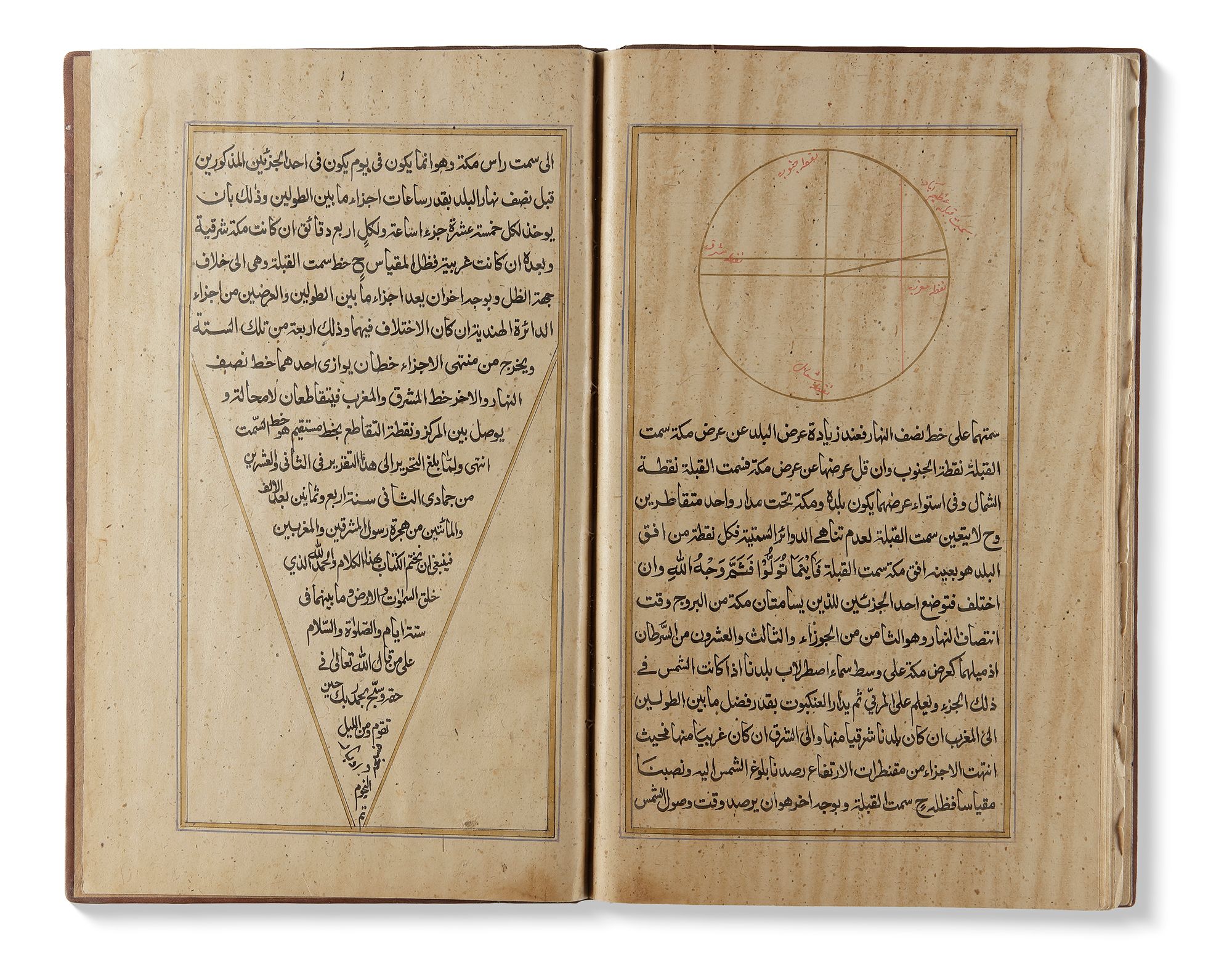
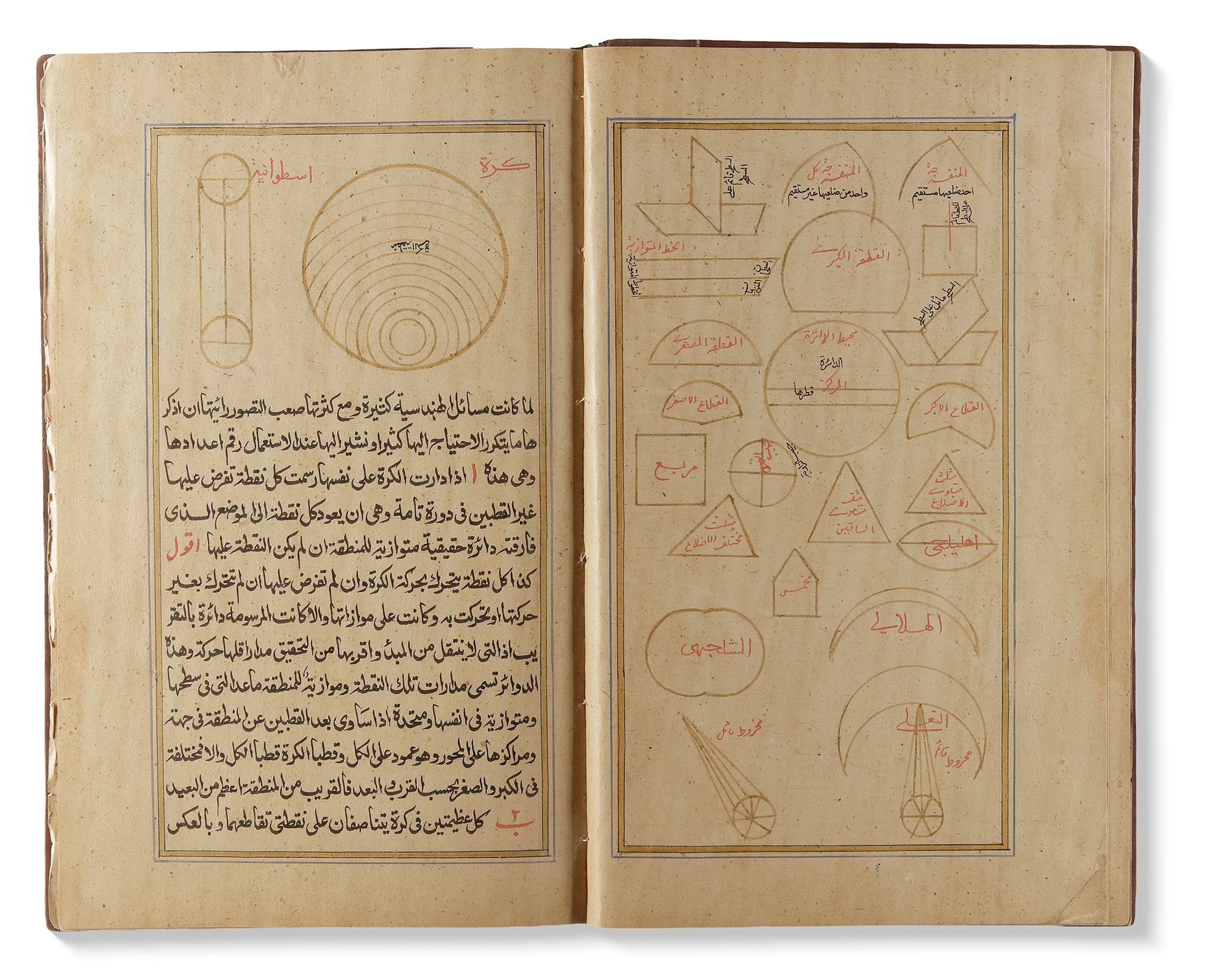
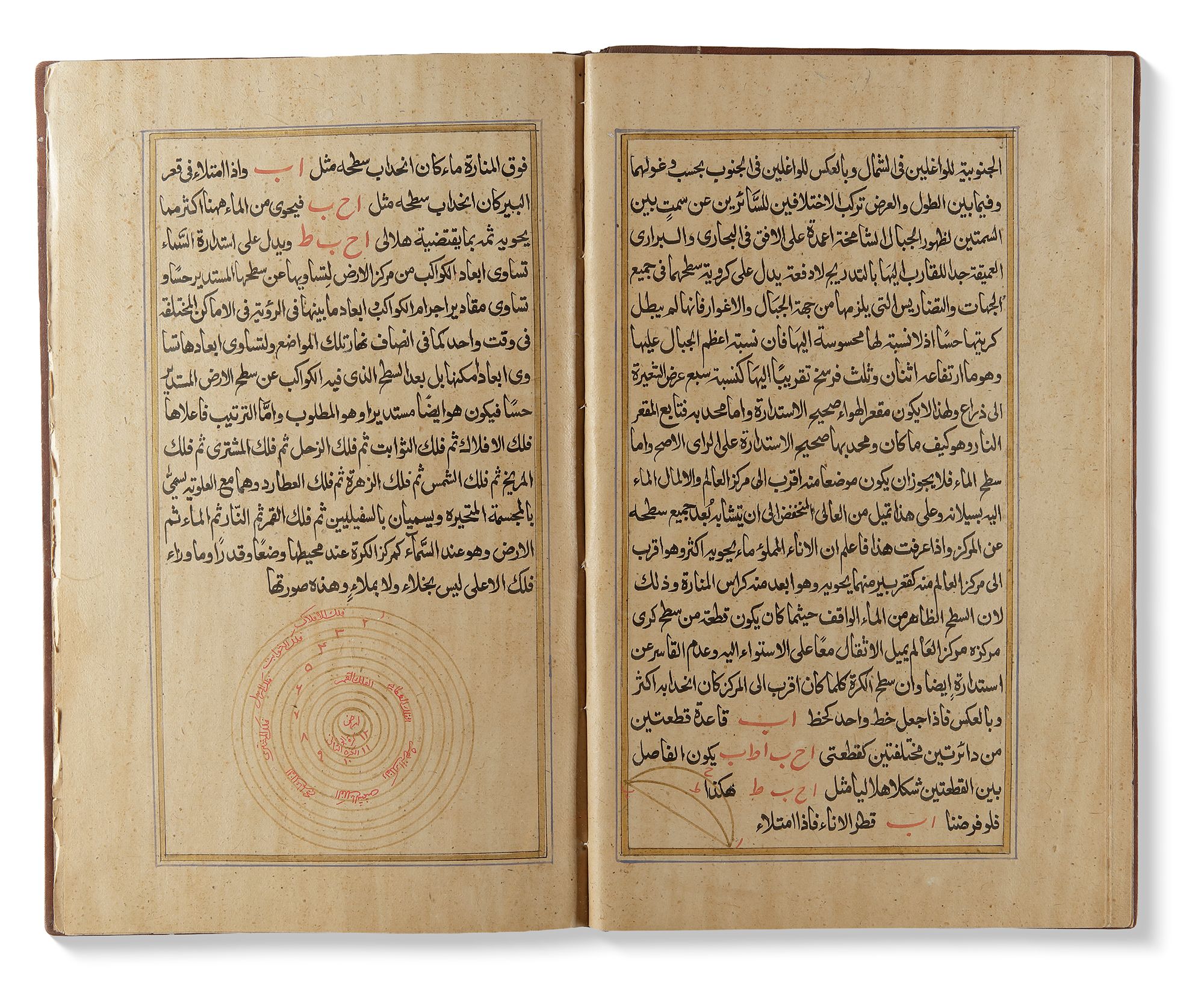
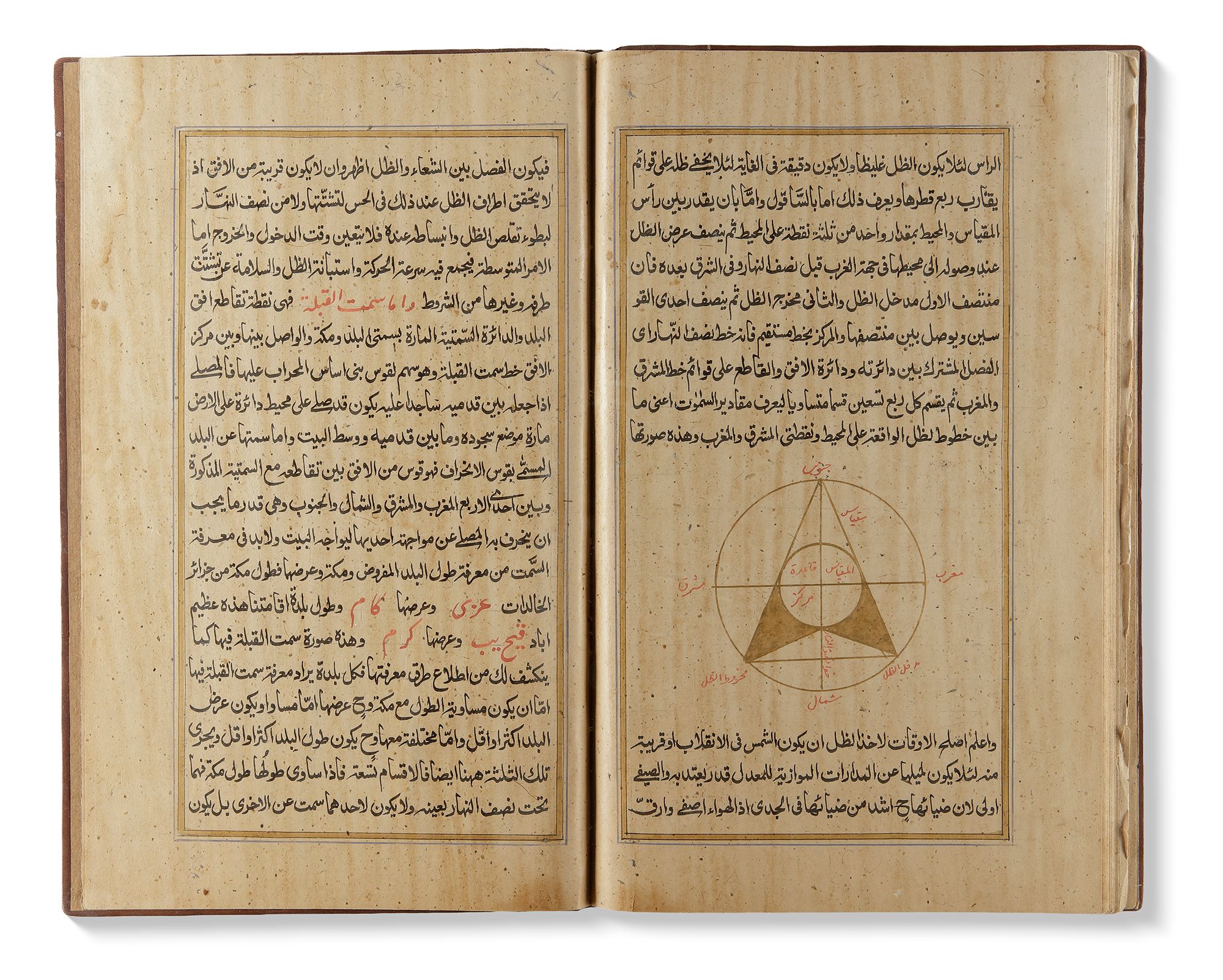
Arabic manuscript on paper, comprising 30 folios, each page with 20 lines written in an elegant black naskh script. Titles and significant words are highlighted in red ink. The text is ruled within blue and gold borders, and the manuscript features various celestial and geometrical diagrams executed in gold.
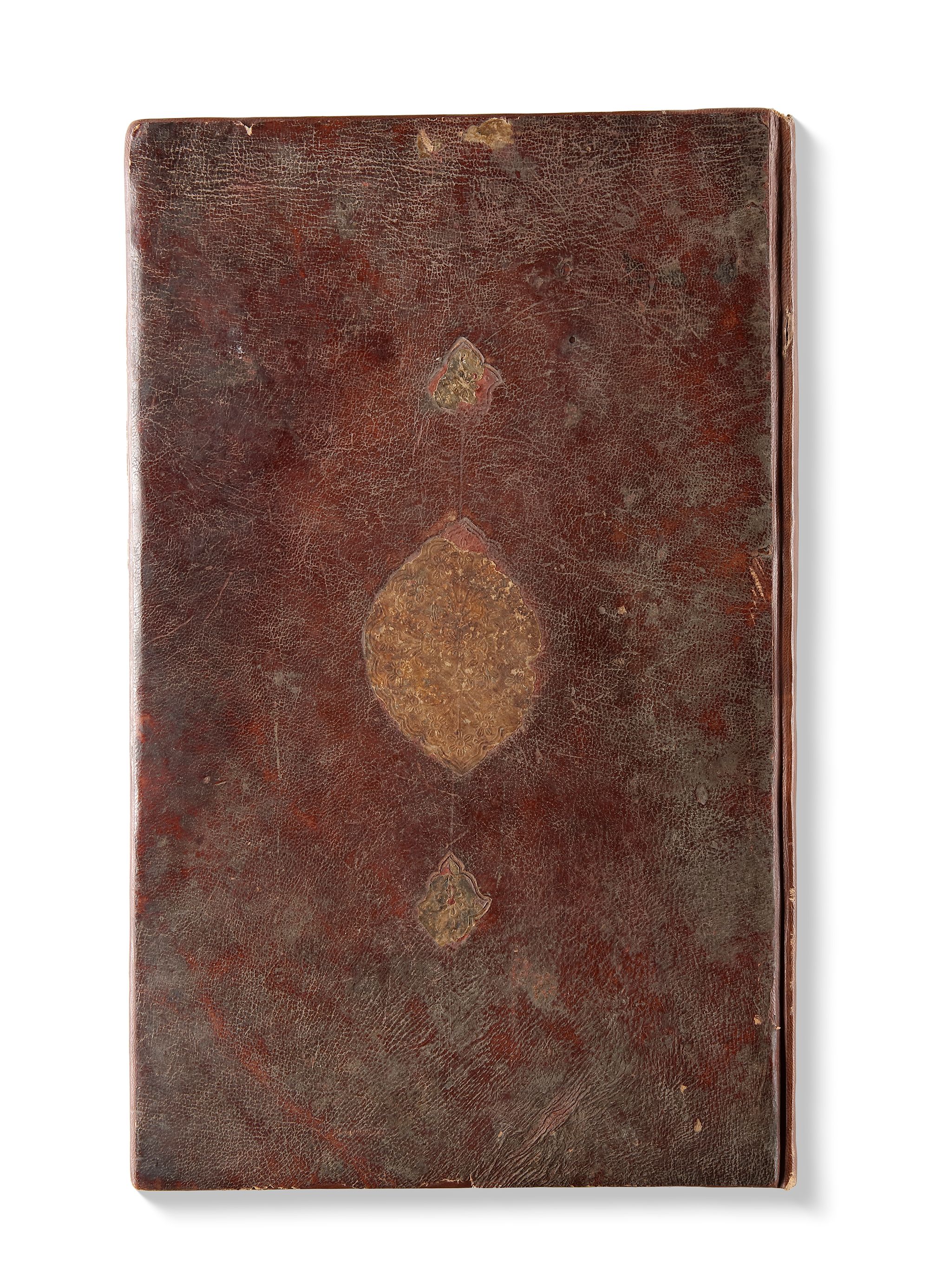
The final page is signed and dated 22 Jumada al-Thani 1284 AH/1867 AD. The manuscript is bound in a deep brown leather Moroccan binding.
20 by 33 cm.
This manuscript, entitled Sullam al-Aflak (“The Ladder of the Spheres”), is a specialized astronomical treatise describing the universe according to the geocentric (Earth-centered) model, with frequent references to the works of Ptolemy.
The thoroughly annotated illustrations and subjects discussed include geometrical shapes (cones, squares, polygons); the order of planets; horoscopes; the positions of the planets relative to each other; the position of the Moon with respect to the Earth and the Sun; solar and lunar eclipses; perihelion and aphelion; the angles of incidence of the Sun to the Earth at sunset and sunrise on Thursday, Friday and Saturday; and the angle of incidence of the Sun relative to the horizon and geographical directions for determining the time of the morning prayer. Prayer times are calculated for fajr (morning), zuhr (noon), asr (afternoon), maghrib (evening), and isha (night).
The work represents the late Islamic astronomical tradition of the Indian subcontinent and follows the intellectual lineage of earlier major works, such as Nasir al-Din al-Tusi’s Tadhkira fi ‘ilm al-hay’a, which sought to refine and reform Ptolemaic models using mathematical devices like the “Tusi couple.”
The author: Alimuddin Huseyin bin Tasadduk Huseyin bin Ubeydullah al-Ansari al-Azimabadi al-Nekranhesevi. Sullam Al-Aflak [The Stairs of the Orbits].
Little is known about the author of the manuscript, an Indo-Islamic scholar who spent his much of his life in Mecca and Lucknow (Medina Leknev in Uttar Pradesh), and indeed his byname "al-Azimabadi" points to his origins in Patna (Azimabad) in Bihar, northeast India.
مخطوطة عربية على الورق، تتكوّن من 30 ورقة، في كل صفحة 20 سطرًا مكتوبة بخط نسخي أسود أنيق. العناوين والكلمات المهمة مميّزة بالحبر الأحمر. النص محاط بإطارات من اللونين الأزرق والذهبي، وتحتوي المخطوطة على رسوم فلكية وهندسية متعددة منفذة بالذهب. الصفحة الأخيرة موقّعة ومؤرخة في 22 جمادى الآخرة سنة 1284هـ / 1867م. والمخطوطة مجلّدة بجلد مغربي بني داكن. الأبعاد: 20 × 33 سم. تحمل هذه المخطوطة عنوان سُلَّم الأفلاك، وهي رسالة فلكية متخصصة تصف الكون وفق النموذج الجغرافي (المتمركز حول الأرض)، مع إحالات متكررة إلى أعمال بطليموس. تتضمن الرسوم التوضيحية المشروحة بعناية والموضوعات المطروحة أشكالًا هندسية (مثل المخاريط، والمربعات، والمضلعات)، وترتيب الكواكب، والأبراج، ومواضع الكواكب بالنسبة لبعضها البعض، وموضع القمر بالنسبة للأرض والشمس، وكسوفي الشمس والقمر، والحضيض والأوج، وزوايا سقوط أشعة الشمس على الأرض عند الغروب والشروق في أيام الخميس والجمعة والسبت، وكذلك زاوية سقوط الشمس بالنسبة للأفق والجهات الجغرافية لتحديد وقت صلاة الفجر. كما تُحسب أوقات الصلوات: الفجر، والظهر، والعصر، والمغرب، والعشاء. تمثّل هذه الرسالة تقاليد علم الفلك الإسلامي المتأخرة في شبه القارة الهندية، وتتبع السلسلة الفكرية لأعمال كبرى سابقة، مثل كتاب نصير الدين الطوسي تذكرة في علم الهيئة، الذي سعى إلى تنقيح النماذج البطلمية وإصلاحها باستخدام أدوات رياضية مثل «زوج الطوسي». المؤلف: عليم الدين حسين بن تصدق حسين بن عبيد الله الأنصاري الأعظم آبادي النكرانهسوي. سُلَّم الأفلاك. ولا يُعرف الكثير عن مؤلف هذه المخطوطة، وهو عالم من التراث الإسلامي الهندي قضى معظم حياته في مكة ولكهنؤ (المدينة المنورة لكهنؤ في ولاية أتر برديش). ويشير لقبه «الأعظم آبادي» إلى أصوله في باتنا (أعظم آباد) في ولاية بيهار شمال شرق الهند.