
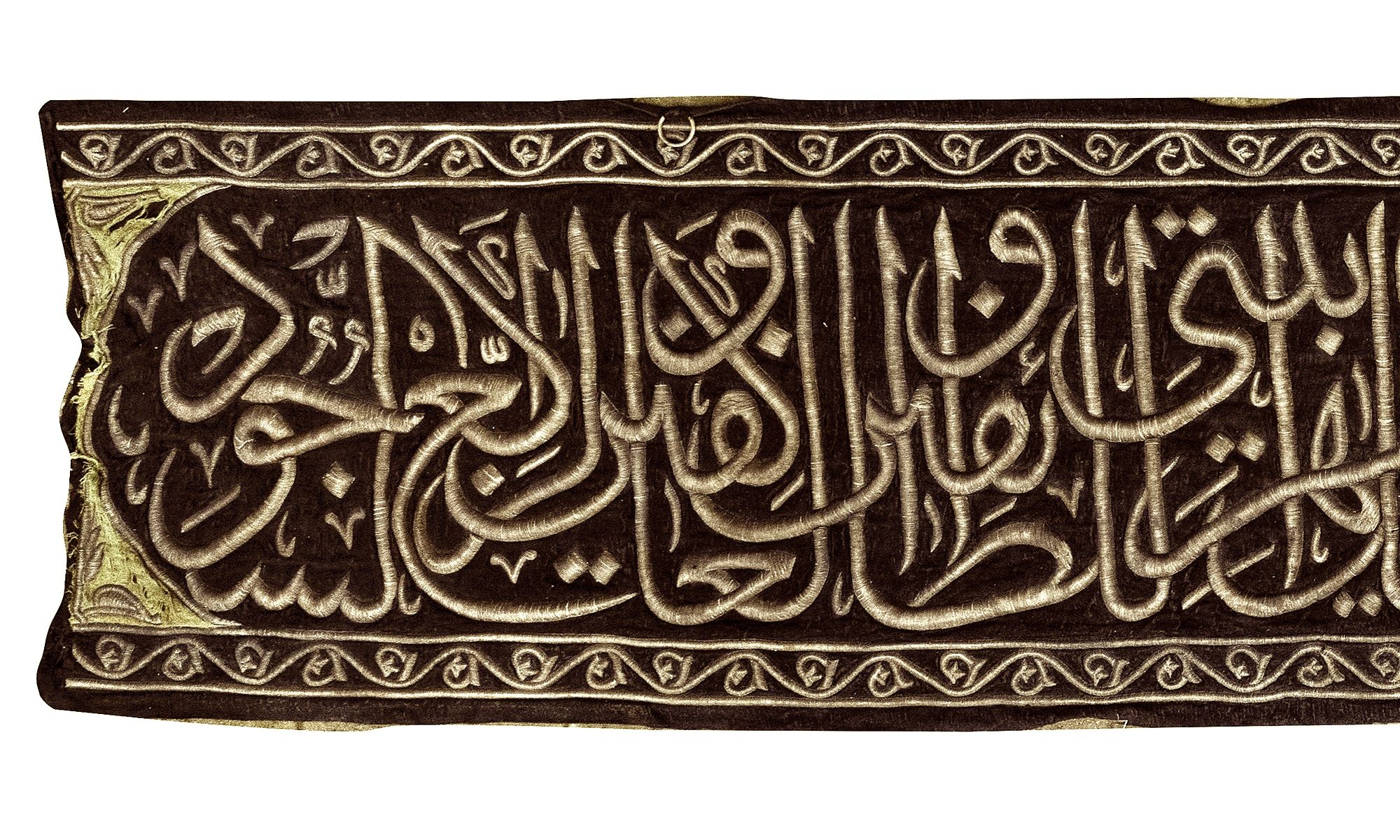
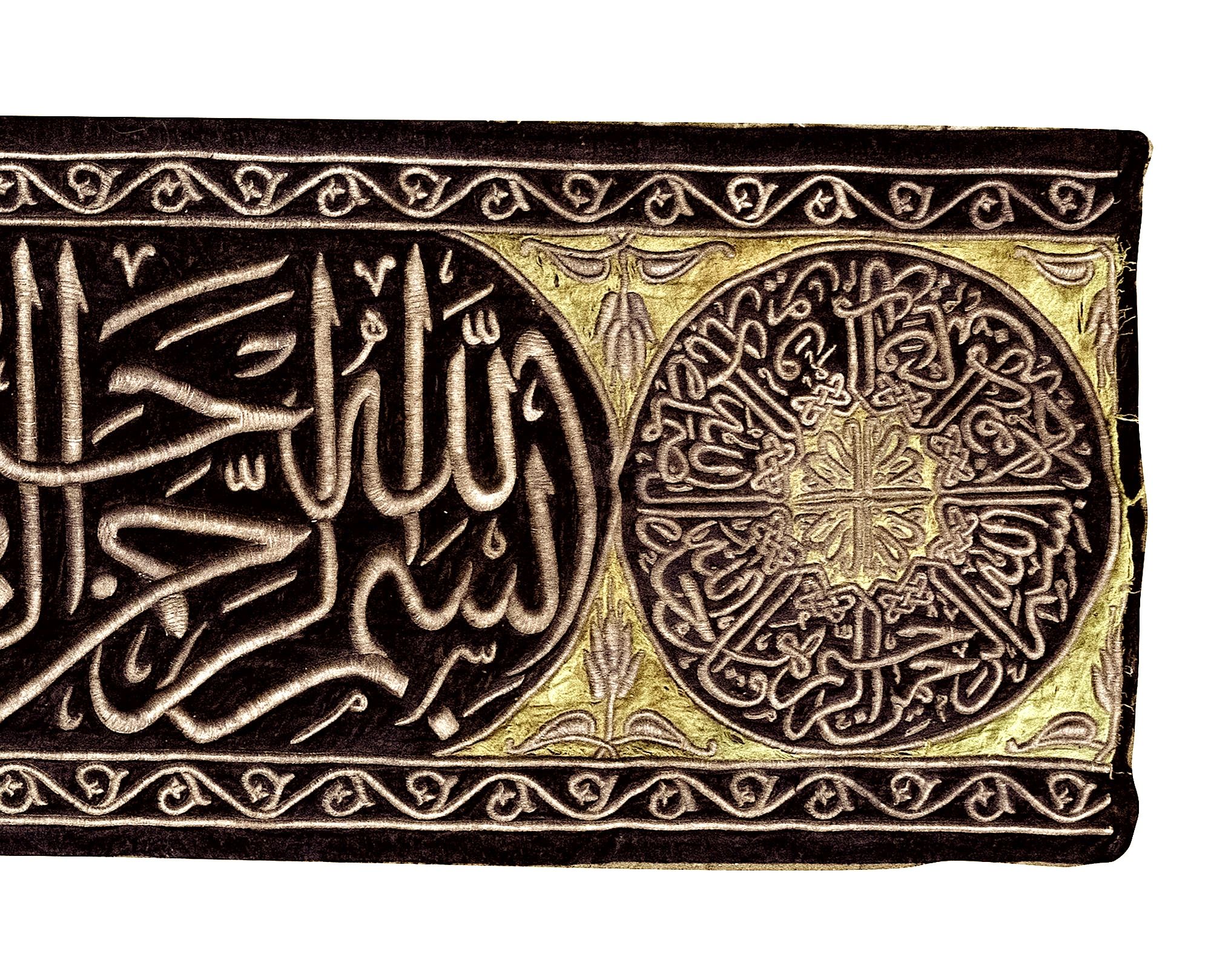
Lot 182 AN OTTOMAN SILK AND METAL THREAD-EMBROIDERED HIZAM, EARLY 20TH CENTURY
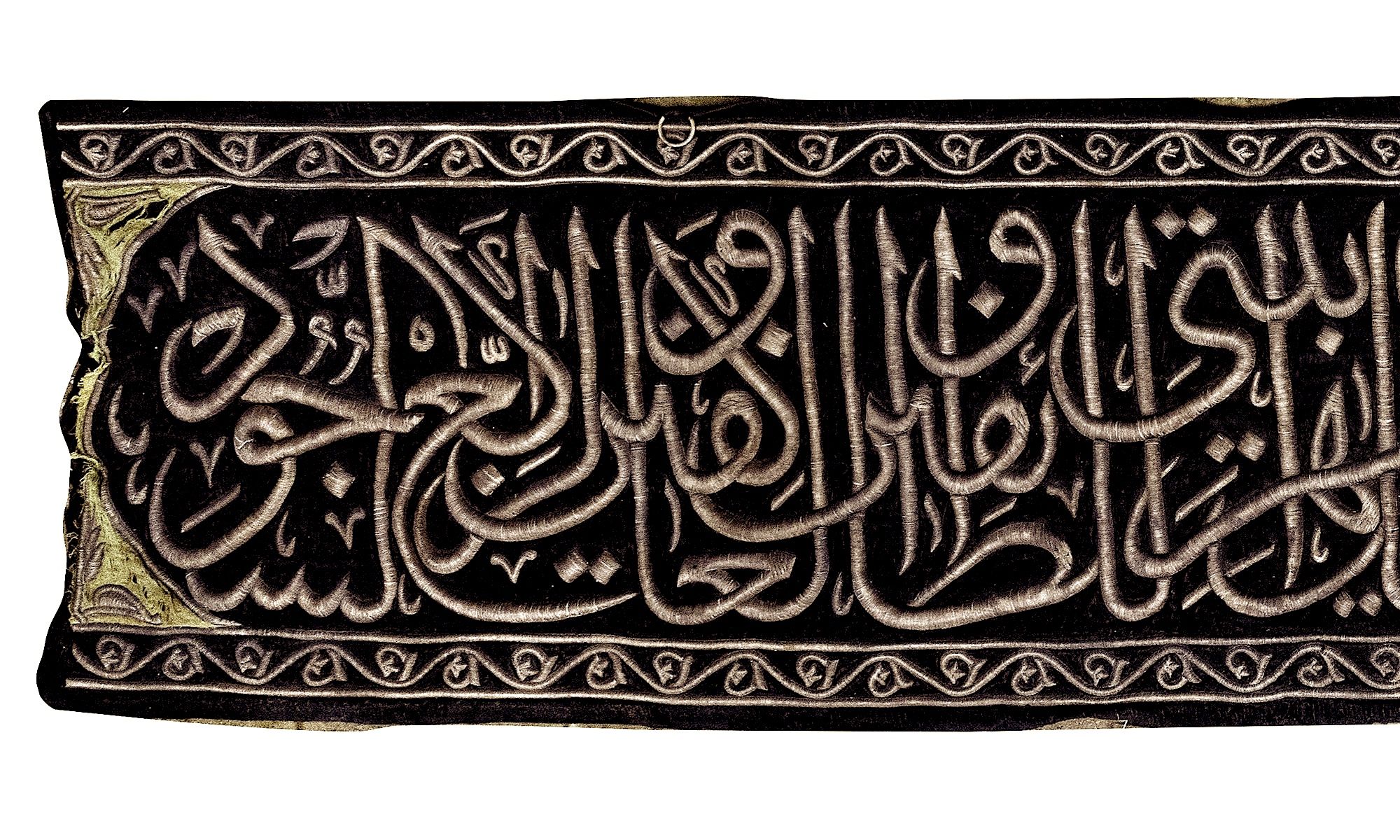
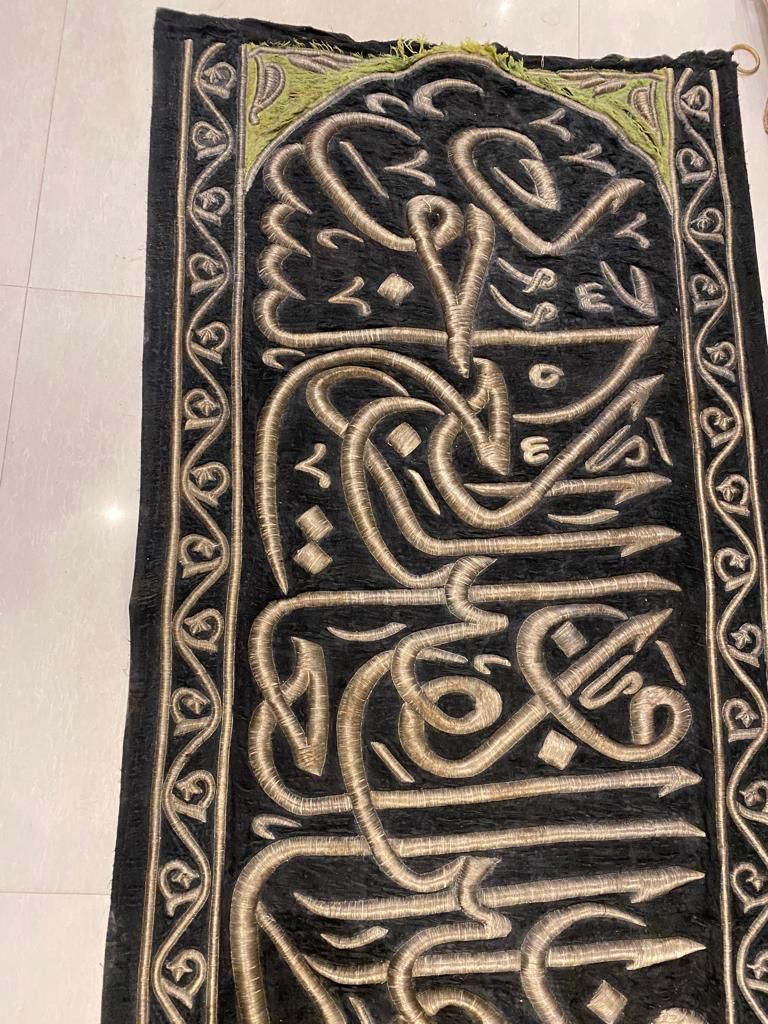
A large Ottoman silk, velvet and metal thread calligraphic band from the holy Kabaa (Hizam), of rectangular form embroidered with silver metal wires. To the centre a large silver cartouche with rounded ends enclosing in silver wires the basmallah and v.125 from surah Al-Baqarah in thuluth script with a band of meandering leafy silver vine above and below. Further flanked to the right side with a circular silver panel enclosing in silver wires surah Al-Ikhlas surrounding four words of 'Allah' on a green silk ground.
90 by 665 cm.
CATALOGUE NOTE
Each year, during the hajj pilgrimage, the Holy Ka’ba in Mecca is adorned with a new kiswa, a tradition that dates back to pre-Islamic times. While its core purpose and form have remained unchanged, the details of its design and production have evolved over the centuries.
Historically, various types of cloth and textiles have been used to cover the Ka’ba, but kiswas produced in Egypt became particularly popular under early Islamic rulers. During the time of Prophet Muhammad, the kiswa was a simple white cloth. After the conquest of Mecca in the ninth Hijri year, the Prophet covered the Ka’ba with Yemeni cloth during his farewell pilgrimage. Over time, the color of the kiswa changed. The Abbasid Caliph Al-Mamun (813–833) covered the Ka’ba three times a year, using red silk brocade, multicolored brocade, and white Egyptian linen. Later, Caliph Al-Nasir (1180–1225) introduced a green kiswa, before black eventually became the standard color. The distinctive embroidered border, now a hallmark of the kiswa, was first added in 1340 by Sultan Hassan, the Bahri Mamluk ruler of Cairo.
During the Mamluk period (13th–16th centuries), the kiswa was crafted in Egyptian workshops and transported along major routes to Mecca. After a year, the covering was removed, cut into sections, and its inscribed panels were either retained by the sultan or distributed as prestigious gifts. Following the Ottoman conquest of Cairo in 1517 (AH 923), the Ottoman sultan, as caliph, took on the responsibility of providing the Ka’ba’s covering, with production continuing in Egypt until the early 20th century.
In 1926, King Abdulaziz ordered the construction of a factory in Mecca for manufacturing the kiswa, which operated until 1937. In 1962, King Faisal bin Abdulaziz established a new factory in Umm Al-Joud, Mecca, which opened in 1976 and continues to produce the kiswa today.
Each year, at the end of the hajj, the old kiswa is replaced with a new one. The old kiswa is then cut into pieces and distributed to various individuals and organizations throughout the Muslim world.
.