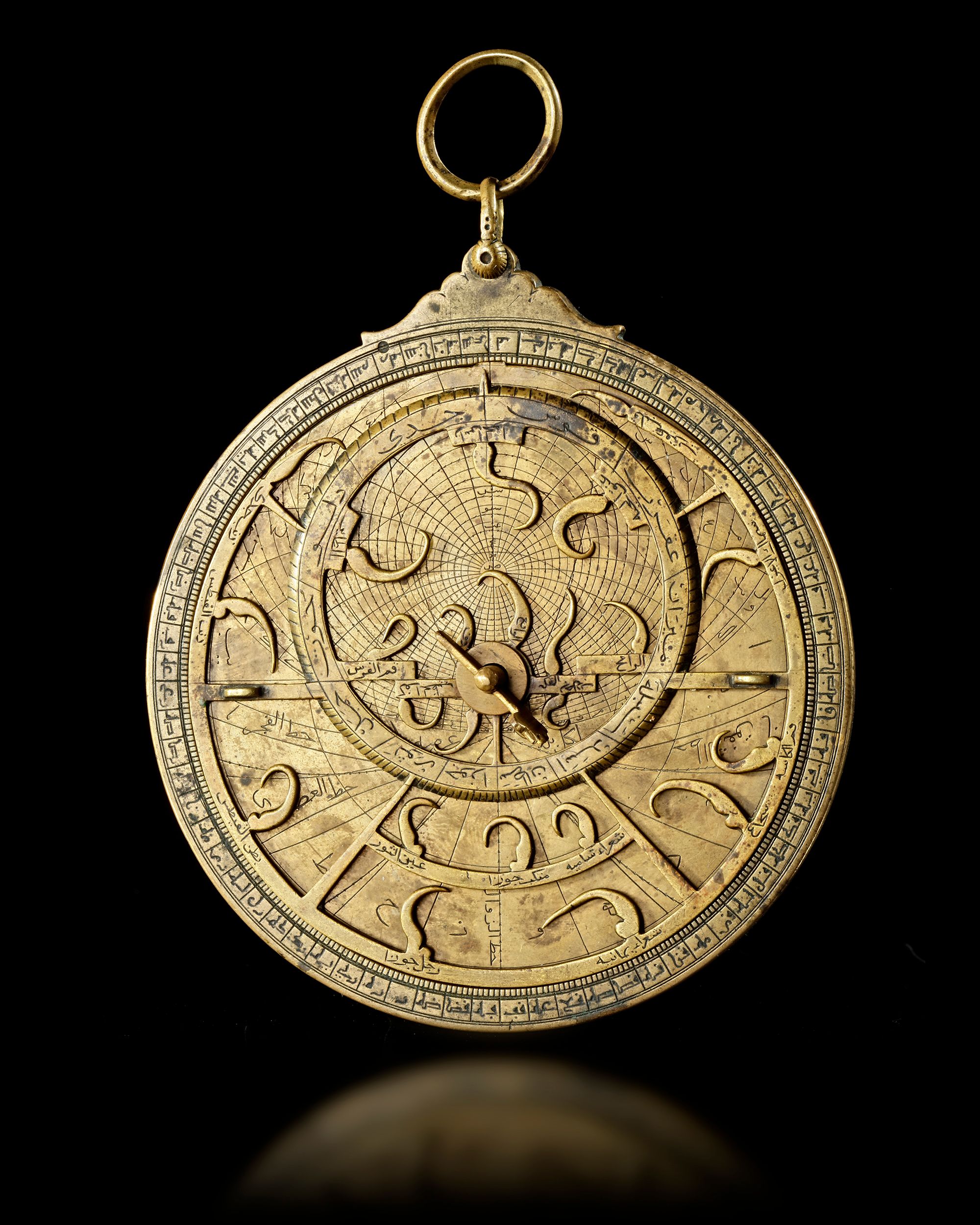
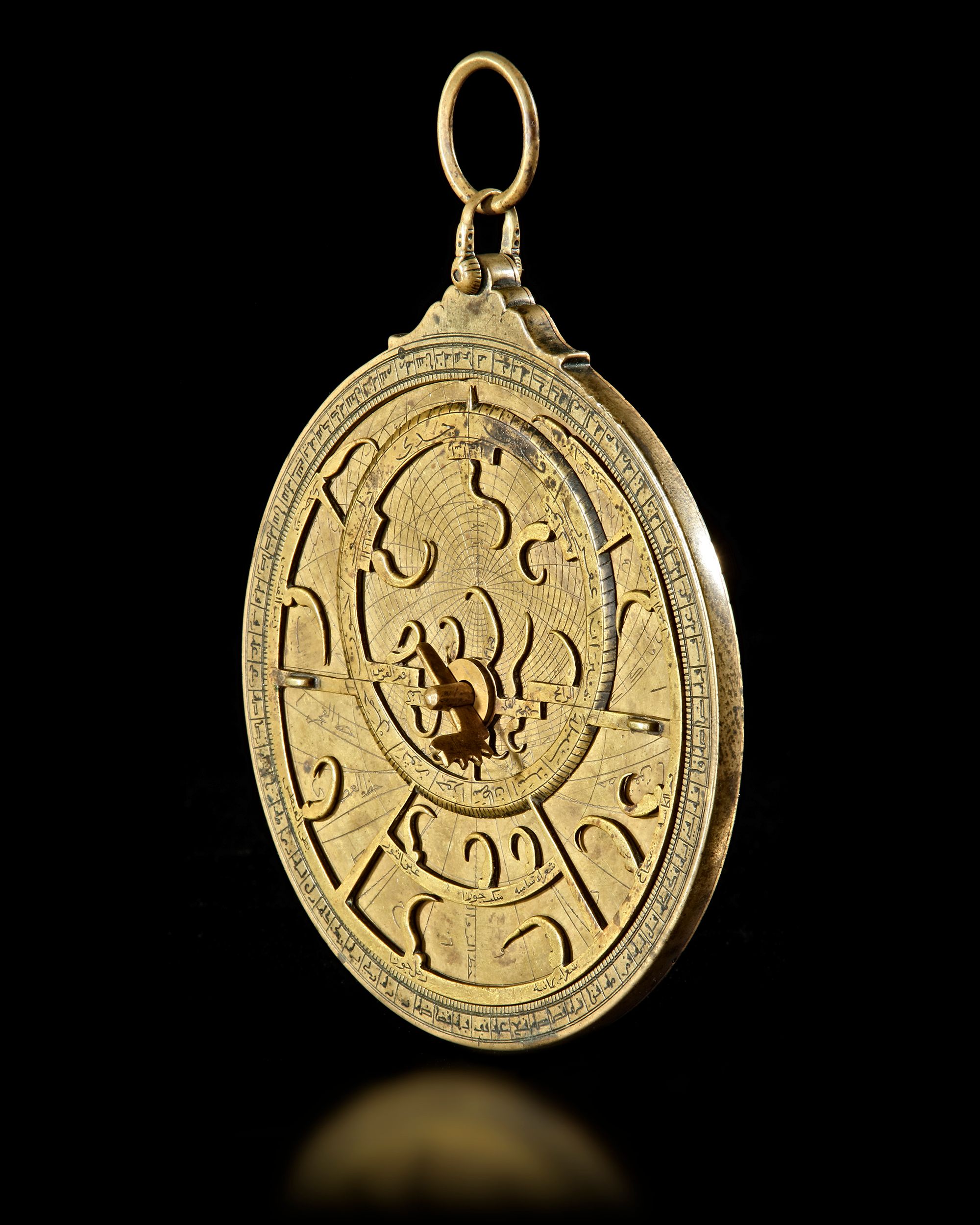
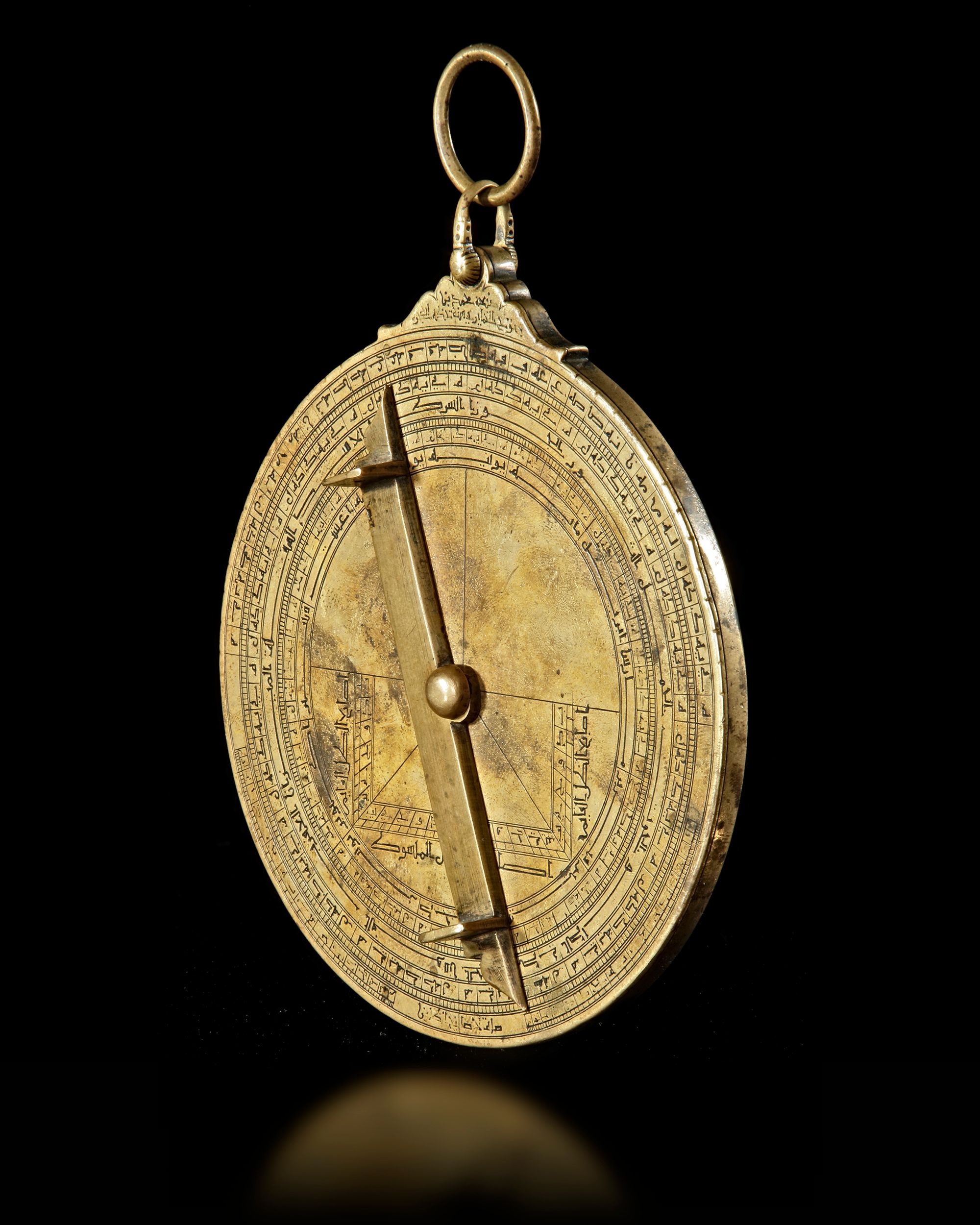
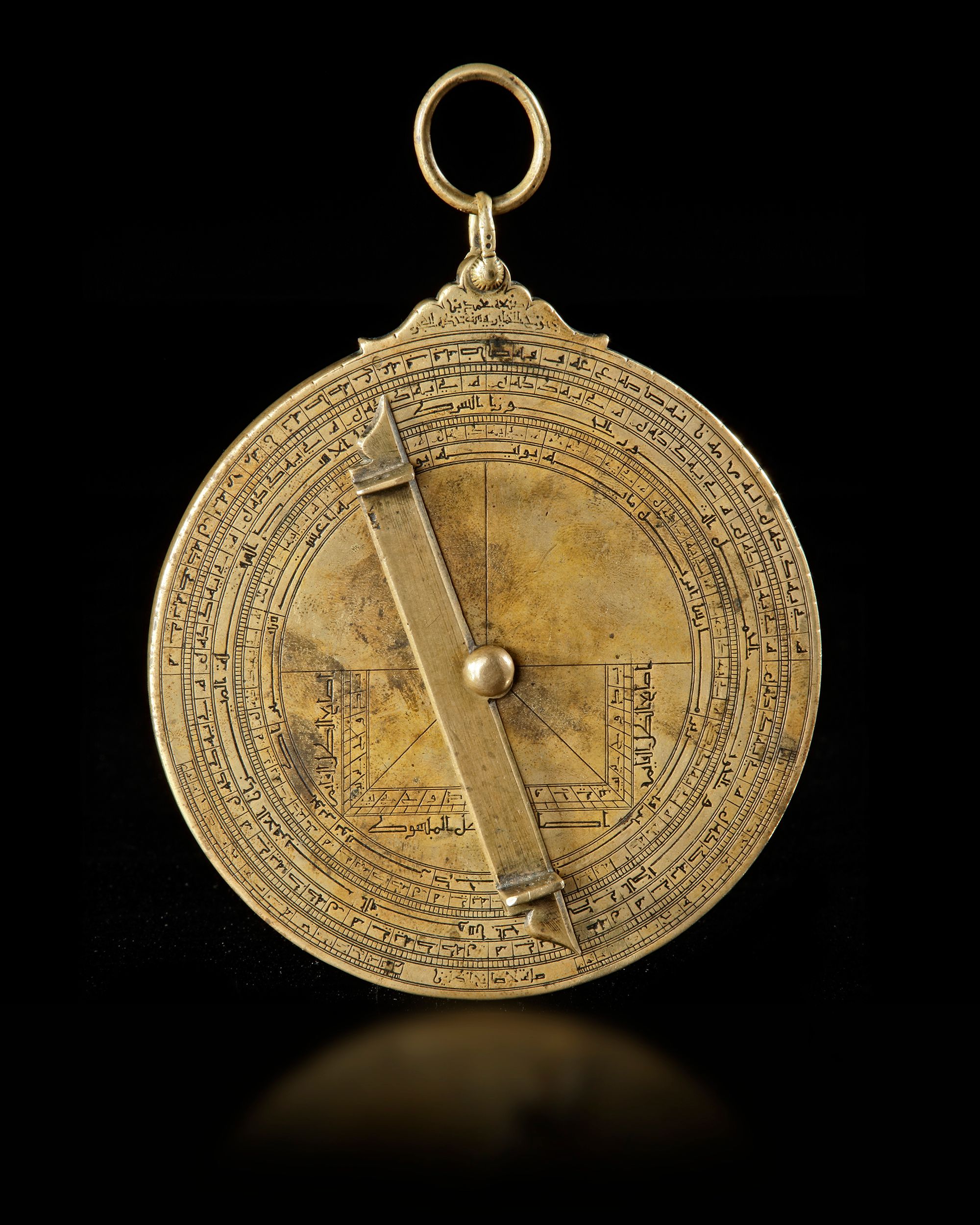
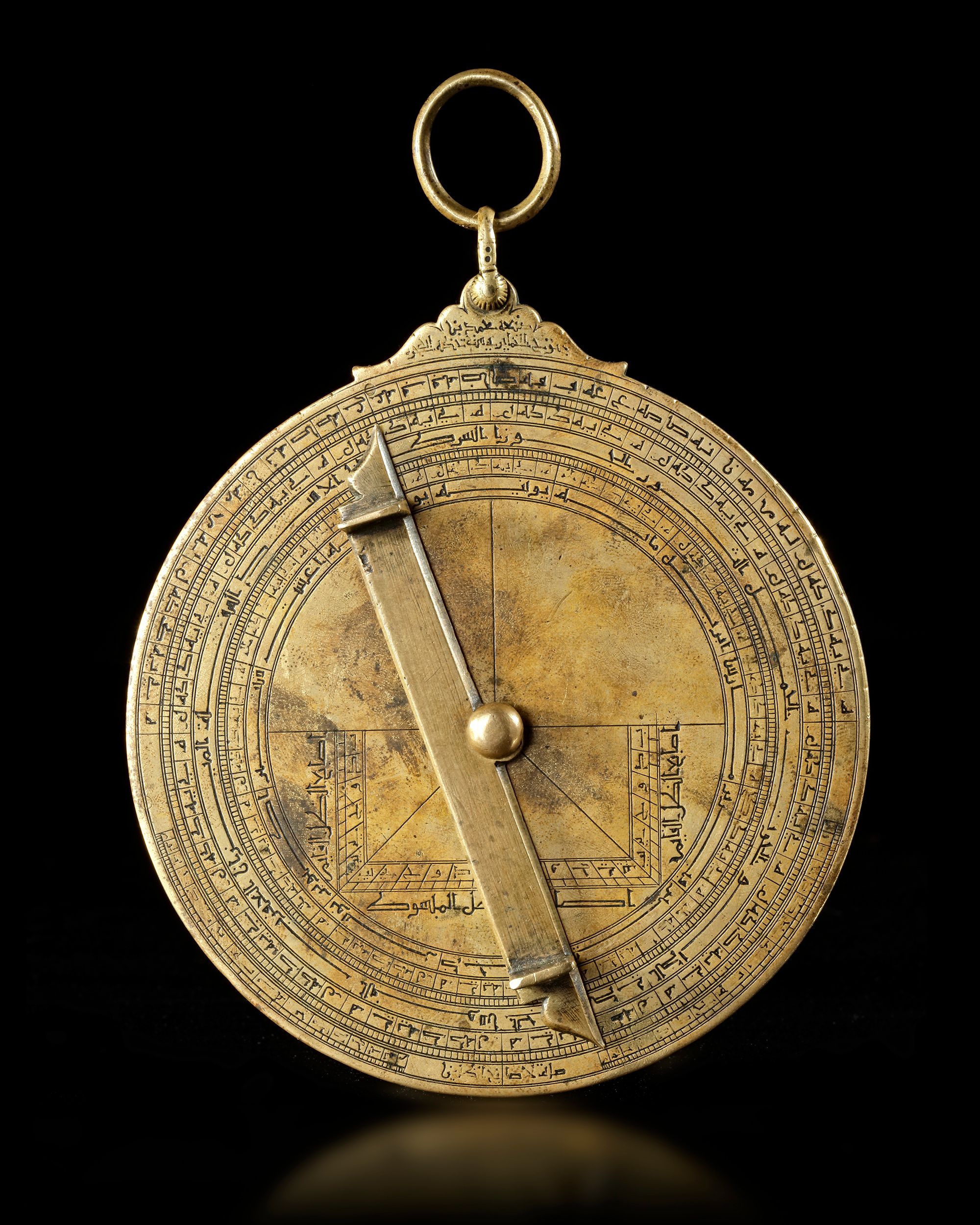
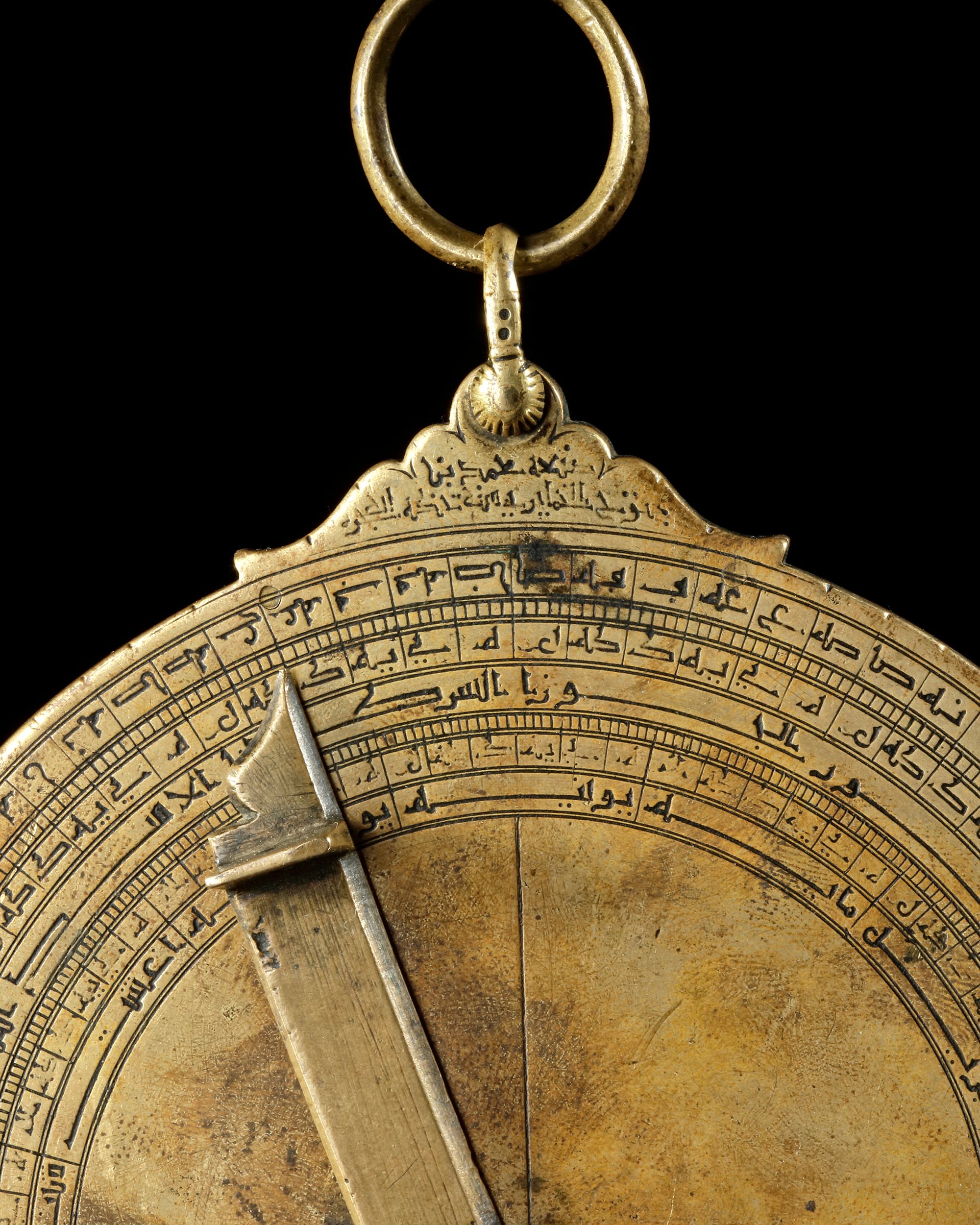
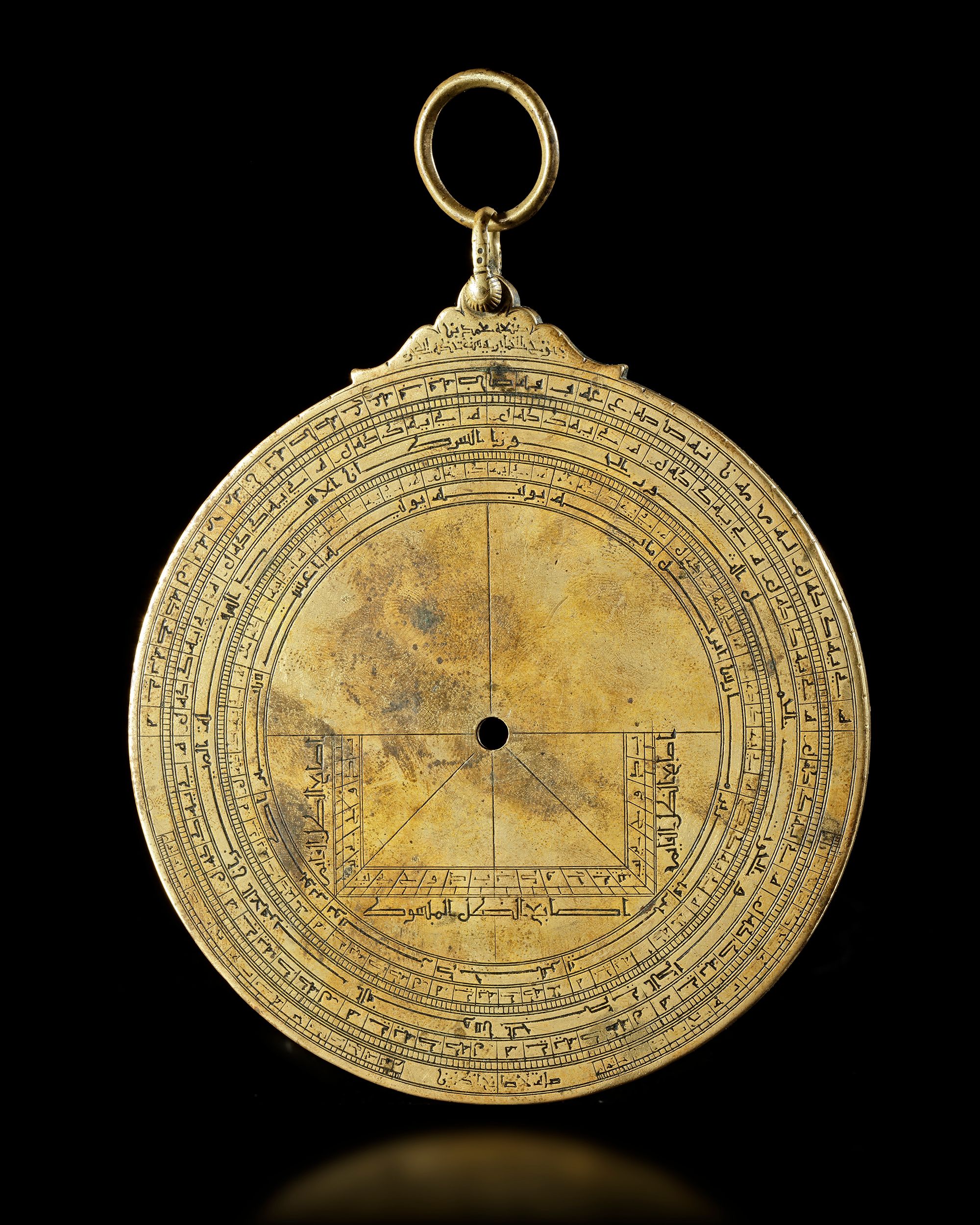
Lot 62 A BRASS ASTROLABE SIGNED BY MUḤAMMAD IBN FATTŪḤ AL-KHAMĀ’IRĪ, SEVILLE (SPAIN), DATED 625 AH / 1227–28 AD
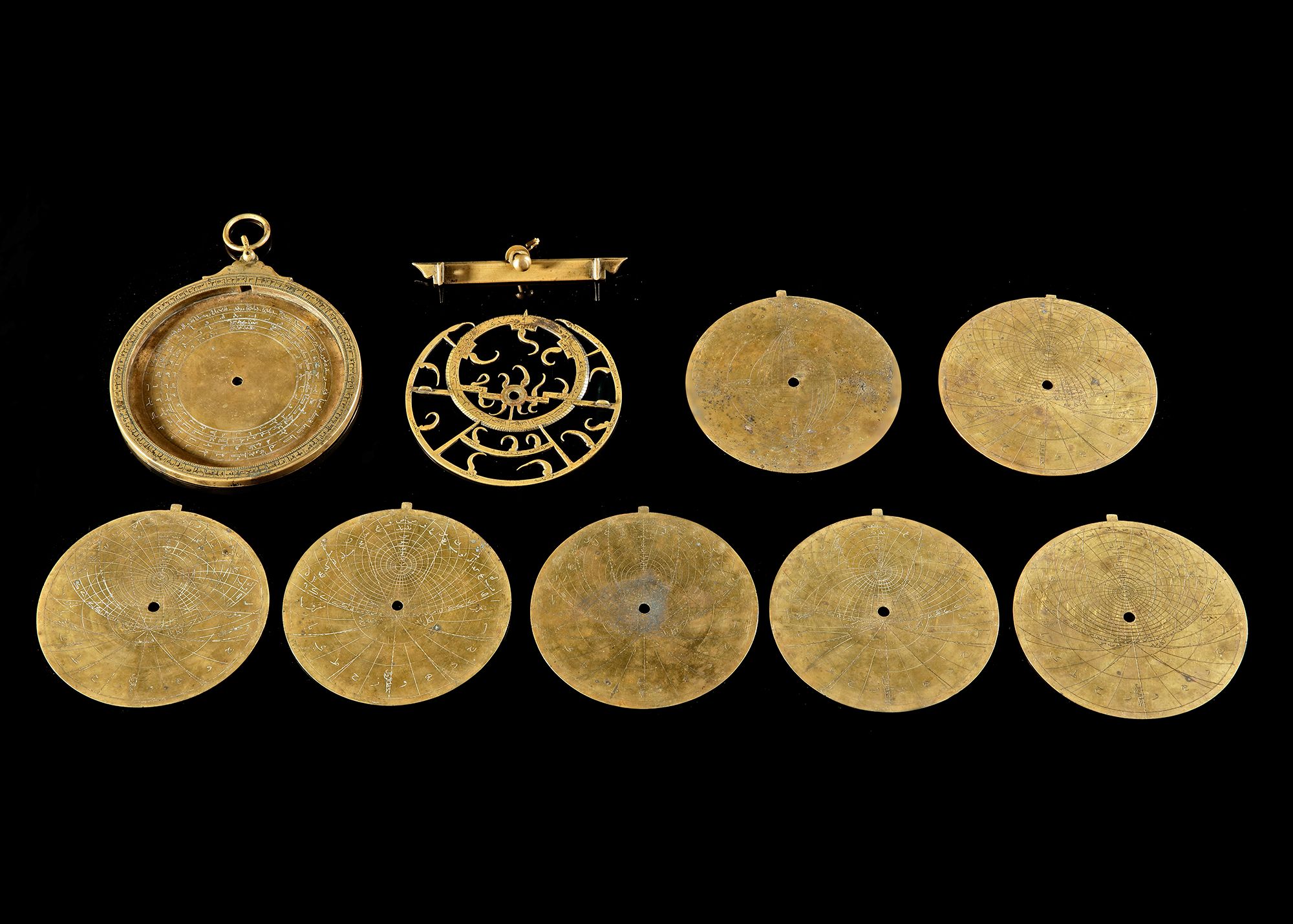
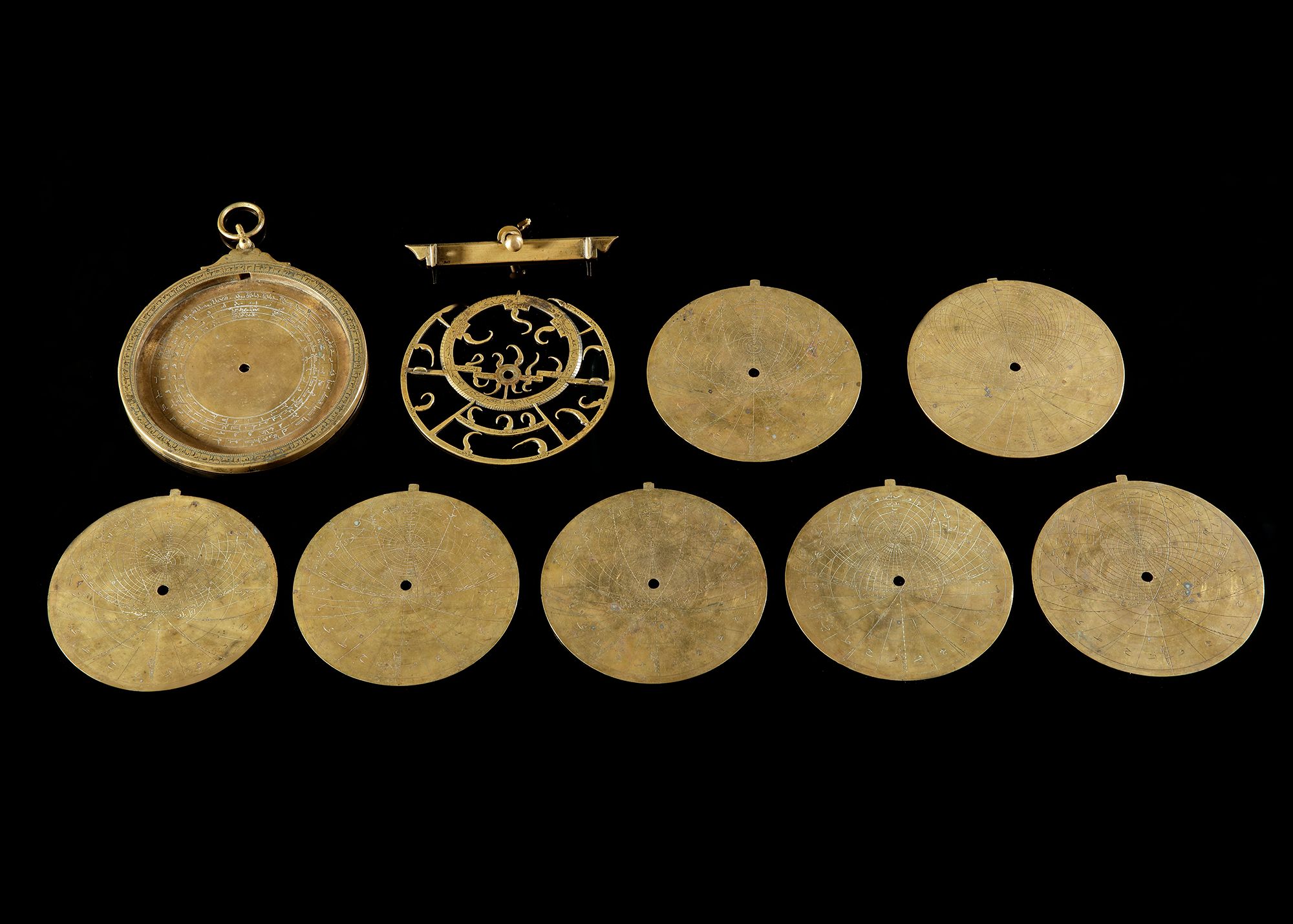
Cast brass, comprising a body (mater), a replacement rete, seven tympans, an alidade, a pin, and a horse-shaped wedge. The back of the throne is engraved in Arabic script with the maker’s signature: ṣanaʿahu Muḥammad ibn Fattūḥ al-Khamā’irī fī sanah 625 hijrah.
Dimensions 124.5 mm diameter; 133.5 mm height.
Catalogue Note
A NEWLY DISCOVERED 13TH-CENTURY ASTROLABE BY THE MOST PROLIFIC AND INFLUENTIAL MASTER OF SEVILLE This brass astrolabe is signed by Muḥammad ibn Fattūḥ al-Khamā’irī, the most prolific and influential astrolabist of Muslim Spain. Signed and dated in Seville in 625 AH (1227–28 AD), the instrument belongs to the later phase of the master’s activity. While approximately forty astrolabes are known from al-Andalus—the region of the Iberian Peninsula under Muslim rule between the 8th and 15th centuries—this example is only the fifteenth known piece or fragment attributed to al-Khamā’irī’s workshop, making it a significant addition to the corpus.
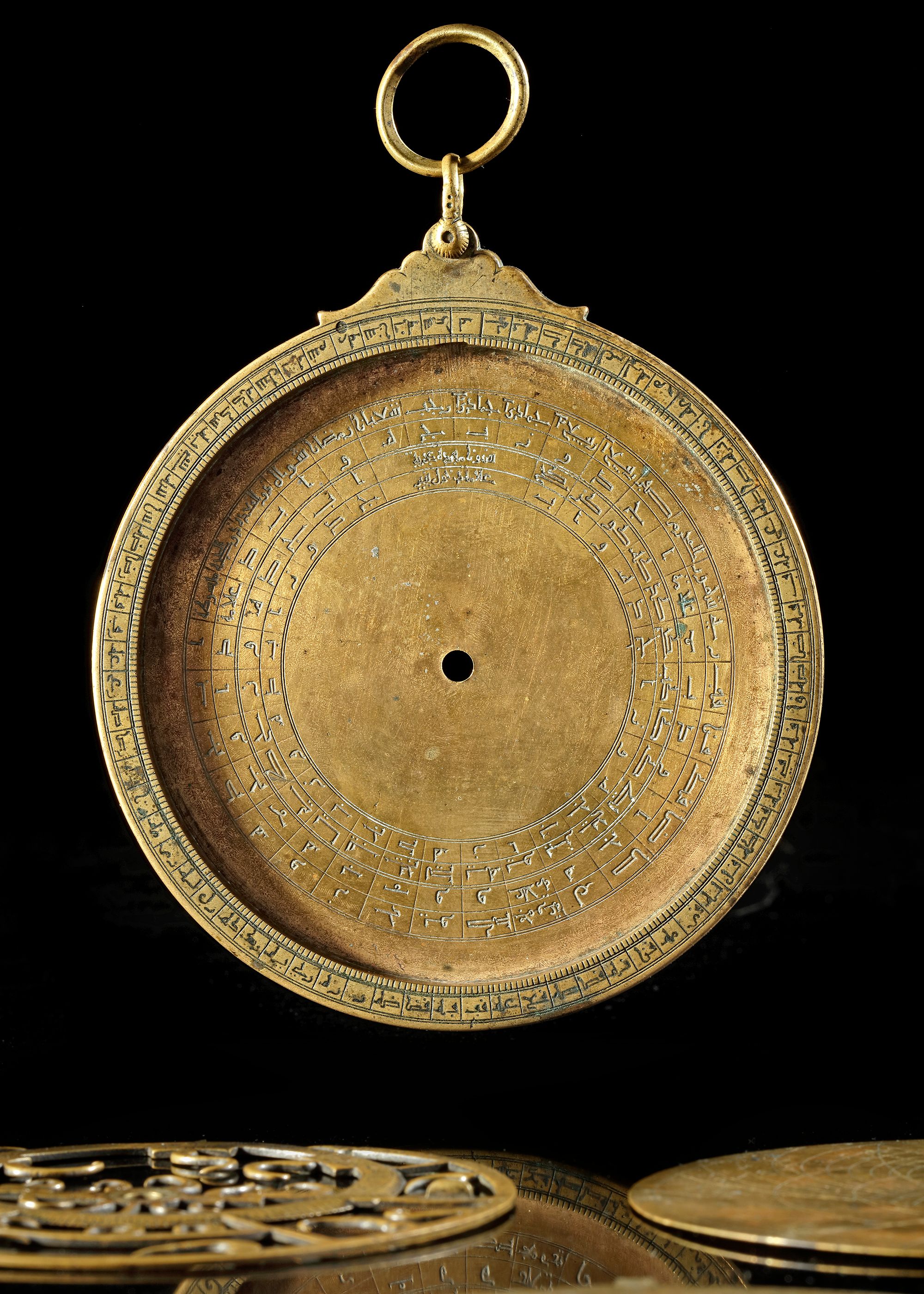
The Mater and Perpetual Calendars The rim of the mater is graduated for every degree, numbered clockwise from 5 to 360. Notably, the symbols for 100, 200, and 300 are omitted in numbers ending in 5 after the first 100 degrees (e.g., 115 is engraved as 15). The interior of the mater contains an elaborate perpetual calendar, characteristic of early Andalusi instruments. Arranged in four concentric circles, these tables allow calculation of the days of the week for both the Julian and Hijra eras, including adjustments for 210-year lunar cycles and 28-year solar cycles. The throne is of a simple, undecorated type integrated with the limb.
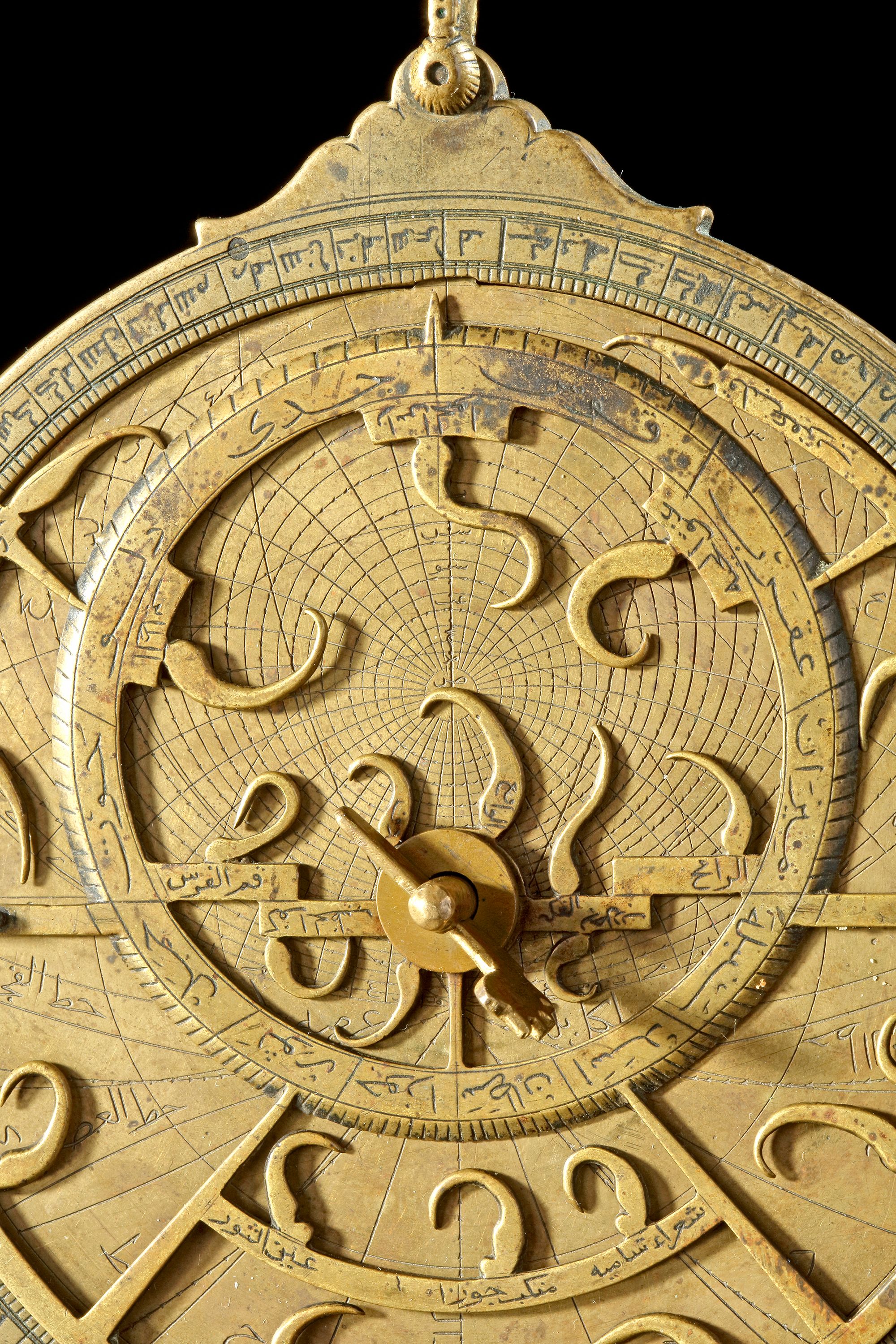
The Rete and Star Map The original rete is missing and has been replaced by a well-fitted 16th- or 17th-century example of the standard Western Islamic type. It features a doubly counter-changed equinoctial bar and twenty-four claw-shaped star pointers. The ecliptic is divided at intervals of 30° and 3°, with zodiacal signs inscribed in abbreviated form (e.g., ḥamal and ʿaqrab instead of al-ḥamal and al-ʿaqrab). The star map includes prominent Western Islamic designations such as kaff al-khāḍīb (Cassiopeia) and qalb al-ʿaqrab (Antares).
The Back and Shadow Square The back of the instrument bears two altitude scales in the upper quadrants and a zodiacal scale beginning at the horizontal diameter. The vernal equinox is placed at March 14, consistent with other instruments by al-Khamā’irī and reflecting the accumulated discrepancy in the Julian calendar. Below the central diameter is a double shadow square, divided into 12 “feet,” used for determining tangents and cotangents. It is labelled aṣābiʿ al-ẓill al-mankūs (inversed shadow) and aṣābiʿ al-ẓill al-mabsūṭ (horizontal shadow).
Tympans and Astrological Features The instrument includes seven brass tympans, providing fourteen engraved plates for latitudes ranging from 21° (Mecca) to 46°. A particularly unusual feature is the inclusion of the lines of the astrological houses, rarely found on surviving Islamic instruments despite their mention in scientific treatises. The plate for 33° (associated with Baghdad or Isfahan) includes markings for specific Muslim prayer times: al-shafaq (nightfall), al-ʿaṣr (afternoon), and al-fajr (dawn). The plates are inscribed with the rare phrase li-kulli bilād (“for each place”), rather than the more common daylight-length values. One specialized “plate of horizons” includes declination scales and half-horizons used by astrologers to calculate the ascendant. Hardware The astrolabe is fitted with a simple, unmarked alidade and a pin with a flattened hemispherical head. The securing wedge is elegantly fashioned in the form of a horse’s head.
Bibliography King 1996: David A. King, A Catalogue of Medieval Astronomical Instruments, Part 1.1–2.3 King 2024: David A. King, Elusive Astrolabes: Some Newly Identified Examples from Muslim Spain Pérez 2018: Azucena Hernández Pérez, Astrolabios en al-Andalus y los reinos medievales hispanos
A detailed scientific description of the instrument is available on request.