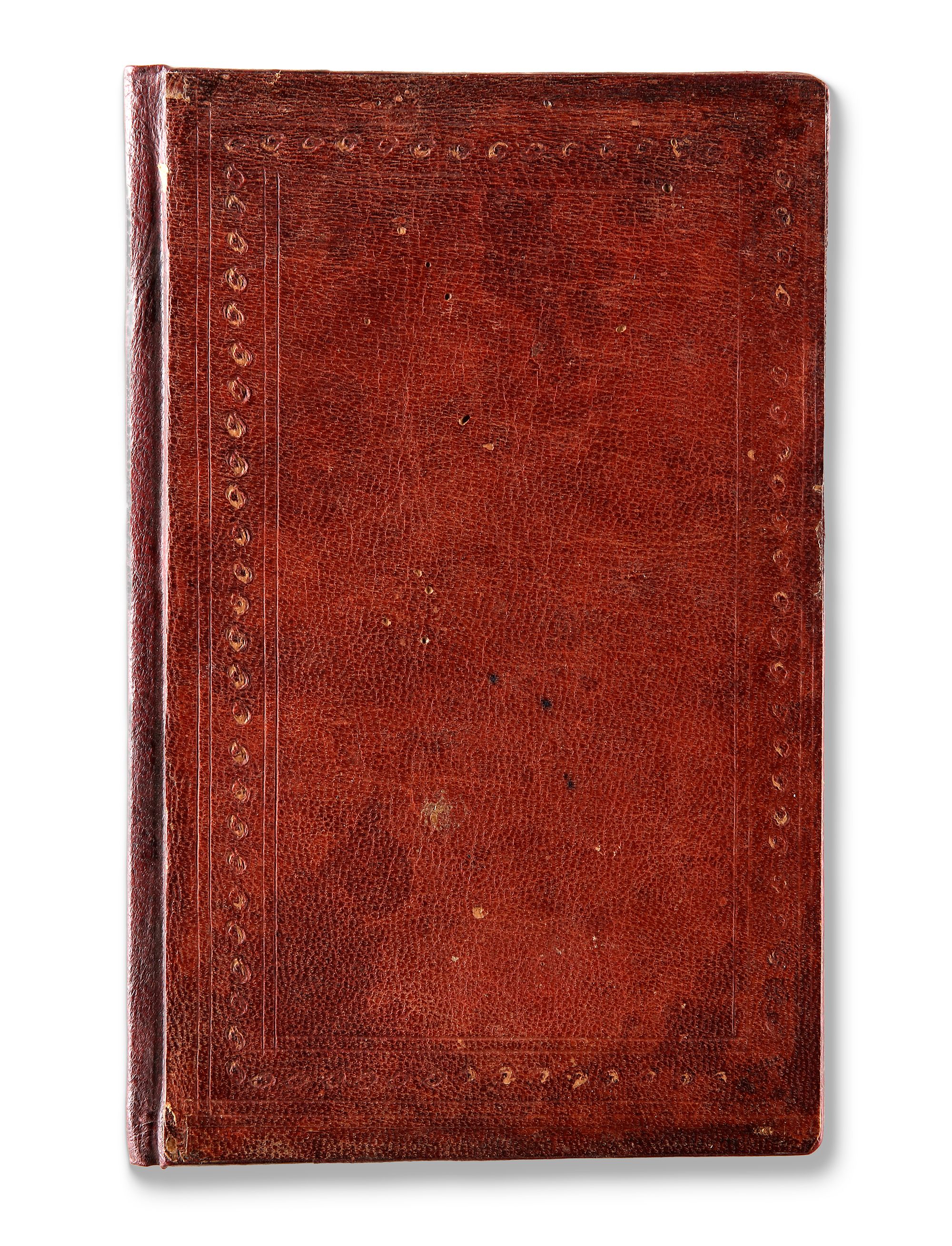
Lot 208 AN OTTOMAN MANUSCRIPT CONSISTING OF MONTHLY ASTROLOGICAL TABLE FOR THE YEAR OF 1315AH/ 1897-98AD
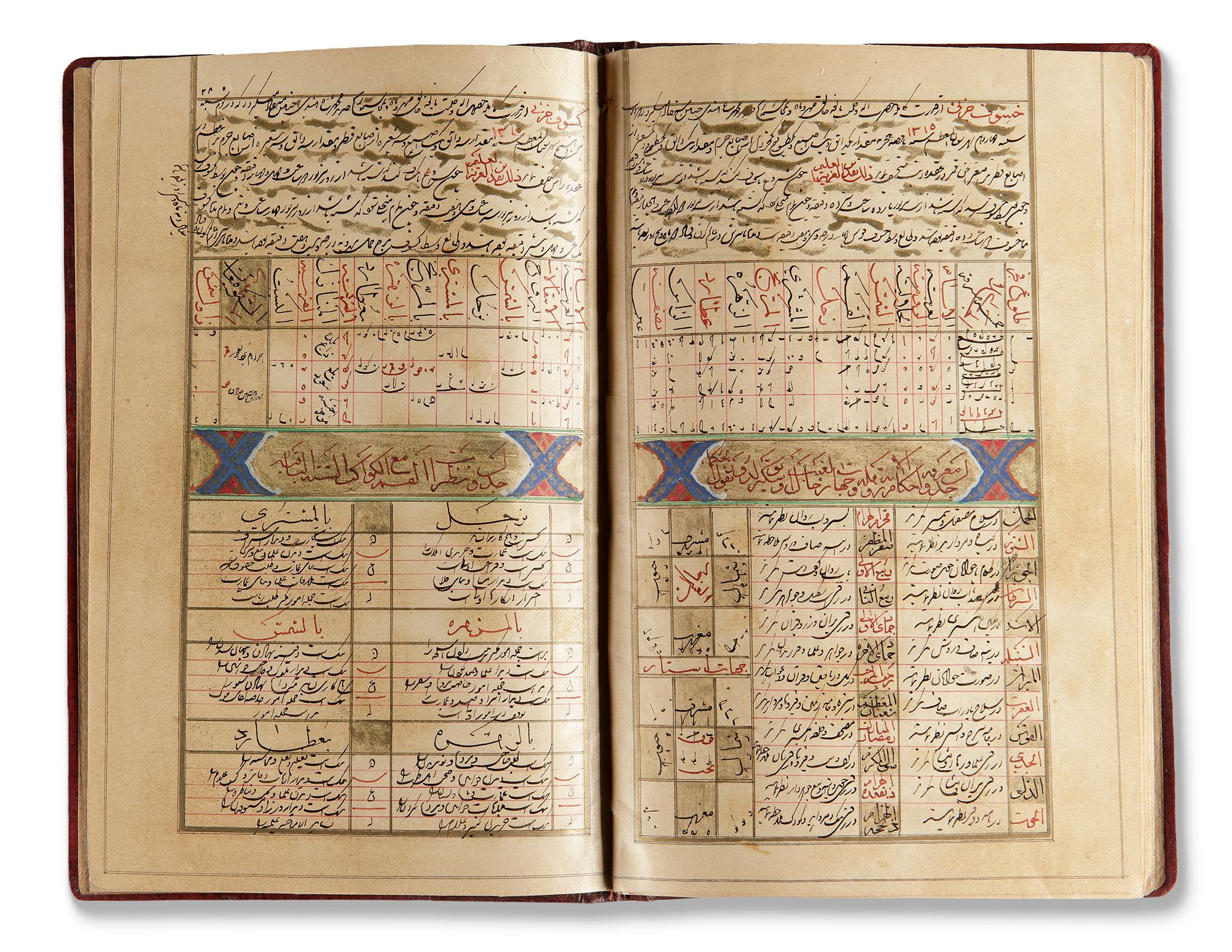
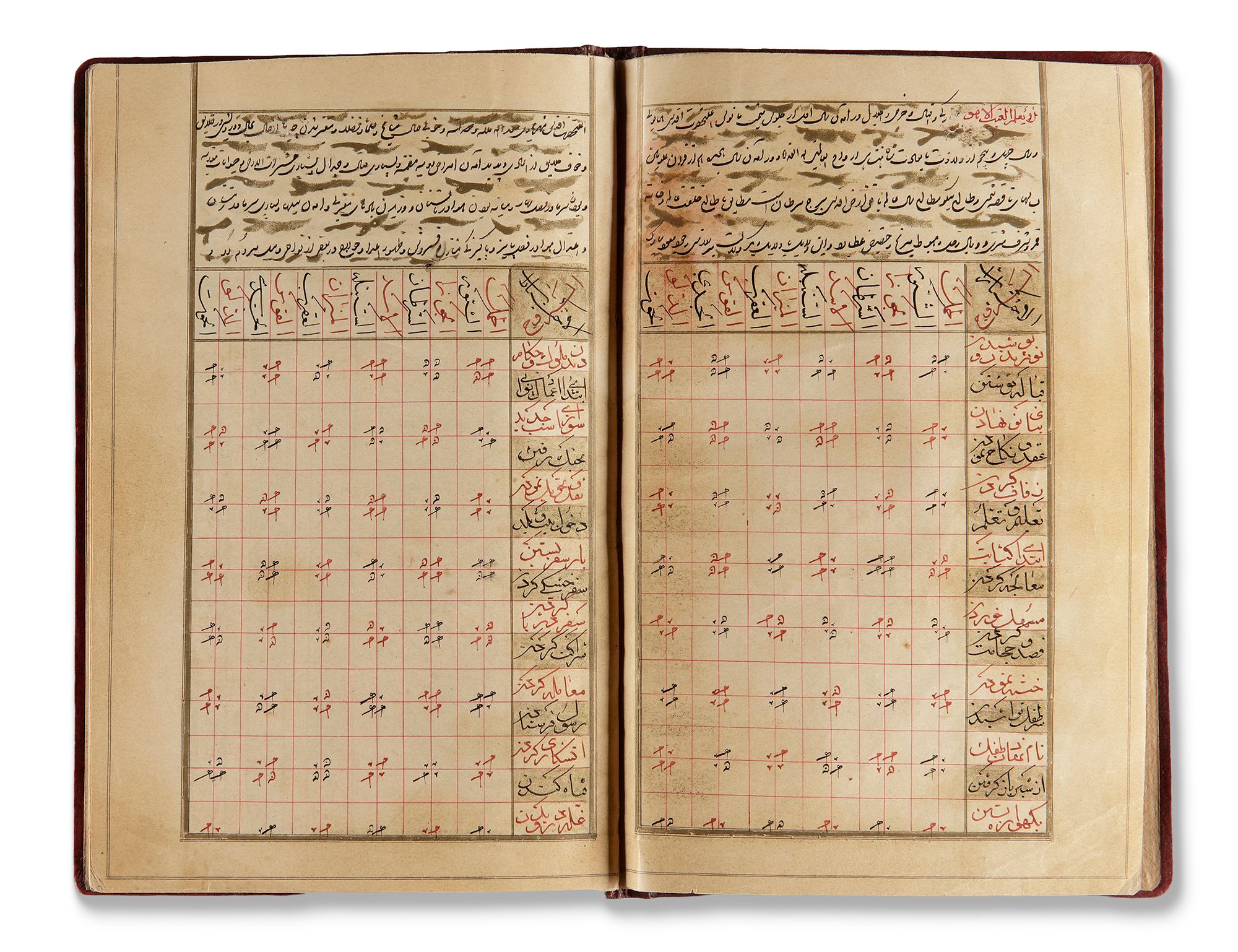
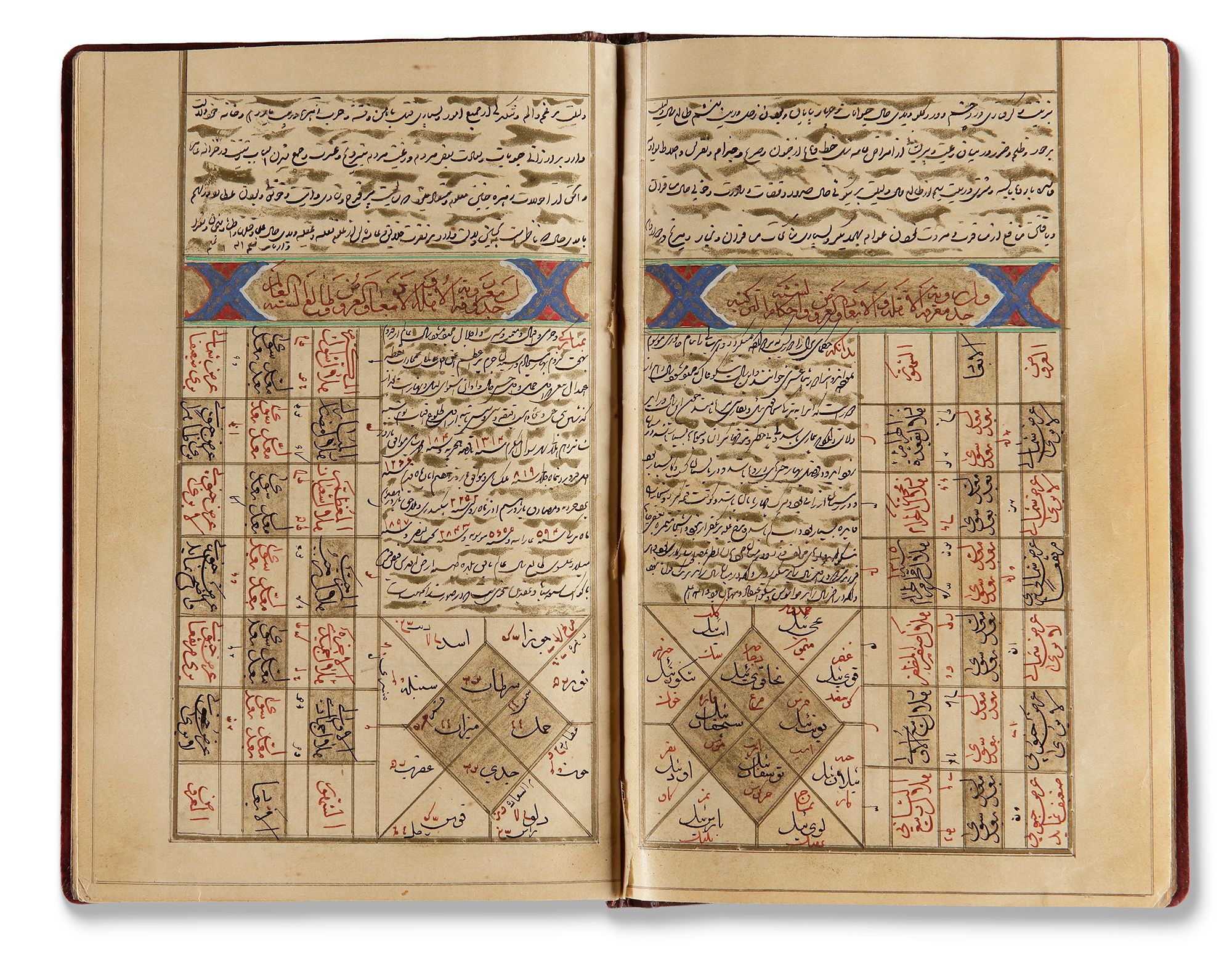
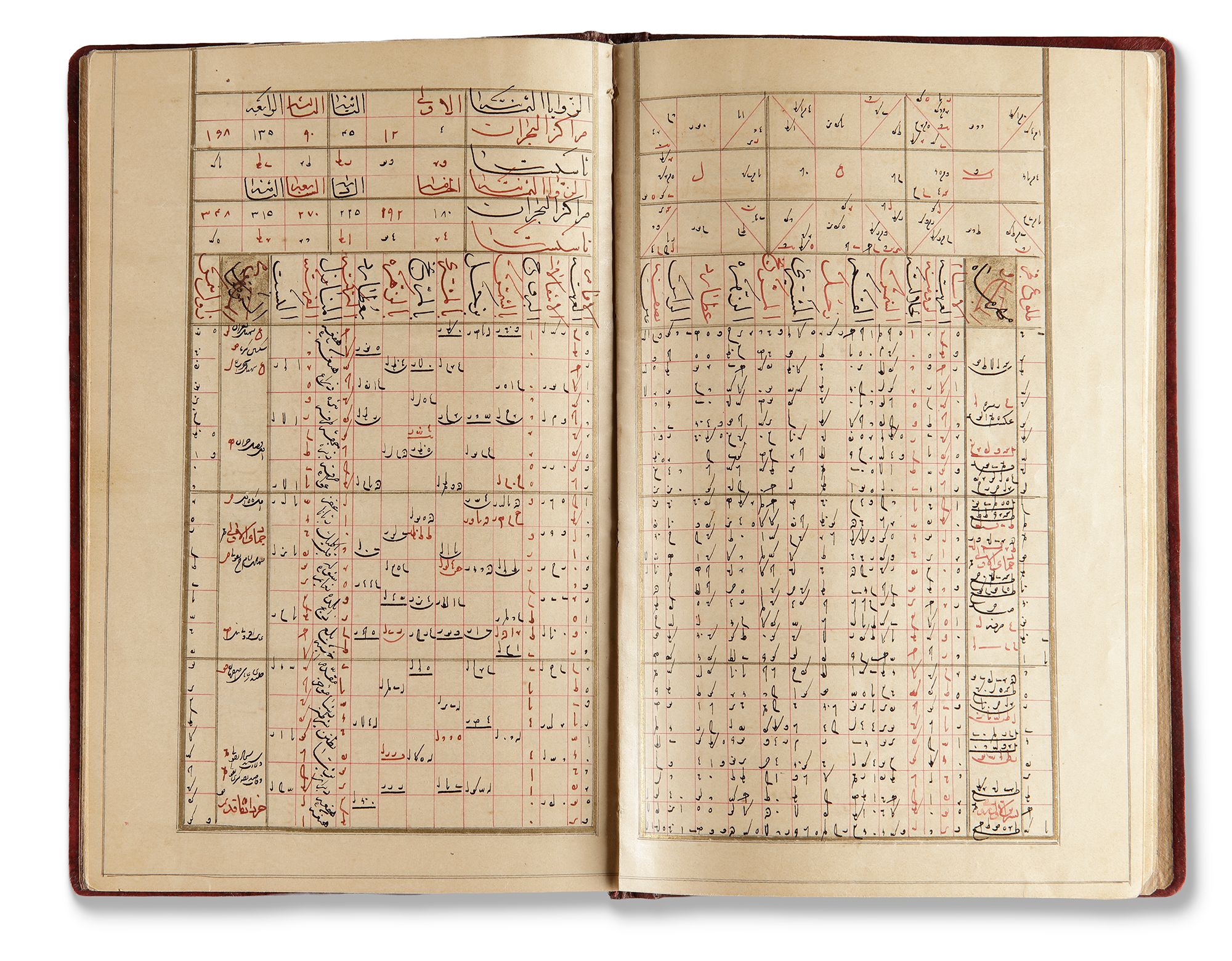
An Ottoman Turkish and Arabic manuscript on paper, 16 leaves, comprising an elaborate sequence of 24 tabulated sections, each devoted to a period of fifteen days, forming a practical astrological almanac for the year 1315 AH (1897–98 AD). The manuscript is conceived almost entirely through carefully ruled tables, recording the months, days, zodiacal signs (burūj), planetary associations and corresponding astrological calculations. The pages are further populated with abbreviated astronomical and astrological signs, numerical values and letter-symbols, arranged in highly systematic grids. Several tables are accompanied by explanatory headings and marginal annotations, while more complex pages incorporate geometric divisions and diagrammatic arrangements used for further calculations and interpretation.
The principal text is written in Ottoman Turkish and Arabic, predominantly in black ink, with extensive use of red rubrication for headings, zodiacal and planetary indications, numerical divisions and significant entries; occasional passages and calculations appear in blue. The dense interplay of script, numerals, symbols and ruled compartments creates a distinctive visual character, characteristic of the Ottoman tradition of practical astronomical and astrological manuscripts.
The upper sections of several leaves contain continuous explanatory text, while the lower and principal areas are occupied by the elaborate calendrical tables. The manuscript thus combines written instruction with a highly organized visual system of calculation, allowing the user to consult astronomical and astrological information according to successive periods of the year.
Such manuscripts belong to the broader Ottoman tradition of the ruzname and taqwim, works that brought together calendrical, astronomical and astrological knowledge. Ottoman examples are known to include tables concerning the days and months of the year, planetary and zodiacal relationships, prayer times and the determination of auspicious or inauspicious periods. An intriguing and visually compelling example of late Ottoman scholarly culture, preserving a practical system of calendar-making, astronomical observation and astrological computation. Housed in deep brown leather binding. 14 by 21 cm