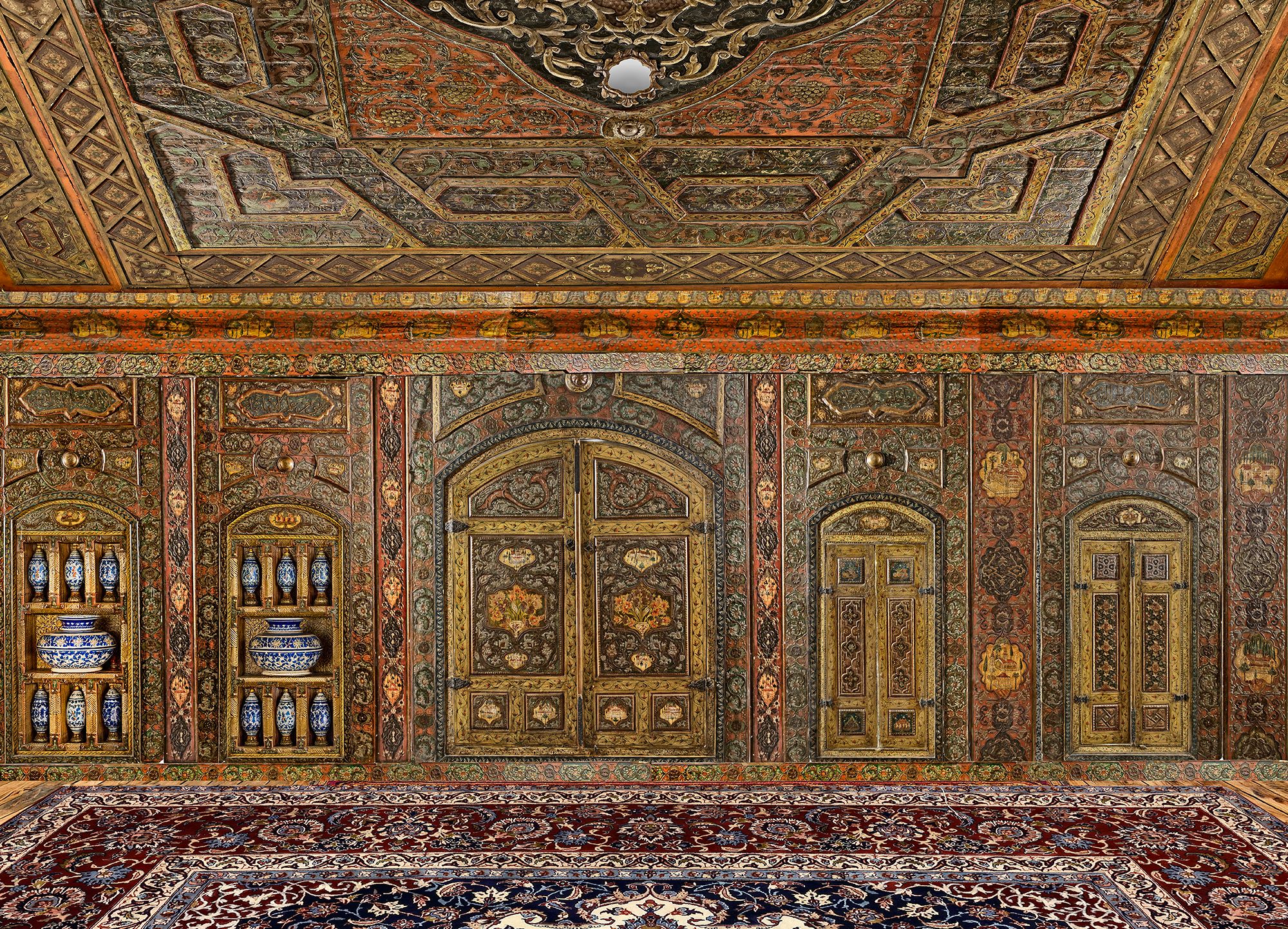
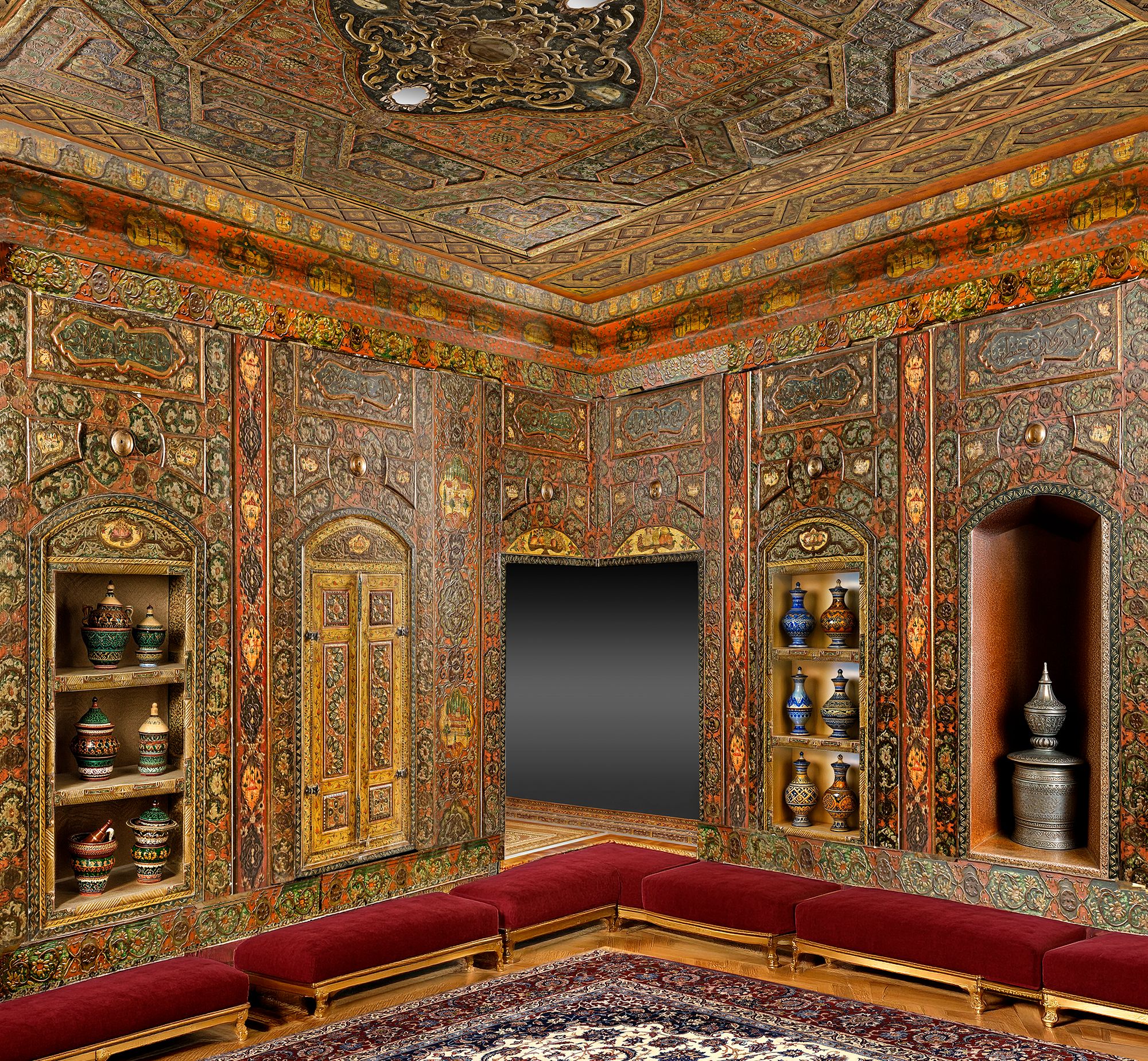
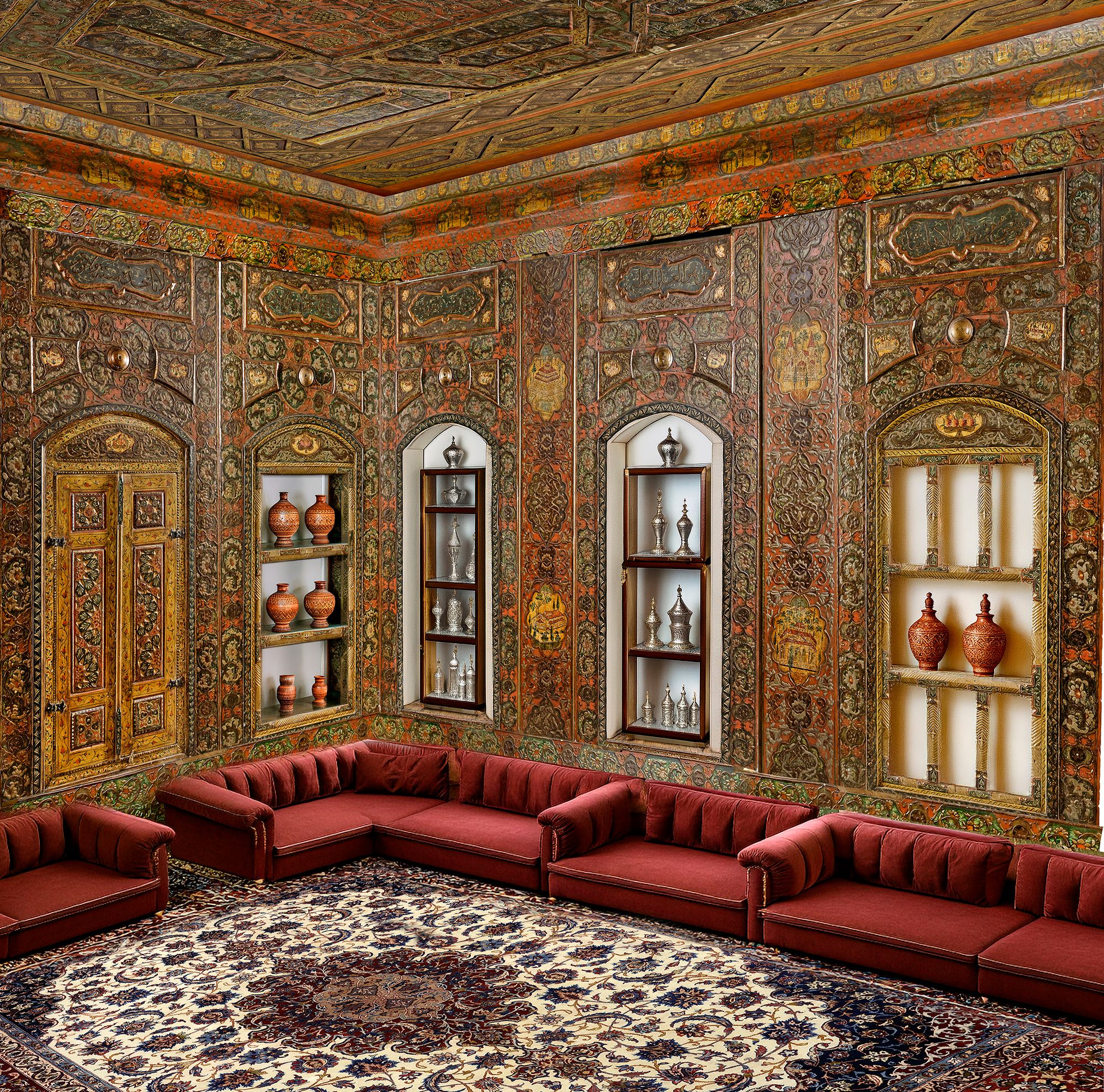
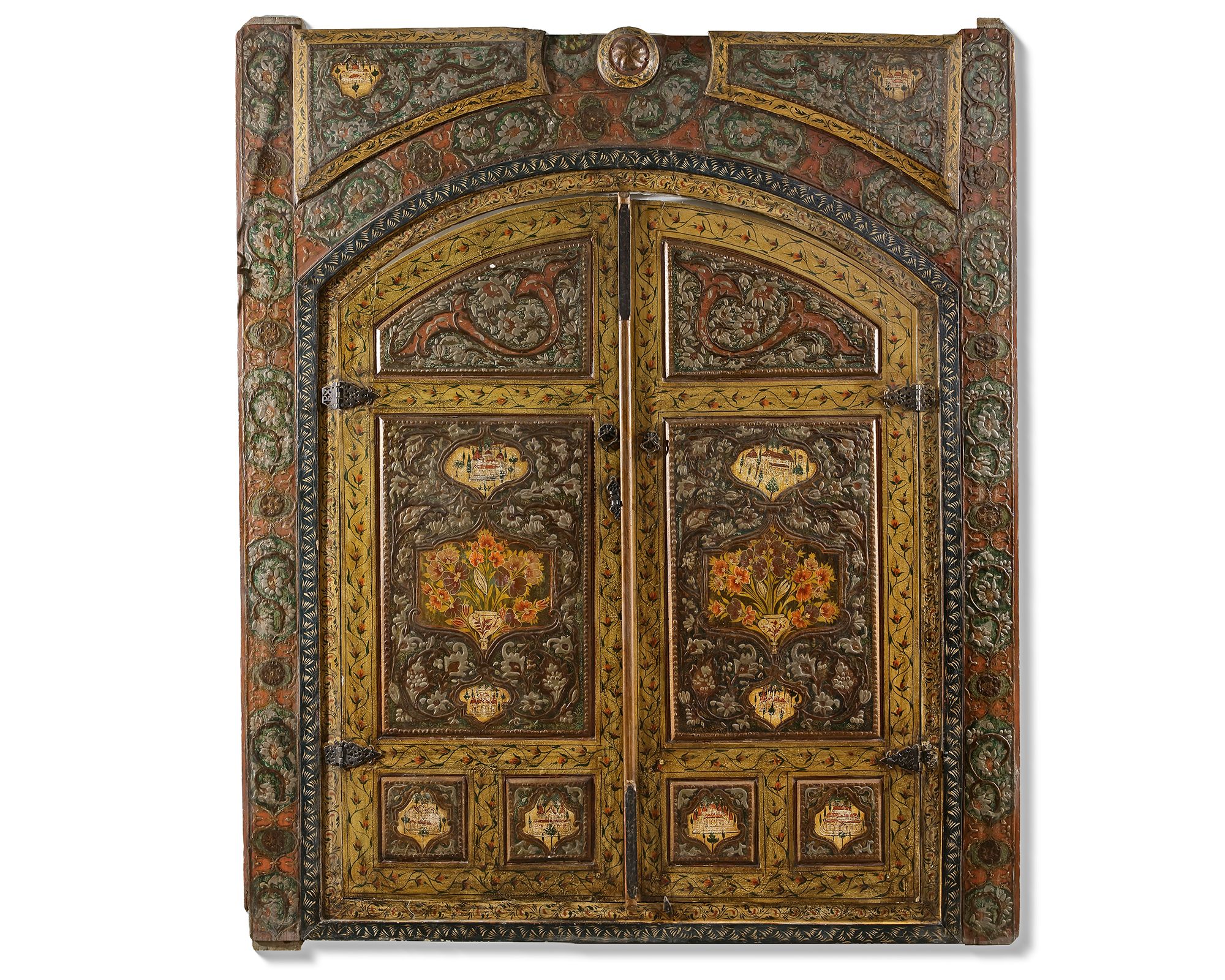
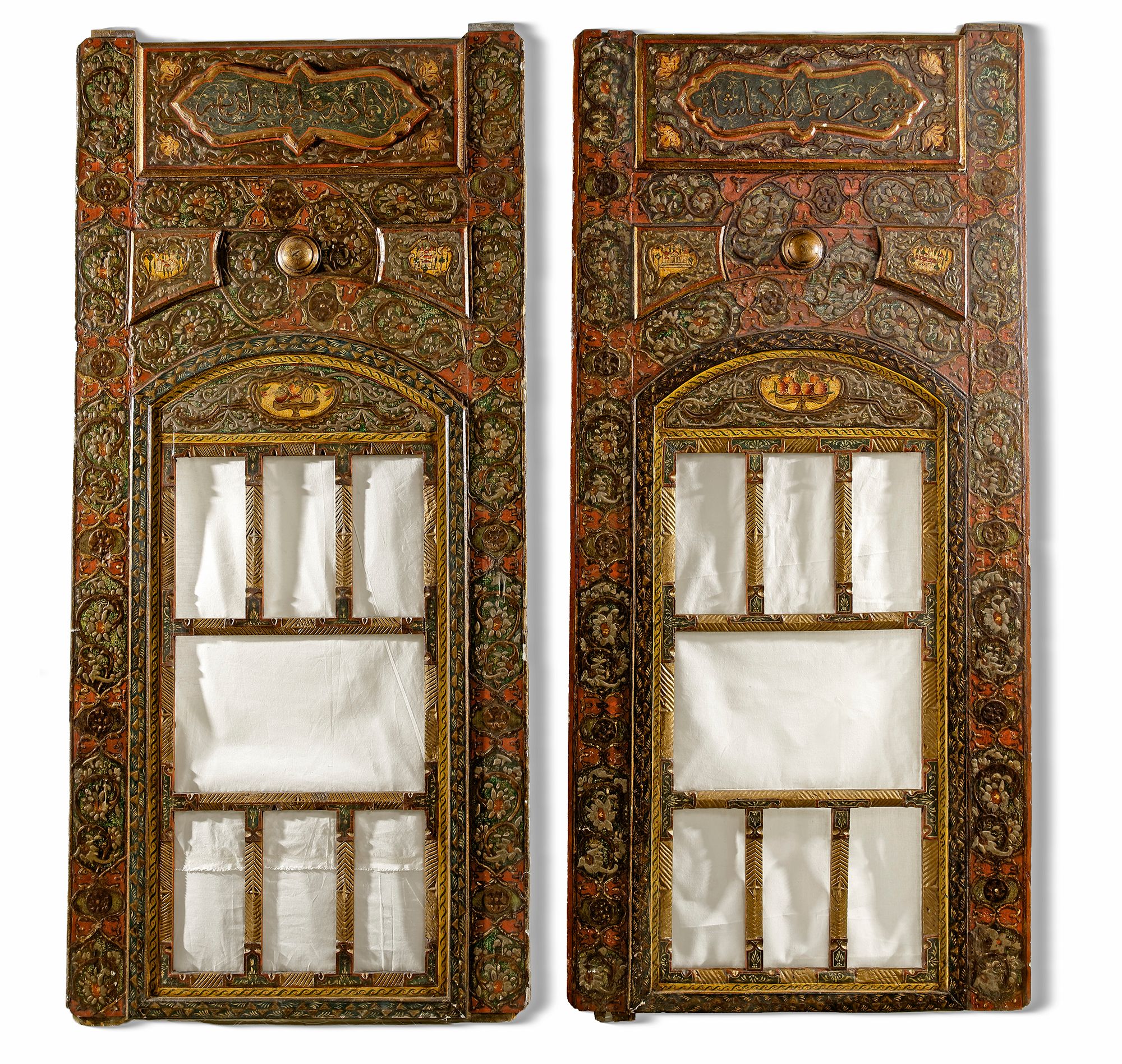
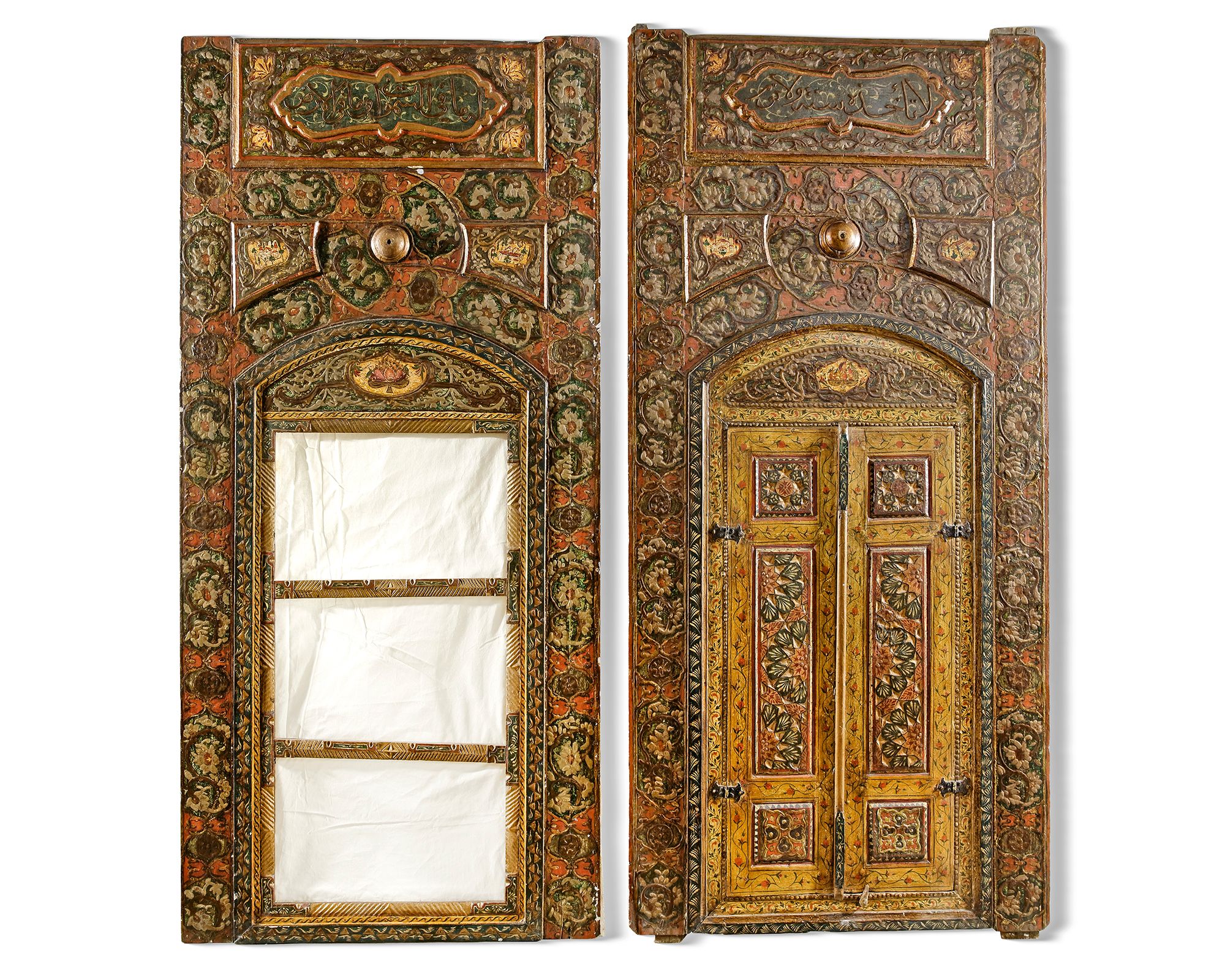
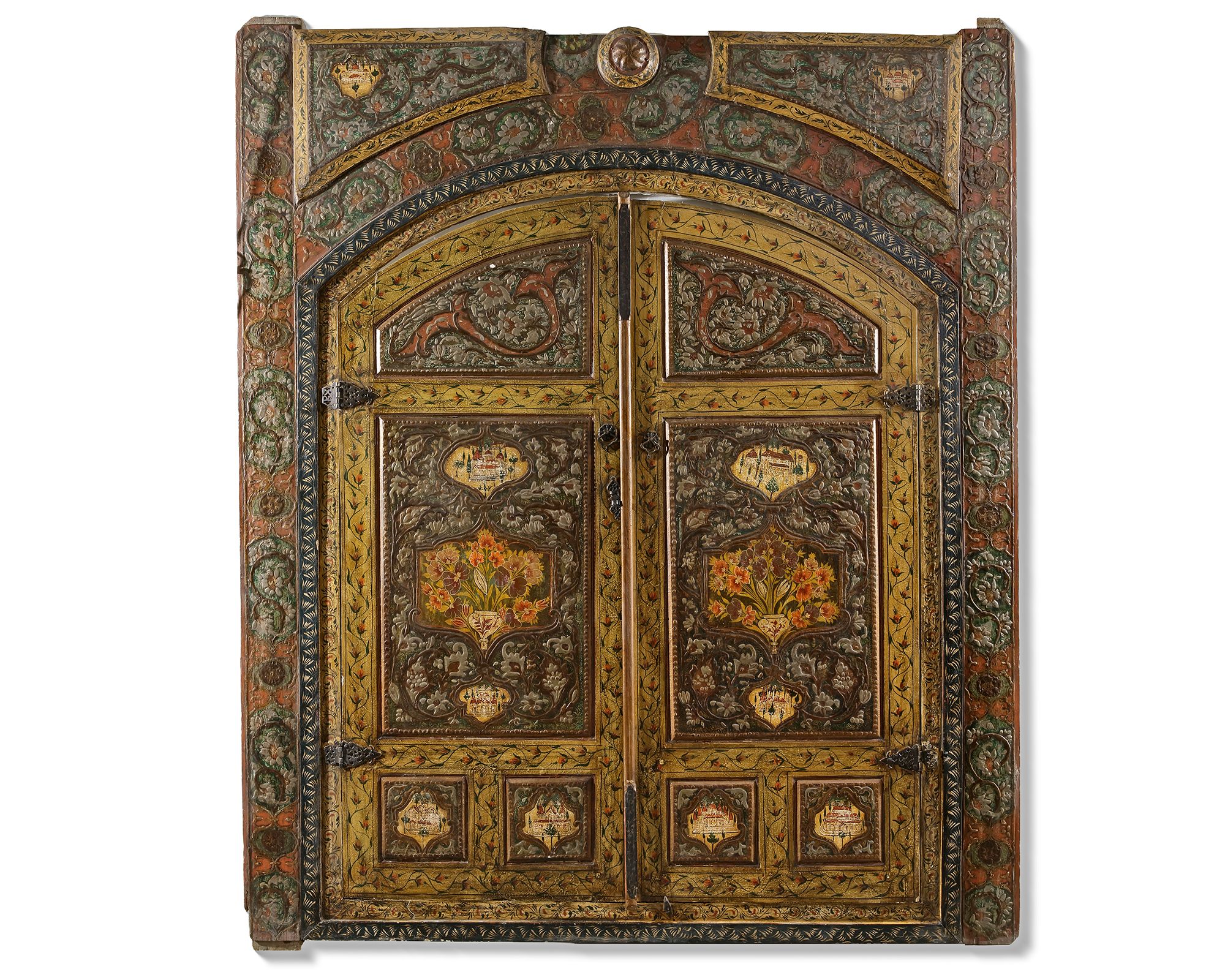
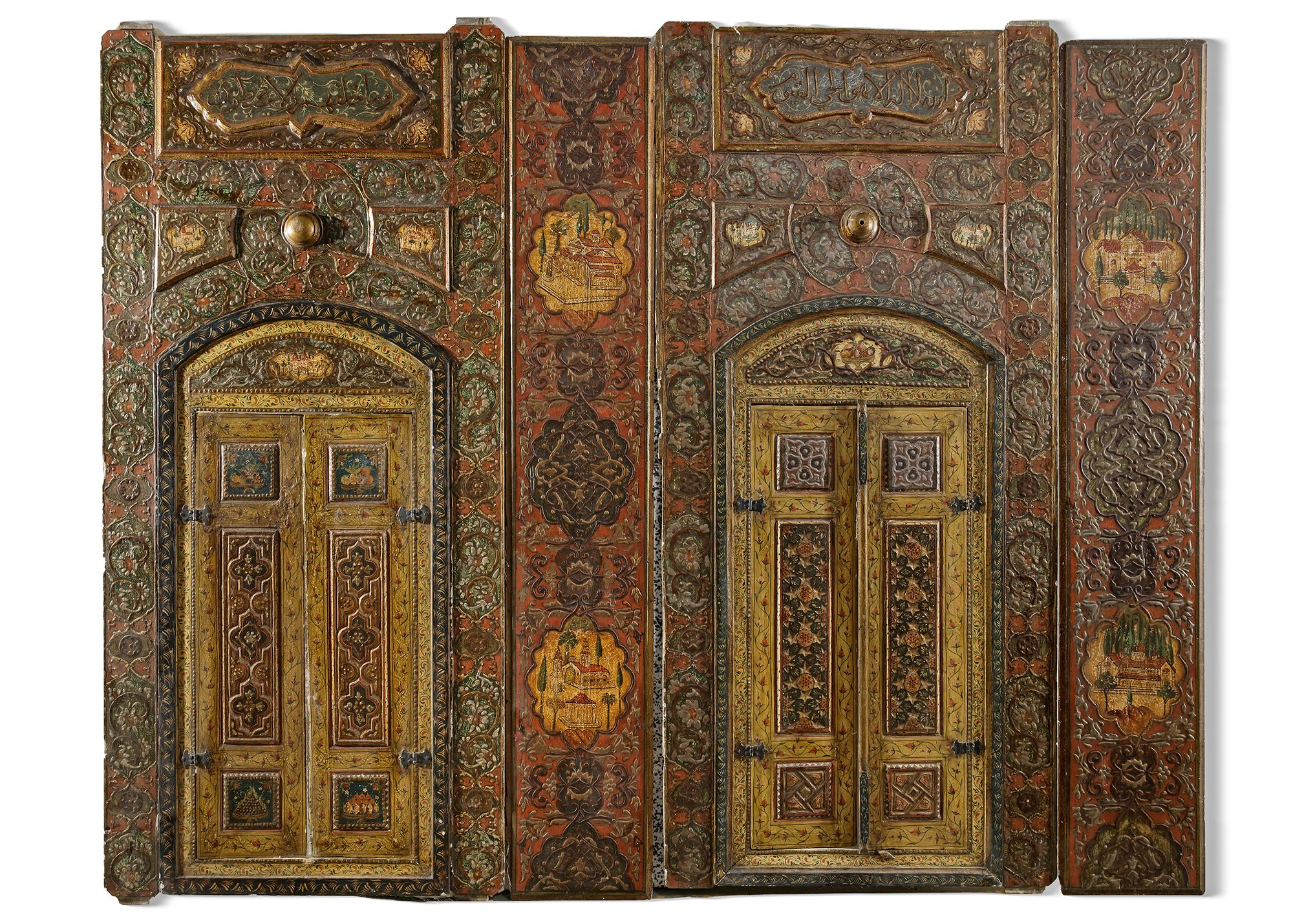
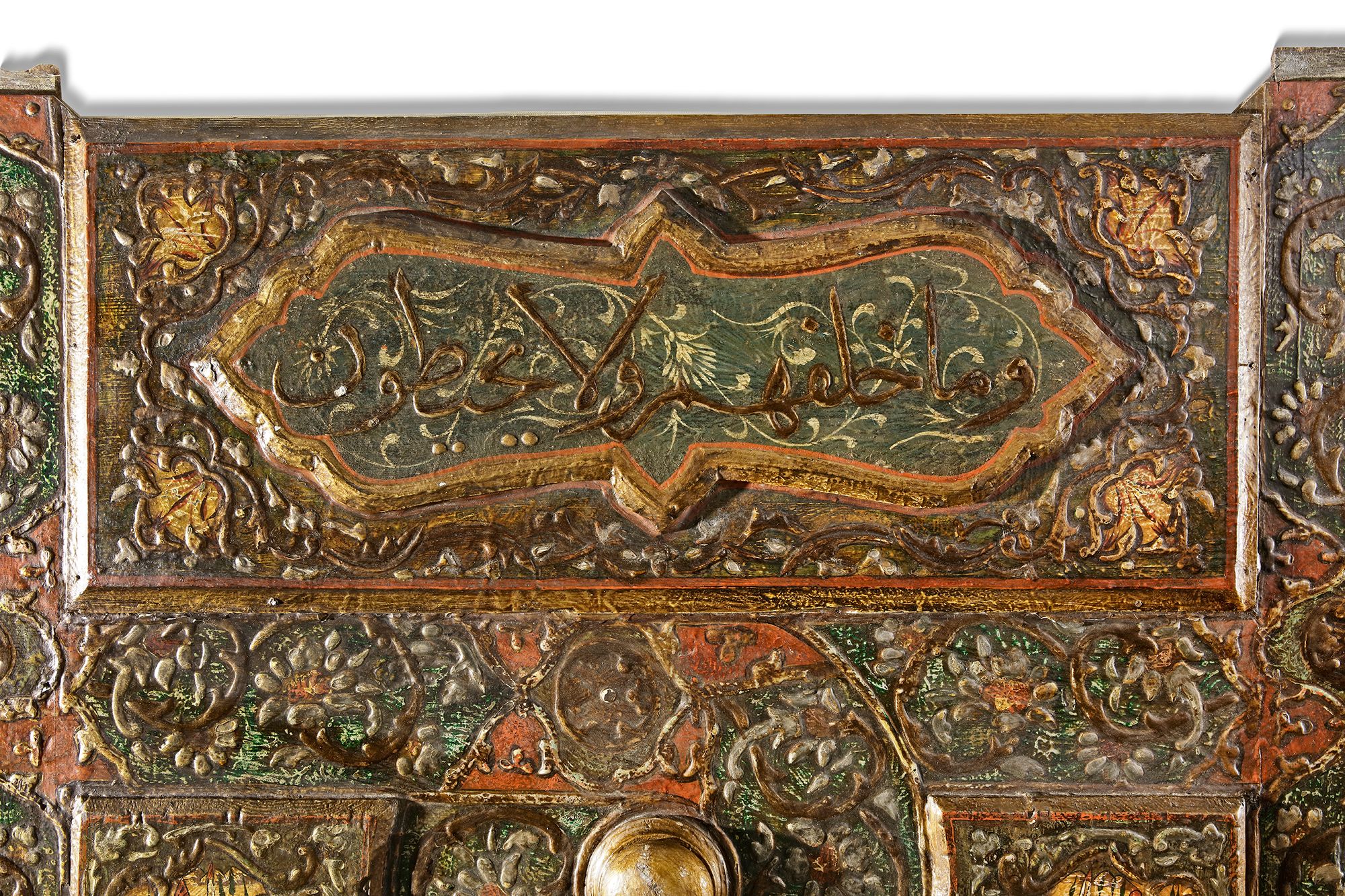
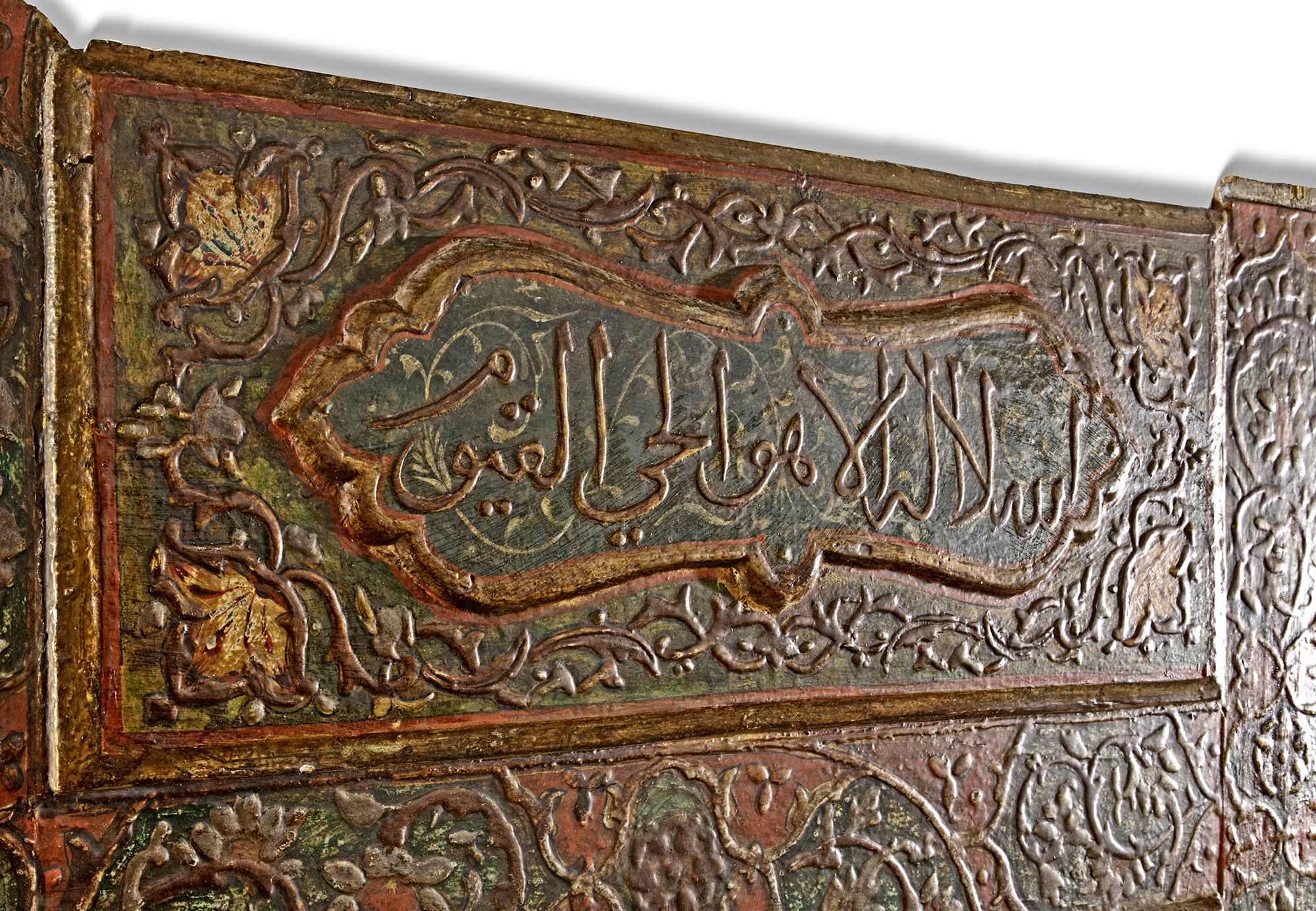
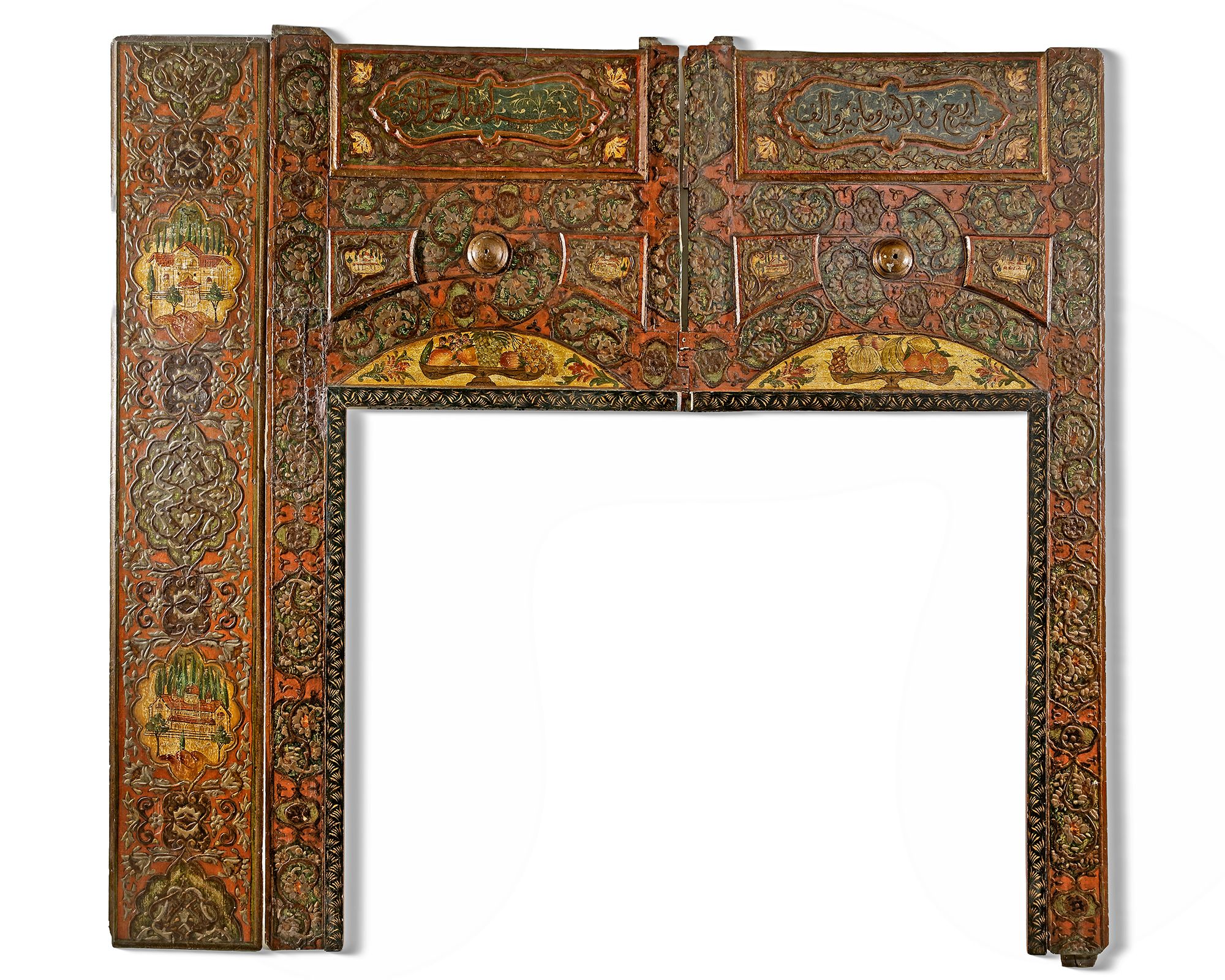
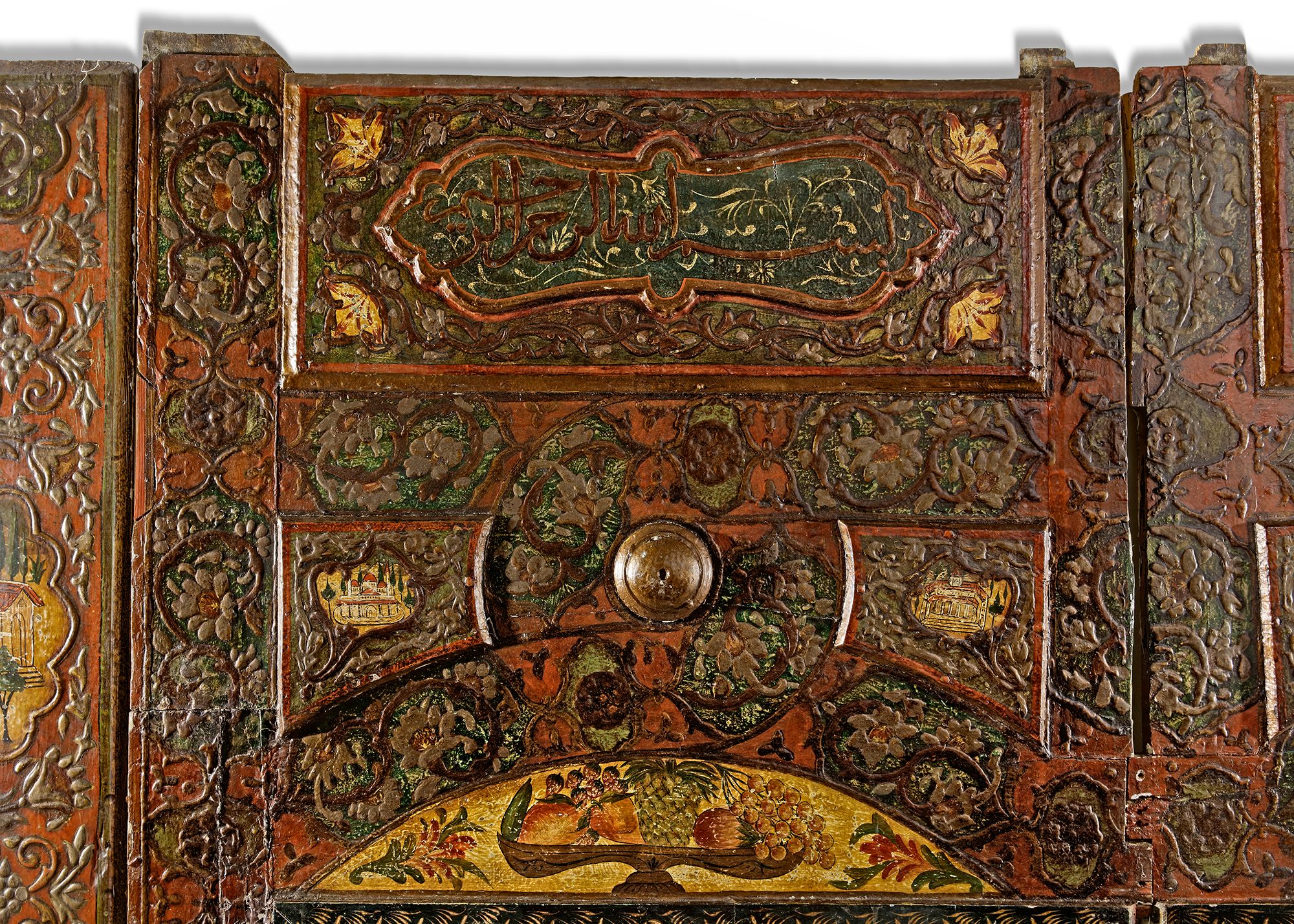
Lot 109 A GILT, GESSOED AND PAINTED 'DAMASCUS ROOM', OTTOMAN SYRIA, DATED 1234 AH/1818-1819 AD
A traditional Damascus reception room (qaʿa) is articulated into two distinct zones: the ʿataba, a lower entrance space or antechamber, often paved in stone and occasionally centered on a fountain, and the tazar, a series of raised seating platforms arranged along the sides of the room. Guests entered through the ʿataba before ascending to the tazar, where they reclined on cushions within a more intimate and sociable setting. A unified wooden ensemble binds these zones together, encompassing the ceilings—with their molded cornices and corner brackets—as well as continuous wall paneling. This ensemble further incorporates built-in recesses, shelving, cupboards, and double-leaf doors, forming a coherent architectural and decorative whole.
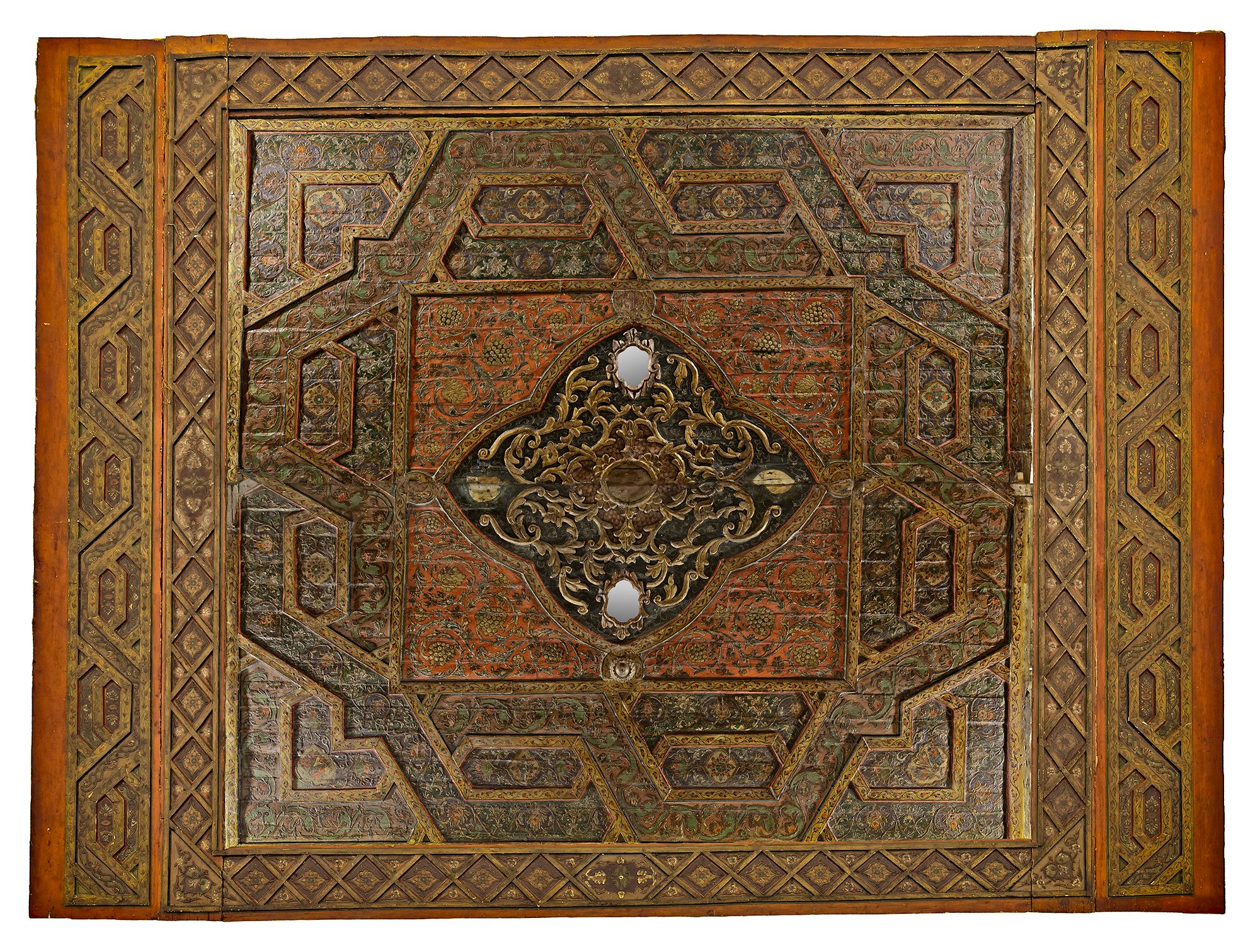
The ceiling is a particularly elaborate and commanding element of the ensemble. It is composed of a large, geometrically structured wooden framework organized around a central medallion. This medallion, set within a polygonal field, features densely layered vegetal scrolls and arabesques executed in relief, enriched with gilding and dark tonal contrasts. Surrounding it, interlocking geometric compartments—rectangular and polygonal—are filled with finely painted floral and vegetal motifs in a rich palette of red, green, gold, and earth tones. The entire composition is framed by multiple borders of repeating geometric patterns, creating a sense of depth, symmetry, and visual rhythm. The surface is further animated by the ʿajami technique, with raised gesso decoration, gold leaf, and tinted glazes that respond dynamically to light, giving the ceiling a textured and luminous quality.
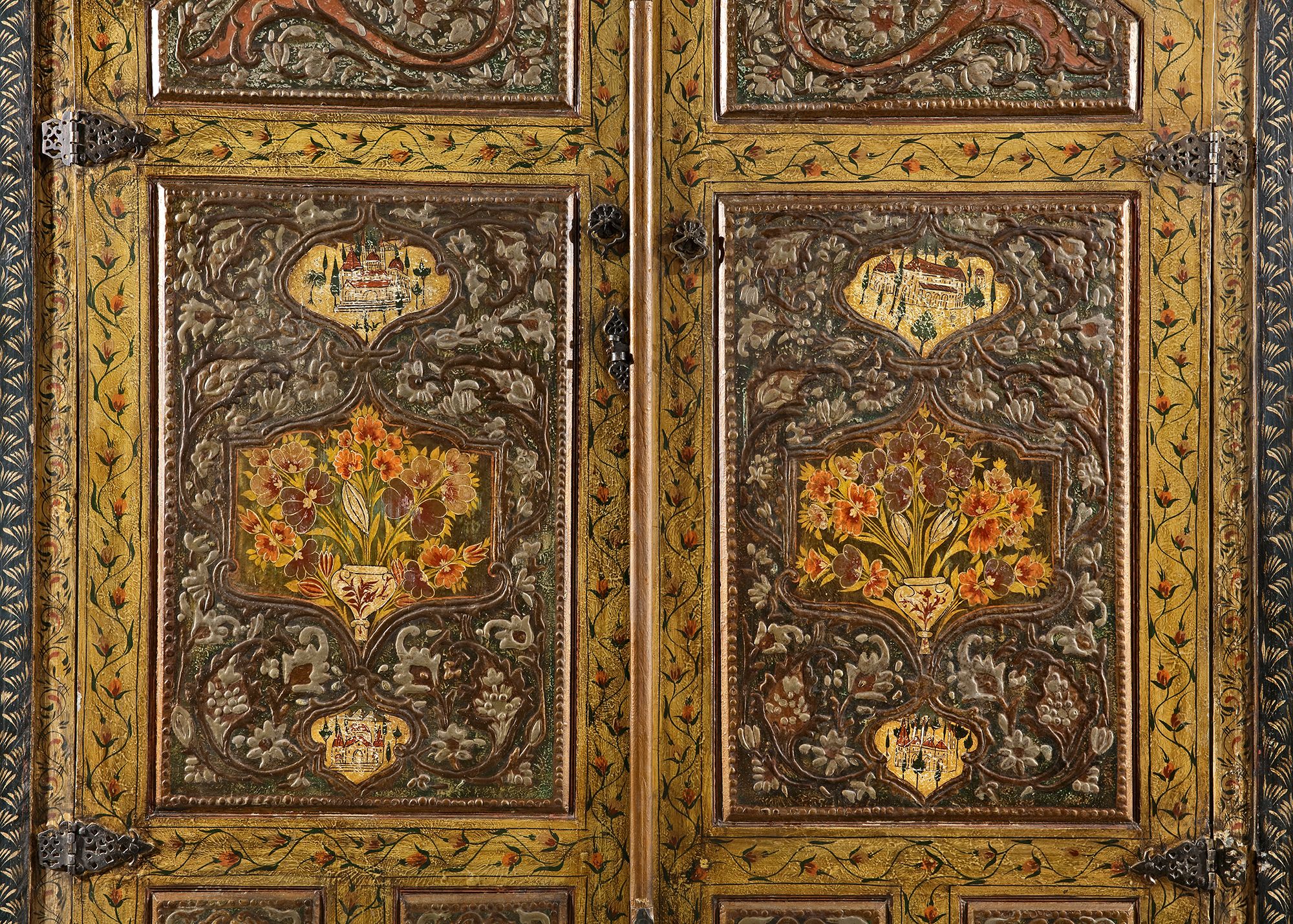
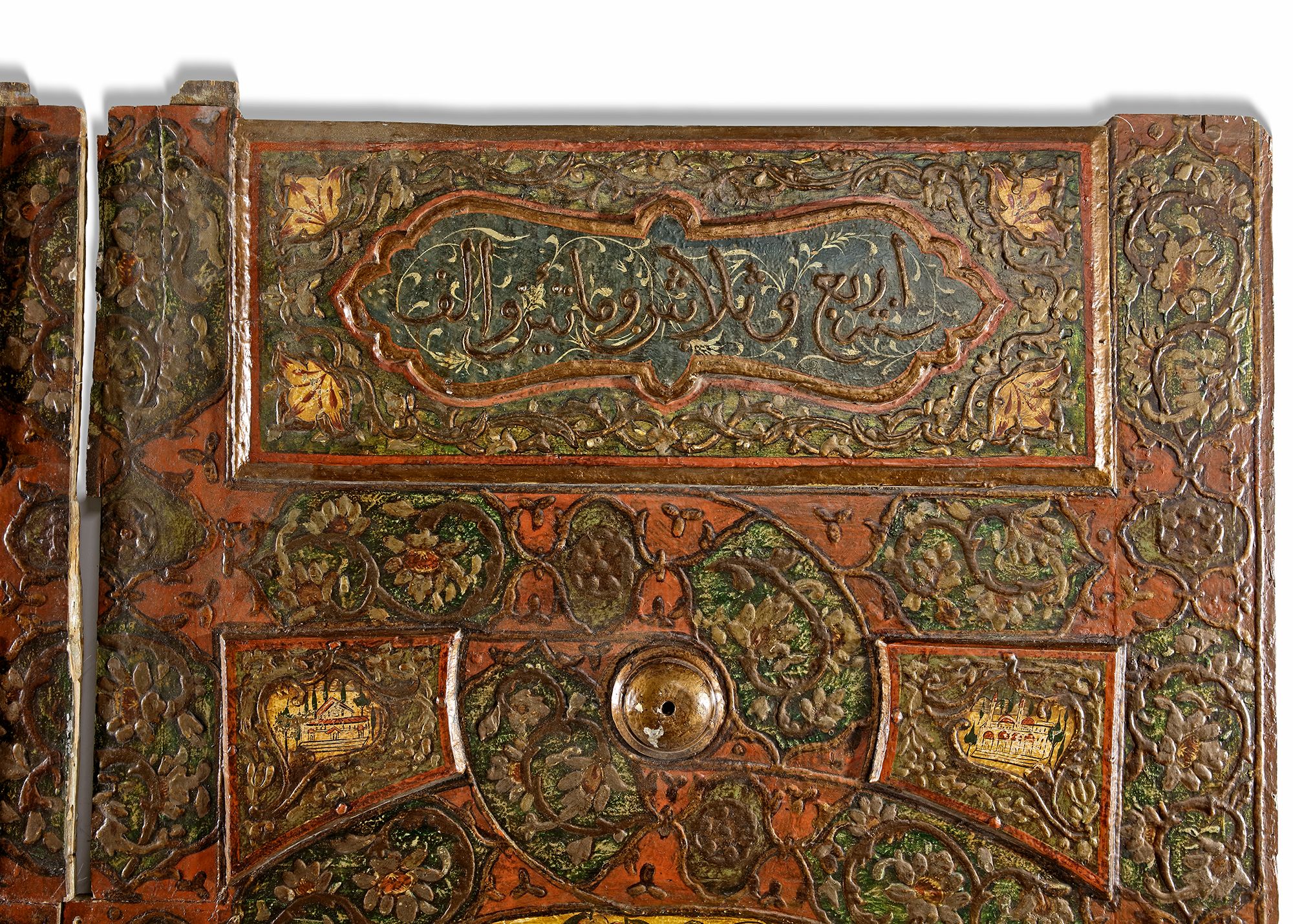
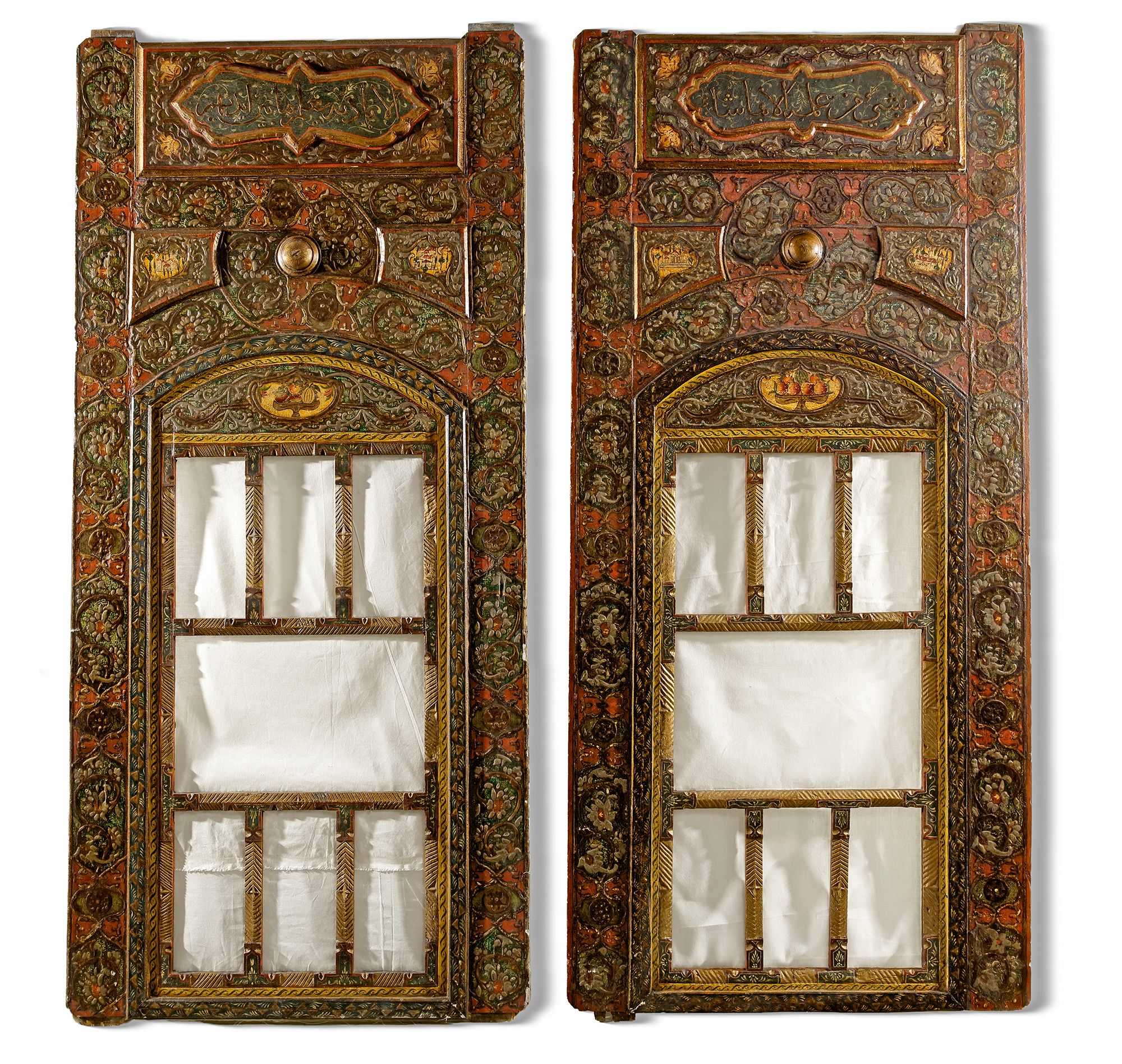
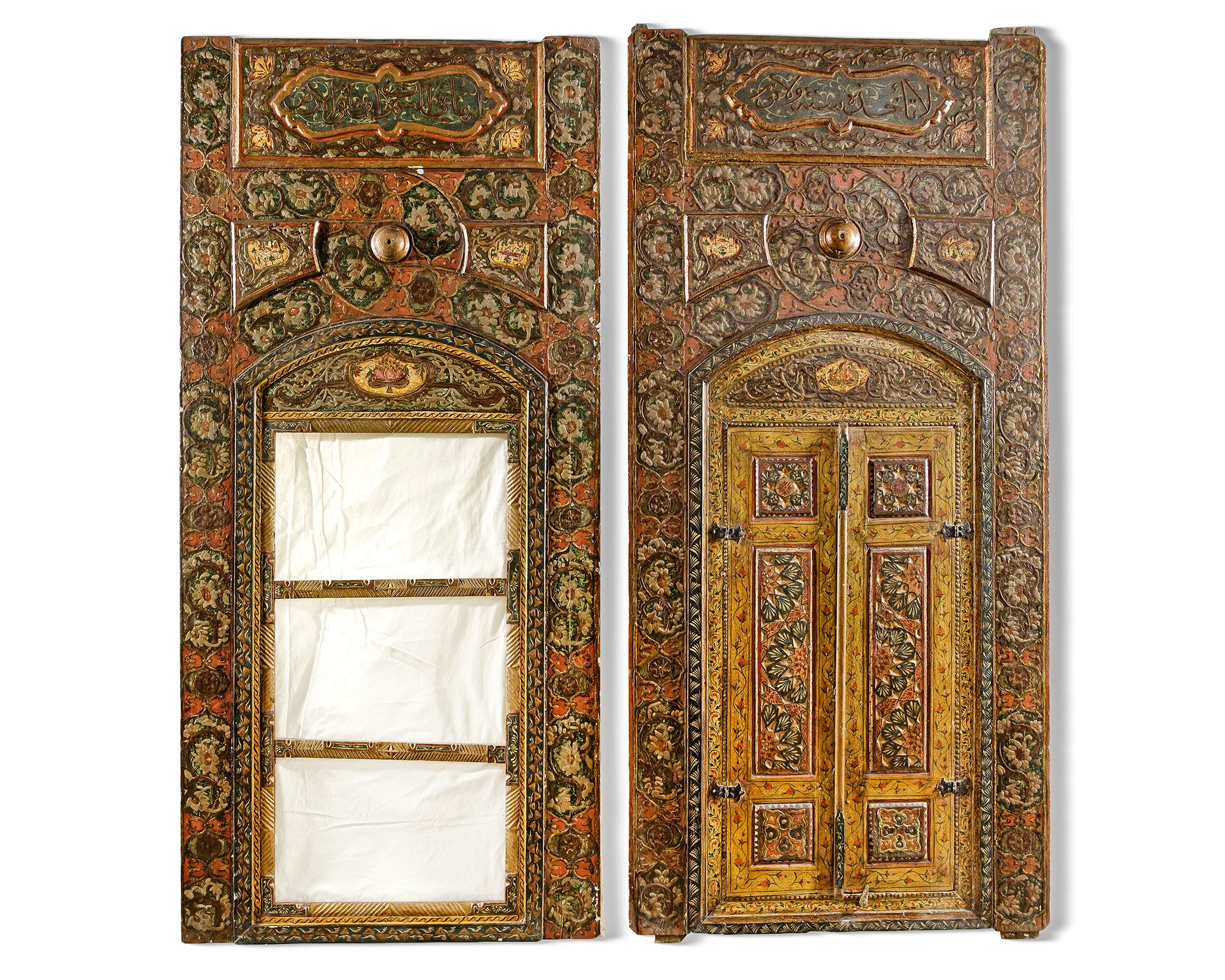
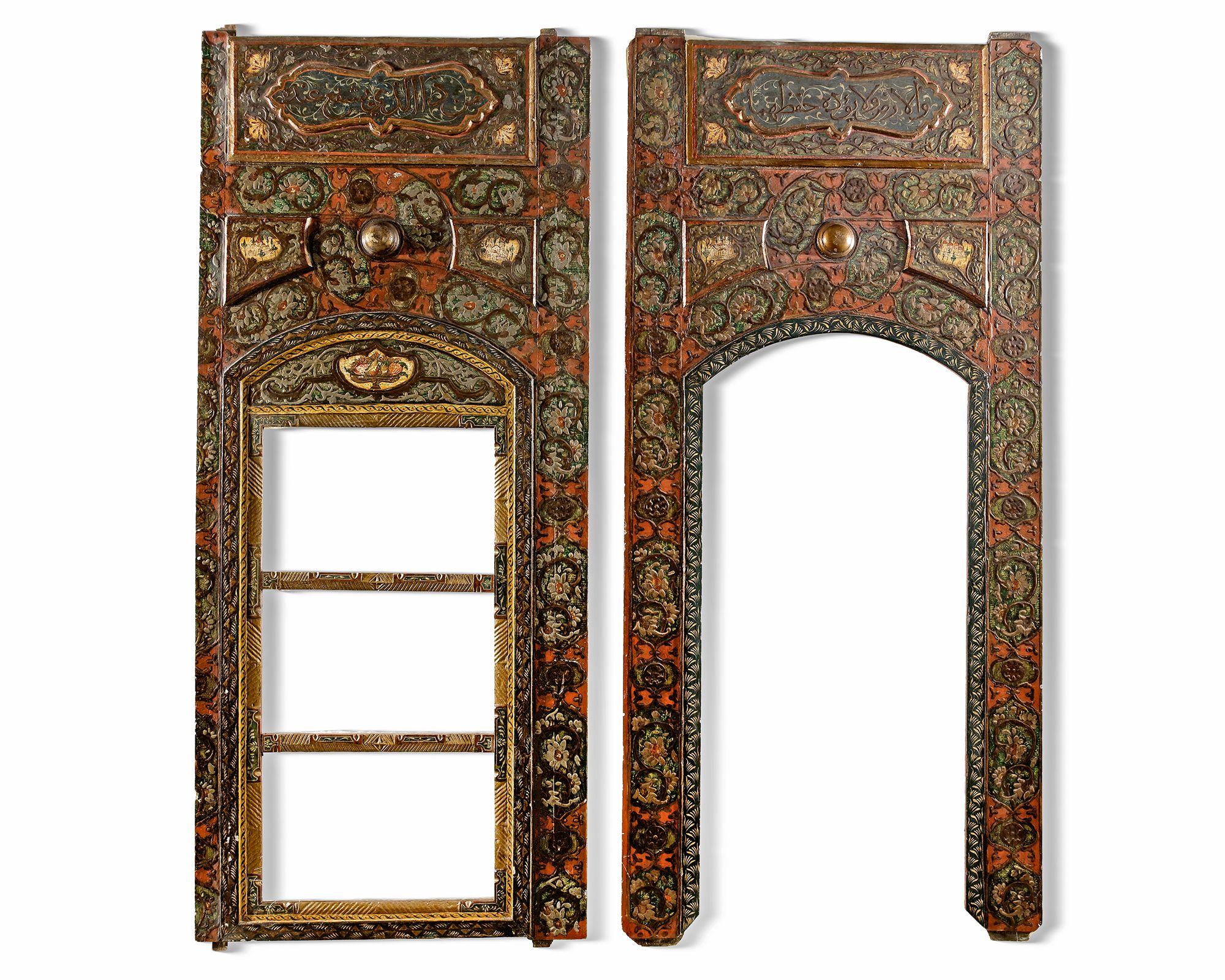
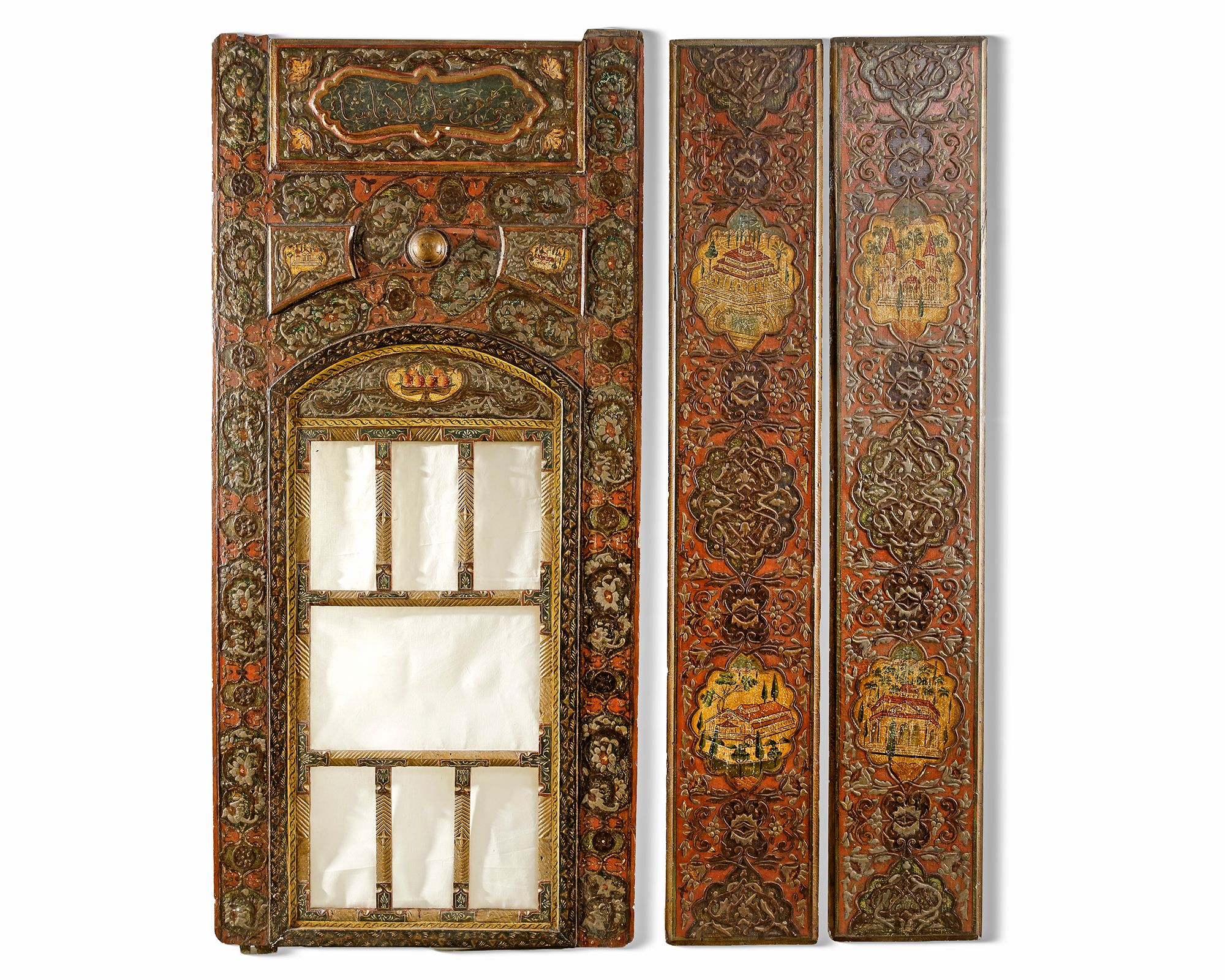
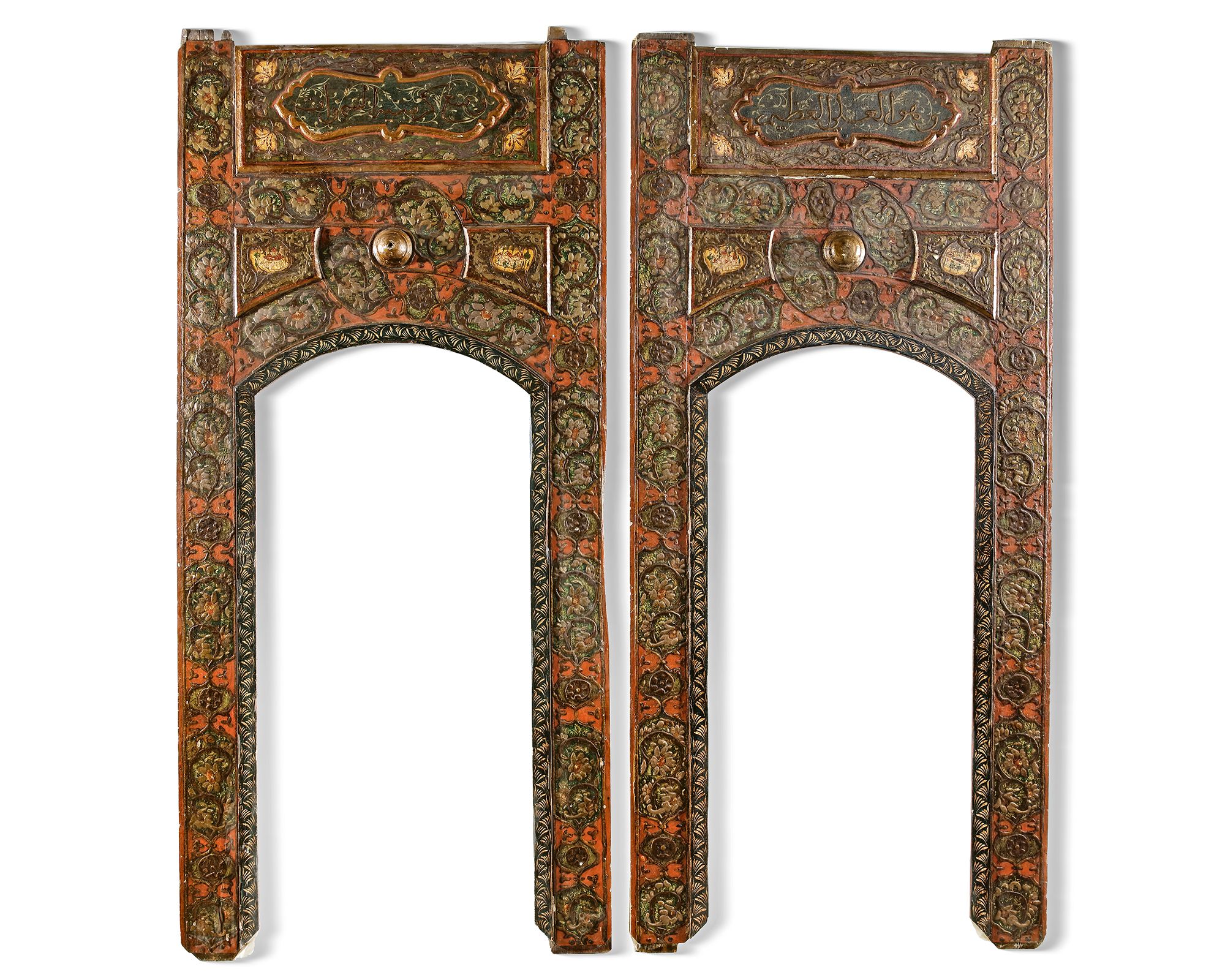
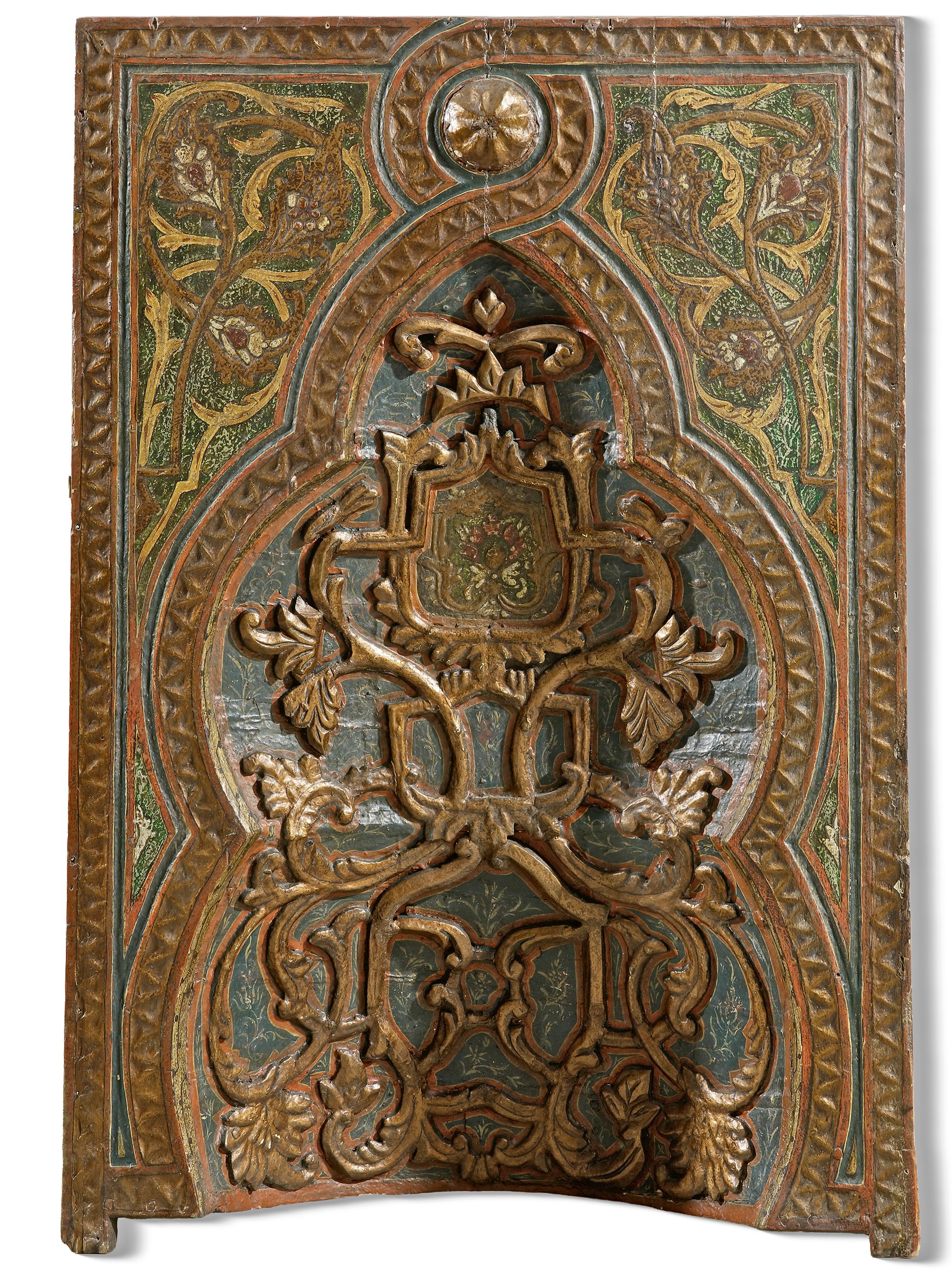
The room features a large, elaborately painted and decorated door adorned with vases filled with flowers, cartouches depicting architectural scenes, and flowing floral and vegetal scrolls. It also incorporates built-in wall cupboards, recessed storage spaces without doors, traditionally concealed by curtains, used for storing bedding such as mattresses, quilts, and cushions. Seven kitbiyyas, open wall niches fitted with wooden shelves, are integrated into the paneling and serve to display Chinese porcelain, candlesticks, glass vessels, and books. A niche resembling a mihrab is likewise set into the wall, underscoring the room’s cultural and religious context. Three smaller windows are richly ornamented with birds, floral scrolls, vegetal motifs, and geometric designs, further enhancing the decorative character of the space.
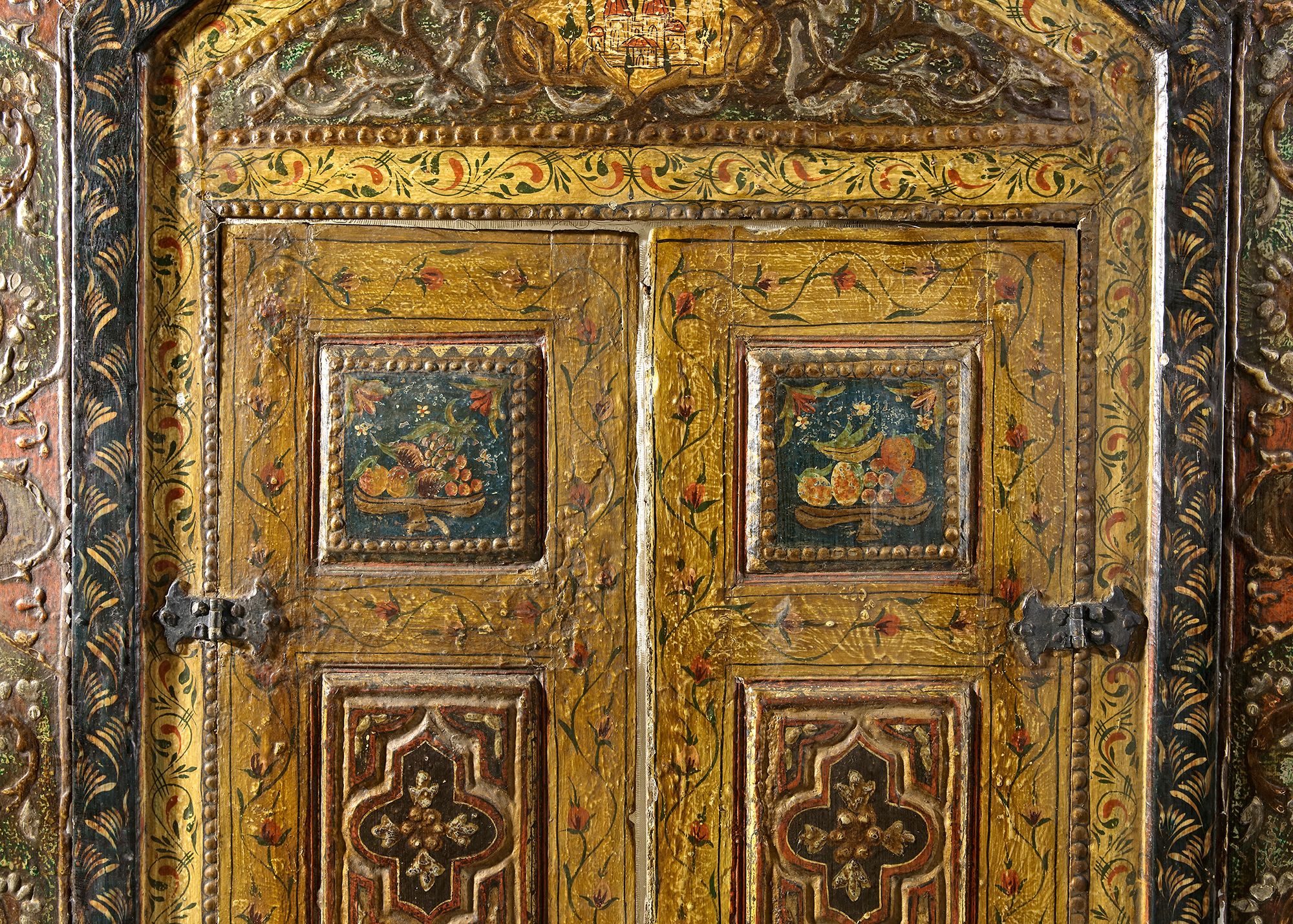
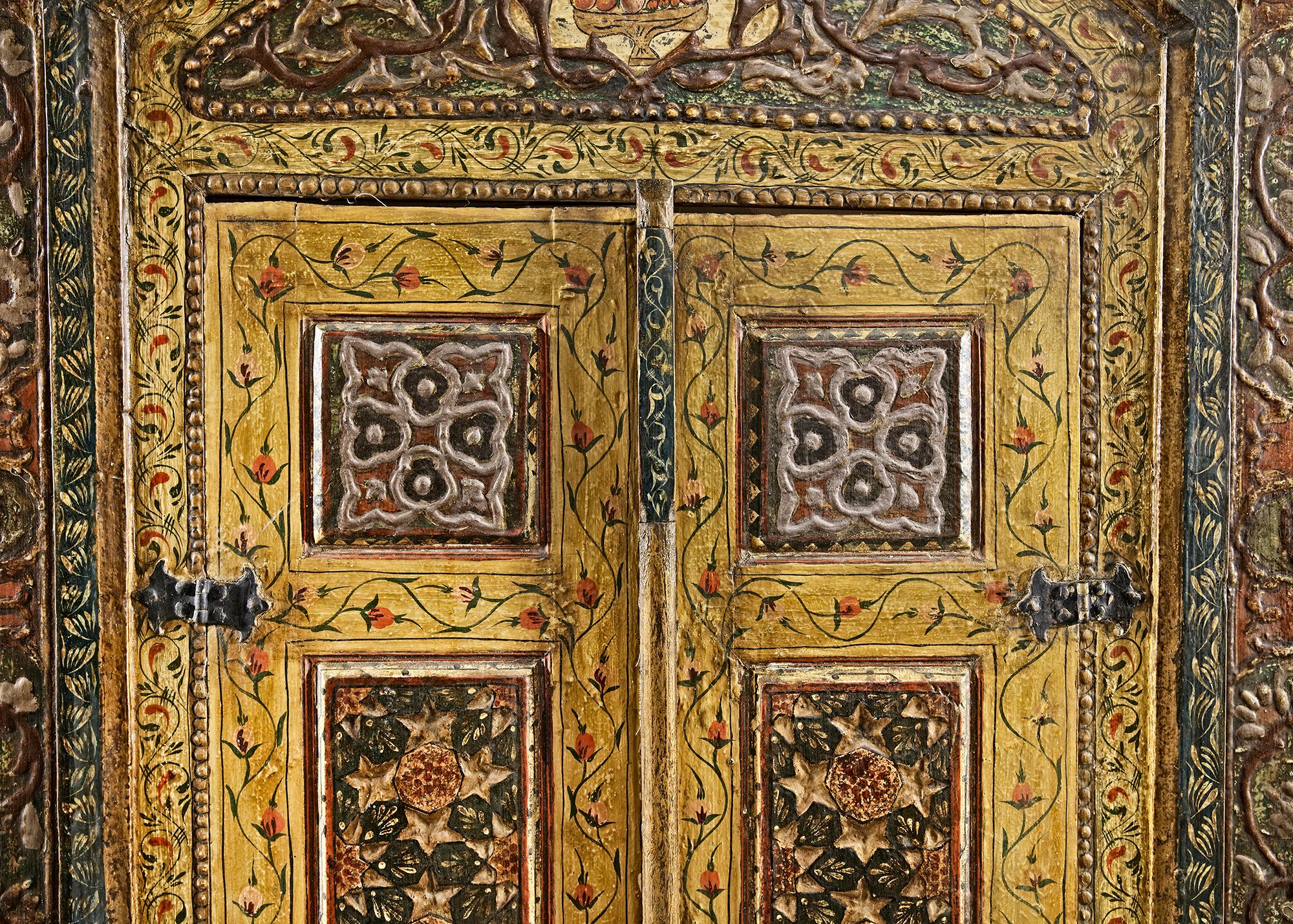
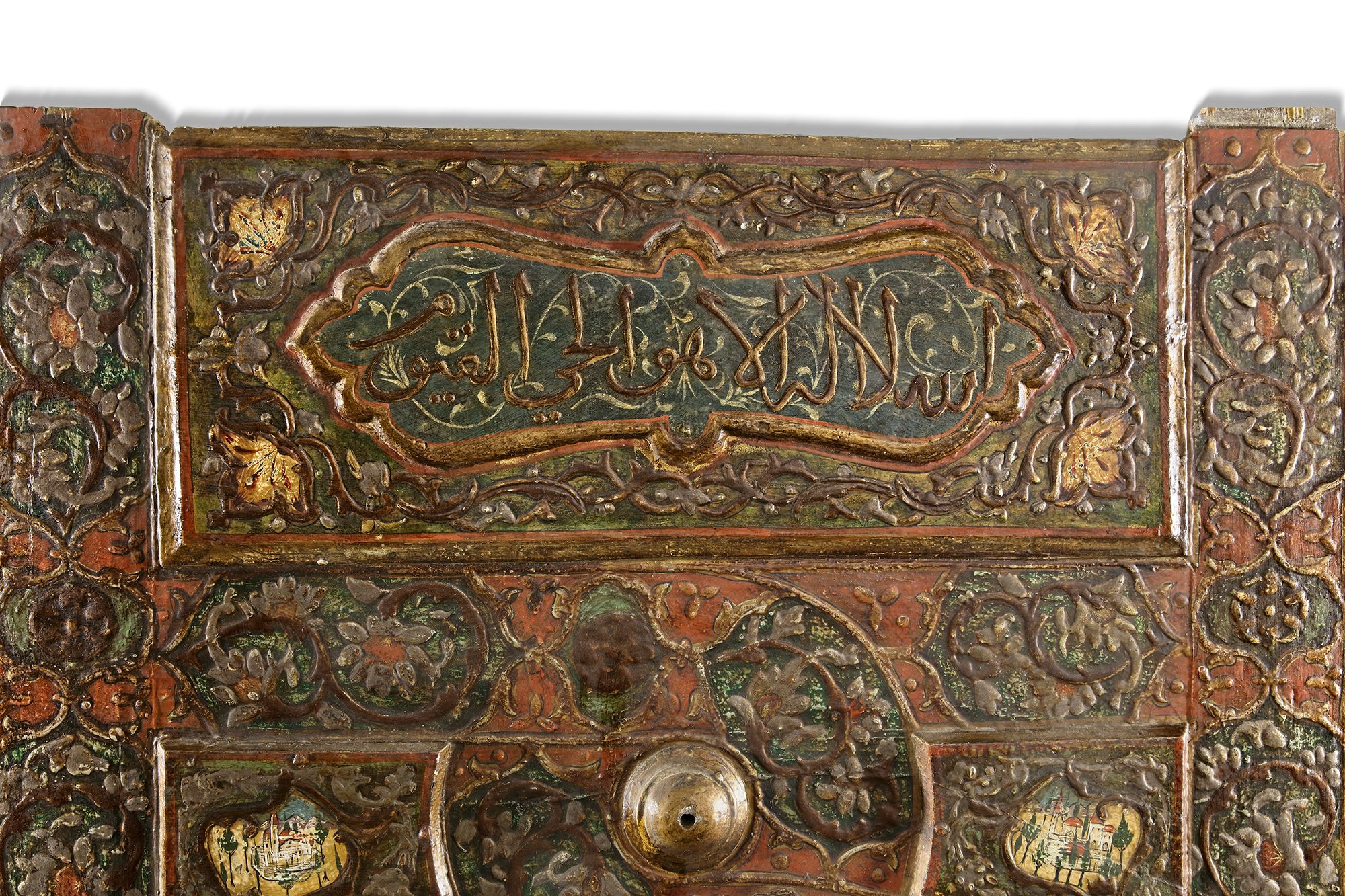
The woodwork is enriched with relief decoration executed in gesso and heightened with gold leaf, as well as tin leaf layered with translucent tinted glazes and vivid egg tempera paint. Known as ʿajami, this distinctive Ottoman-Syrian technique creates richly textured, multi-layered surfaces that respond dynamically to shifting light. These surfaces are adorned with a wide array of motifs—floral and vegetal designs, vases brimming with flowers, fruit compositions, narrative vignettes, geometric patterns, and calligraphy in elegant thuluth script, including the Ayat al-Kursi, attesting to the Muslim identity of the room’s original owner.
The presence of fruit bowls and flower vases reflects the rapid adoption in Damascus of decorative iconography associated with early eighteenth-century Istanbul, while their execution in the local ʿajami technique lends them a distinctly Syrian character. Additional elements, such as depictions of European-style houses and architectural forms, further suggest engagement with broader Ottoman visual culture and raise the possibility that the room was produced within an imperial context, perhaps in Istanbul, before being transferred to Damascus.
Situated at a vital crossroads, Damascus connected the northern routes linking Aleppo, Istanbul, and Europe with the southern pilgrimage roads to Mecca and Medina. The city was a prosperous commercial center, drawing wealth from local agriculture, from trade routes across the Ottoman Empire and beyond, and from Muslim pilgrims who gathered in Damascus on their way to Mecca. As a meeting point for caravans traveling in both directions, it flourished as a hub of exchange and cultural interaction. Wealthy and cosmopolitan Damascenes looked to Istanbul for the latest fashions, embraced styles inspired by Europe, and collected imported goods from East Asia. Within this milieu, affluent urban residents incorporated richly appointed reception rooms such as this one into their homes. The presence of refined Qurʾanic calligraphy further suggests that the owner was a prosperous local Muslim merchant, reflecting both affluence and cultural sophistication.
Originally, the palette of the ʿajami decoration in this room was far more vibrant and varied than it appears today. Over time, successive applications of protective varnish have darkened the surface, softening and muting the once-luminous colors. Although the exact residence from which the room originated remains unknown, it forms part of the interior of a house dated by inscription to 1234 AH / 1818AD . As such, it stands as a remarkable and rare survival—one of the earliest nearly complete examples of its kind—and remains a highlight of the museum’s collection.
Closely comparable examples are preserved in the Metropolitan Museum of Art (the “Damascus Room,” dated 1119AH / 1707AD ; Object no. 1970.170) and in the Museum of Islamic Art, Qatar, dated 1232 AH (1816/1817AD).