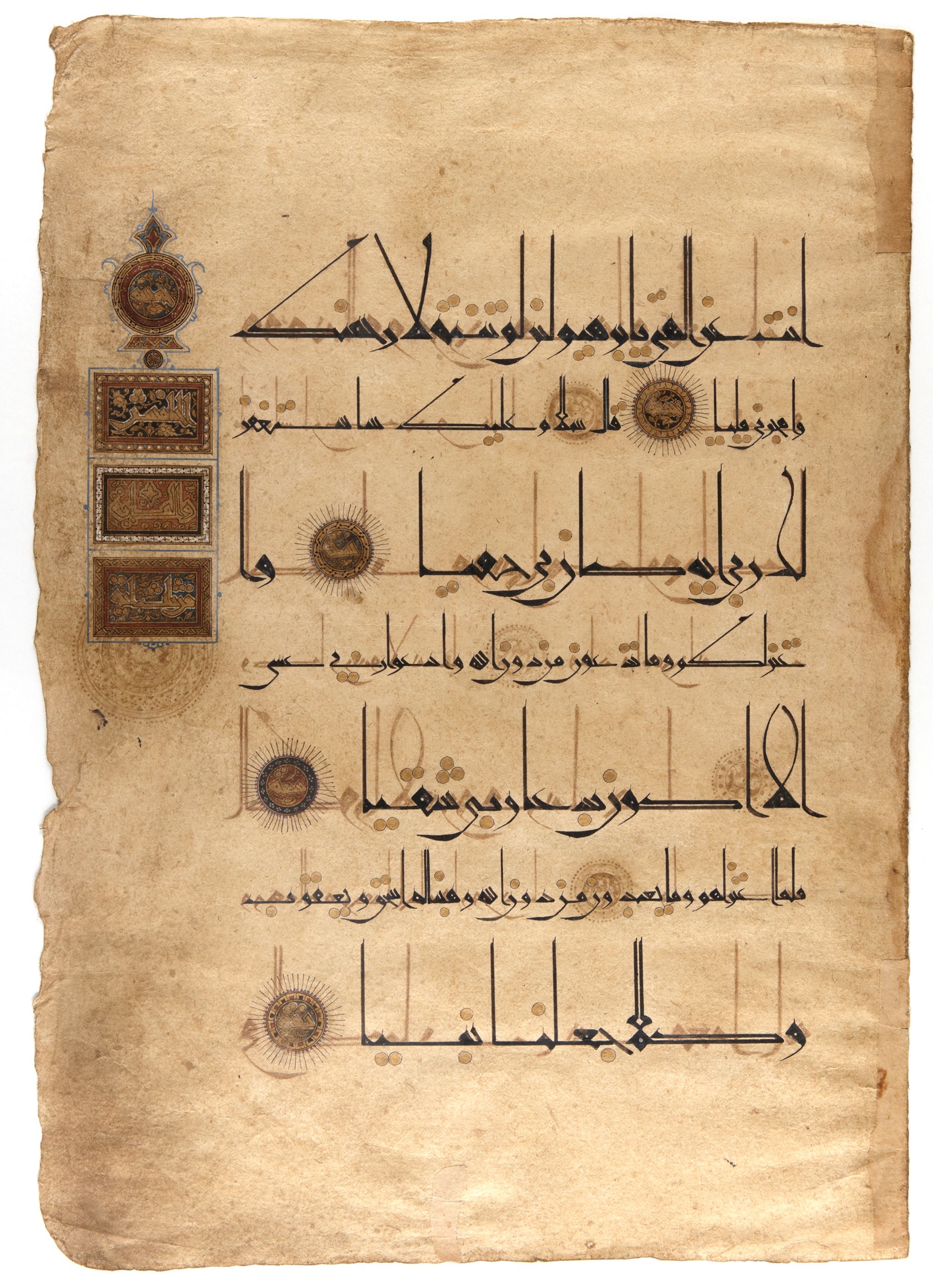
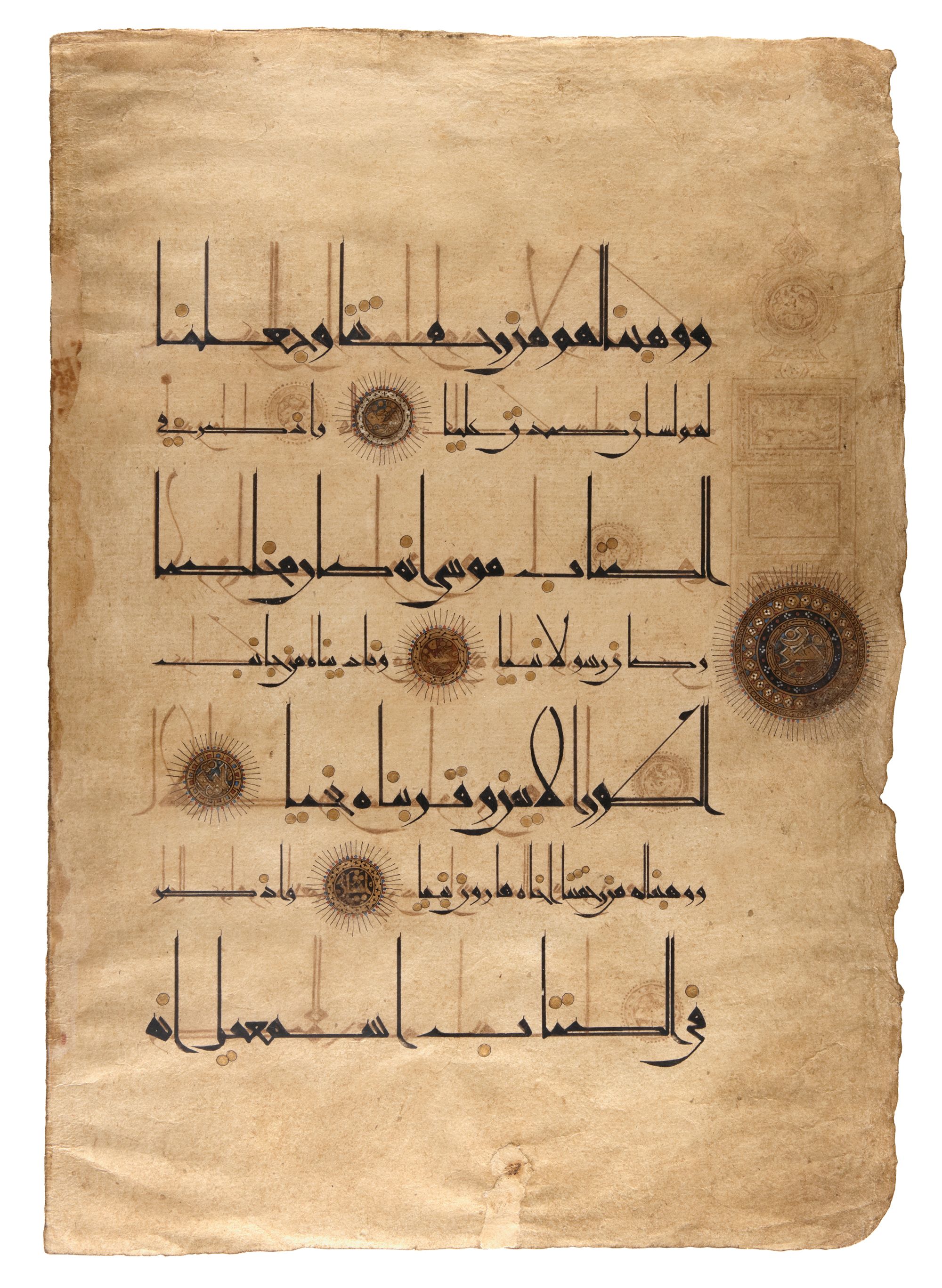
Lot 5 A QURAN LEAF IN EASTERN KUFIC SCRIPT ON PAPER, PERSIA, 11TH-12TH CENTURY
Arabic manuscript on paper, 7 lines to the page, written in elegant Eastern Kufic in black ink. Diacritical marks rendered as gold dots outlined in black. Verses separated by finely executed gold rosettes with blue and red detailing. Larger illuminated devices mark the khams and ‘ashr, while the margins bear richly decorated medallions indicating juz’ divisions. The composition is distinguished by elongated verticals and measured spacing, characteristic of the Eastern Kufic tradition. A refined example of early Islamic calligraphy, combining clarity of script with restrained yet luminous ornamentation. Inscriptions: v.46 till v.54 from surah Maryam 33.5 by 47 cm
Catalogue note: This folio belongs to the later phase of Eastern Kufic manuscript production in Persia, during the 11th–12th centuries—a period marked by the refinement of calligraphy and the increasing sophistication of the Islamic book arts under regional dynasties such as the Seljuks. By this time, paper had largely supplanted parchment as the preferred medium, allowing for greater fluidity of execution and more intricate decorative detail.
In this period, Eastern Kufic achieves a subtle balance between monumentality and ornament: the script retains its angular discipline while adopting greater vertical emphasis and refined stylistic flourishes. The use of gold diacritics, polychrome verse markers, and illuminated marginal medallions reflects a growing concern for both legibility and visual hierarchy, guiding the recitation and structural division of the Qurʾanic text.
Manuscripts of this type were likely produced in major Persian centers and intended for elite devotional or institutional contexts, embodying a synthesis of spiritual function and artistic refinement characteristic of the high medieval Islamic world.