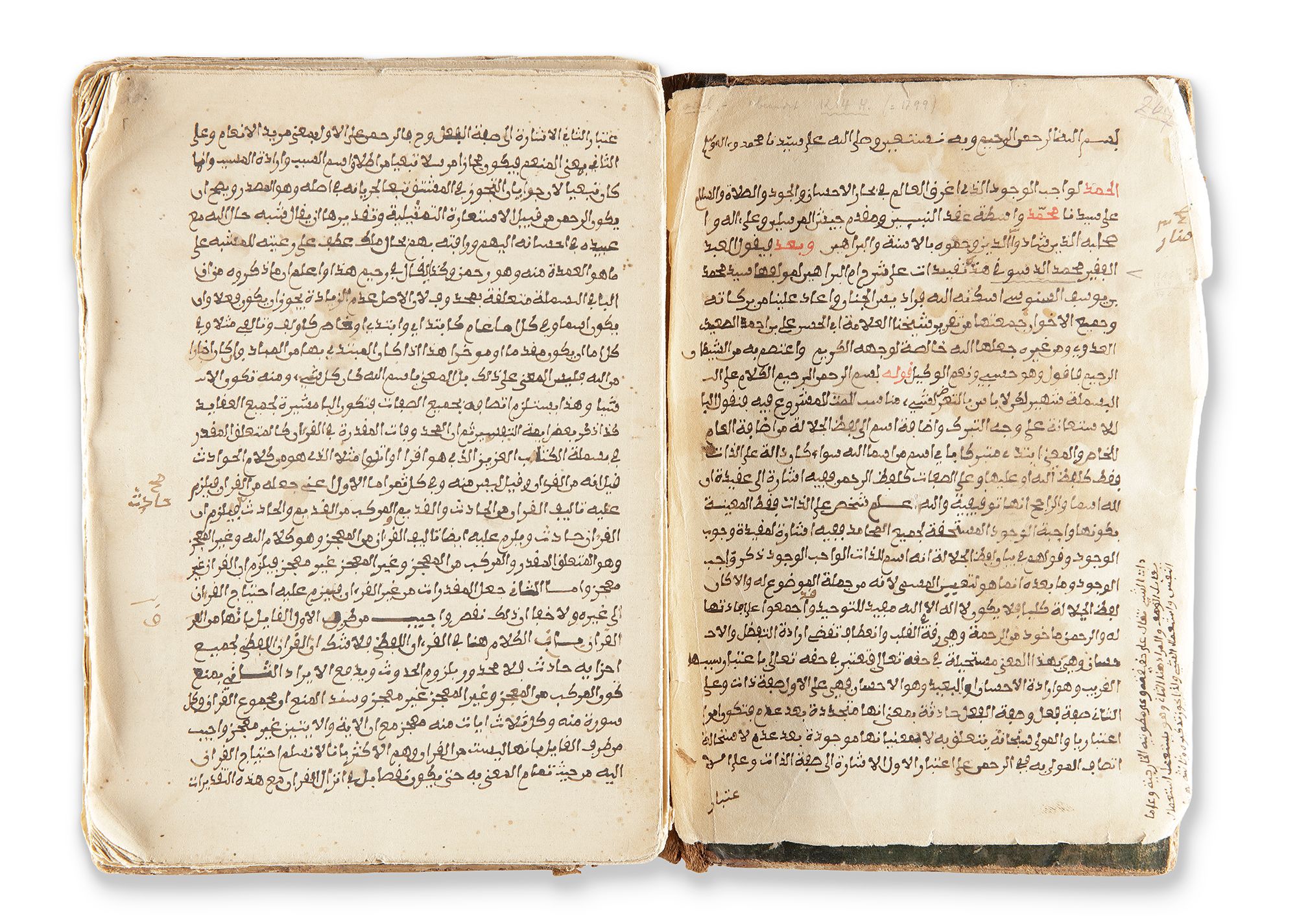
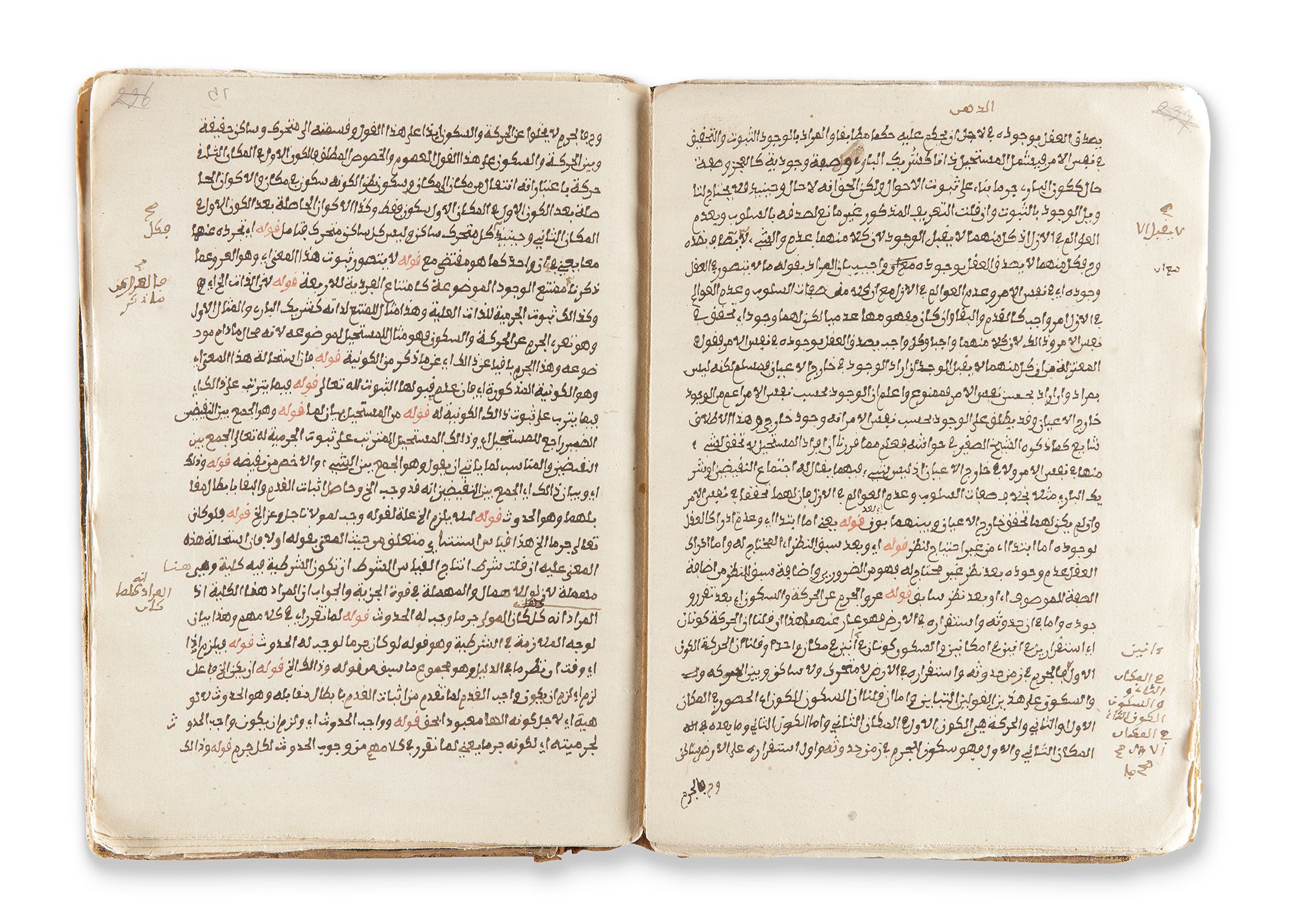
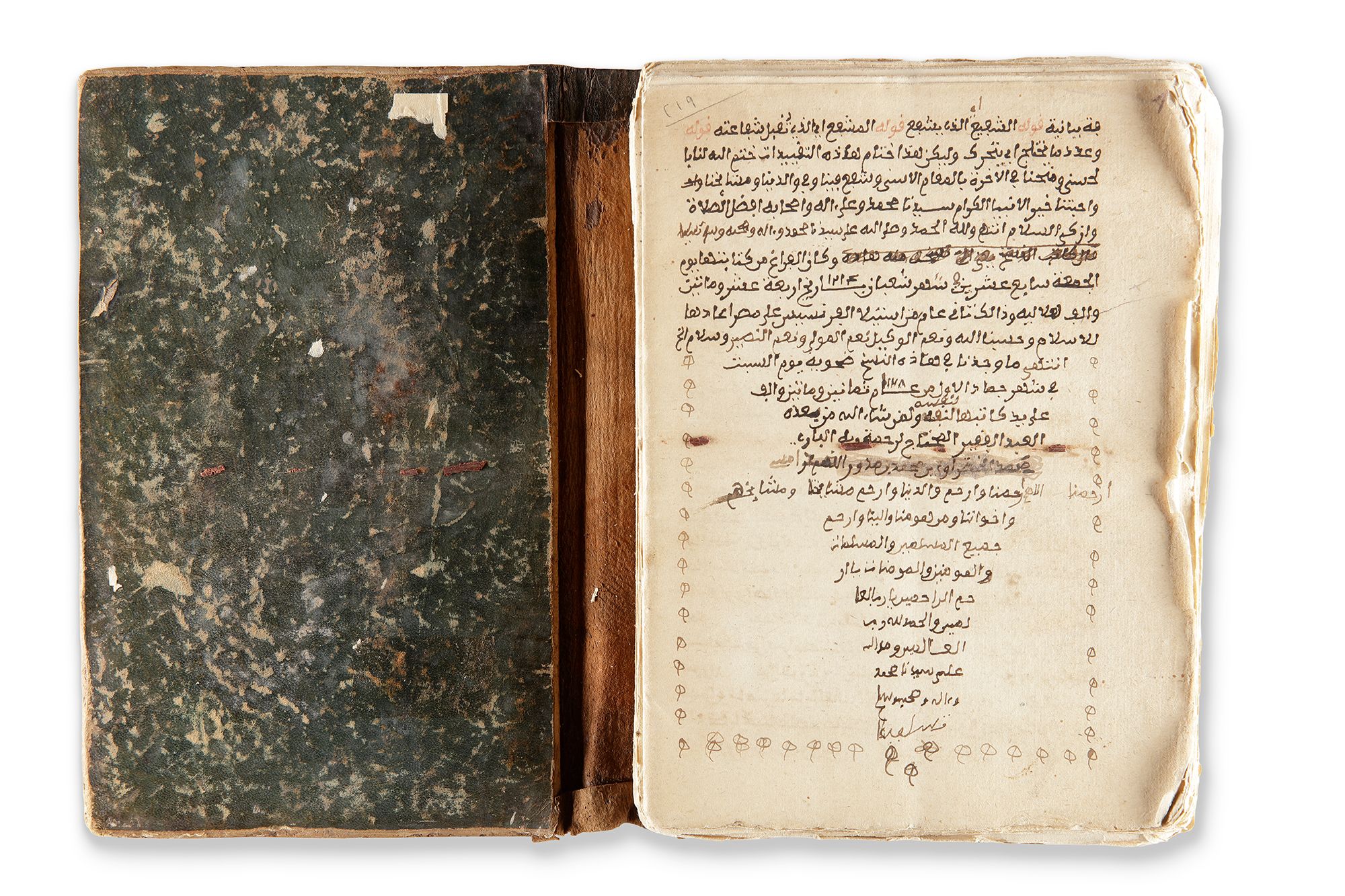
Lot AN ASH‘ARI THEOLOGICAL MANUSCRIPT: HASHIYAT AL-DASUQI ‘ALA UMM AL-BARAHIN, DATED 1214 AH / 1799–1800AD
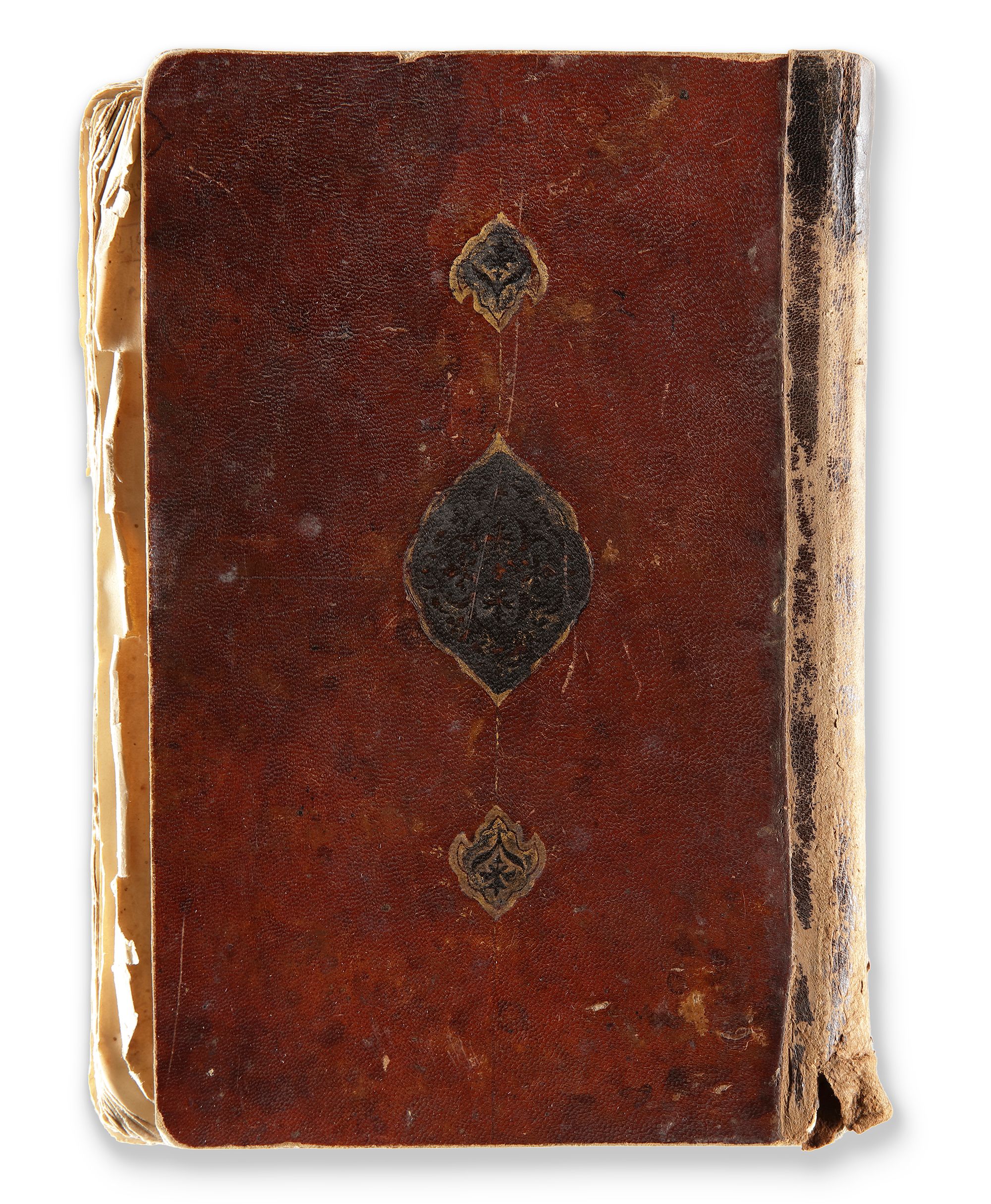
Arabic manuscript on paper, comprising 218 folios, each page with 25 lines of neat black script, important and catchwords in red ink. The final page is signed and dated, stating that the manuscript was completed on Friday, 27 Sha‘ban 1214 AH / 1799–1800 AD. Bound in deep brown morocco leather. 15 by 24 cm
Hashiyat al-Dasuqi ‘ala Umm al-Barahin is an important theological commentary by the scholar Muhammad ibn Ahmad al-Dasuqi on the celebrated creedal primer Umm al-Barahin by the North African theologian Abu Abd Allah Muhammad ibn Yusuf al-Sanusi al-Tilimsani. This work occupies a distinguished place within the classical tradition of Sunni scholastic theology (‘ilm al-kalam), particularly within the Ash‘ari school. Al-Sanusi’s original text, renowned for its concise precision and intellectual rigor, became one of the most widely studied creeds in the Islamic world. Al-Dasuqi’s marginal commentary (hashiyah) elucidates the subtleties of the text with clarity, depth, and scholarly refinement. The work systematically examines the foundations of divine unity (tawhid), the necessary, possible, and impossible attributes of Allah, prophethood and revelation, rational proofs for faith and belief, and the core principles of Sunni doctrine. What distinguishes this commentary is its harmonious balance between logical reasoning and spiritual reverence. Al-Dasuqi carefully unpacks complex theological formulations, rendering the dense language of classical kalam more accessible to advanced students while preserving the sophistication of the original discourse. For centuries, the work was studied in traditional centers of learning across North Africa, Egypt, and the broader Muslim world, particularly within Maliki–Ash‘ari scholarly circles. It remains an important reference for students of Islamic theology, classical logic, and the intellectual heritage of Sunni Islam.
يُعدّ كتاب حاشية الدسوقي على أم البراهين من الشروح الكلامية المهمة التي وضعها الشيخ محمد بن أحمد الدسوقي على متن أم البراهين للإمام أبو عبد الله محمد بن يوسف السنوسي التلمساني، أحد أشهر علماء العقيدة في بلاد المغرب الإسلامي. ويحتل هذا العمل مكانة مرموقة في التراث الكلاسيكي لعلم الكلام السني، ولا سيما في المدرسة الأشعرية. وقد اشتهر متن أم البراهين للإمام السنوسي بإيجازه المحكم ودقته العلمية، فأصبح من أكثر المتون العقدية تداولًا ودراسةً في العالم الإسلامي. أما حاشية الدسوقي، فقد امتازت بقدرتها على توضيح دقائق النص وإبراز معانيه بأسلوب يجمع بين العمق العلمي وحسن البيان. ويتناول الكتاب بصورة منهجية أصول التوحيد، والصفات الواجبة والجائزة والمستحيلة في حق الله تعالى، ومسائل النبوة والوحي، والأدلة العقلية للإيمان، إضافة إلى أصول العقيدة السنية. ومن أبرز ما يميز هذه الحاشية توازنها بين الاستدلال العقلي والروحانية الإيمانية؛ إذ يعمد الدسوقي إلى شرح العبارات الكلامية المعقدة بأسلوب ييسر فهمها للطلبة المتقدمين، مع الحفاظ على رصانة الخطاب العلمي الكلاسيكي. وقد ظل هذا الكتاب يُدرَّس لقرون في مراكز العلم التقليدية في شمال أفريقيا ومصر وسائر أنحاء العالم الإسلامي، خاصة في الأوساط المالكية الأشعرية، ولا يزال يُعد مرجعًا مهمًا لدارسي العقيدة الإسلامية والمنطق والتراث الفكري السني.