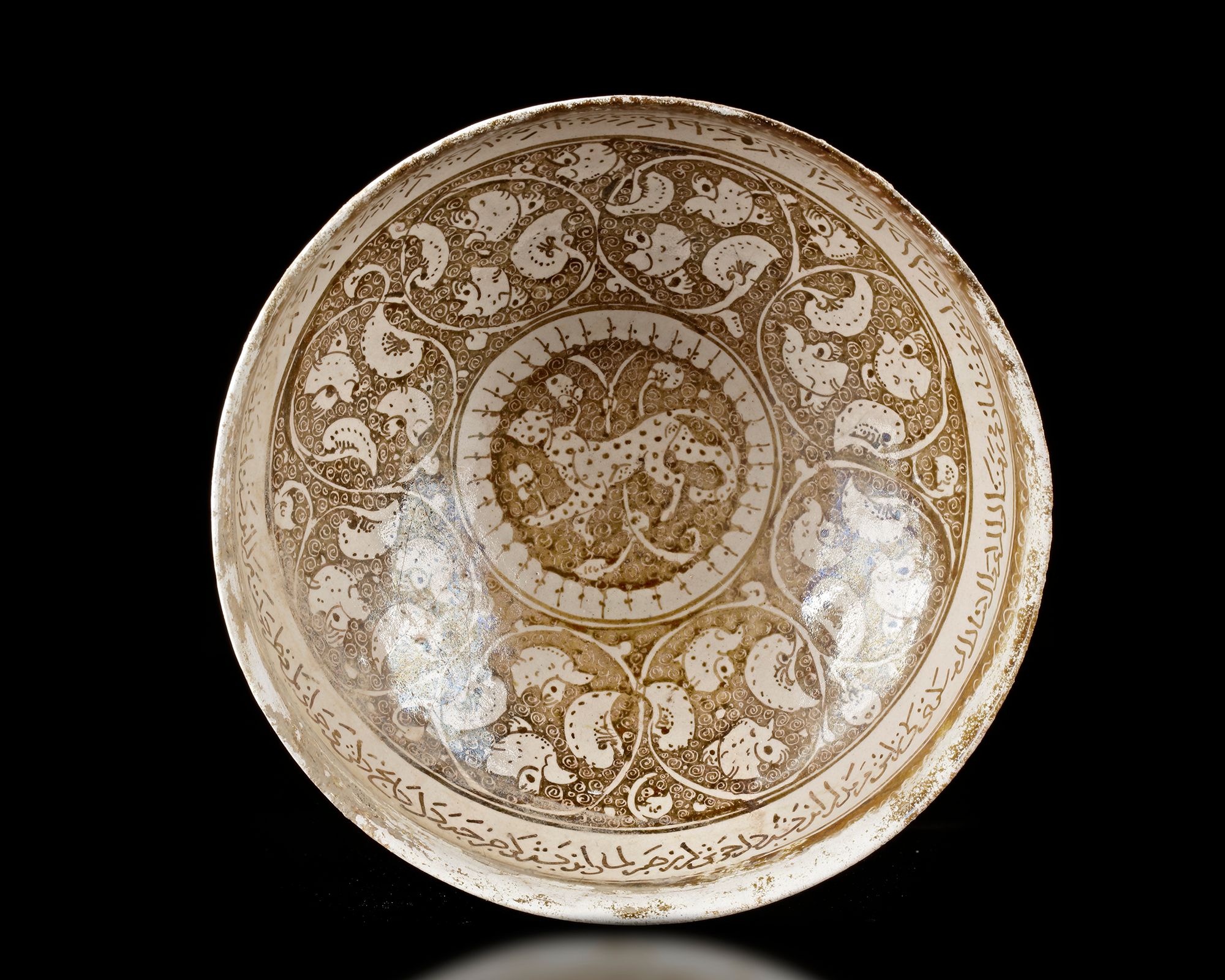
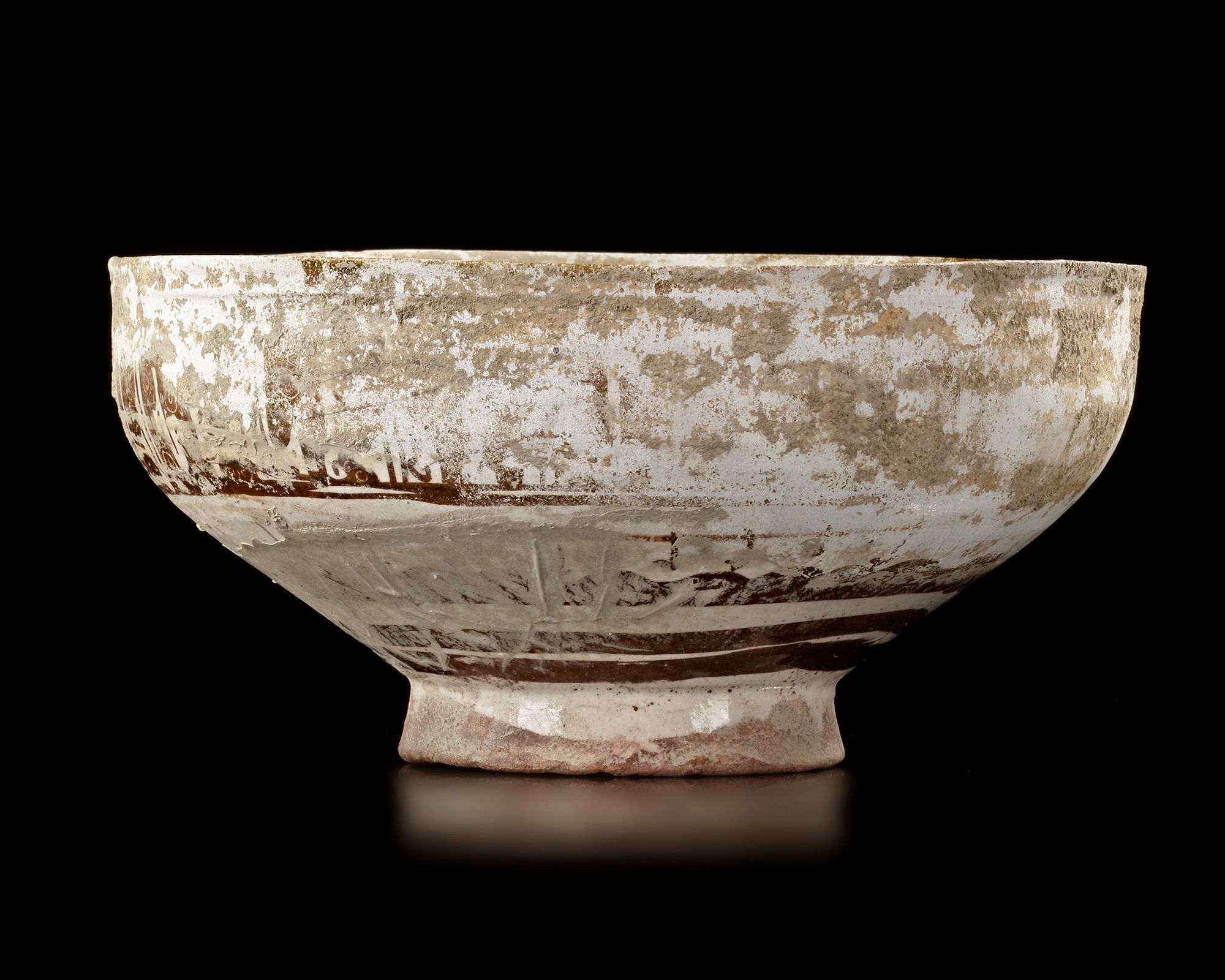
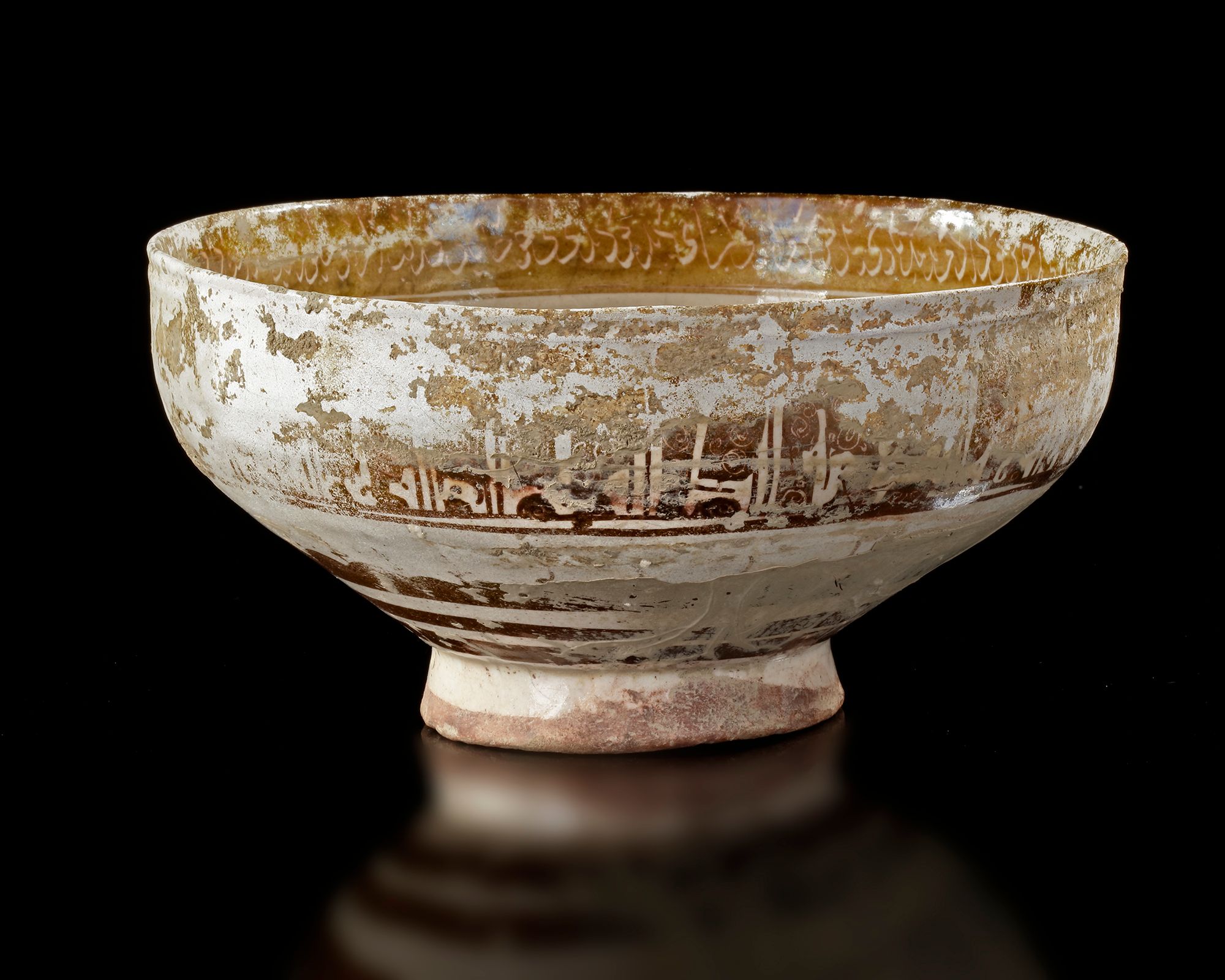
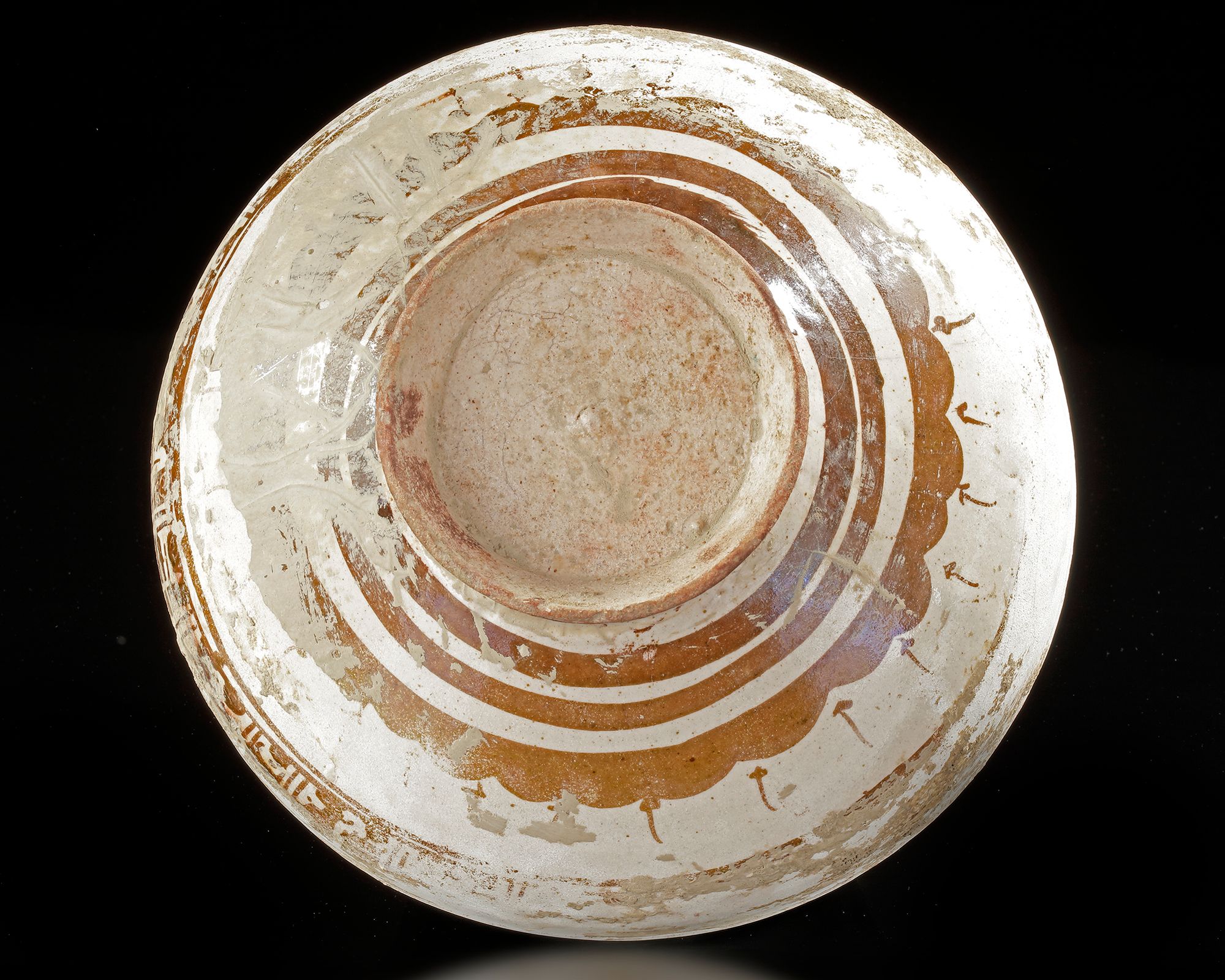
Lot 20 A KASHAN LUSTRE POTTERY BOWL, PERSIA, 12TH CENTURY
A pottery bowl with gently conical sides rising from a short, slightly spreading foot. The interior is decorated in brown lustre on an opaque white ground, centered by a stylized animal medallion surrounded by radiating motifs and scrolling vegetal ornament arranged in circular registers. Around the rim runs a band of flowing cursive Arabic calligraphy.
The exterior is similarly ornamented in lustre, with a band of angular Kufic inscription encircling the body beneath the rim, above additional geometric and linear decorative elements. The underside is painted with concentric bands and simple motifs. The surface shows areas of wear and iridescence consistent with age.
Diameter: 21 cm.
Height: 10 cm.
Kashan, in central Persia, was one of the most important centers of ceramic production in the medieval Islamic world during the Seljuk period (11th–13th centuries). Potters in the city perfected lustreware, a sophisticated technique in which metallic pigments were applied over a glazed surface and fired again at a lower temperature to create a shimmering, gold-like finish. This process produced the distinctive brown-gold iridescent decoration seen on Kashan bowls. The vessels were typically made from stonepaste (fritware), a refined ceramic body that allowed potters to create thin-walled forms with elegant profiles such as conical bowls on short feet. These forms became characteristic of Kashan production around the late 12th century. Decoration on Kashan lustre pottery frequently combines figural imagery, vegetal scrolls, and calligraphy. Inscriptions, often in Arabic, commonly include poetic verses or benedictory phrases wishing prosperity, glory, or long life. These inscriptions may appear in flowing cursive scripts on the interior and angular Kufic bands around the exterior. Many of the most celebrated Kashan lustre pieces were produced during the late 12th and early 13th centuries, a period considered the peak of Persian lustre ceramic production.