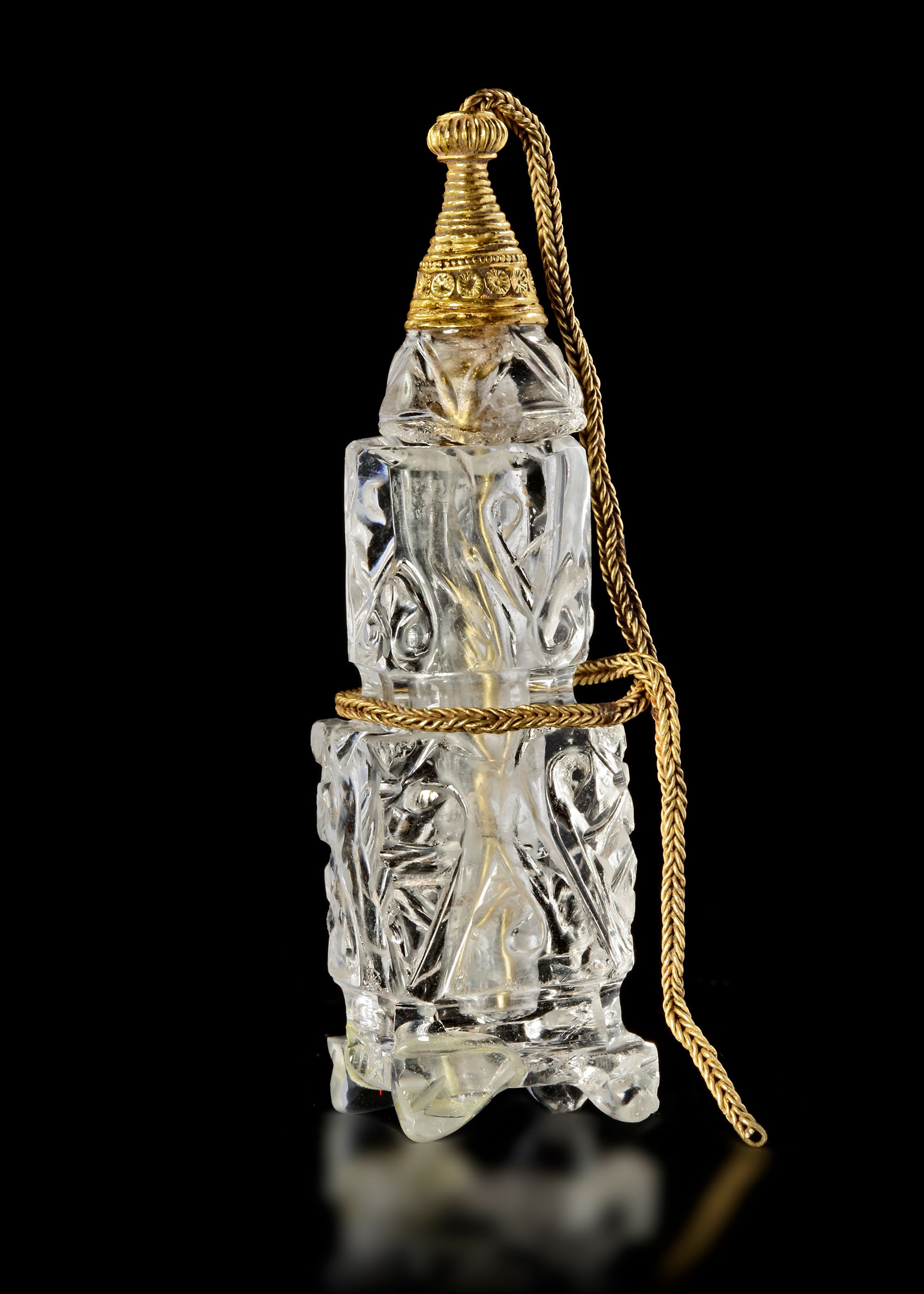
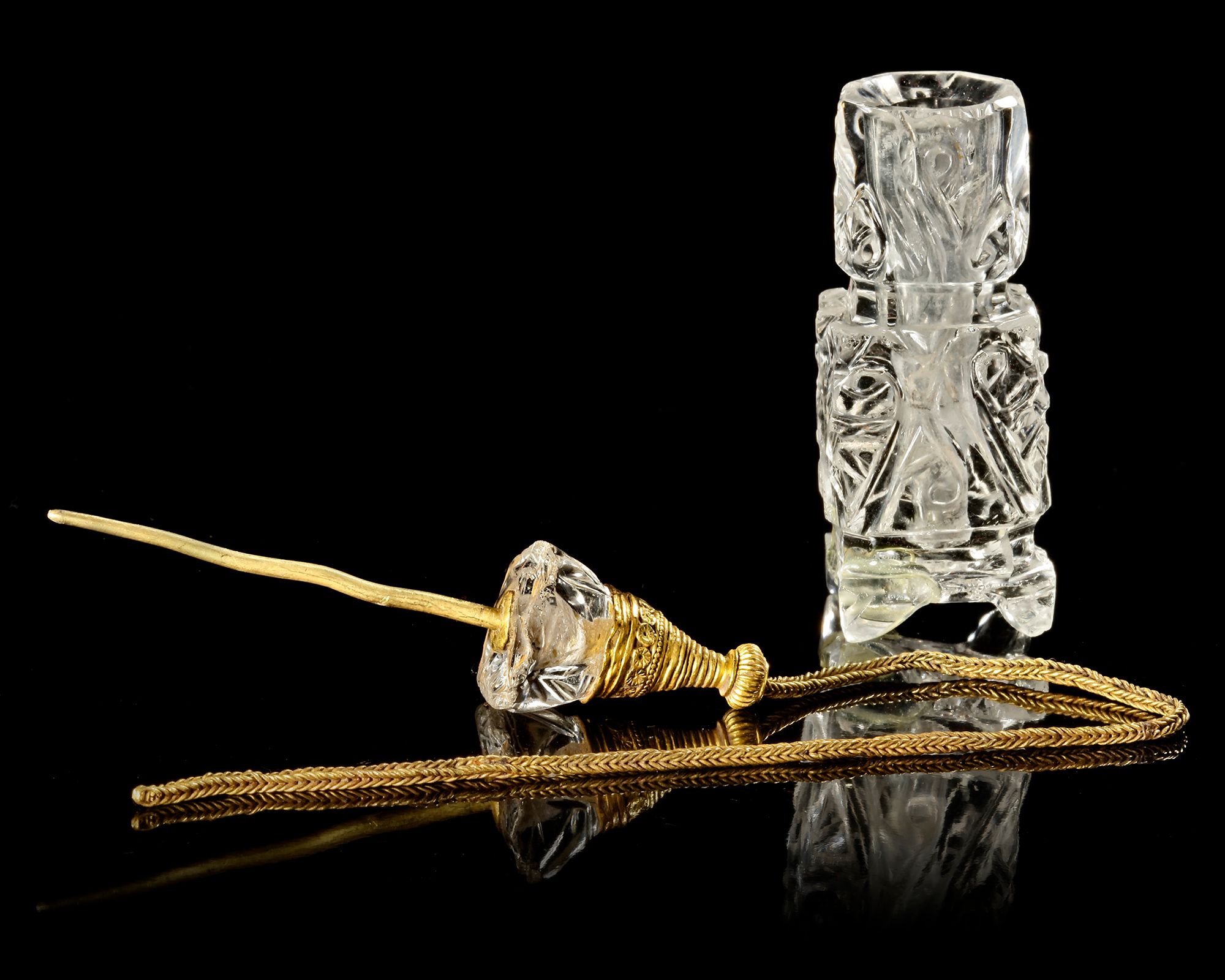
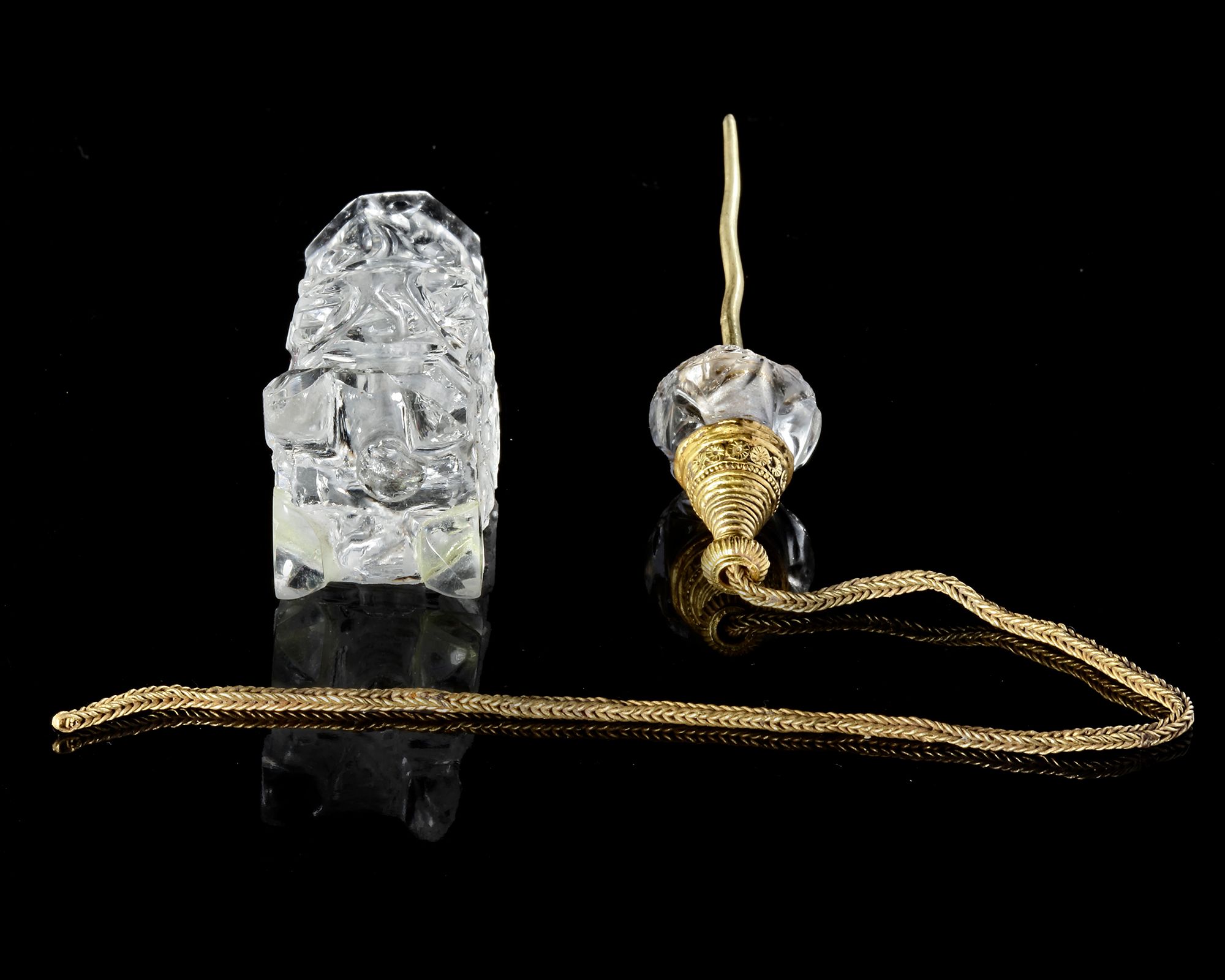
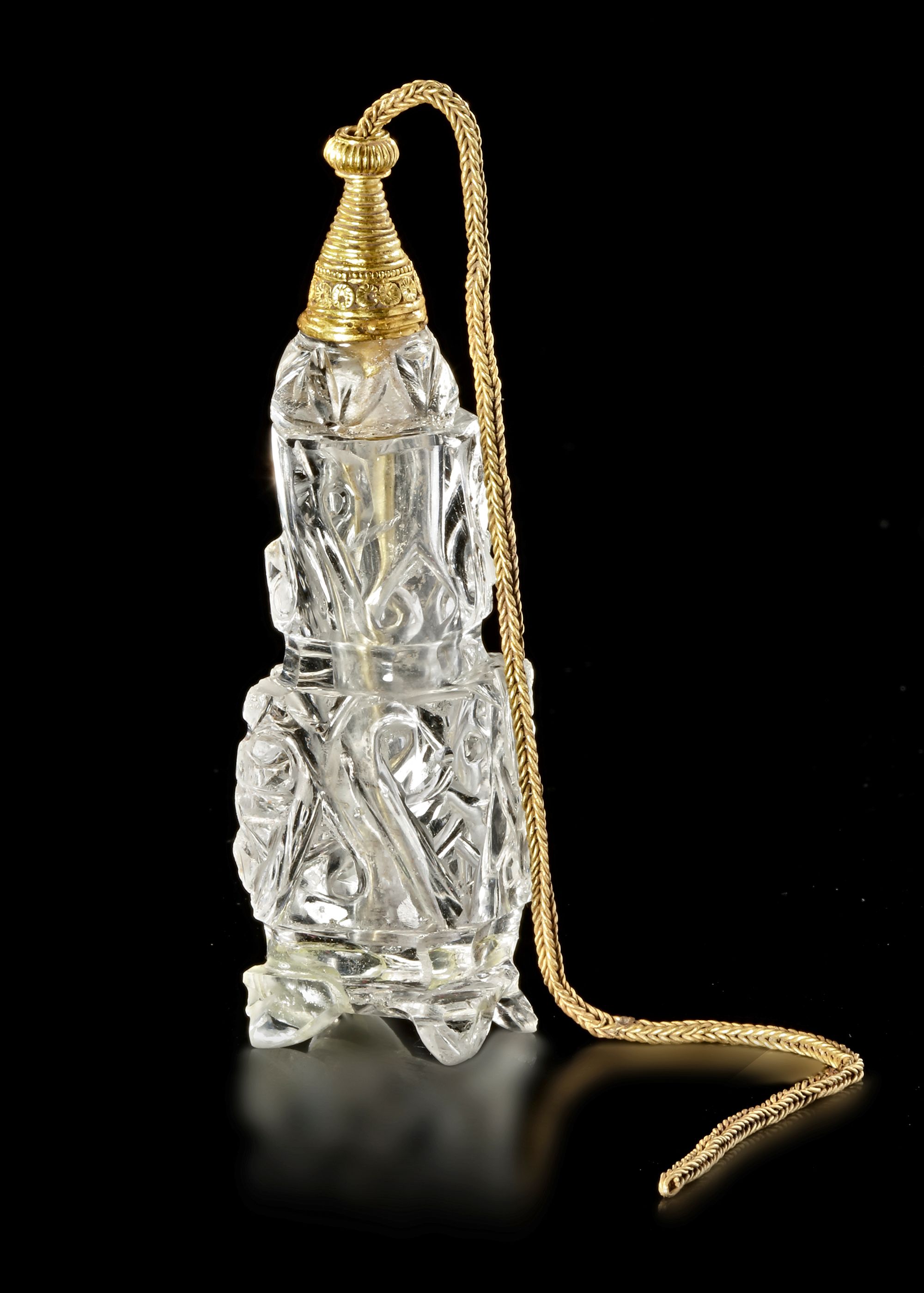
Lot 27 A FATIMID CARVED ROCK CYSTAL BOTTLE, EGYPT 11TH-12TH CENTURY
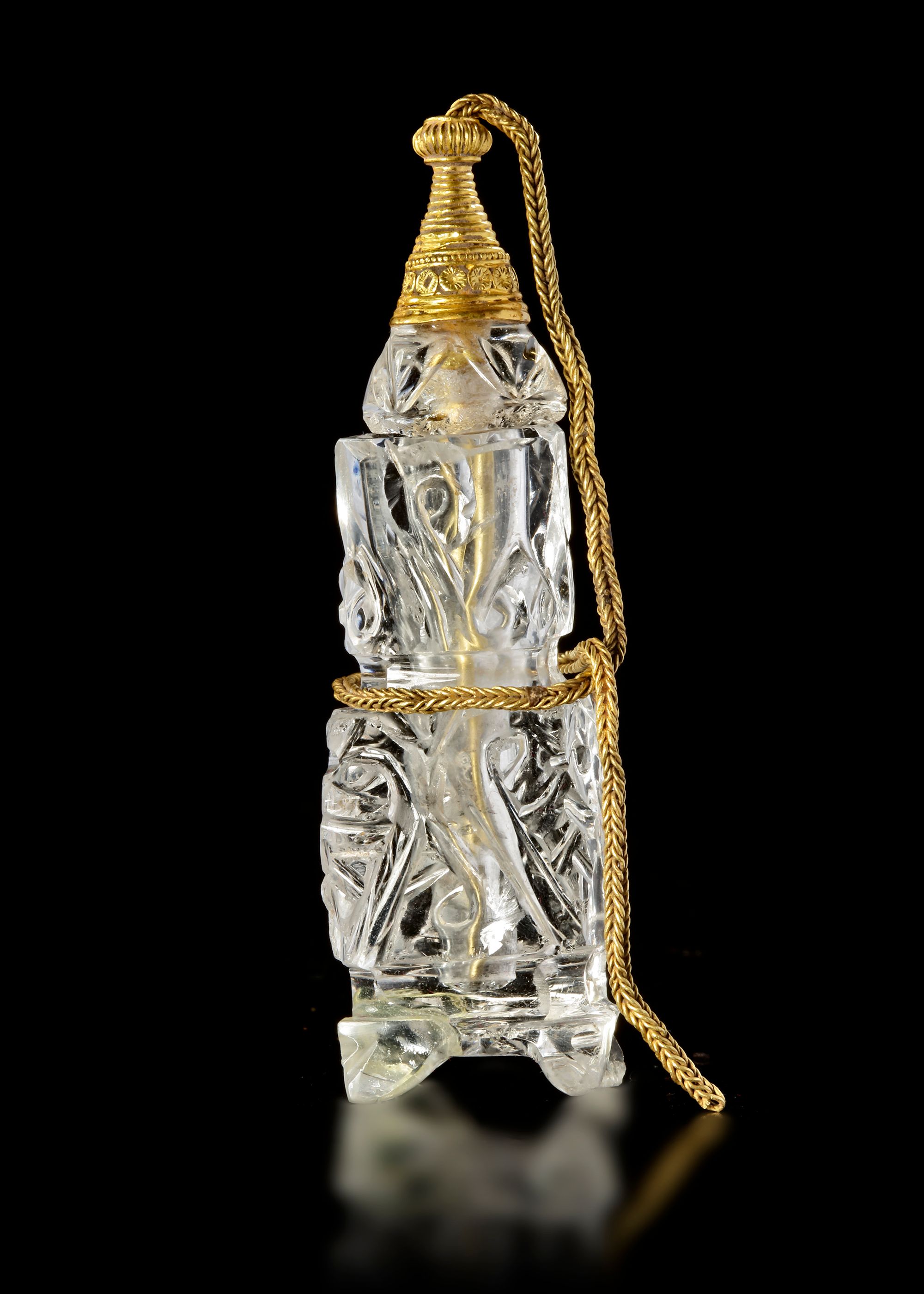
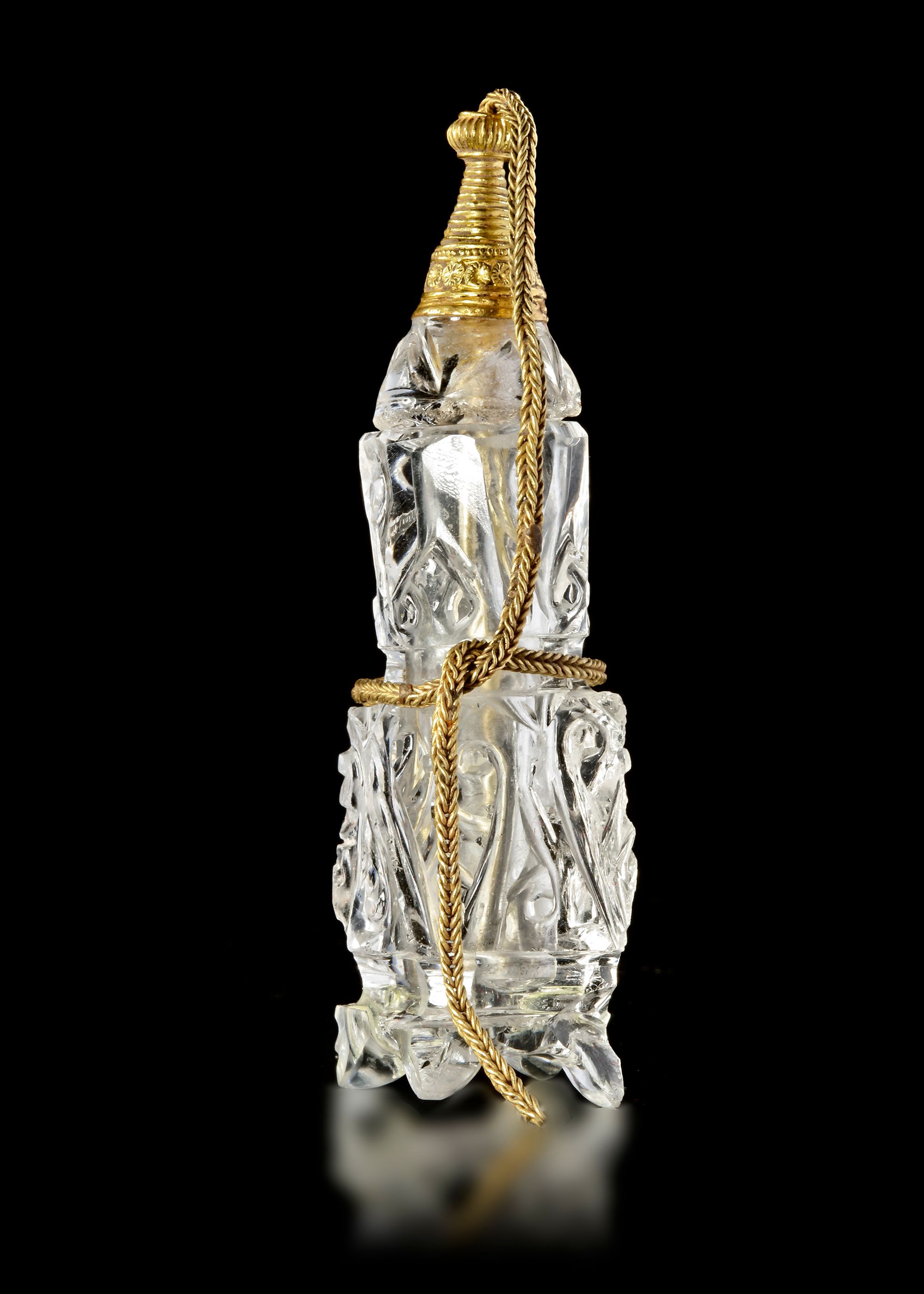
A finely carved Fatimid rock crystal kohl or perfume bottle, this exceptional object embodies the union of rare material, consummate craftsmanship, and refined personal use characteristic of the Fatimid court. Carved from clear rock crystal, the purest and most prized variety of quartz, the vessel is delicately hollowed and formed into a small, upright cylindrical shape with gently tapering sides. It stands on a subtly faceted base and is fitted with a separate stopper. Its compact scale and elegant proportions suggest it was intended to be worn or carried, an intimate luxury object accompanying its owner.
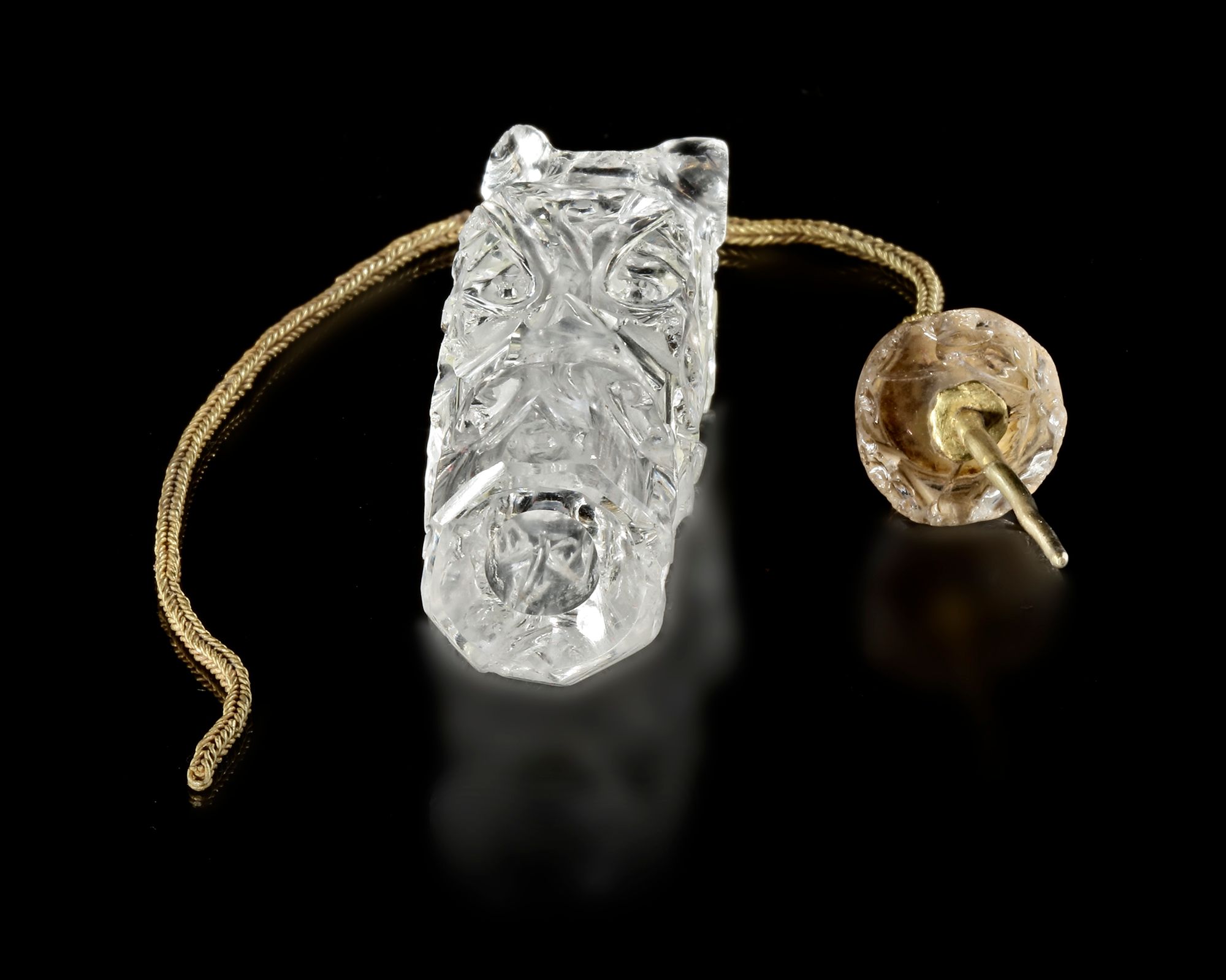
A finely worked gold mount and chain enhance both its beauty and function, allowing the bottle to be suspended from the body. The stopper contains a slender applicator rod, typical of vessels used for kohl or precious scented oils.
The crystal surface is intricately carved in high relief with a symmetrical vegetal design of scrolling vines and stylized palmettes. Deep, crisp cutting animates the transparent material, catching and refracting light to striking effect. The balanced, rhythmic ornament reflects the sophisticated aesthetic of Fatimid decorative arts at their height.
The stopper, also carved from crystal, is crowned with an ornate gold finial enriched with delicate granulation and filigree-like detailing. A fine gold chain secures it to the vessel, ensuring both practicality and continuity of form.
Height with stopper: 7.4 cm.
Catalogue note:
Rock crystal held a special status in the Fatimid world, valued not only for its purity and luminous beauty but also for the extraordinary skill required to work it. The historian al-Maqrizi (1364–1442) records that the Fatimid caliphs possessed thousands of rock crystal objects—some carved in relief, others left plain—attesting to their abundance and prestige within the royal treasury. Such works were later highly prized beyond the Islamic world; many surviving examples found their way into European church treasuries, where they were mounted and transformed into reliquaries.
This bottle thus stands as both a personal luxury and a testament to the artistic and cultural brilliance of Fatimid Egypt.