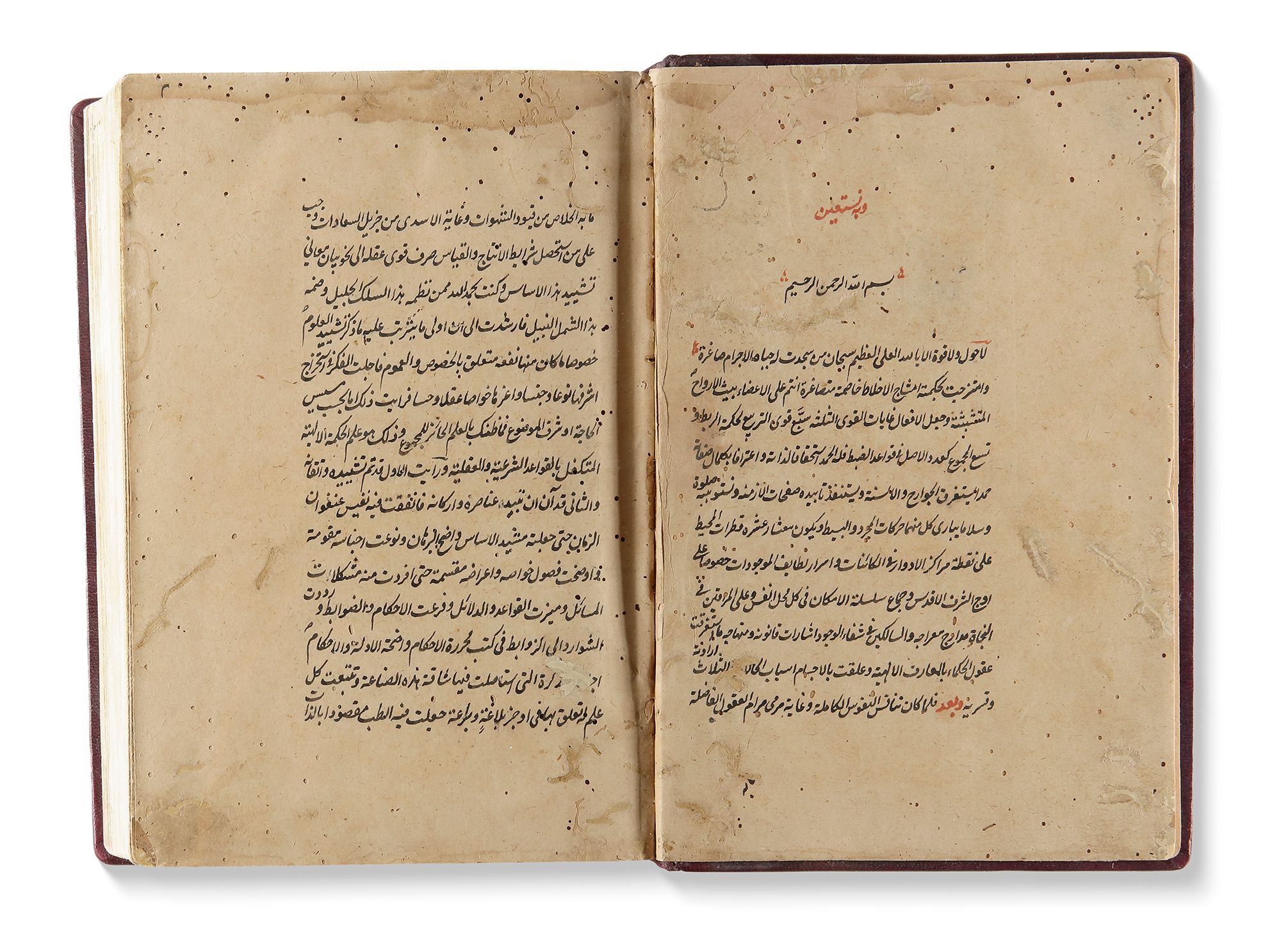
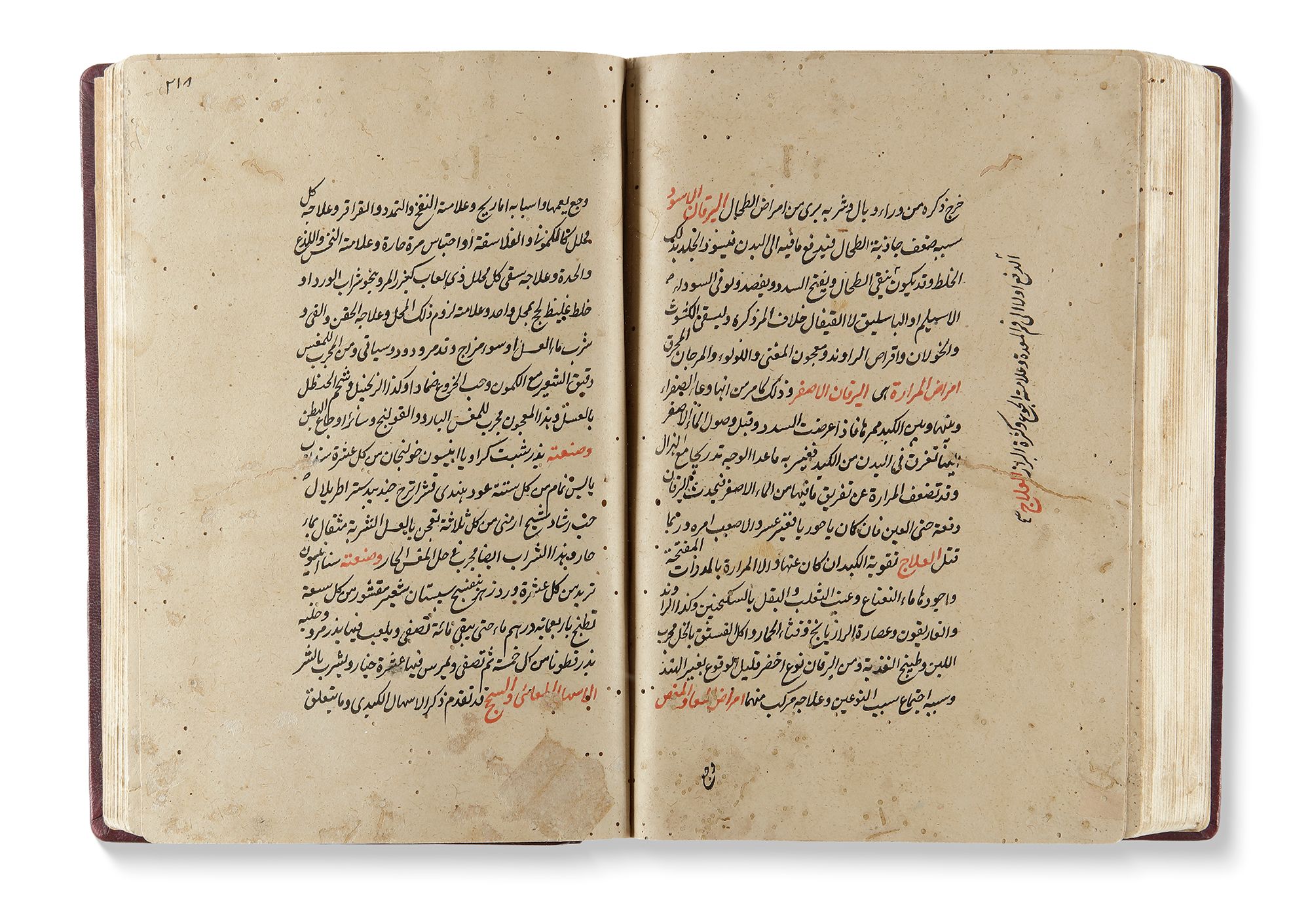
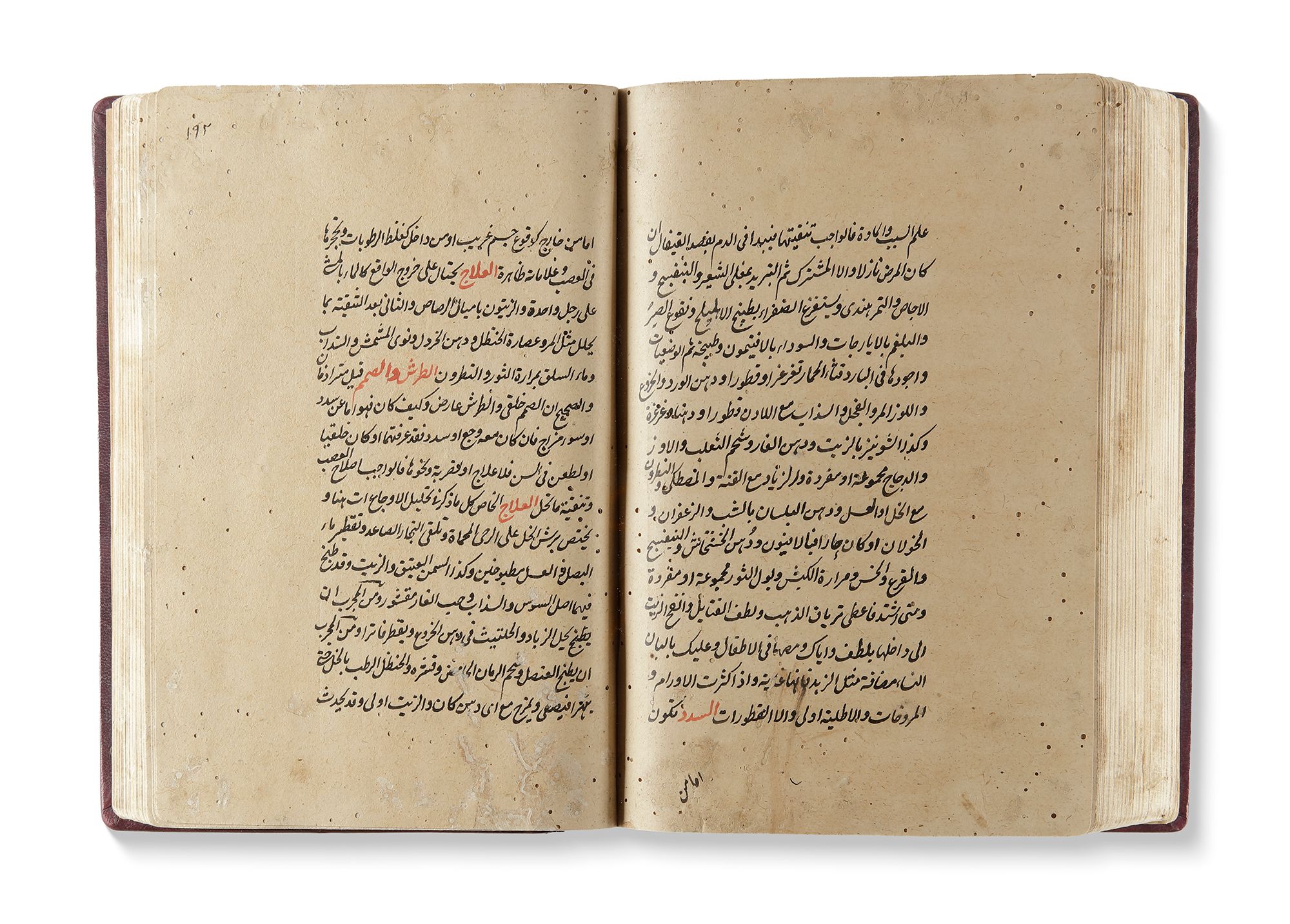
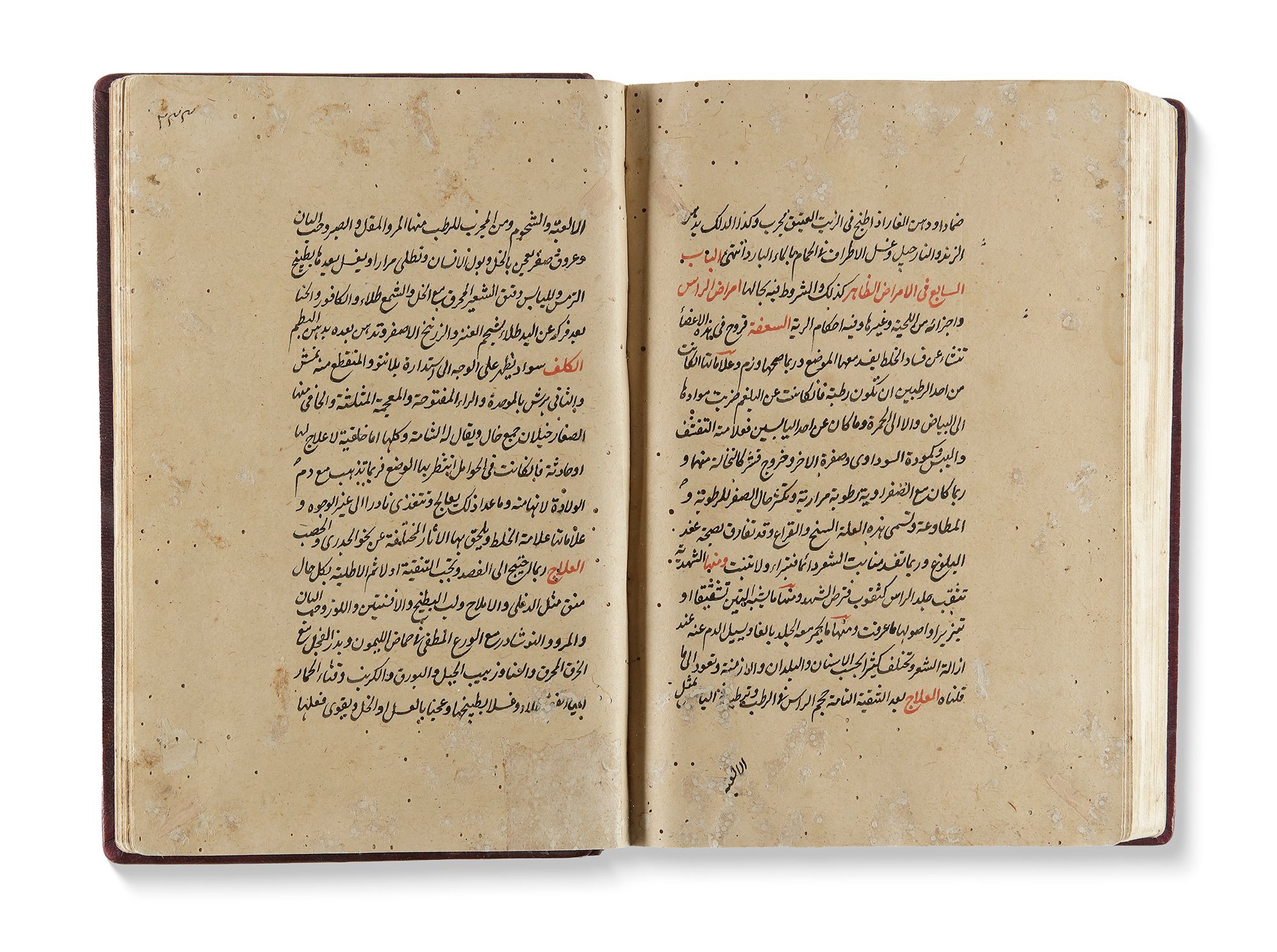
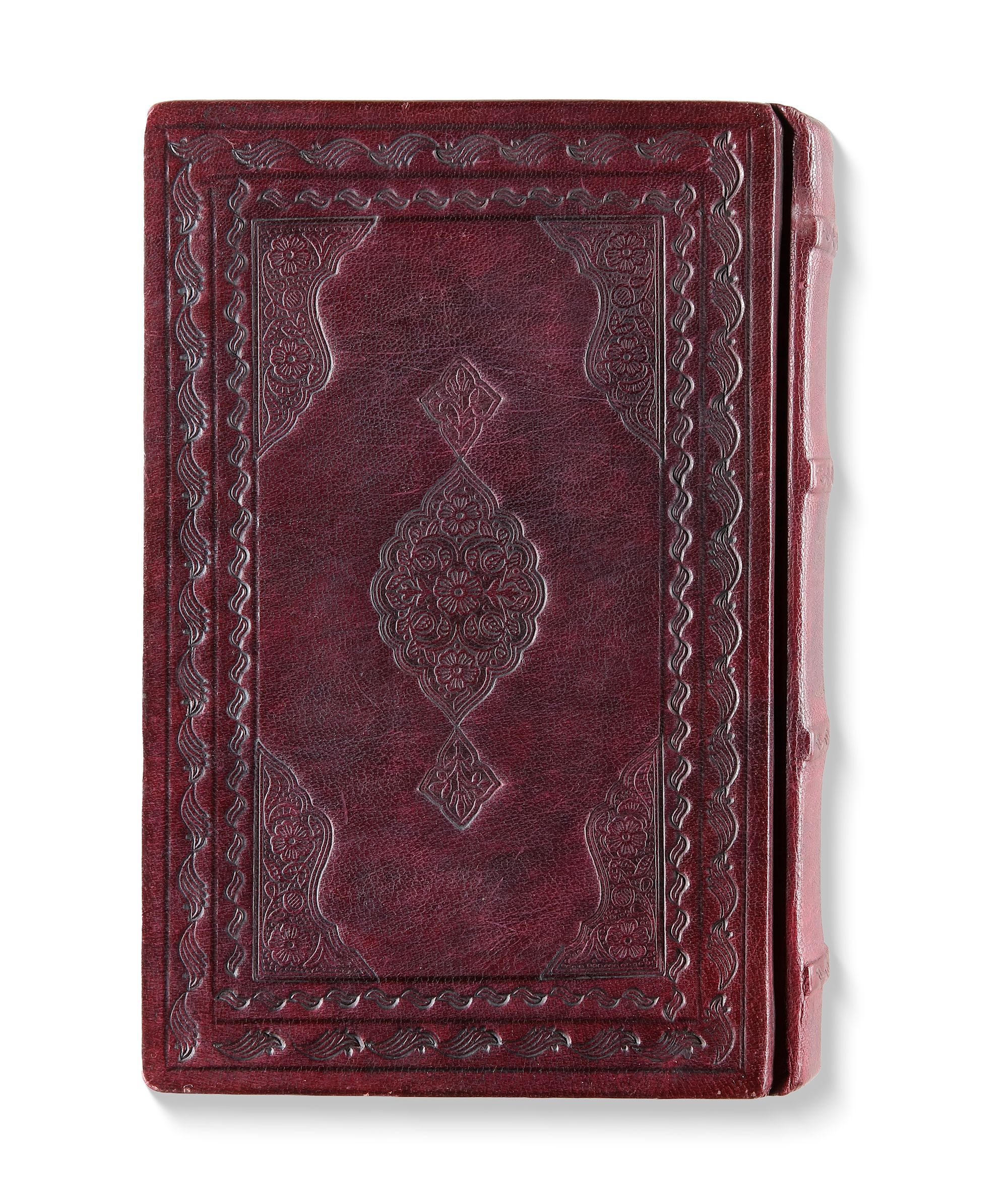
Lot 236 AL NOZHA AL MOBHIJA FI TASH'HEETH AL AZHAN W TA'DEEL AL AMZEGA, DAWD BIN UMAR AL-ANTAKI, WRITTEN BY ABDULLAH, 18TH CENTURY
Arabic manuscript on paper, 375 leaves., each page with 15 lines, written in a neat naskh script; catchwords and important words in red ink; housed in a deep brown leather binding. 15.5 by 23 cm A classical Arabic medical compendium that unites philosophy and practice, this work traces the order of knowledge from first principles to the care of the human body. It examines temperament, environment, and anatomy before turning to the causes of health and disease across all stages of life. Refined in its diagnostic art, it analyses signs, the pulse, and the critical moments of illness to guide prognosis. Concluding with practical rules of treatment and regimen, it presents medicine as a balanced discipline—at once rational, observational, and deeply attuned to the harmony of the human condition. The Author Al-Antaki emerges as a true polymath—physician, philosopher, man of letters, poet, astronomer, and historian—whose prolific output spans multiple disciplines, reflecting both breadth of learning and sound critical judgment. The following titles, though likely incomplete due to gaps in the sources, are among his known works: a treatise on the use of astrology in medicine; Istiqṣāʾ al-ʿilal wa-shifāʾ al-amrāḍ; and a medical alfiyya (didactic poem). Literature The work survives in several manuscript copies: A copy in Istanbul (Arabic section, no. 5186), 157 folios, in naskh script, copied by Yusuf in 1177 AH. Copies are also recorded in Iraq, Tunisia, and Egypt. The Iraqi copy is preserved in the Iraqi Museum (no. 3411), with another in its collection of medical manuscripts. A Tunisian copy, written in Maghrebi script, comprises approximately 250 folios, with 11 lines per page.
النزهة المبهجة في تشحيذ الأذهان وتعديل الأمزجة، داود بن عمر الأنطاكي، نسخها عبد الله، القرن الثامن عشر.
مخطوطة عربية على الورق، تتألف من 375 ورقة، في كل صفحة 15 سطرًا مكتوبة بخط نسخي واضح؛ الكلمات الدالة والكلمات المهمة مميزة بالحبر الأحمر؛ ومجلدة بجلد بني داكن. الأبعاد: 15.5 × 23 سم. يمثل هذا العمل مصنّفًا طبيًا عربيًا كلاسيكيًا يجمع بين الفلسفة والتطبيق، إذ يتتبع ترتيب المعرفة من المبادئ الأولى وصولًا إلى رعاية جسم الإنسان. ويتناول الأمزجة والبيئة والتشريح قبل الانتقال إلى أسباب الصحة والمرض عبر مختلف مراحل الحياة. ويمتاز بدقة منهجه التشخيصي، حيث يحلل العلامات والنبض ومراحل المرض الحرجة لتوجيه التنبؤ بمسار الحالة. ويختتم بقواعد عملية في العلاج والتدبير، مقدّمًا الطب بوصفه علمًا متوازنًا يجمع بين العقلانية والملاحظة، ومتناغمًا مع طبيعة الإنسان. المؤلف: يبرز الأنطاكي بوصفه عالمًا موسوعيًا بحق—طبيبًا وفيلسوفًا وأديبًا وشاعرًا وفلكيًا ومؤرخًا—وقد امتد إنتاجه العلمي عبر مجالات متعددة، مما يعكس سعة معارفه ودقة نظره النقدي. ومن مؤلفاته المعروفة، وإن كانت القائمة غير مكتملة بسبب نقص المصادر: رسالة في استخدام علم النجوم في الطب؛ استقصاء العلل وشفاء الأمراض؛ وألفية طبية تعليمية. المراجع (الأدب): حُفظ هذا العمل في عدة نسخ مخطوطة، منها: نسخة في إسطنبول (القسم العربي، رقم 5186)، تقع في 157 ورقة، بخط نسخي، نسخها يوسف سنة 1177هـ. كما توجد نسخ في العراق وتونس ومصر. النسخة العراقية محفوظة في المتحف العراقي (رقم 3411)، إضافة إلى نسخة أخرى ضمن مجموعة المخطوطات الطبية. نسخة تونسية مكتوبة بالخط المغربي، تتألف من نحو 250 ورقة، في كل صفحة 11 سطرًا.