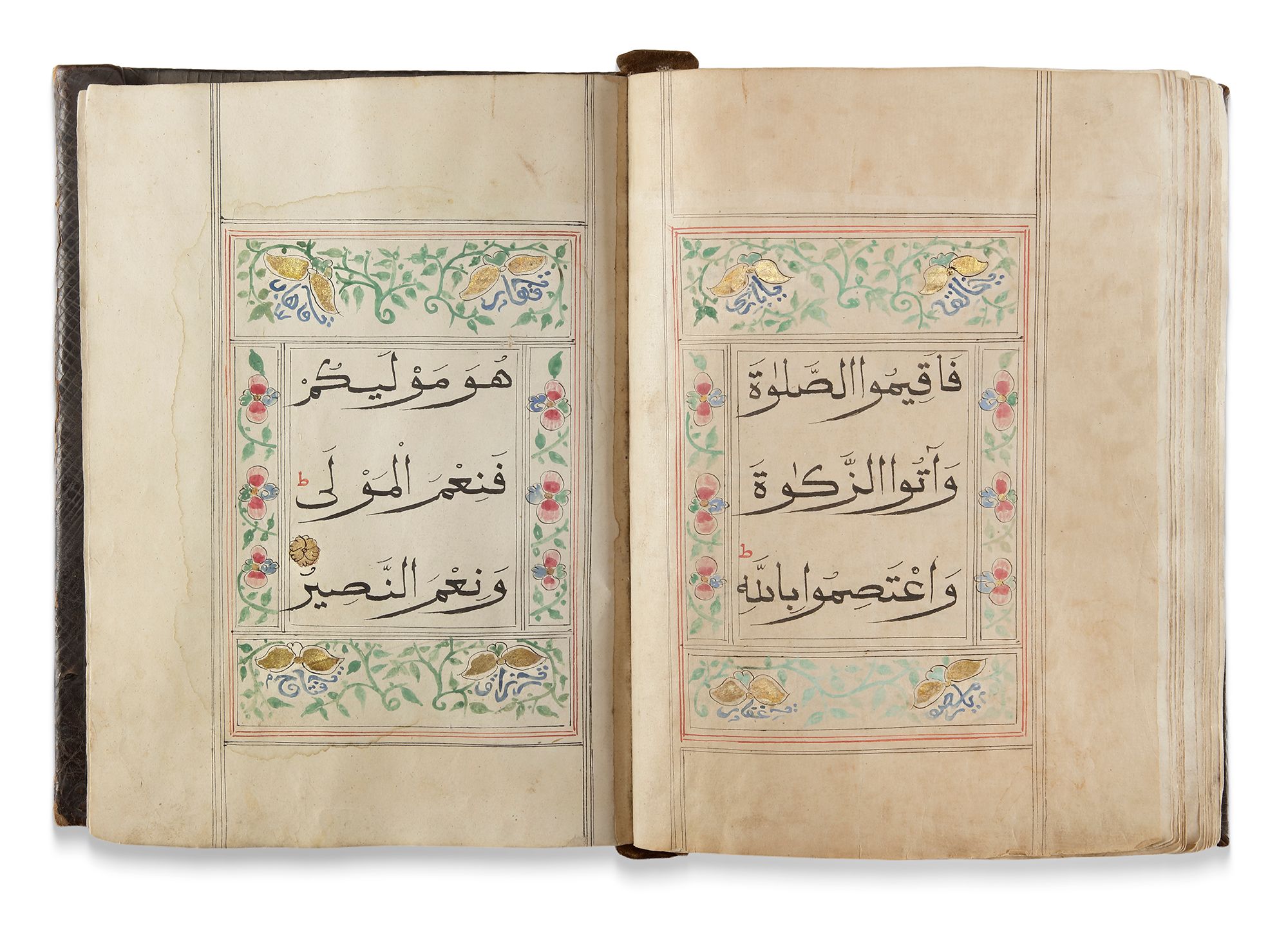
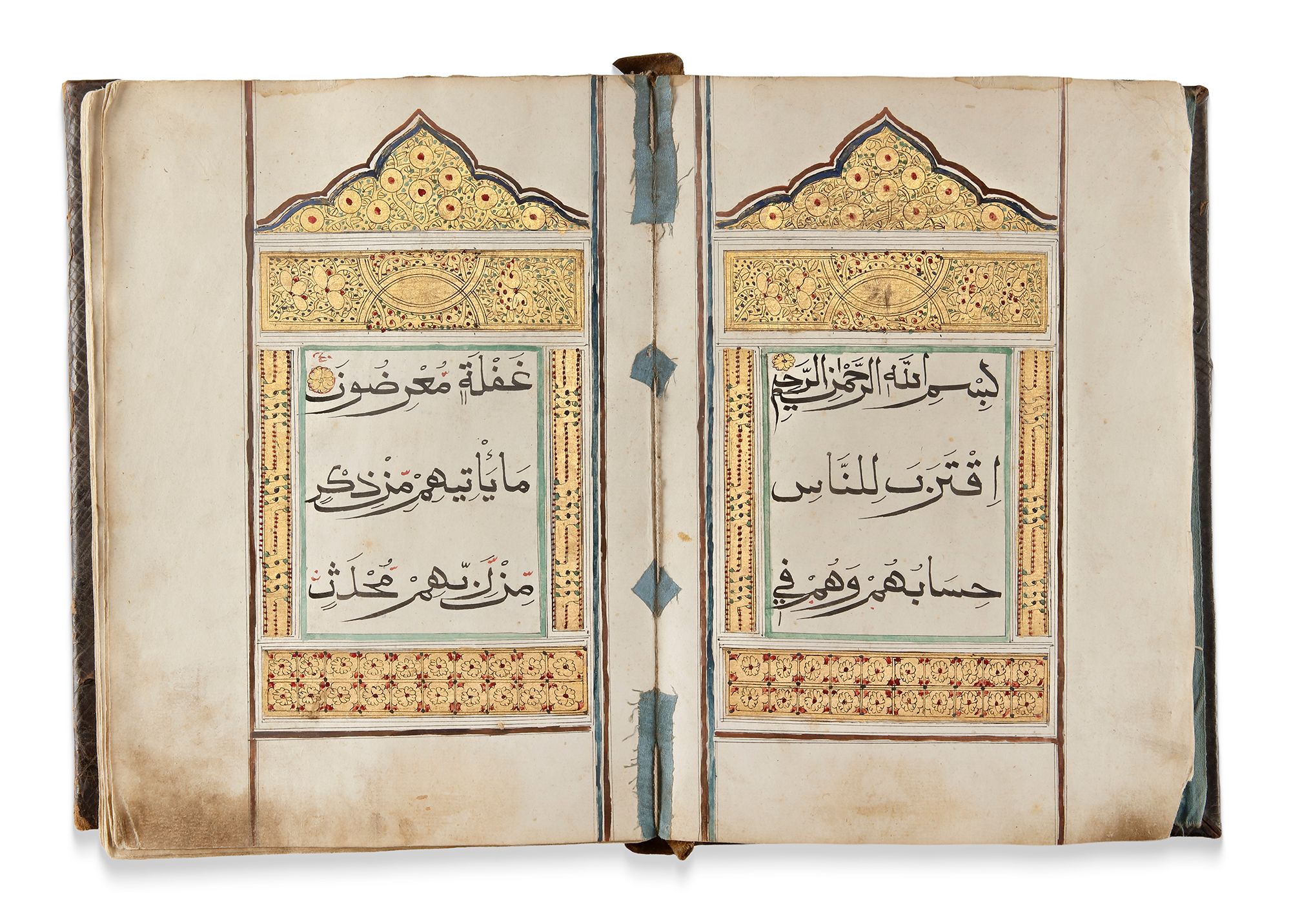
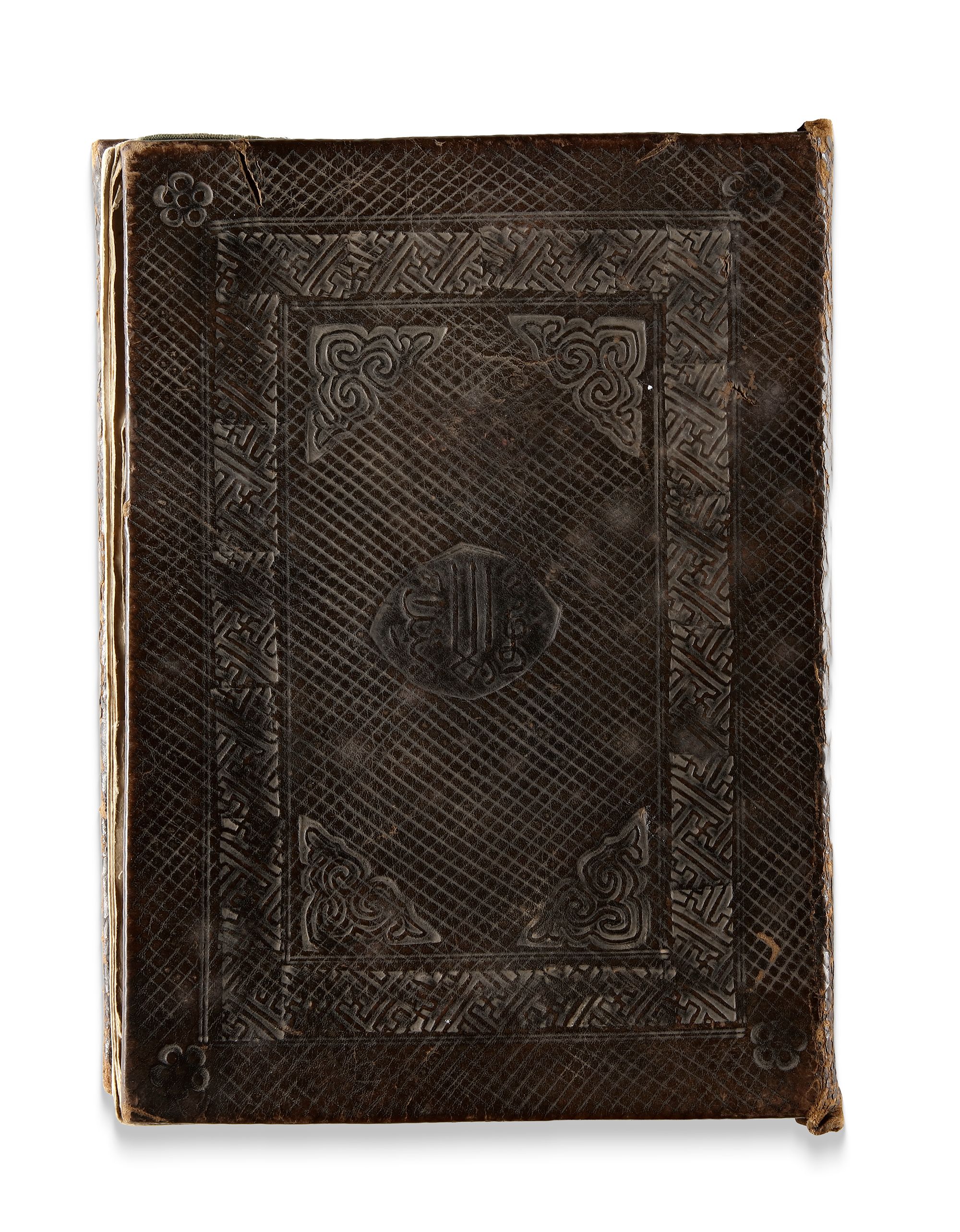
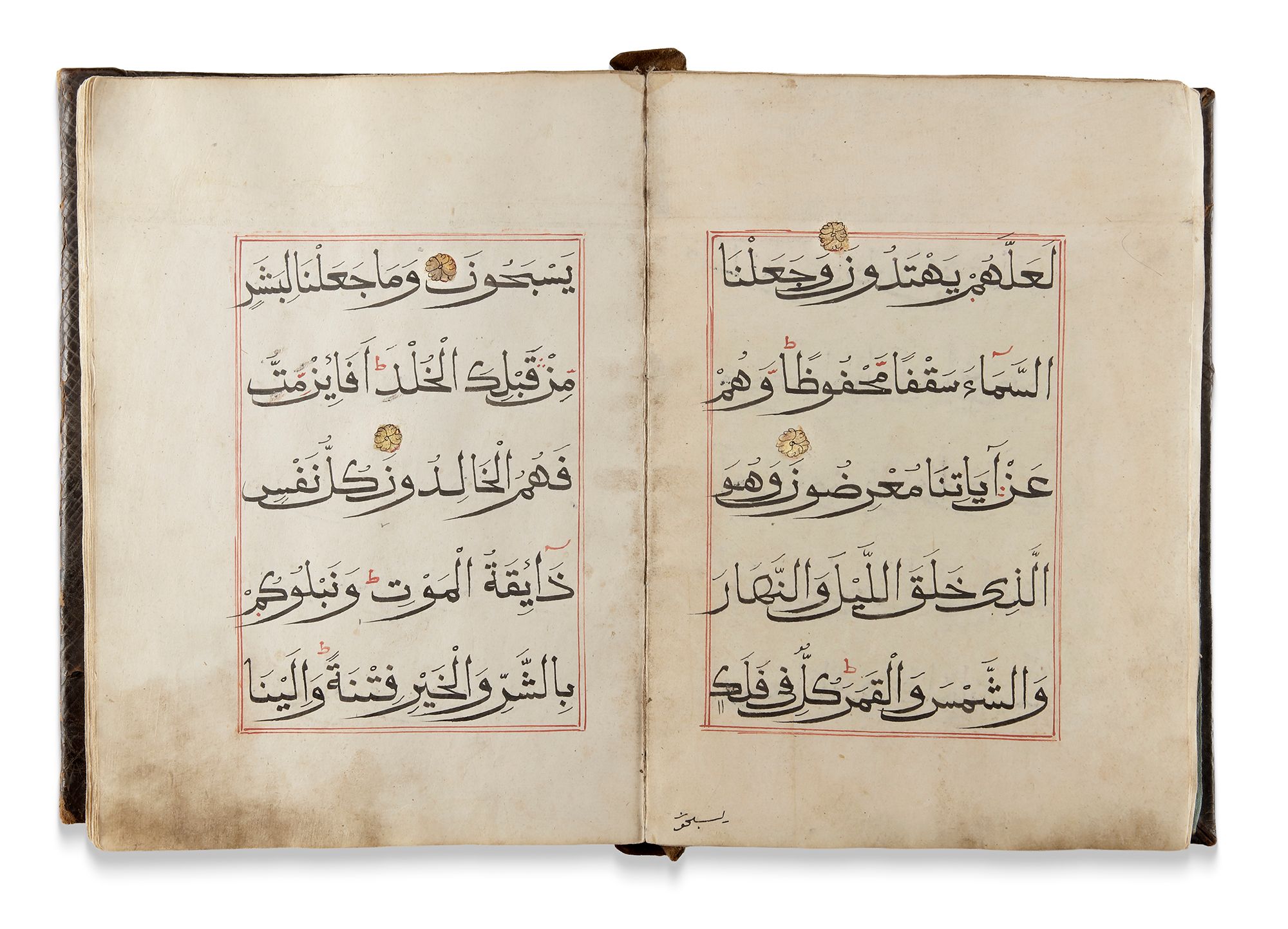
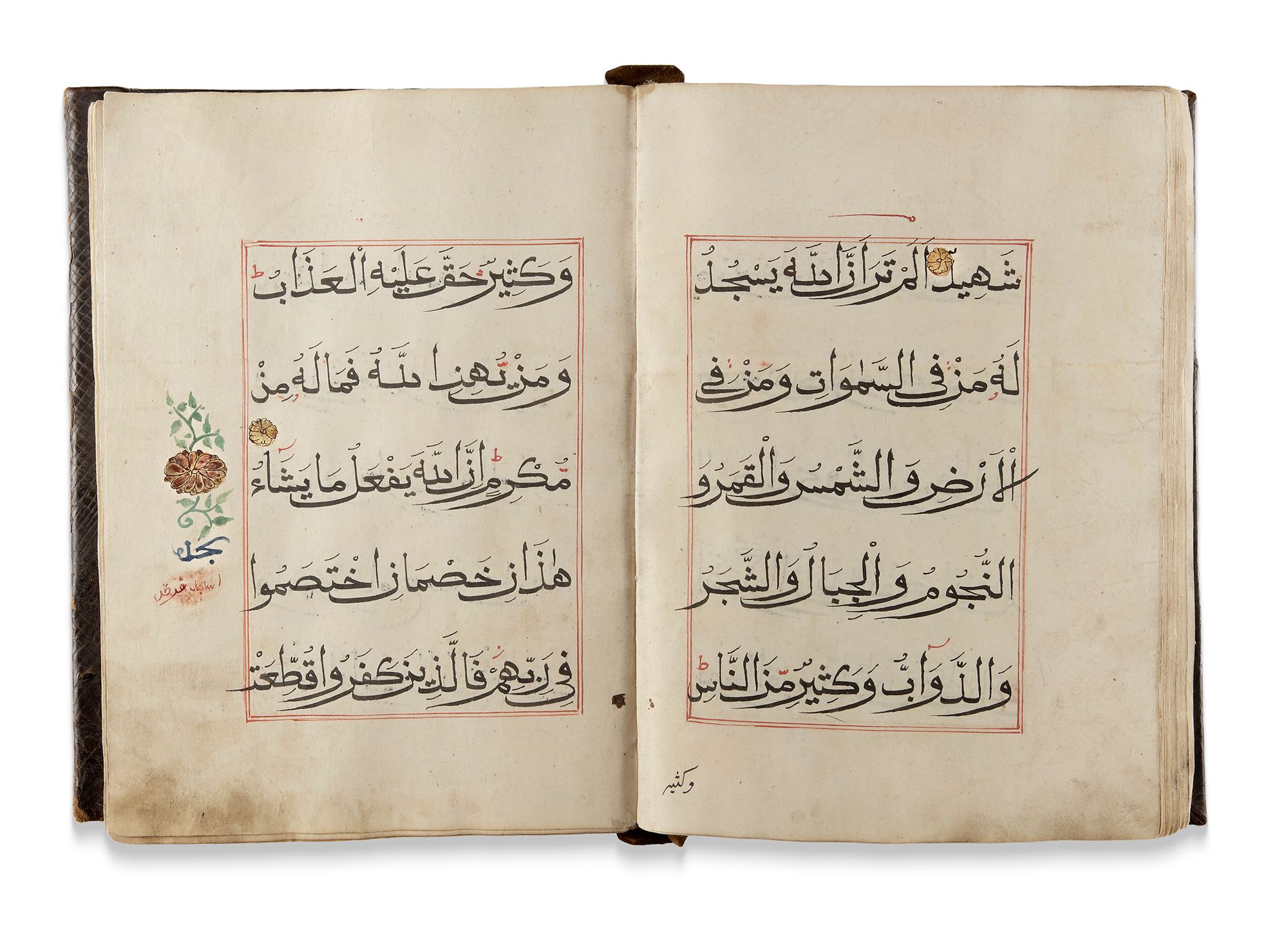
Lot 80 A CHINESE ILLUMINATED QURAN VOLUME ( JUZ'), CHINA 16TH-17TH CENTURY
Arabic manuscript on paper, comprising 57 pages, each with five lines per page written in Sini script in black ink, ruled in red; verses separated by gold or red roundels or rosettes; surah headings in gold, outlined in red or black; illuminated marginal verse markers; each juzʾ with an illuminated frontispiece framing the text; the final two pages decorated with gold and polychrome illuminated floral scrolls. Housed in a black leather binding with a flap.
Text: 13 by 18 cm.
Paper: 21 by 29 cm.
Inscriptions: Juzʾ 17, Surah al-Anbiyāʾ and Surah al-Ḥajj, verse 78.
Catalogue note: Islam spread into China during the Song dynasty (10th century), with a Muslim community officially established by 1070. Under the Mongol Yuan dynasty (1206–1368), many Muslims from Central Asia and Persia migrated to China and gained influence. This migration strongly influenced Chinese Qur’an production, particularly in calligraphy, layout, and decoration, which were shaped by Central Asian styles. From the 15th century (Ming period), as Muslim political power declined and communities became more integrated into Chinese society, Qur’an production became more standardized and conservative. Earlier Yuan-era styles remained influential, partly due to their association with a period of prosperity. Chinese Qur’ans from the 15th to 17th centuries display consistent features, including similar script (muhaqqaq), layout (five lines per page), and decorative elements such as geometric patterns and arch motifs.