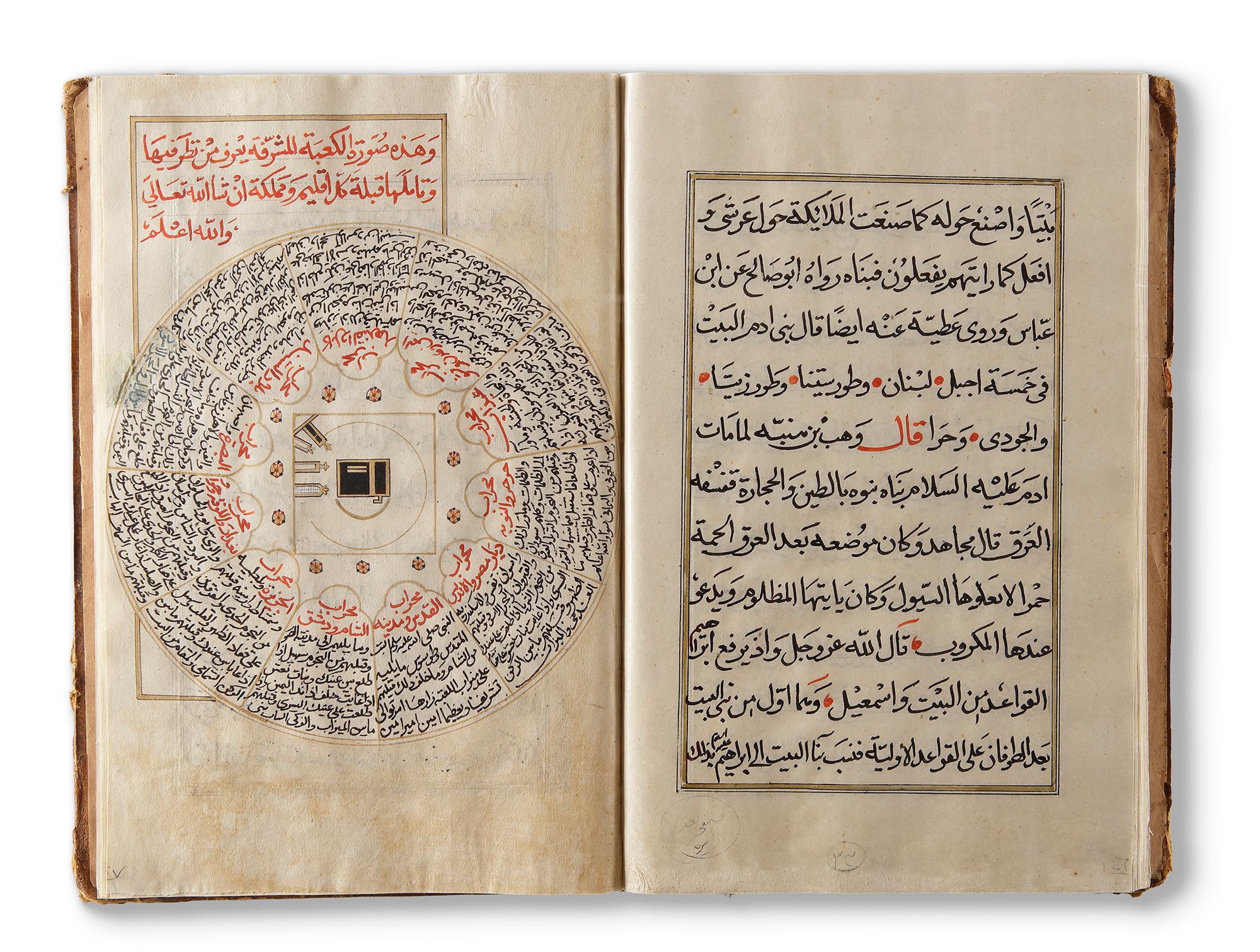
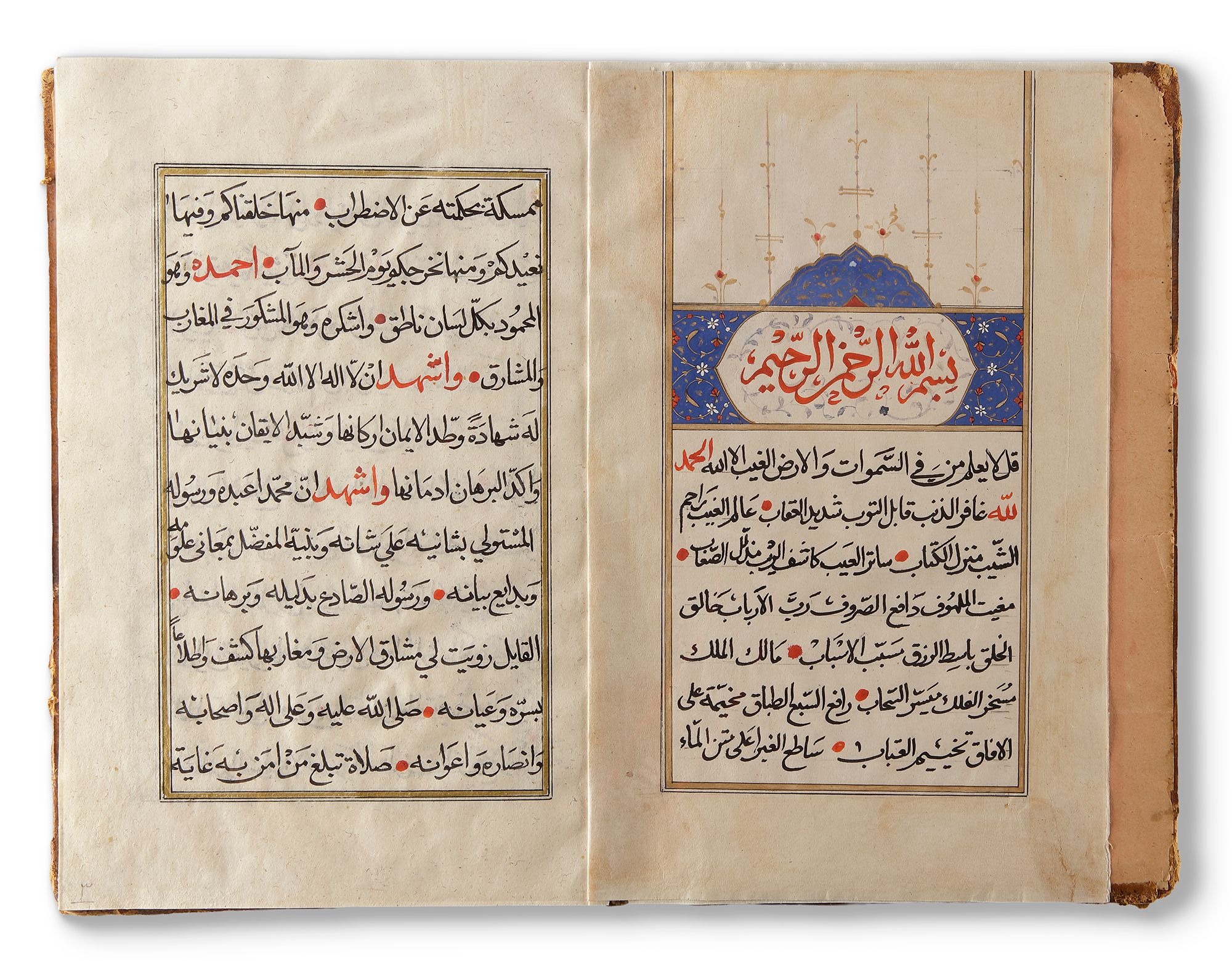
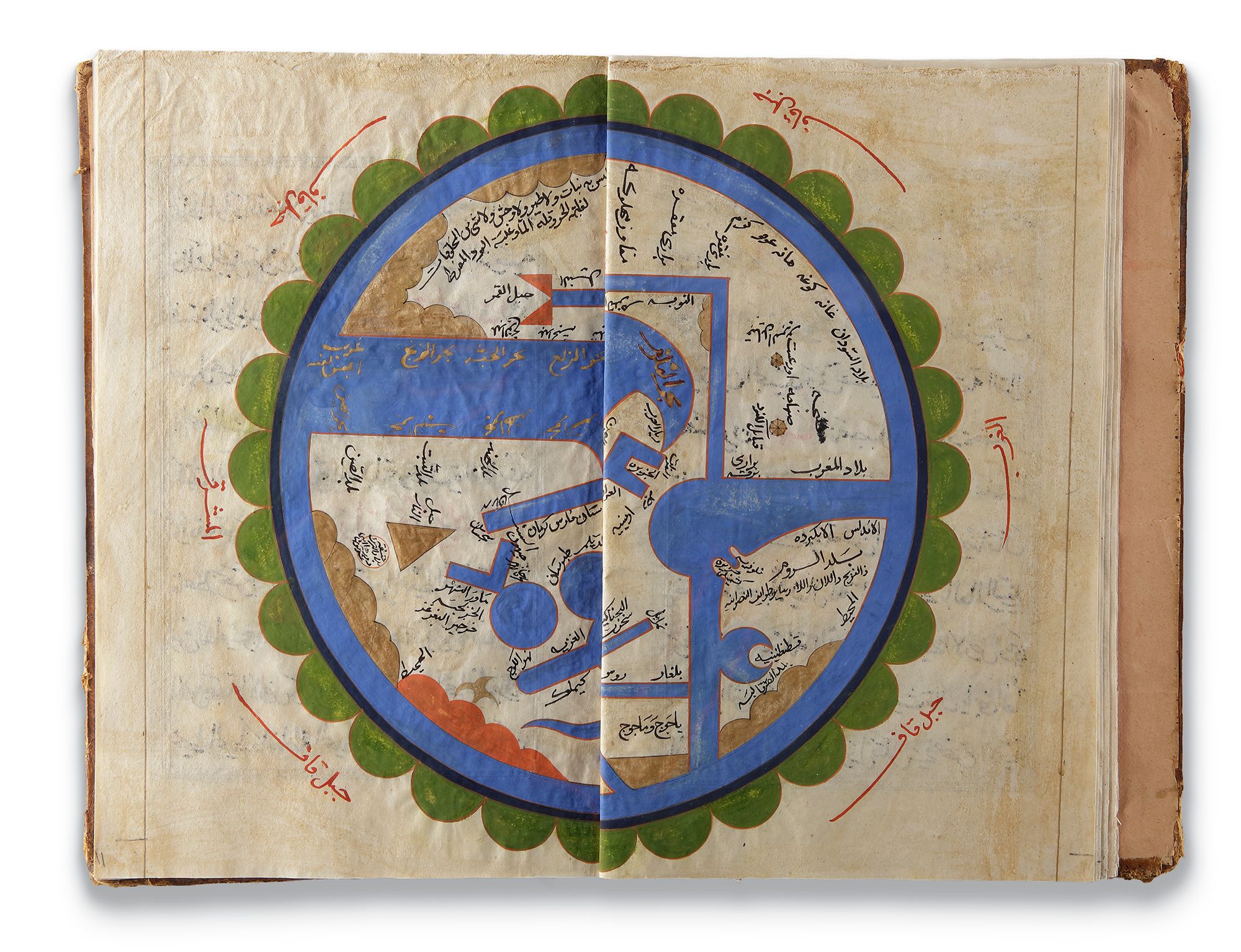
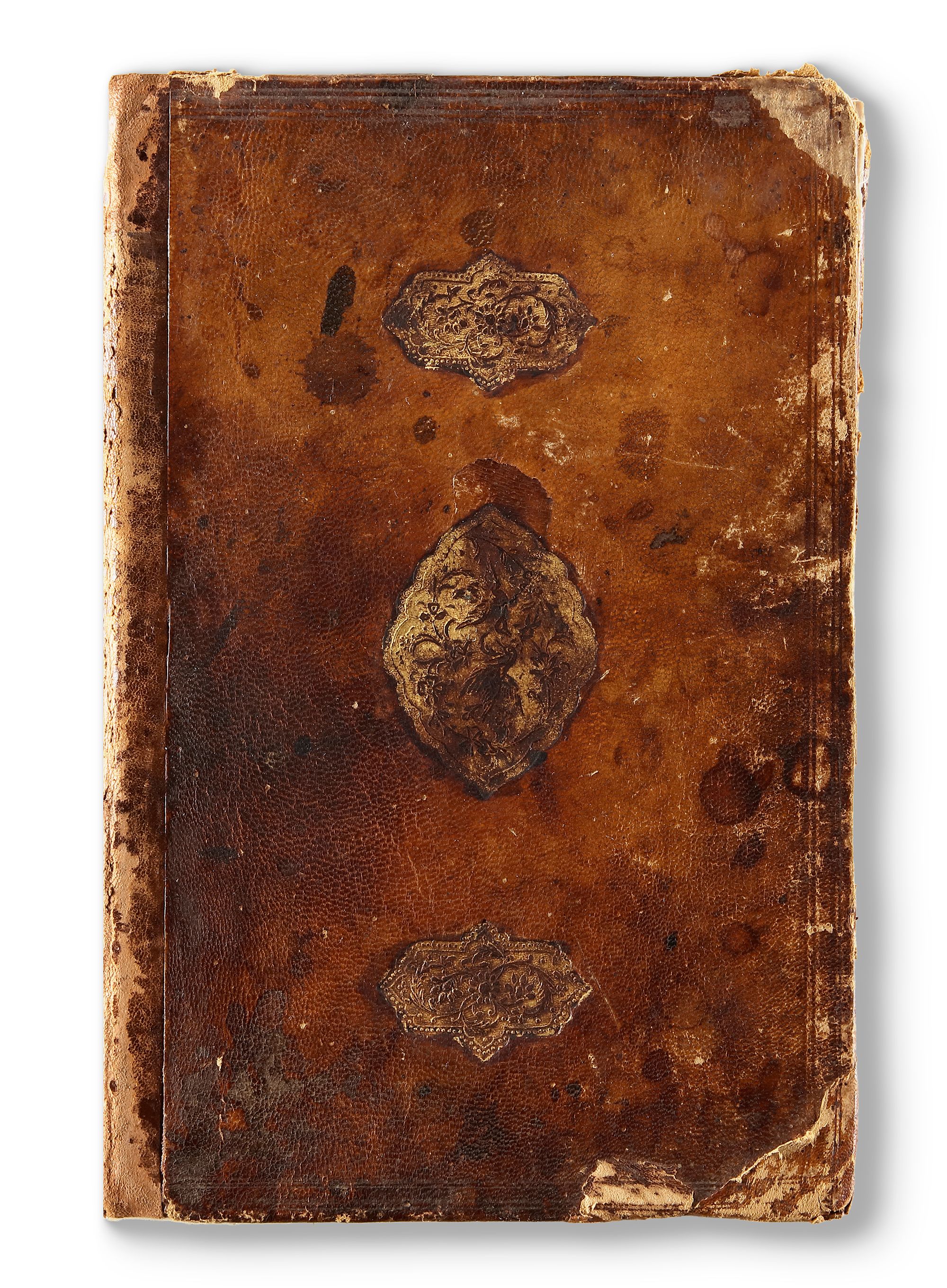
KHARITAT AL-AJAIB WA FARIDAT AL-GHARAIB, 'THE PEARL OF WONDERS AND UNIQUENESS OF STRANGE THINGS' BY IBN AL-WARDI, OTTOMAN TURKEY, 19TH CENTURY
Arabic manuscript on paper, 35 folios with 2 fly-folios, each page with 19 lines, written in black naskh script, titles and important words in red ink, the text ruled in gold and black borders. Two paintings with gouache color heightened with gold, different ownership statements and seals, with a gilt brown morocco leather binding.
15 by 26 cm.
CATALOGUE NOTE
This manuscript is a geographical treatise that synthesizes the contemporary Arabic knowledge of the world. The work features an introductory discussion on distances, the Earth, and its divisions, followed by chapters describing countries, regions, seas, famous rivers, wells, and mountains. The conclusion covers epics and eschatological signs of yawm al-qiyamah (the Day of Resurrection).
Notable illustrations include a colored world map and a depiction of the Kaaba in Al-Masjid Al-Haram, surrounded by maqams and minarets.
Although traditionally attributed to his grandfather, the manuscript was actually written by Ibn al-Wardi, a grandson, who was also an agricultural scientist and geographer. He authored several other works, including Manāfi‘ al-Nabāt (Benefits of Plants) and al-Wajibat wa’l-Manāfi‘ (Obligations and Benefits).
خريطة العجائب وفريدة الغرائب، «درة العجائب وفريدة الغرائب»، تأليف ابن الوردي، تركيا العثمانية، القرن التاسع عشر. مخطوطة عربية على الورق، تتألف من 35 ورقة مع ورقتي حراسة، في كل صفحة 19 سطرًا مكتوبة بخط نسخي أسود، مع تمييز العناوين والكلمات المهمة بالحبر الأحمر، والنص مؤطر بخطوط سوداء ومذهبة. وتحتوي على لوحتين ملونتين بألوان الغواش مع تذهيب، إضافة إلى تملكات وأختام مختلفة، ومجلدة بجلد مغربي بني مذهّب. الأبعاد: 15 × 26 سم. ملاحظة الفهرس: تمثل هذه المخطوطة رسالة جغرافية تجمع خلاصة المعارف العربية المعاصرة عن العالم. يبدأ العمل بمقدمة تتناول المسافات والأرض وتقسيماتها، تليها فصول تصف البلدان والأقاليم والبحار والأنهار الشهيرة والآبار والجبال. ويختتم بموضوعات تتعلق بالملاحم وعلامات يوم القيامة. ومن أبرز الرسوم التوضيحية خريطة ملوّنة للعالم، وتصوير للكعبة المشرفة في المسجد الحرام، تحيط بها المقامات والمآذن. وعلى الرغم من نسبته تقليديًا إلى الجد، فإن هذه المخطوطة من تأليف ابن الوردي الحفيد، الذي كان عالمًا في الزراعة وجغرافيًا. وقد ألّف عدة أعمال أخرى، منها منافع النبات والواجبات والمنافع.