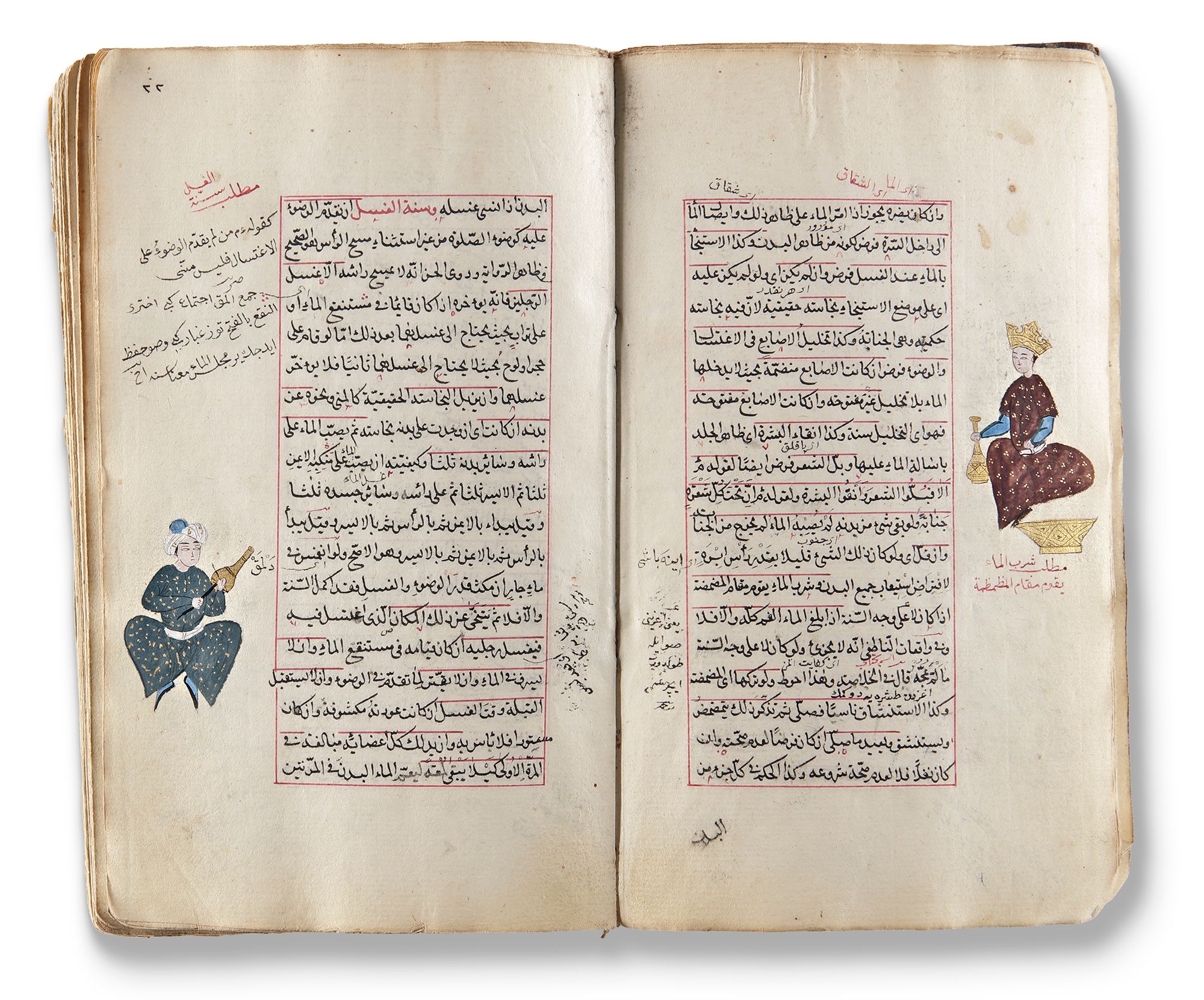
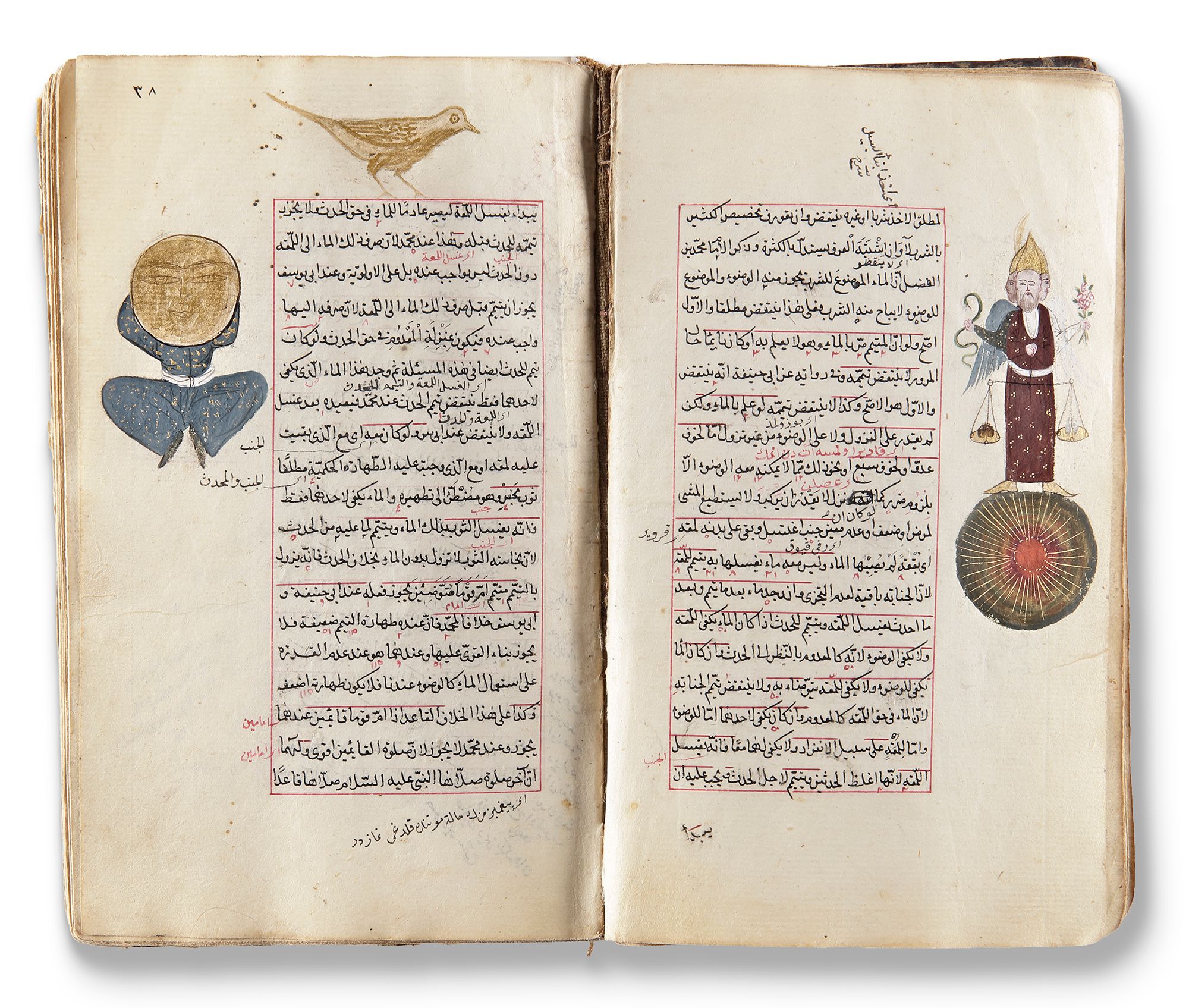
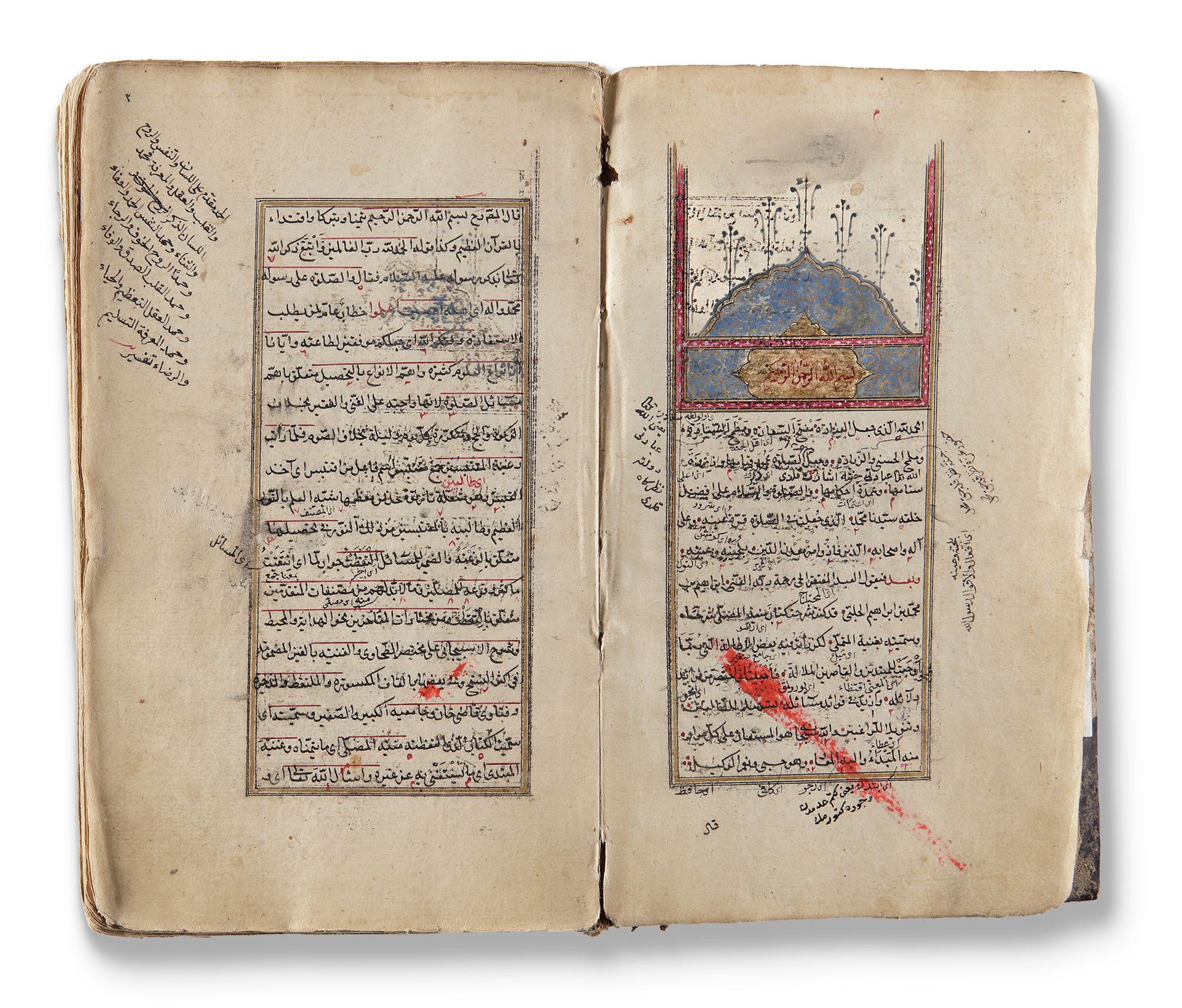
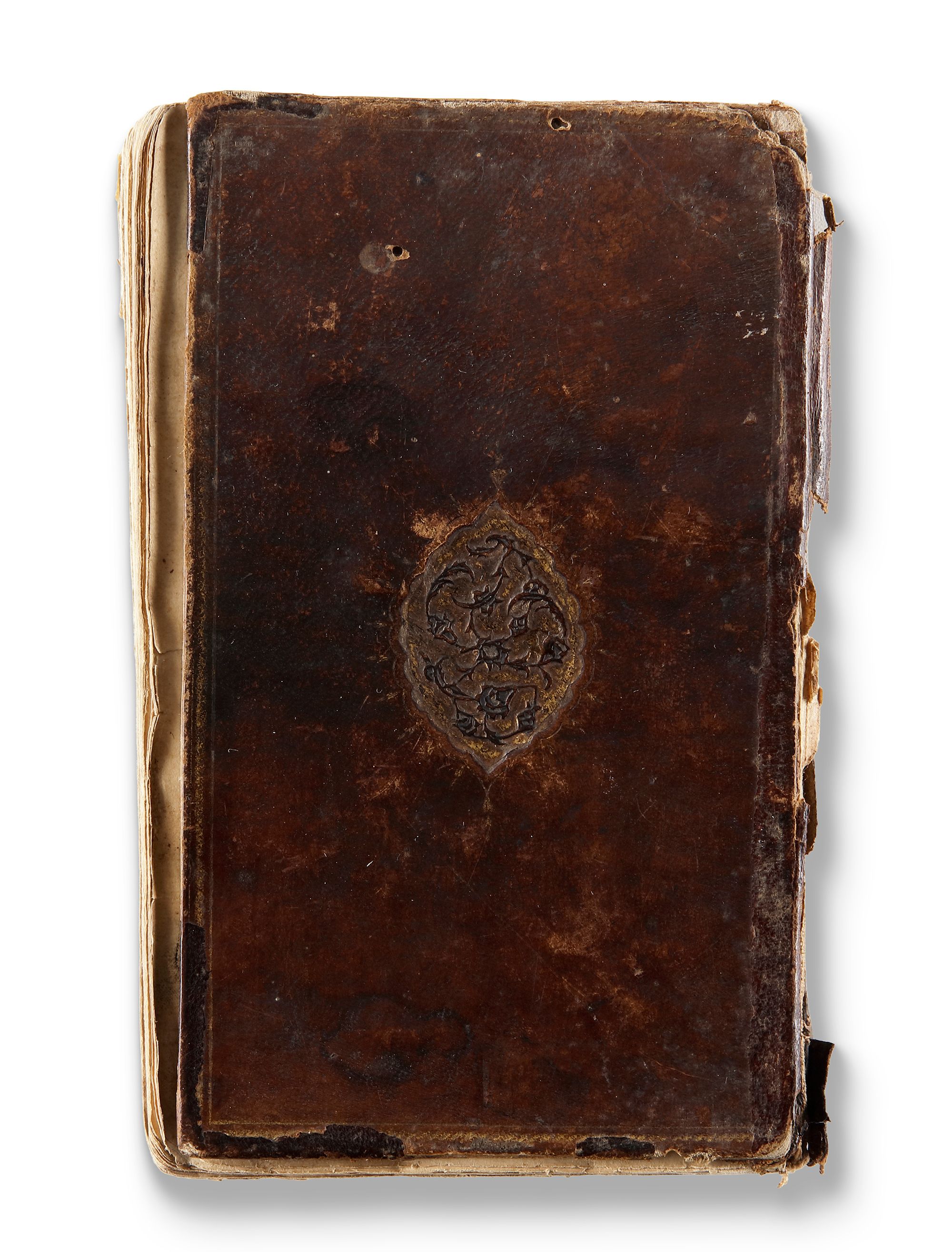
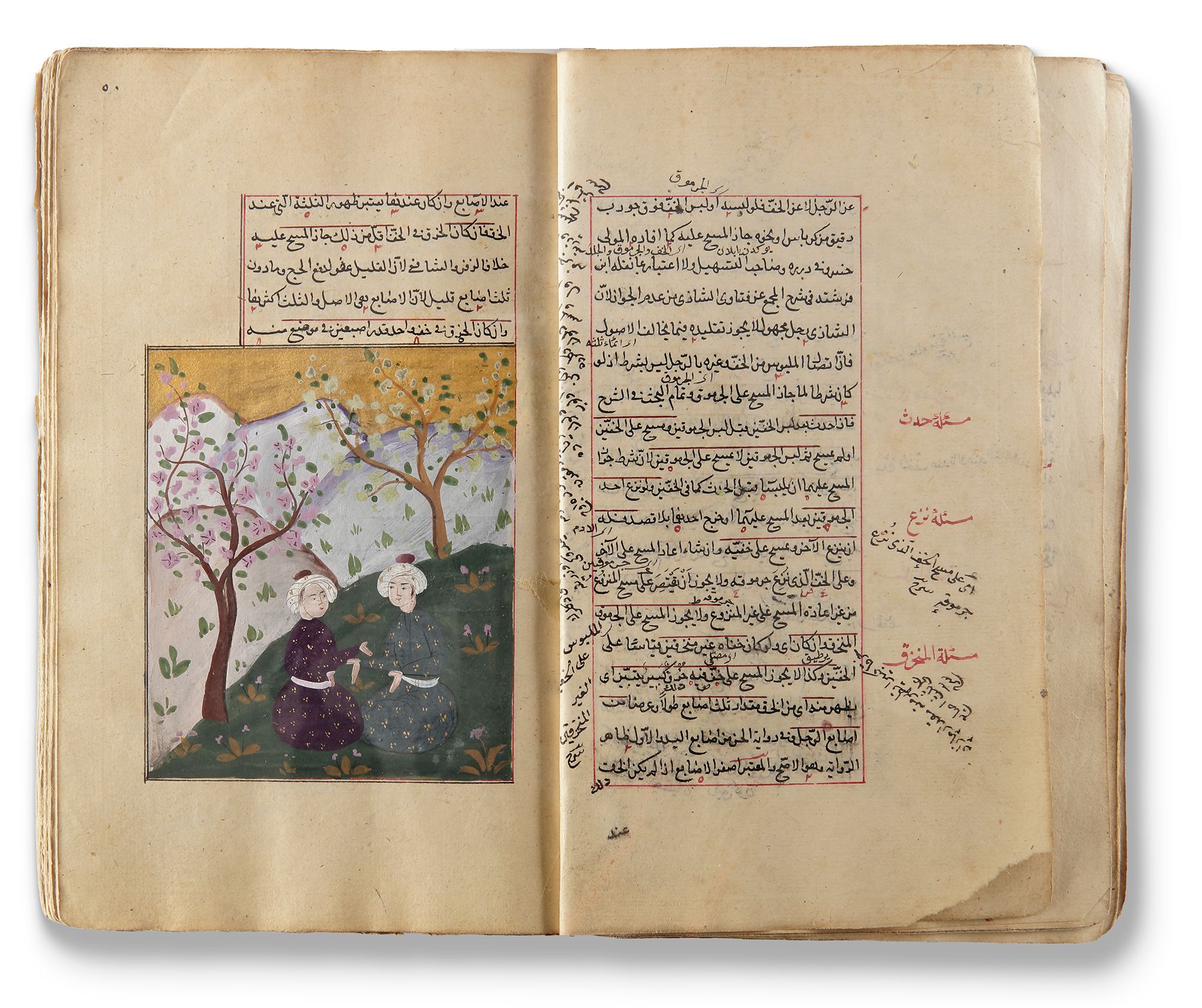
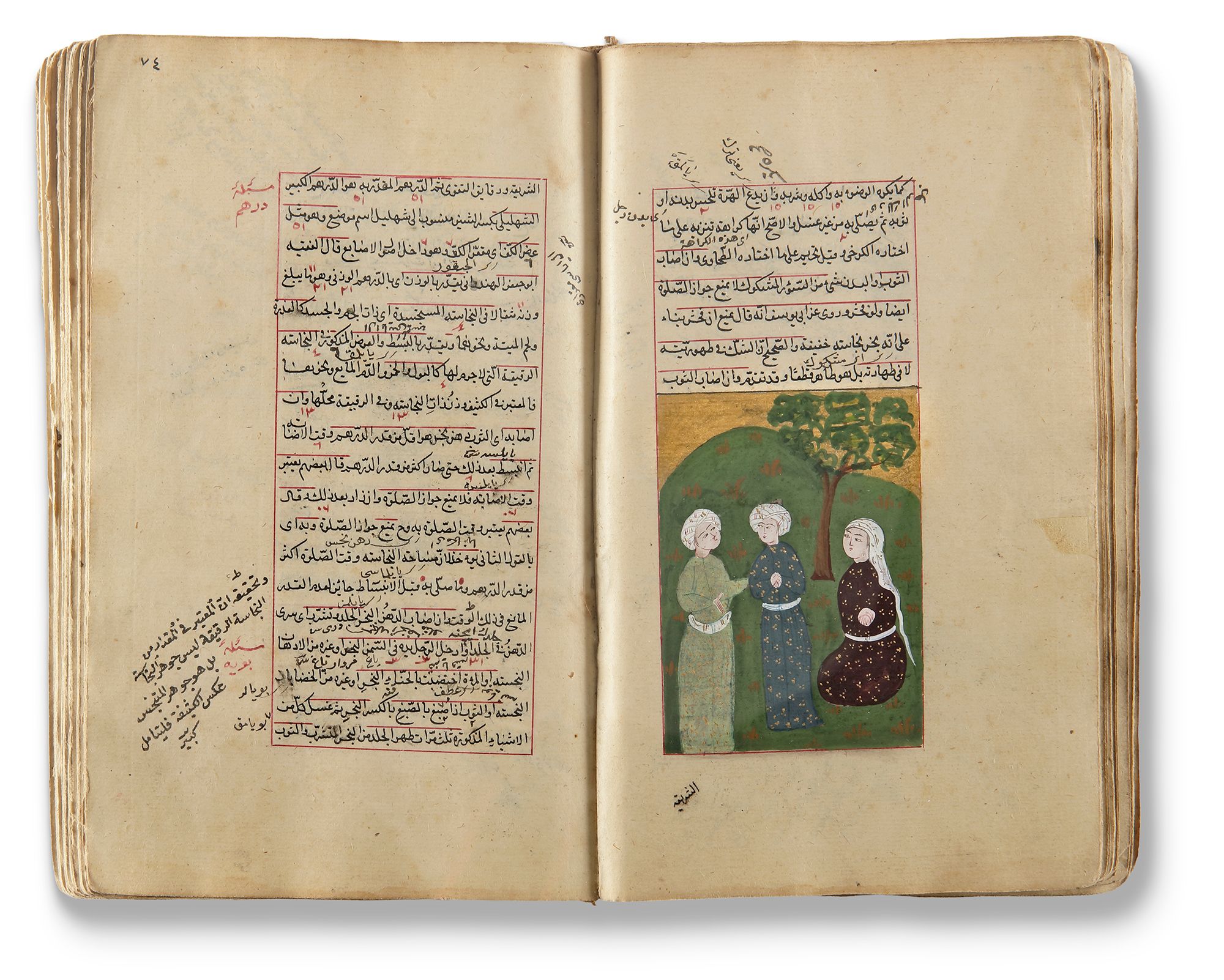
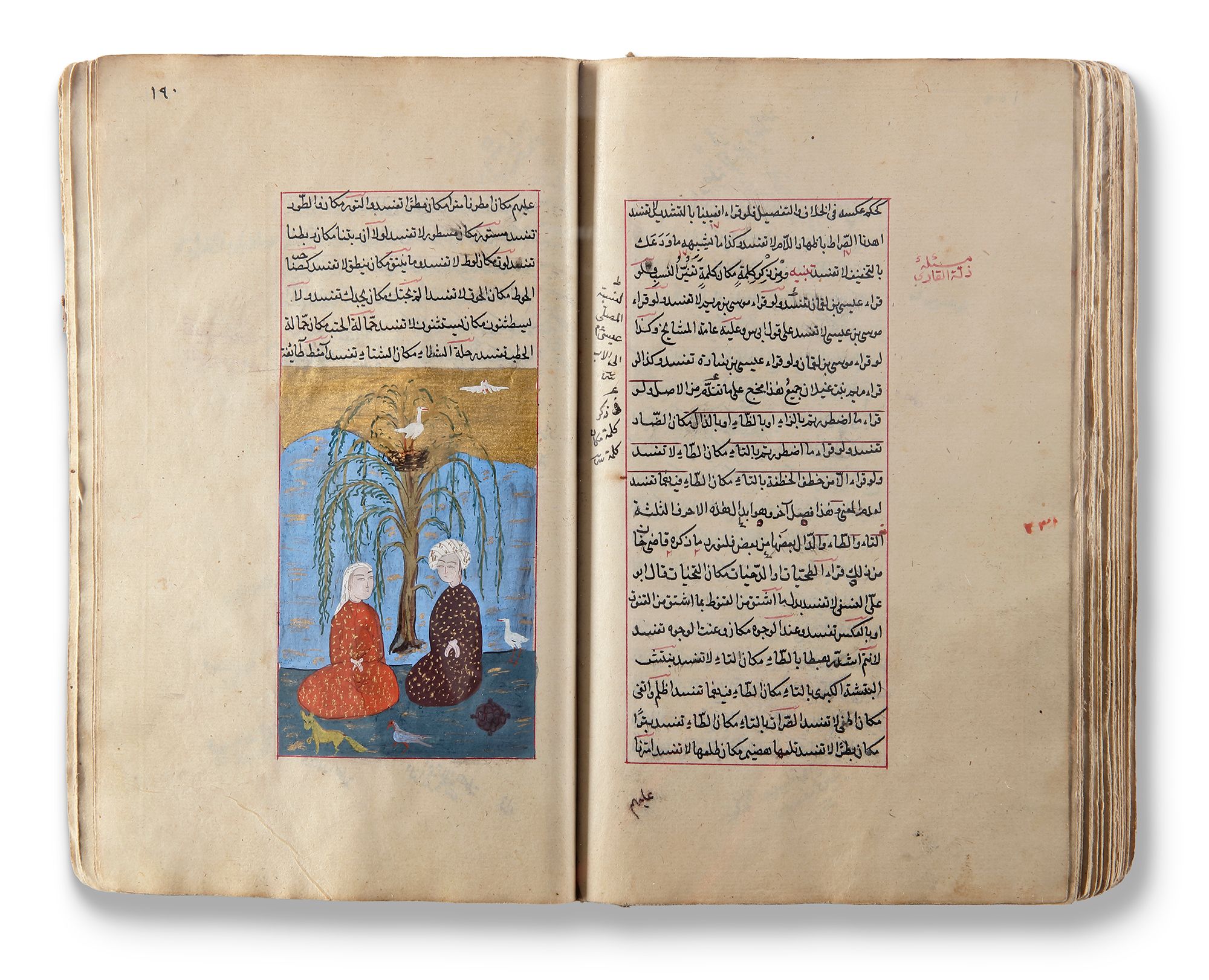
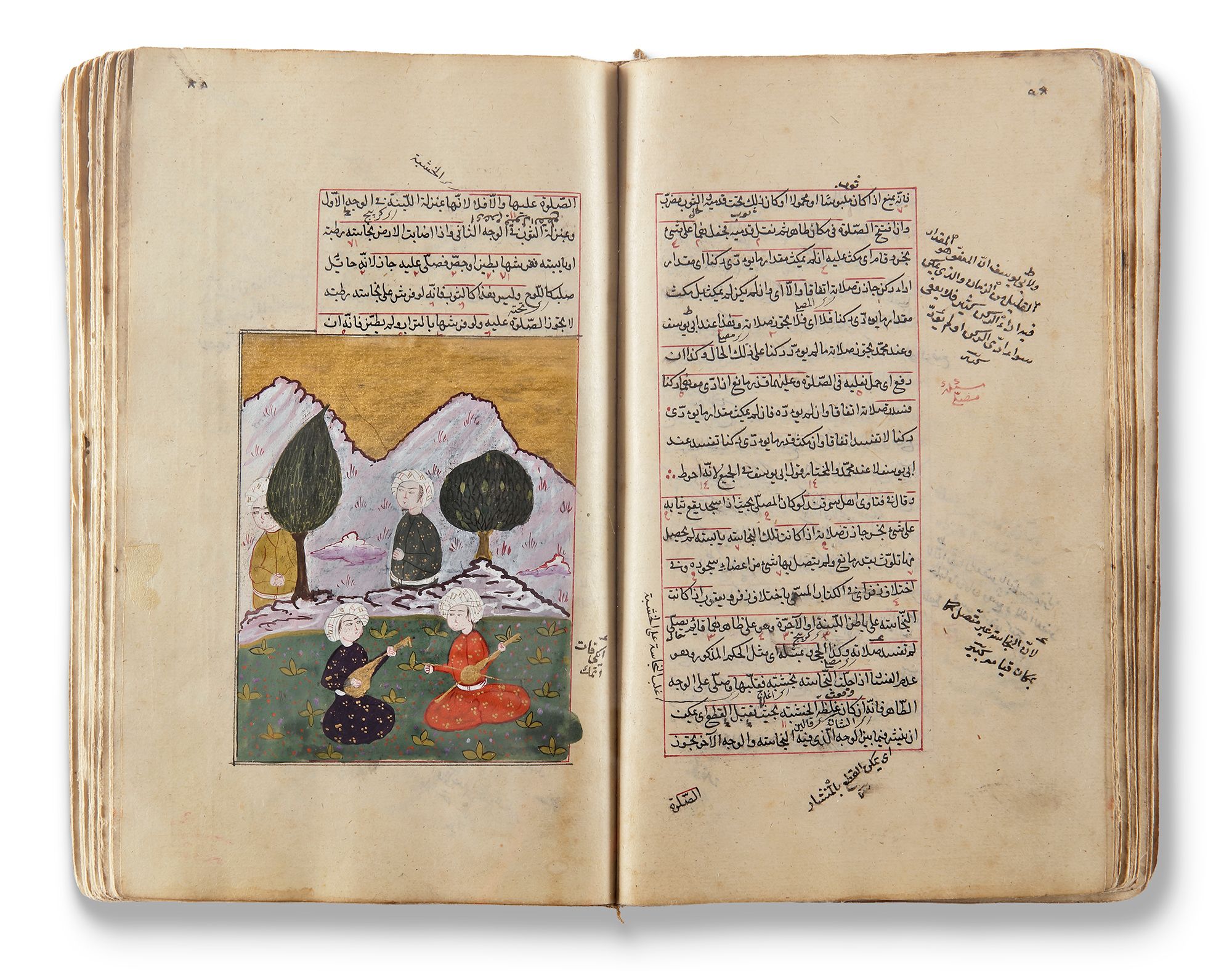
KITAB AL-MUSALLI, A HANAFI TREATISE ON PURIFICATION AND PRAYER BY IBRAHIM AL-HALABI, OTTOMAN TURKEY, 18TH CENTURY
An Arabic manuscript on paper, each page comprising 19 lines in neat black naskh script, with text framed by ruled red borders. Titles and catchwords are inscribed in red ink, while occasional marginal notes and commentaries appear throughout. Select passages are underlined in red. The opening page is adorned with gold and blue illumination, and the manuscript contains three miniatures and four side paintings executed in opaque colors heightened with gold. ownership statement and seals of 1245 AH/1829 AD.
The volume is bound in deep brown leather.
10 by 17 cm.
This work is a summary of Imam Alkashgari’s Munyat al-Mosalli (d. 505 AH), condensed by Imam Ibrahim. In this text, he addresses numerous issues relating to purification and prayer, presenting them in accessible language. He clarifies points of divergence, weighs differing opinions, and highlights supporting evidence.
Kitab al-Musalli, a synopsis of Ghunayat al-Mutamalli fi Sharh Munyat al-Musalli, is a significant contribution to the Hanafi legal tradition, both in its foundational principles and detailed rulings. It offers a comprehensive treatment of matters pertaining to purification and prayer and has been widely referenced. Recognized as a doctrinal work, it occupies an important place among the leading Hanafi scholars, including Ibn Nujaym, Ibn ‘Abidin, and al-Shurunbulali. Each chapter and section is rich with numerous issues and subsidiary rulings, providing thorough discussions throughout.
In his commentary, Imam Ibrahim draws upon the foundational Hanafi sources, including al-Mabsut, al-Asl, al-Muhit, al-Fatawa al-Khaniyya, among others. The work is supported by extensive proofs from the Qur’an, Sunnah, and other authoritative texts.
The author is esteemed for his careful weighing of legal opinions (tarjih al-masa’il), although in some instances his conclusions diverge from those of al-Kashghari.
The author: Ibrahim al-Halabi (c. 1460–1549) was a prominent Islamic jurist born in Aleppo, then part of the Mamluk Sultanate. He studied in Aleppo and Damascus before continuing his education in Cairo, likely at Al-Azhar University, where he studied under the renowned scholar Jalal al-Din al-Suyuti. Around 1500, he moved to Istanbul, the Ottoman capital, where he became an imam, preacher, and teacher at major mosques and institutions, including the Fatih Mosque and the Dar al-Qurra. Al-Halabi is best known for his legal work Multaqa al-Abhur, which became a standard reference for the Hanafi school in the Ottoman Empire. His other major works include Ghaniyat al-Mutamalli, Mukhtasar Tatarikhani, and Mukhtasar al-Jawahir al-Mudhiya, among others. He was recognized in later centuries as one of the foremost jurists of his era. He died in Istanbul in 1549 at about ninety years of age and was buried in the Edirnekapı district.
كتاب المُصَلِّي: رسالة حنفية في الطهارة والصلاة لإبراهيم الحلبي، تركيا العثمانية، القرن الثامن عشر مخطوطة عربية على الورق، تحتوي كل صفحة على 19 سطرًا مكتوبة بخط النسخ الأسود المتقن، مع إحاطة النص بإطارات حمراء محددة. العناوين والكلمات المفتاحية مكتوبة بالحبر الأحمر، بينما تظهر هوامش التعليقات والشروح بين الحين والآخر. بعض المقاطع مختارة ومسطرة باللون الأحمر. الصفحة الافتتاحية مزخرفة بالذهب والأزرق، وتحتوي المخطوطة على ثلاث مصورات وأربع لوحات جانبية نُفذت بألوان غامقة مع تعزيز الذهب. الكتابة مجلدة بجلد بني غامق. الأبعاد: 10 × 17 سم. هذا العمل هو خلاصة كتاب الإمام الكاشغري منية المصلي (توفي 505 هـ)، مجمعة بواسطة الإمام إبراهيم. في هذا النص، يتناول مسائل عديدة تتعلق بالطهارة والصلاة بأسلوب يسهل فهمه، ويوضح نقاط الاختلاف، ويوازن بين الآراء المختلفة، ويبرز الأدلة المؤيدة لكل رأي. يُعد كتاب المصلي، وهو مختصر لكتاب غنية المتأمل في شرح منية المصلي، مساهمة هامة في التقليد الفقهي الحنفي، سواء من حيث المبادئ الأساسية أو الأحكام التفصيلية. يقدم معالجة شاملة لمسائل الطهارة والصلاة وقد استُشهد به على نطاق واسع. ويُعترف به كعمل عقائدي يحتل مكانة مرموقة بين كبار العلماء الحنفيين، من بينهم ابن نجيم، وابن عابدين، والشورنبلي. كل فصل وقسم غني بالمسائل والأحكام الفرعية، مع مناقشات مستفيضة على امتداد النص. في شرحه، يستند الإمام إبراهيم إلى المصادر الحنفية الأساسية، بما في ذلك المبسوط، والأصل، والمحيط، والفوائد الخانية، وغيرها. كما يدعم عمله بأدلة واسعة من القرآن الكريم والسنة النبوية والنصوص الموثوقة الأخرى. يُقدَّر المؤلف لتأنّيه في ترجيح المسائل الفقهية، رغم أن بعض استنتاجاته تختلف أحيانًا عن آراء الكاشغري. المؤلف: إبراهيم الحلبي (حوالي 1460–1549) كان فقيهًا إسلاميًا بارزًا وُلد في حلب، التي كانت آنذاك جزءًا من سلطنة المماليك. درس في حلب ودمشق قبل أن يكمل تعليمه في القاهرة، على الأرجح في جامعة الأزهر، حيث تتلمذ على يد العالم المعروف جلال الدين السيوطي. حوالي عام 1500، انتقل إلى إسطنبول، عاصمة الدولة العثمانية، حيث أصبح إمامًا وخطيبًا ومعلمًا في مساجد ومؤسسات رئيسية، بما في ذلك مسجد الفاتح ودار القراء. يشتهر الحلبي بعمله الفقهي ملتقى الأبْحُر، الذي أصبح مرجعًا قياسيًا للمذهب الحنفي في الدولة العثمانية. ومن أعماله المهمة الأخرى: غنية المتأمل، ومختصر الطتارخاني، ومختصر الجواهر المضيئة، وغيرها. وقد عُرف في القرون اللاحقة كأحد أبرز الفقهاء في عصره. توفي في إسطنبول عام 1549 عن عمر يناهز تسعين عامًا تقريبًا، ودُفن في منطقة إدرنكابي