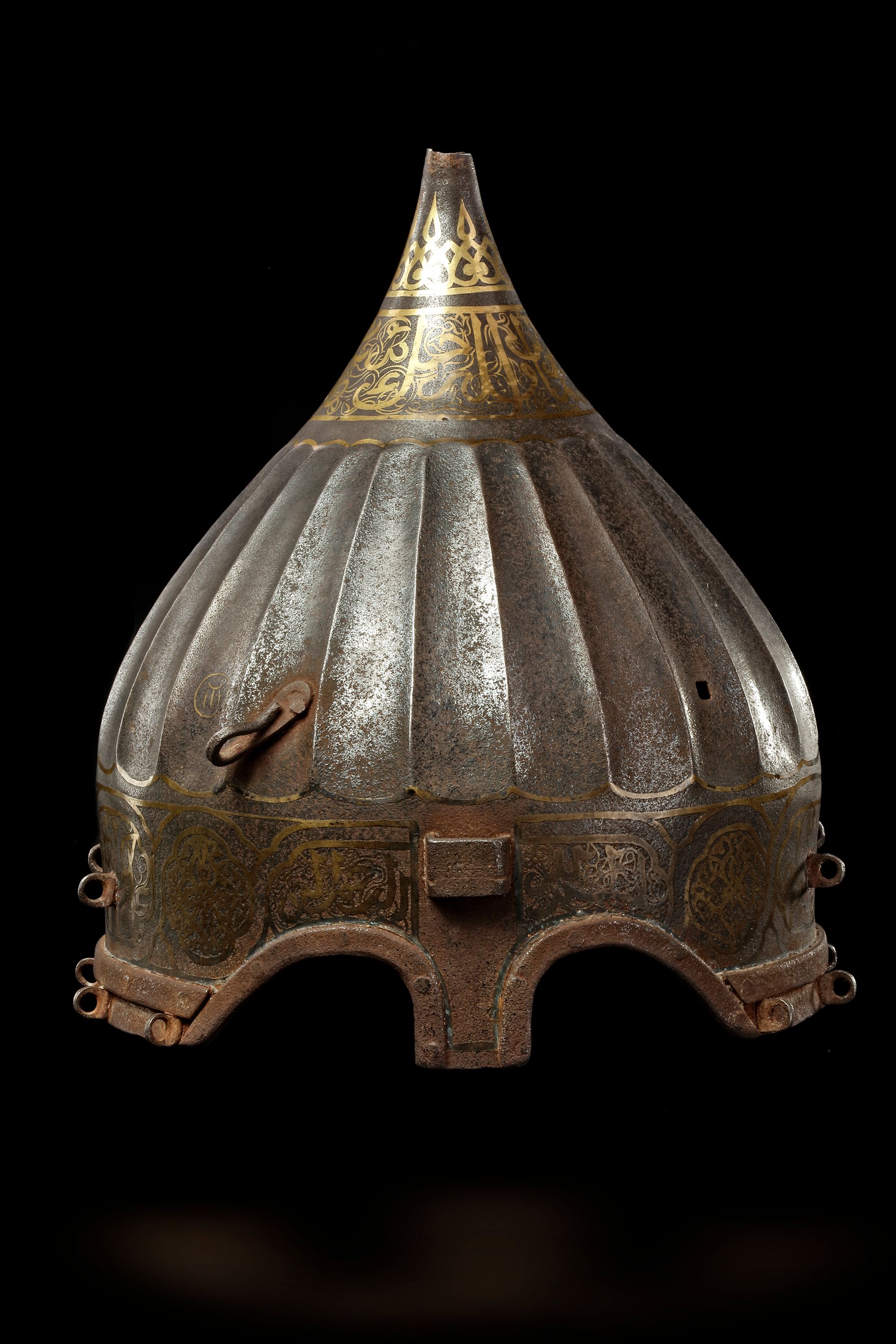
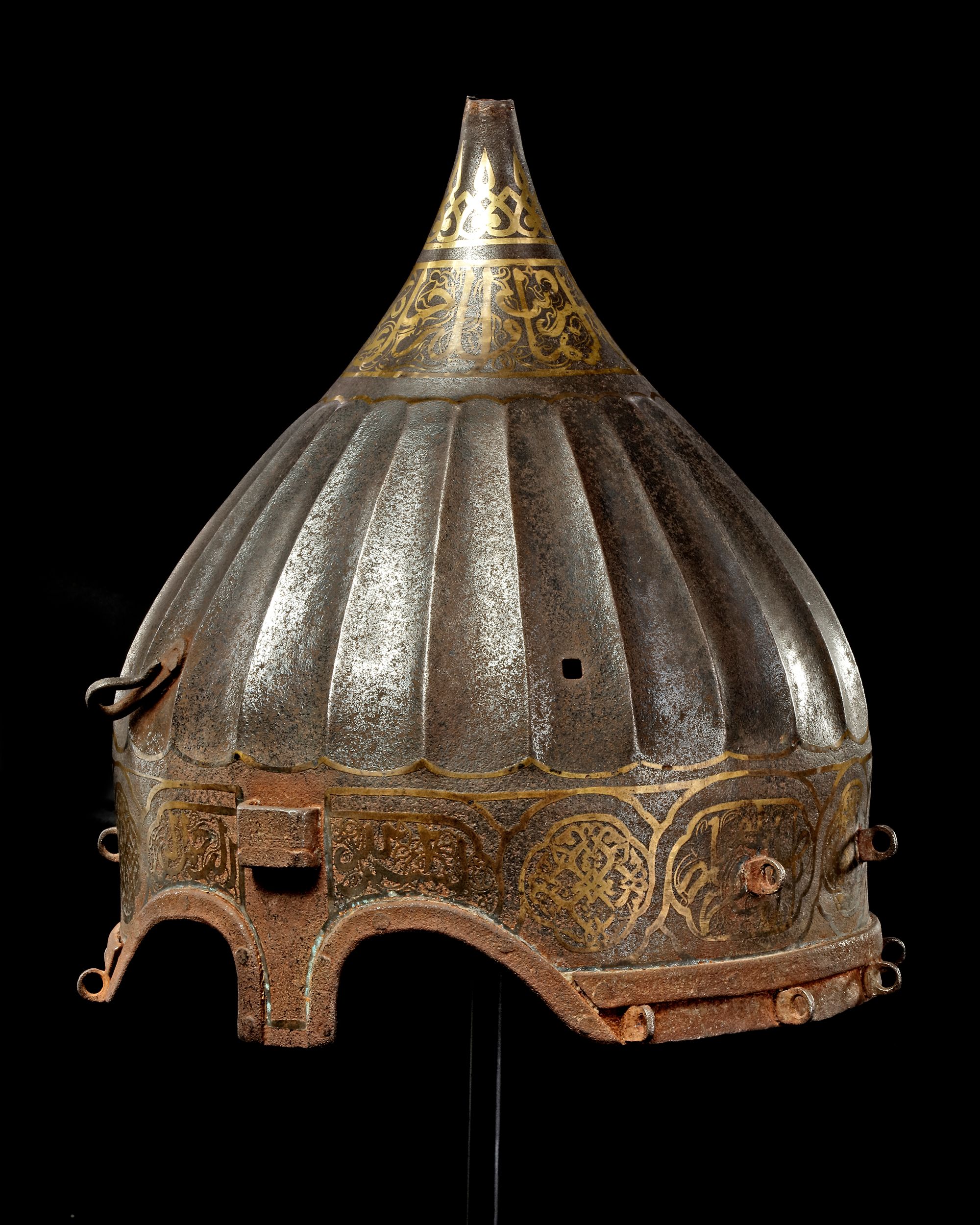
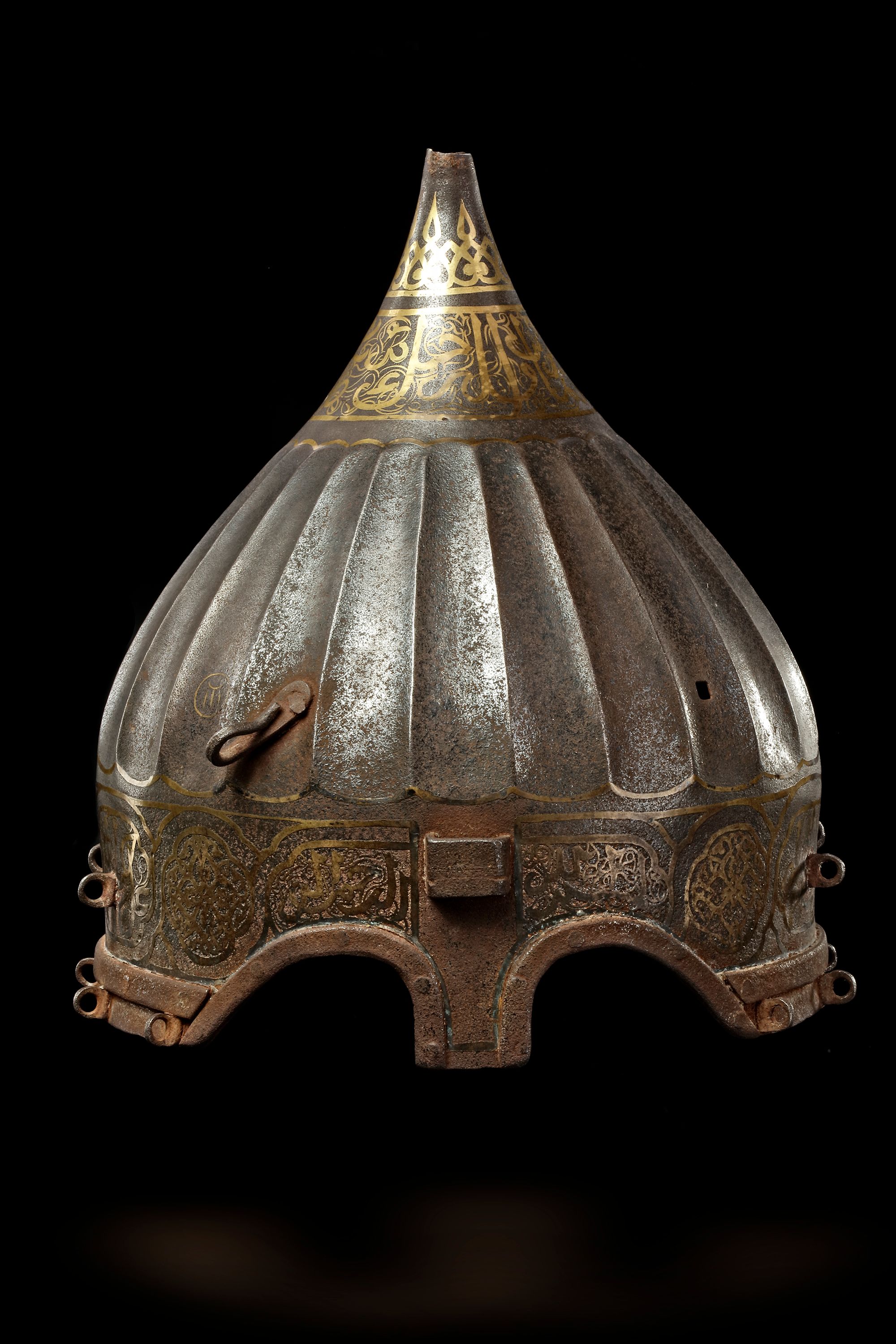
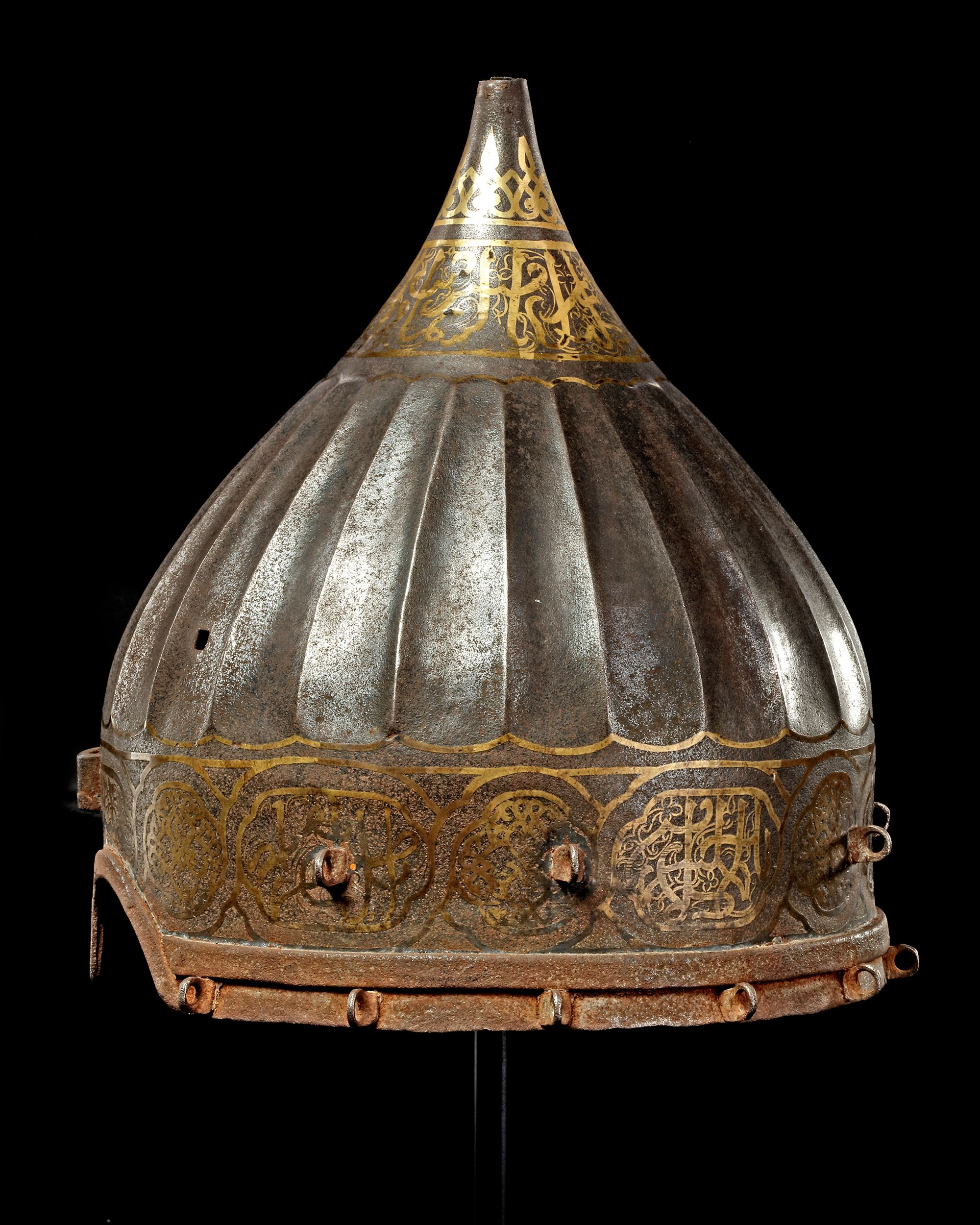
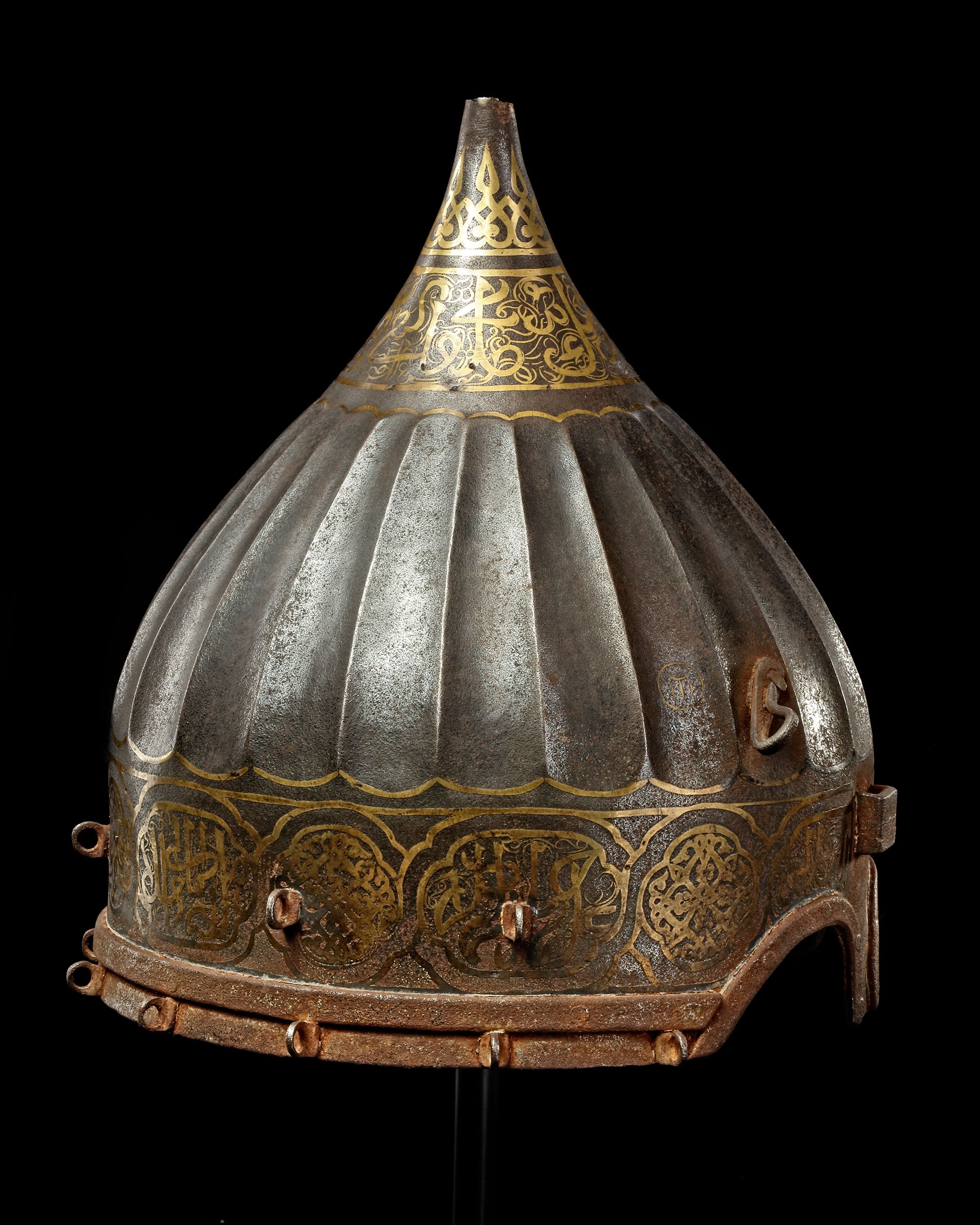
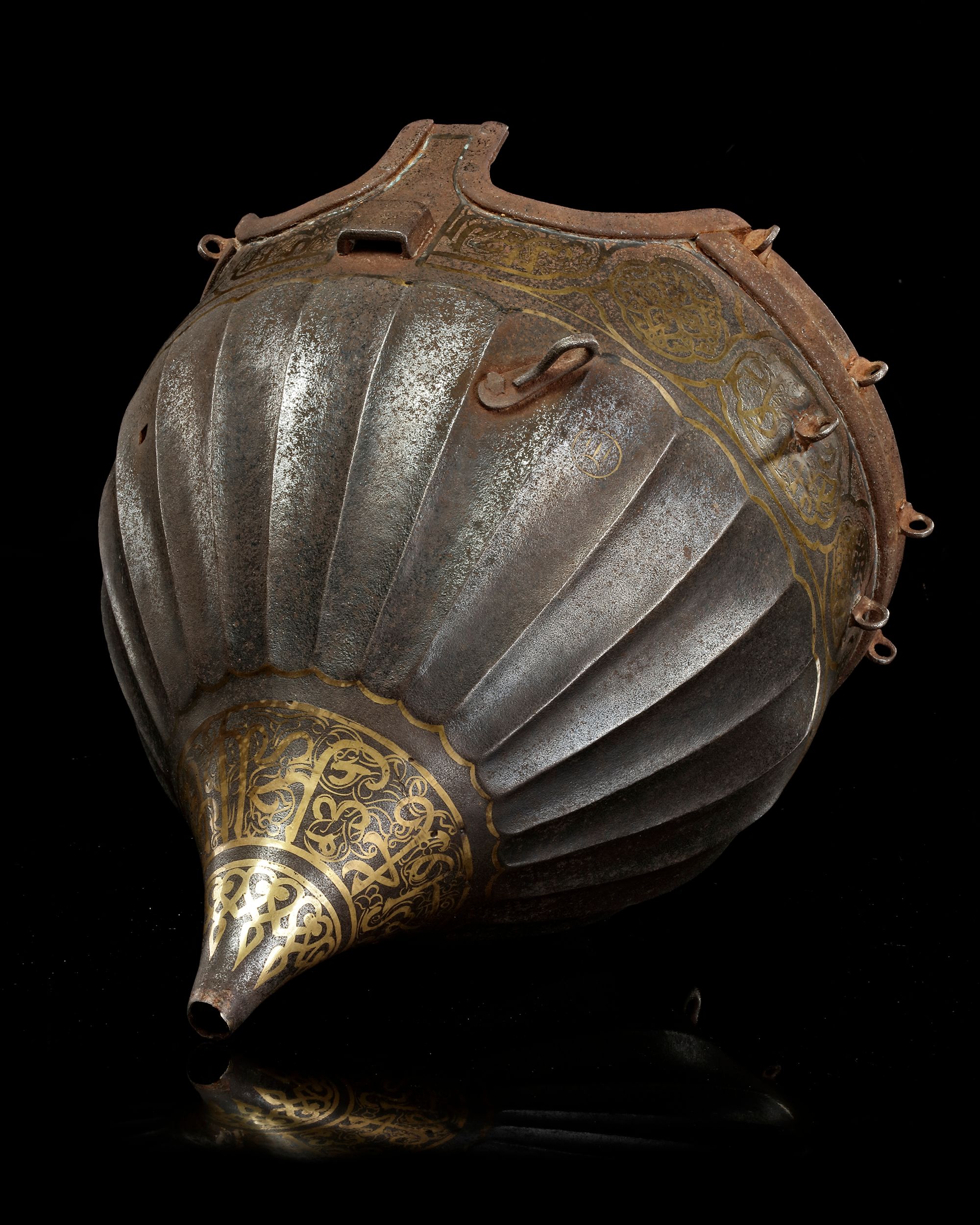
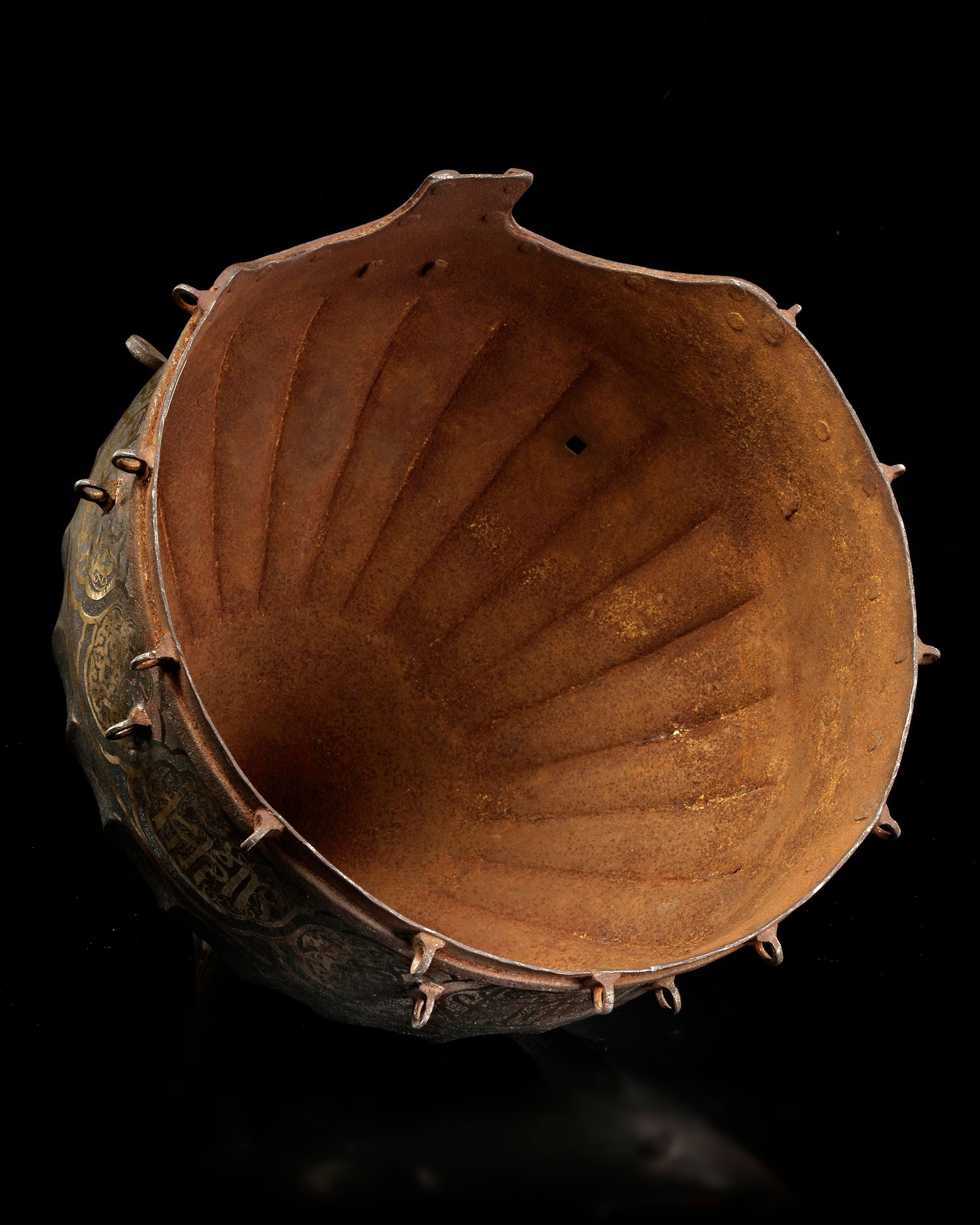
AN INSCRIBED STEEL TURBAN HELMET, ANATOLIA 15TH CENTURY
A fine steel turban helmet, of cylindrical form rising to a swollen band of vertical flutes narrowing to a central pointed apex housing a fixing for a finial, indents for the eyes and nose-guard to front, with applied rings for the nasal guard and plume holders, 17 rings around the lower edge and the rim for the suspension of an aventail, a wide band around base containing cartouches enclosing gilt engraved inscriptions, the helmet is gilded with the mark of the Ottoman arsenal (Kayi tribe), a similar band of gilt inscriptions around the top under a band of interlocked leafy palmettes.
Height: 26 cm.
Inscriptions
two cartouches above the indents for the eyes contains the Basmallah, with Quran verses " Allah Akbar, Allah Jalla Jalaluhu' around the rim.
PROVENANCE
Private collection, United Kingdom
CATALOGUE NOTE
This helmet, which is characterised by its large yet elegant domical shape with a band of flutes and gently rising finial, is also referred to as a ‘turban helmet’ due to the resemblance of these flutes to the folds on a turban. Turbans could be representative of one’s rank or religious order, and the way that these were wound and the numbers of folds created were particularly important indicators of rank or religious status, some mystical dervish groups would wear turbans folded several times to reflect some important mystical number. The fluted design of the turban helmet might replicate this practice. The religious nature of the turban helmet was underlined by the presence of Arabic inscriptions taken from the Quran. These Quranic inscriptions supposedly provided God's protective power to the wearer.