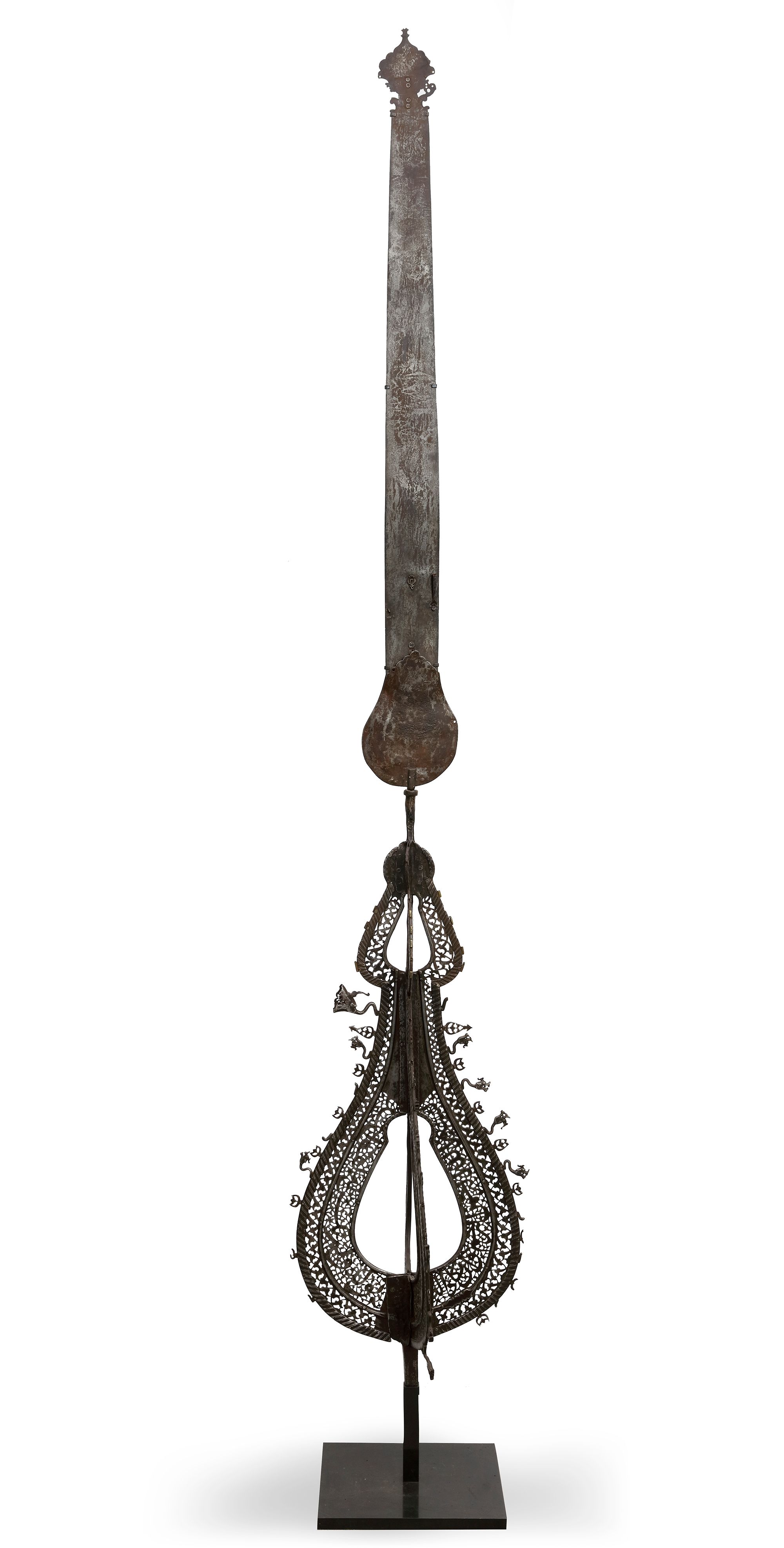
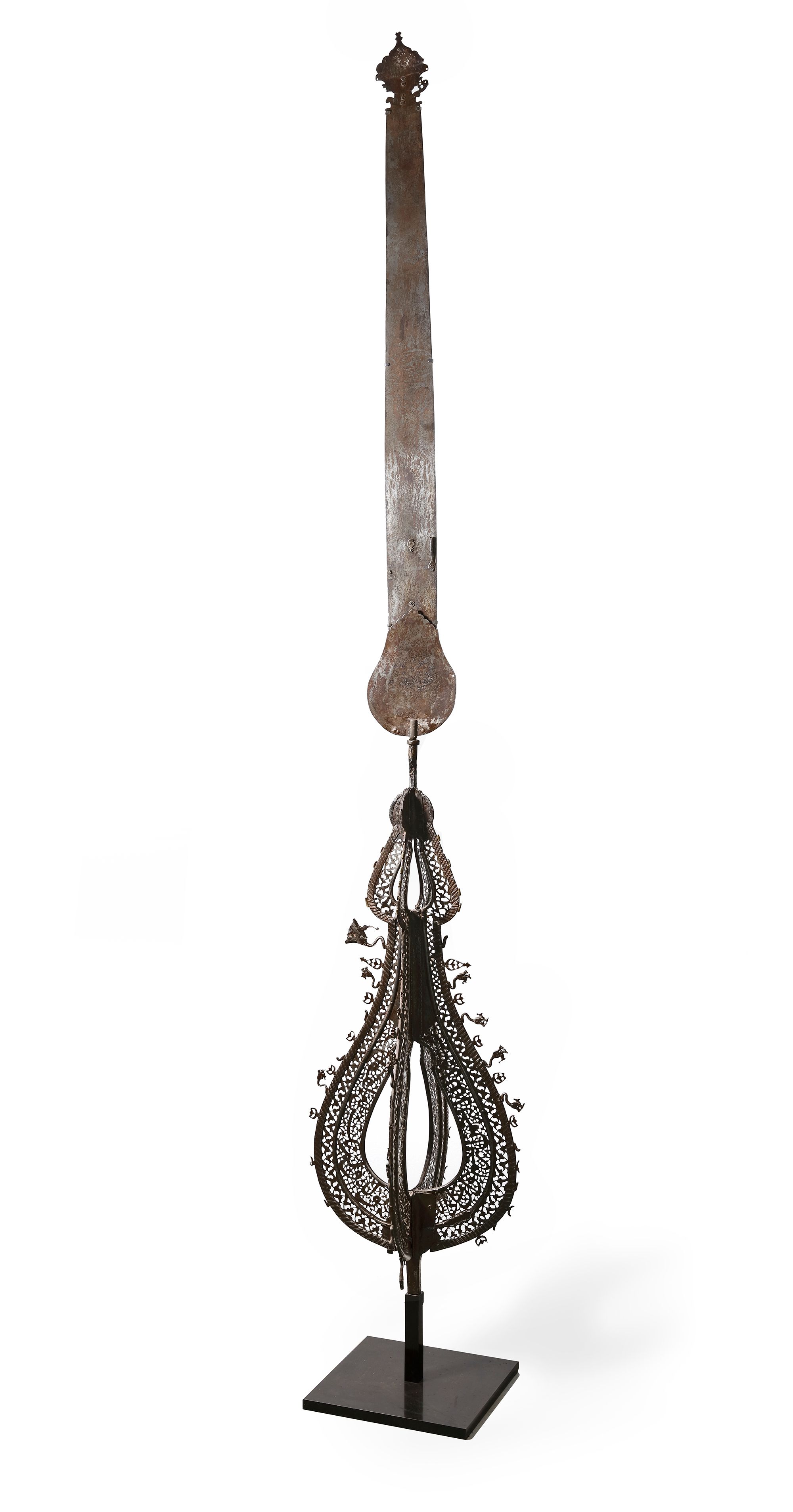
Lot 184 A MONUMENTAL PIERCED-STEEL PROCESSIONAL STANDARD ('ALAM), PERSIA OR DECCAN, 17TH CENTURY
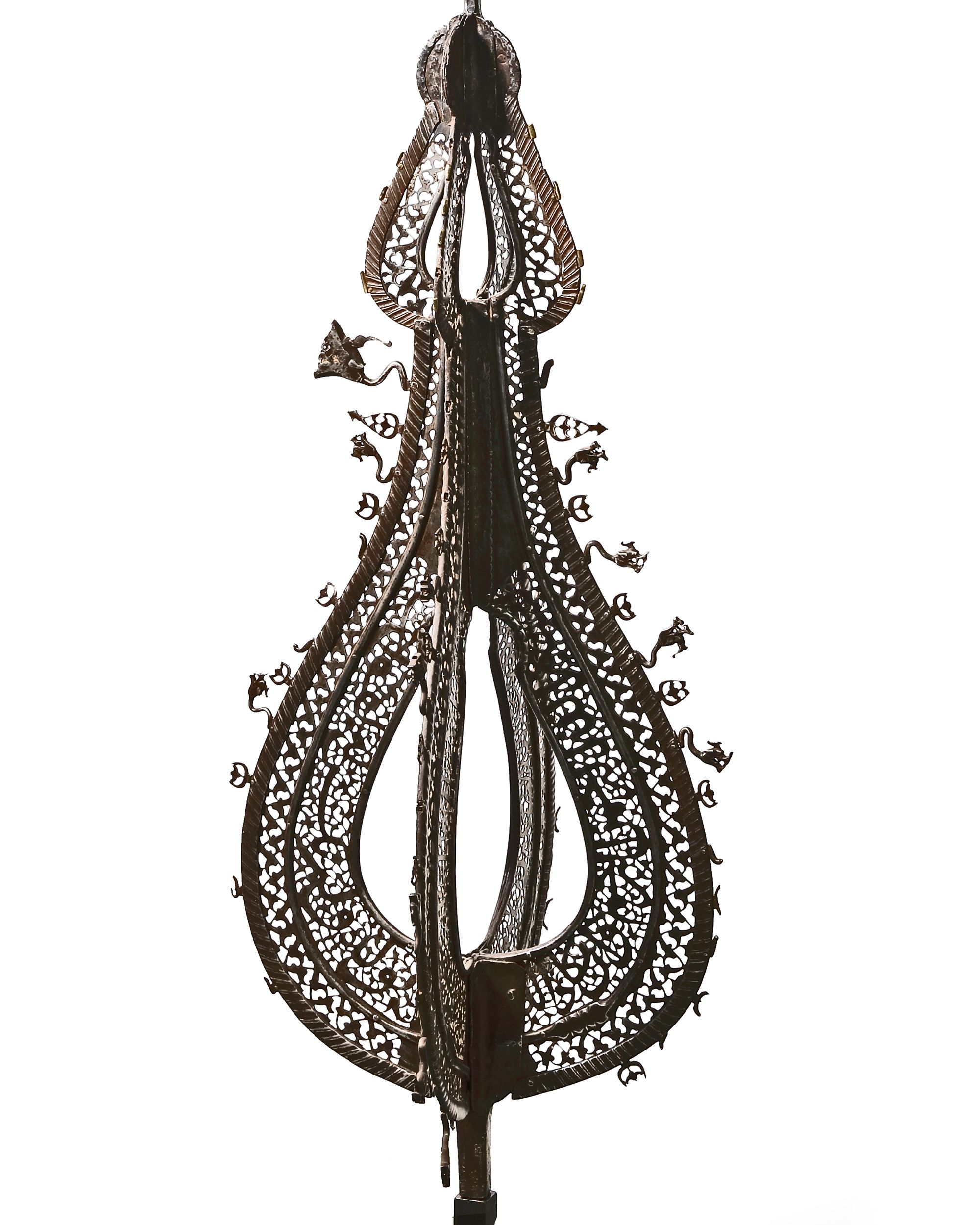
A monumental pierced-steel ‘alam, this work stands among the most striking survivals of Safavid ceremonial metalwork, distinguished by its commanding scale and extraordinary refinement. Standards of this type, particularly those of such impressive height, served as powerful religious and martial insignia, borne aloft in processions to evoke both spiritual devotion and dynastic authority. The present example is composed of two elegantly proportioned drop-shaped elements, joined and surmounted by a quarter-lobed finial and elongated terminal. Its surface is animated by a masterfully executed openwork design, in which fluid cursive calligraphy, including Surah al-Ikhlas and verse 51 of Surah al-Qalam, unfolds across a dense ground of finely pierced foliated scrollwork. This intricate field is framed by a border of rhythmic palmettes, all contained within a subtly ridged outer contour.
Of particular note are the numerous stylized dragon-head projections that punctuate the perimeter. Both ornamental and symbolic, these dynamic forms were believed to safeguard the sacred inscriptions through their fiery breath. From the Timurid period onward, dragon imagery functioned as a potent symbol of royal, and even divine, authority. The royal symbolism of the dragon has been explored by Souren Melikian-Chirvani in his study Le Shah-Name, la gnose soufie et le pouvoir mongol (Journal Asiatique, vol. 272, nos. 1–2, 1984, pp. 323ff). Here, their integration with Quranic text creates a compelling synthesis of spiritual protection and sovereign power.
The conjunction of pierced calligraphy and dragon-head terminals is characteristic of seventeenth-century Persian standards. Closely related examples underscore this shared aesthetic: a comparable ‘alam in the Aga Khan Museum (inv. no. AKM00620), attributed either to Safavid Persia or to the Shi‘a courts of the Deccan, regions closely aligned with Safavid cultural traditions features a similar proliferation of dragon motifs. Another parallel is preserved in the David Collection, Copenhagen (inv. no. 32/2001).
Impressive in scale and intricate in execution, the present ‘alam encapsulates the Safavid synthesis of devotion, dynastic imagery, and technical virtuosity, embodying the ceremonial grandeur and symbolic richness of seventeenth-century Persian art. Height: 265 cm.