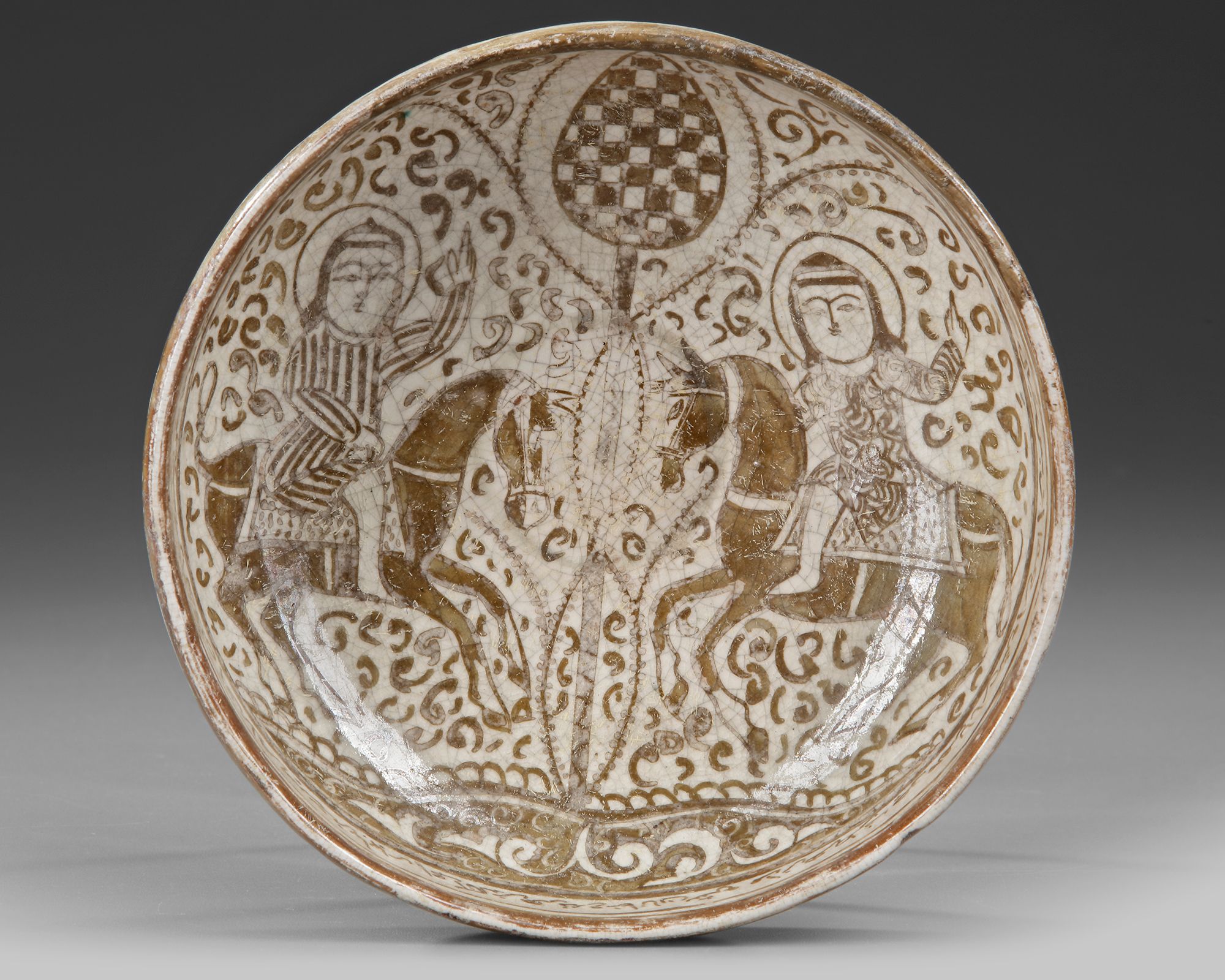
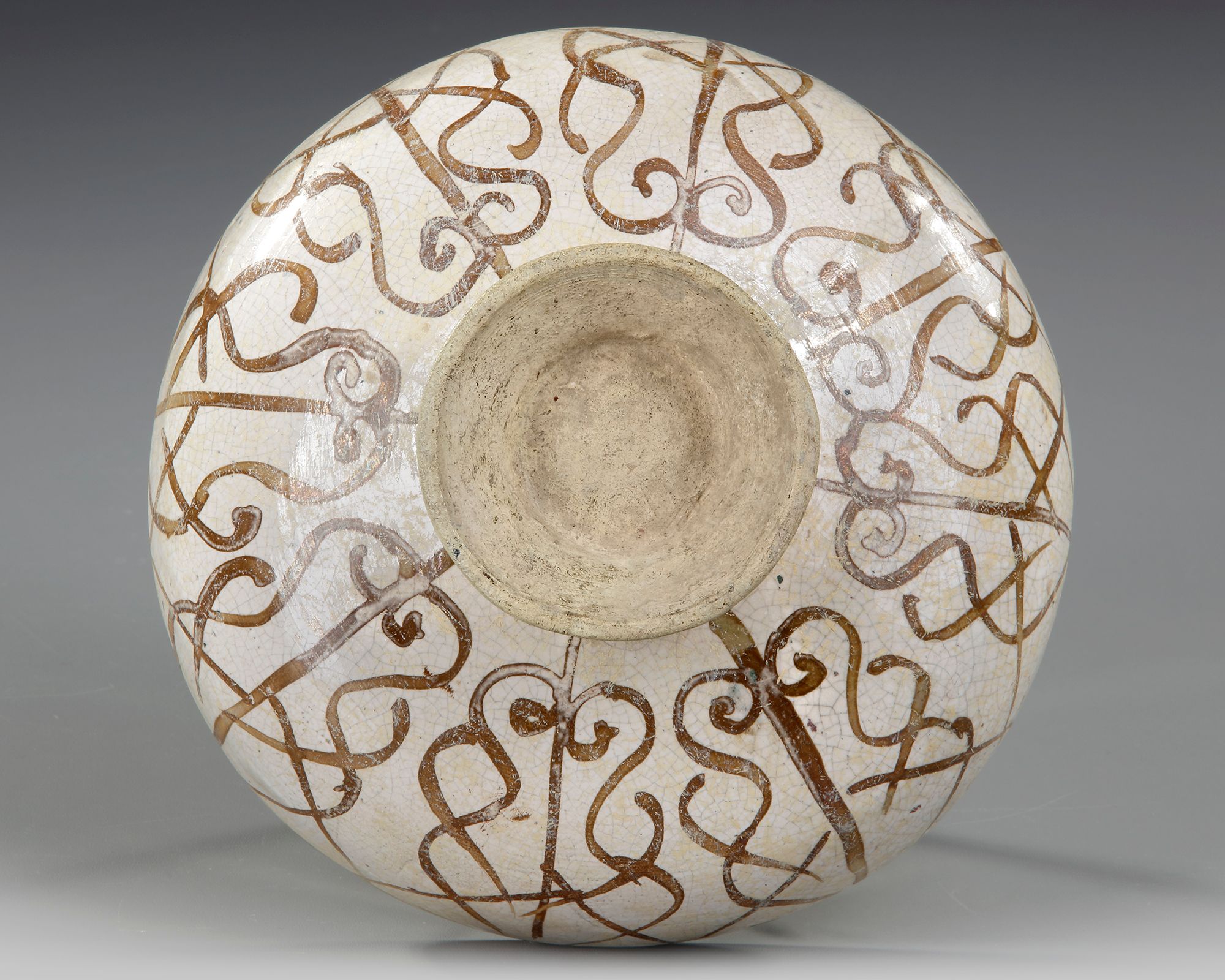
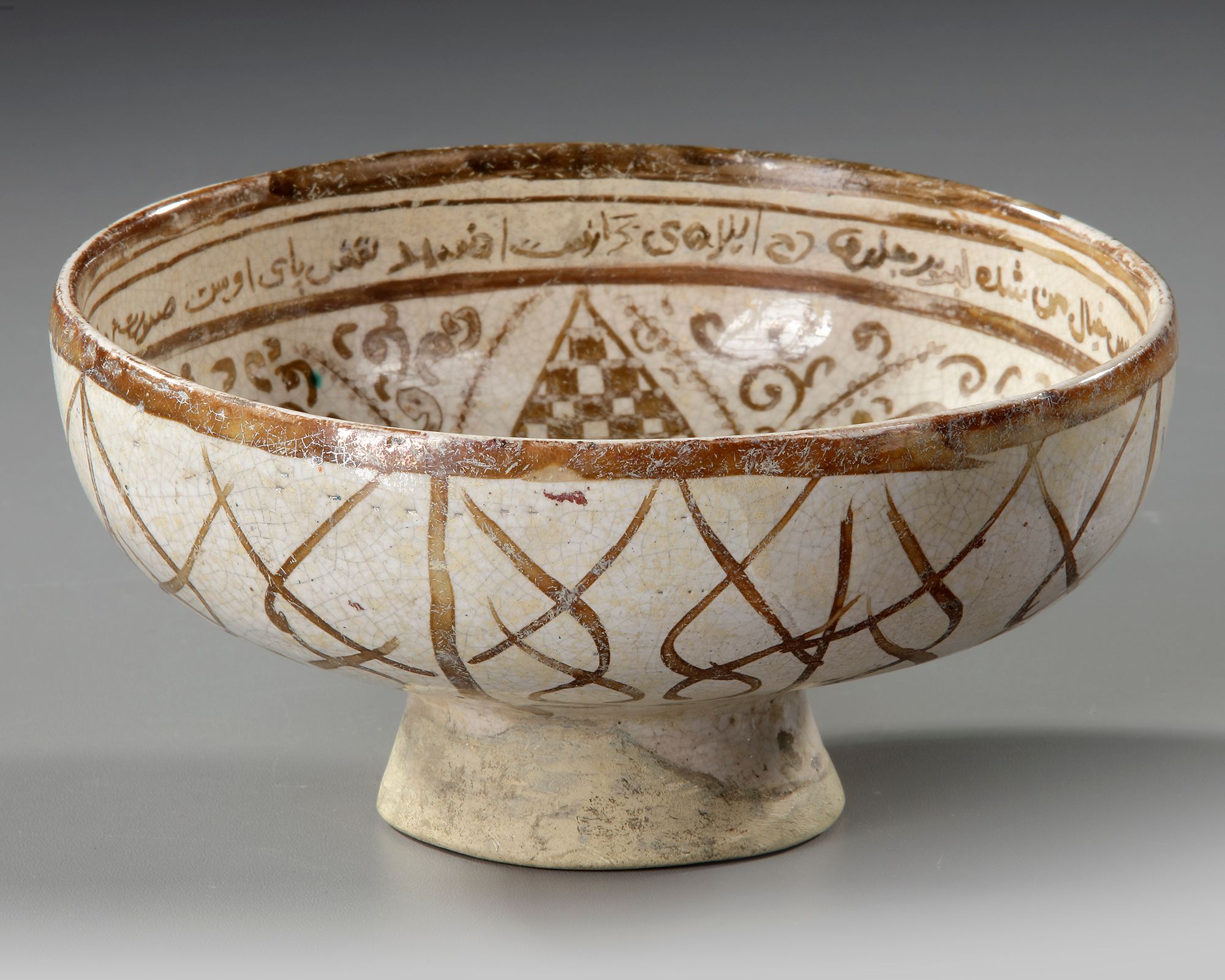
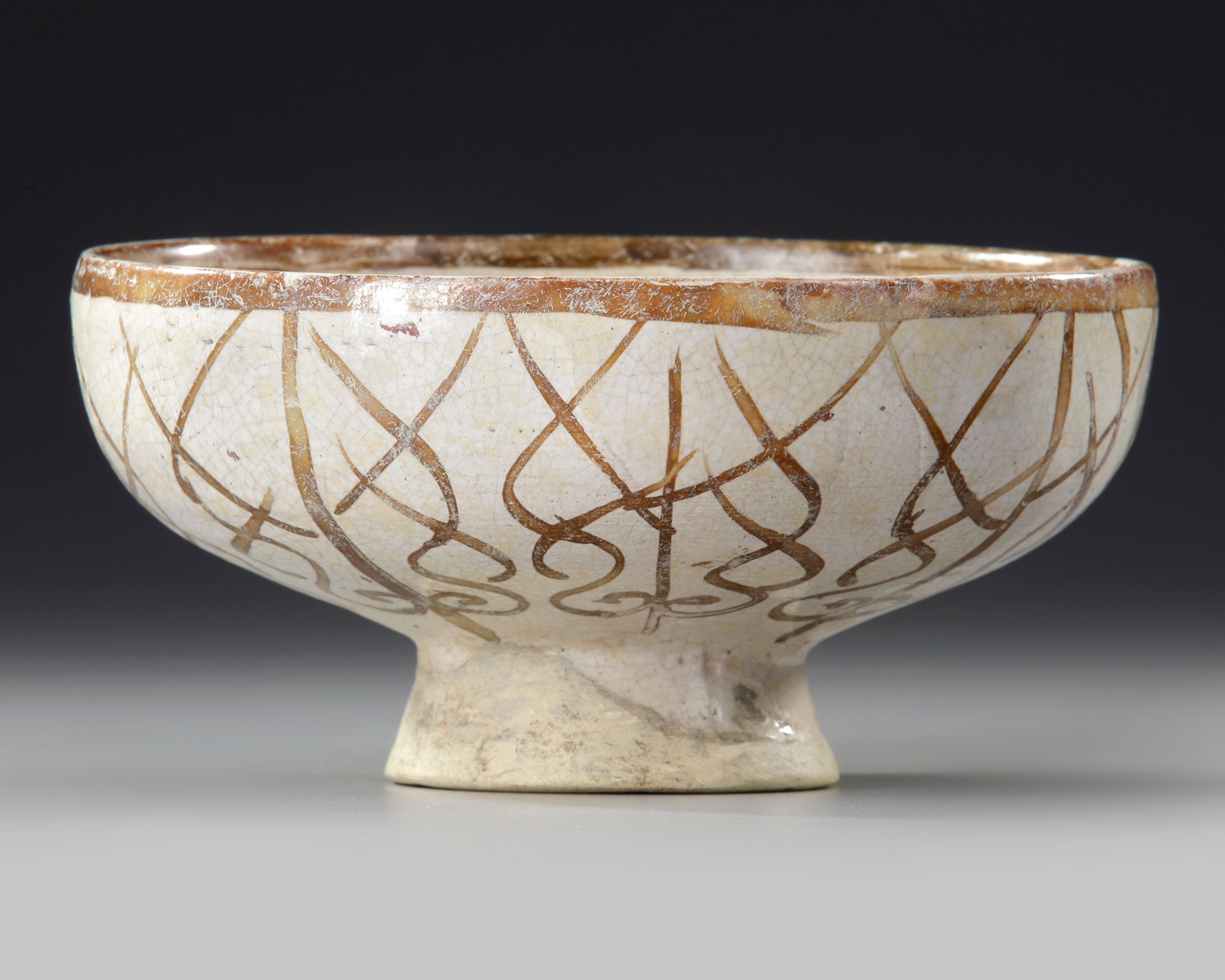
A KASHAN LUSTRE POTTERY BOWL, PERSIA, LATE 12TH - EARLY 13TH CENTURY
A Persian pottery bowl with conical sides resting on a spreading foot, decorated with two figures on horseback on a leafy scrolls decorated ground, under the rim with a diaper band enclosing inscriptions in naskh script.
Diameter: 16 cm.
Height: 8 cm.
Kashan fritware often depicted scenes of elite leisure activities such as hunting, feasting, and dancing, such activities constituted one component of the medieval Persian conception of courtly enjoyment, called “feasting and fighting” or bazm wa razm. Representations of this concept often included images of figures on horseback as our bowl here. Lustre painting first emerged in Iraq in the 9th century. Used for ceramic decoration, lustre paint was made by compounding metal oxides to create bright yellows and browns. Before the paints’ application, the vessel in question would have already gone through the process of a first firing, through which the ceramic body was hardened. The lustre would have then been applied, followed by a second firing to fix the colour onto the ceramic surface.