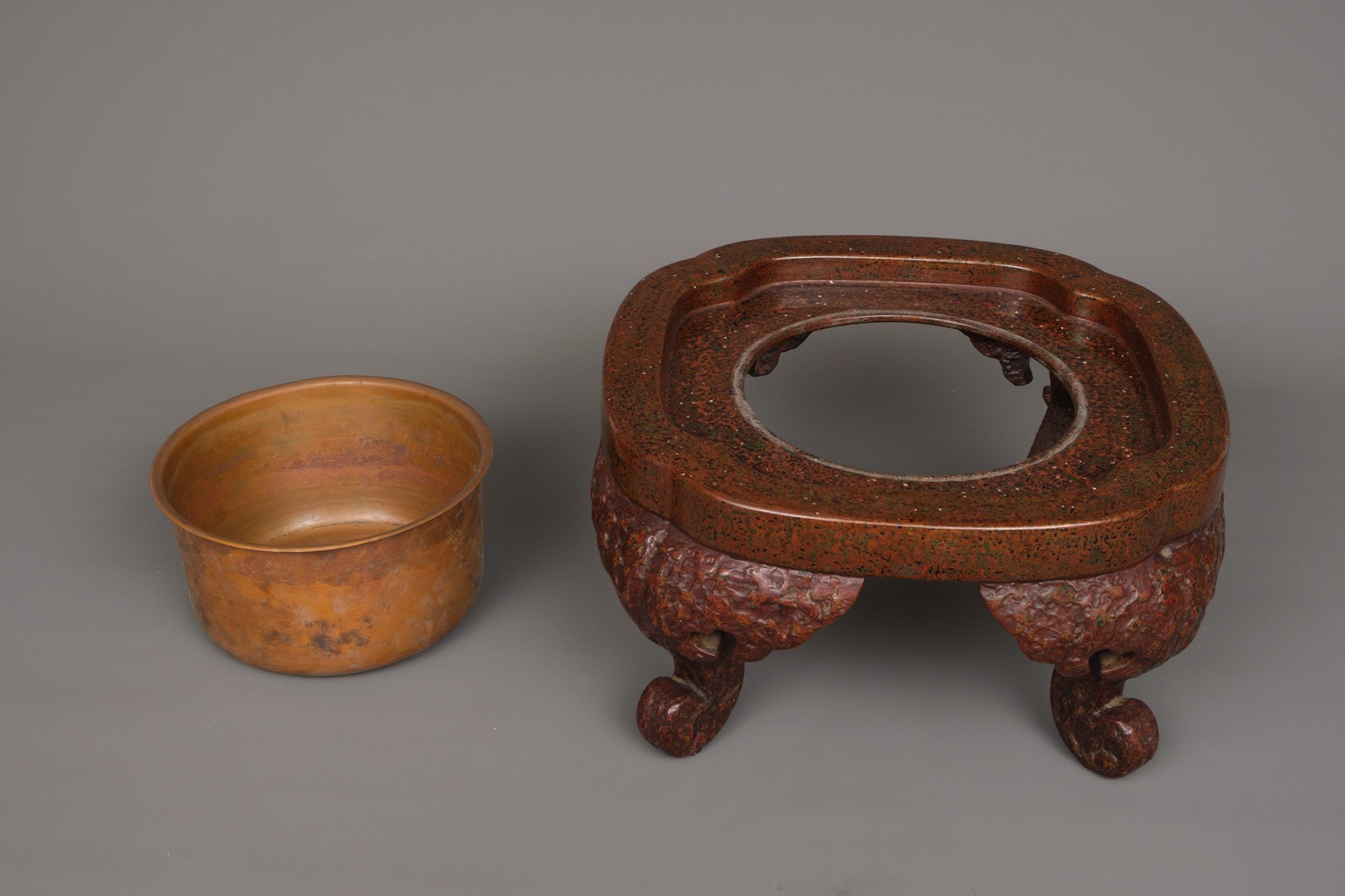
A WAKASA’NURI HIBACHI
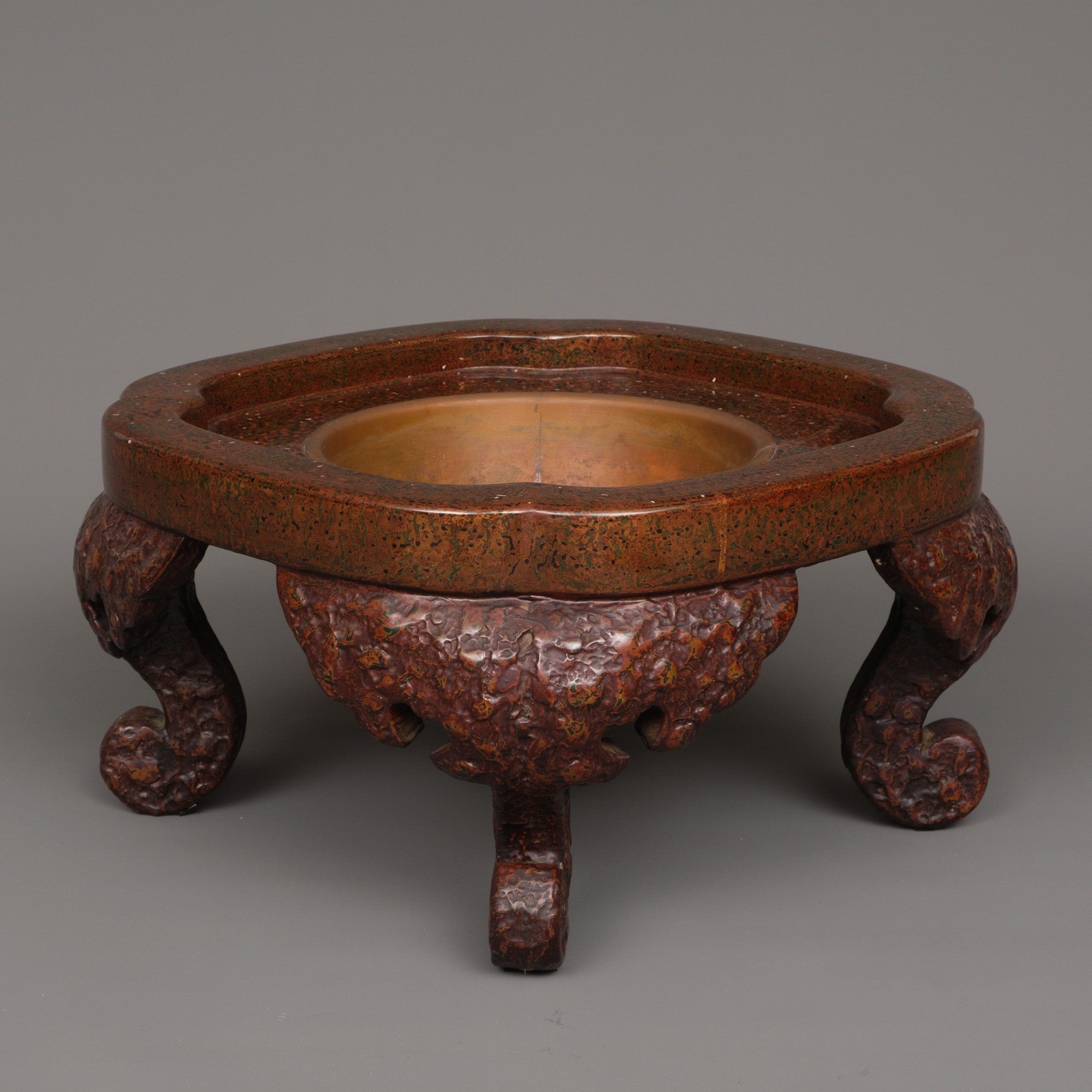
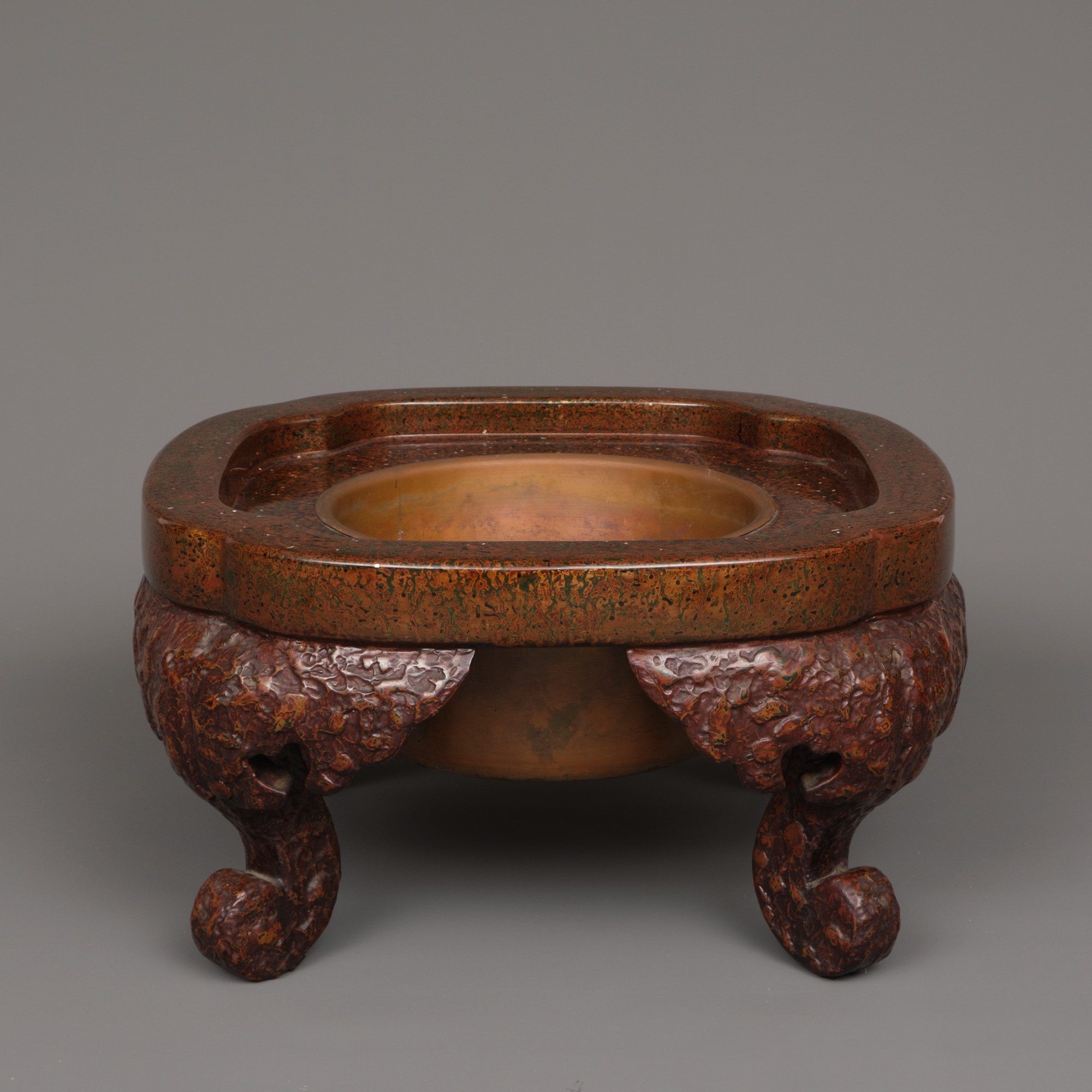
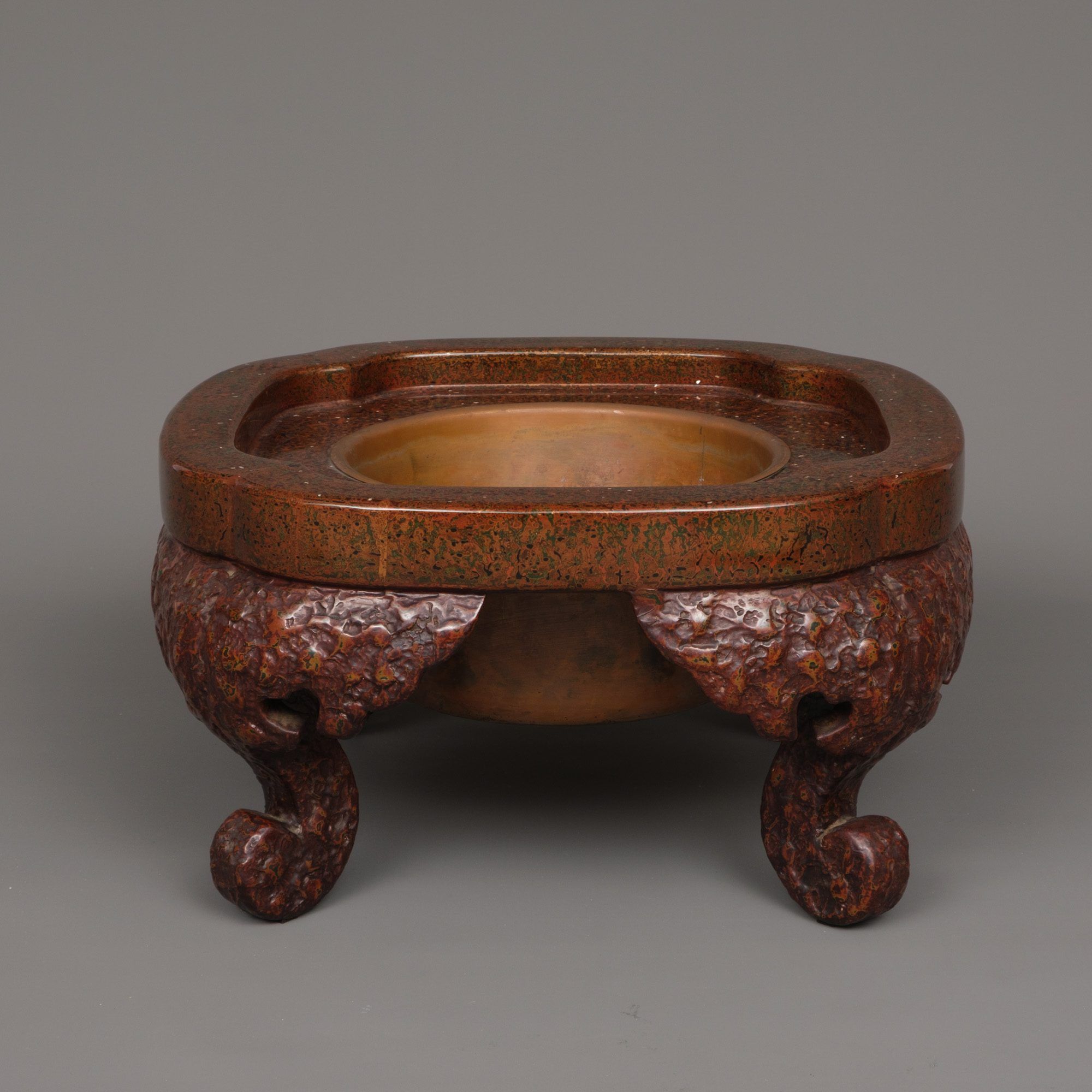
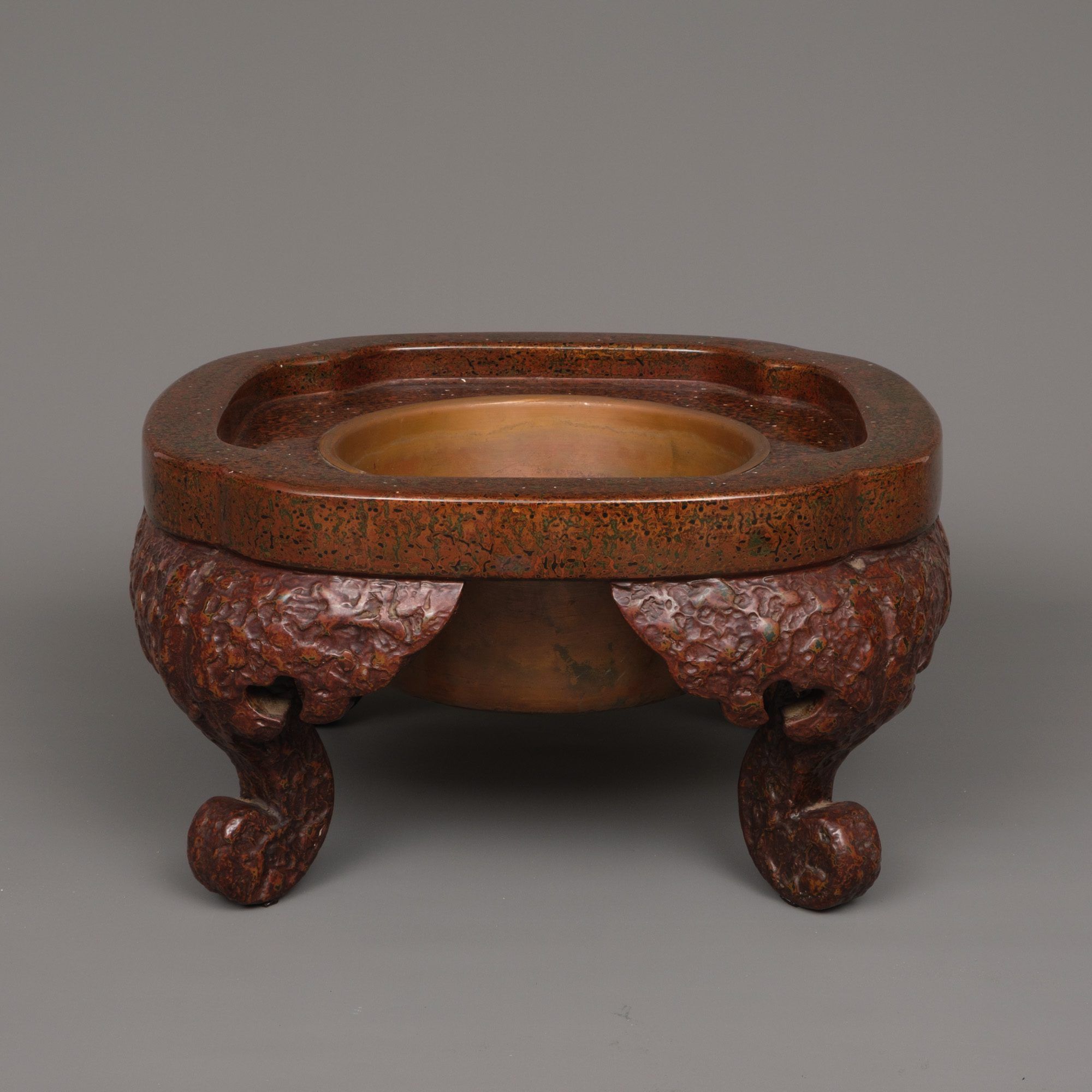
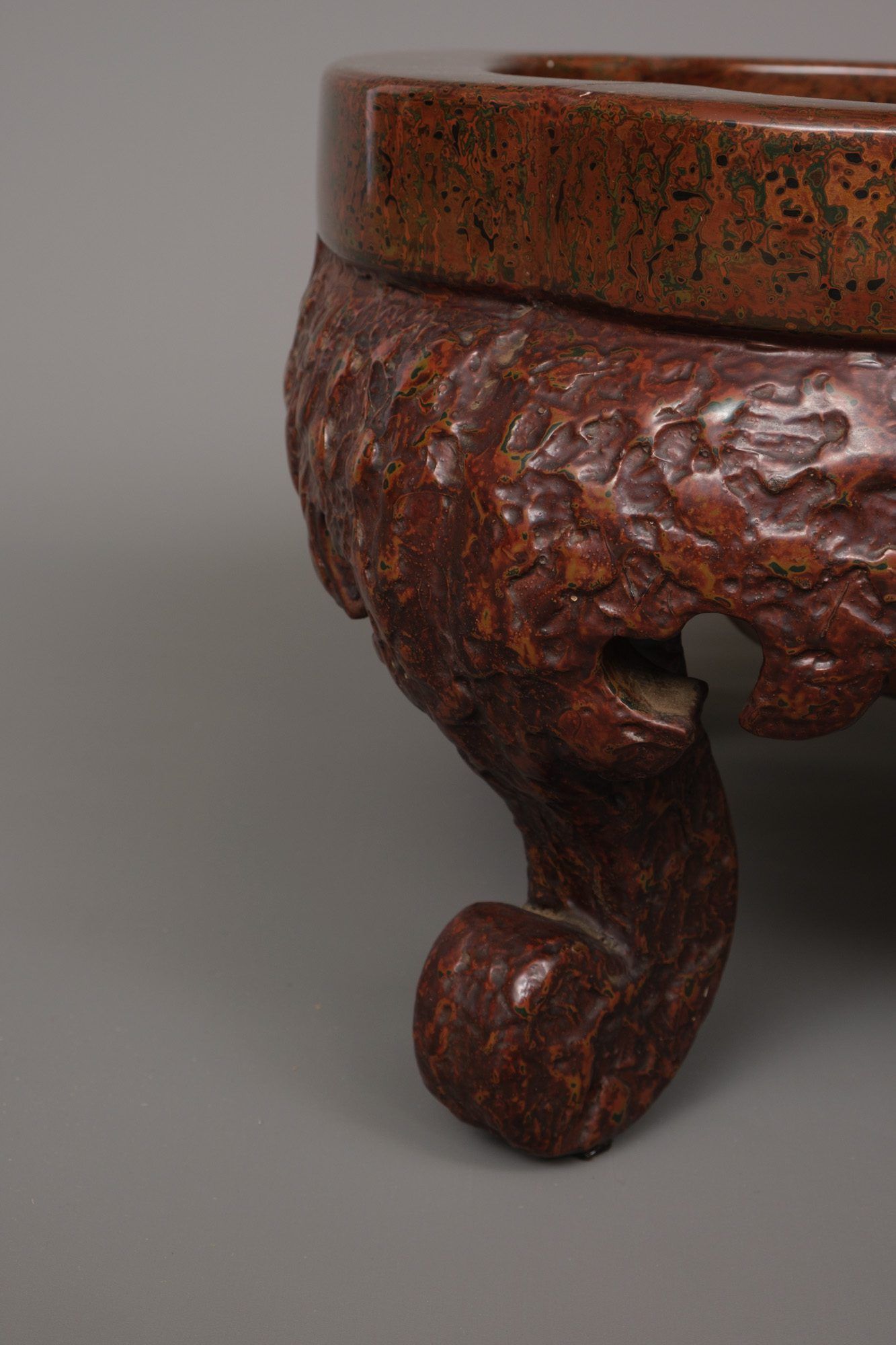
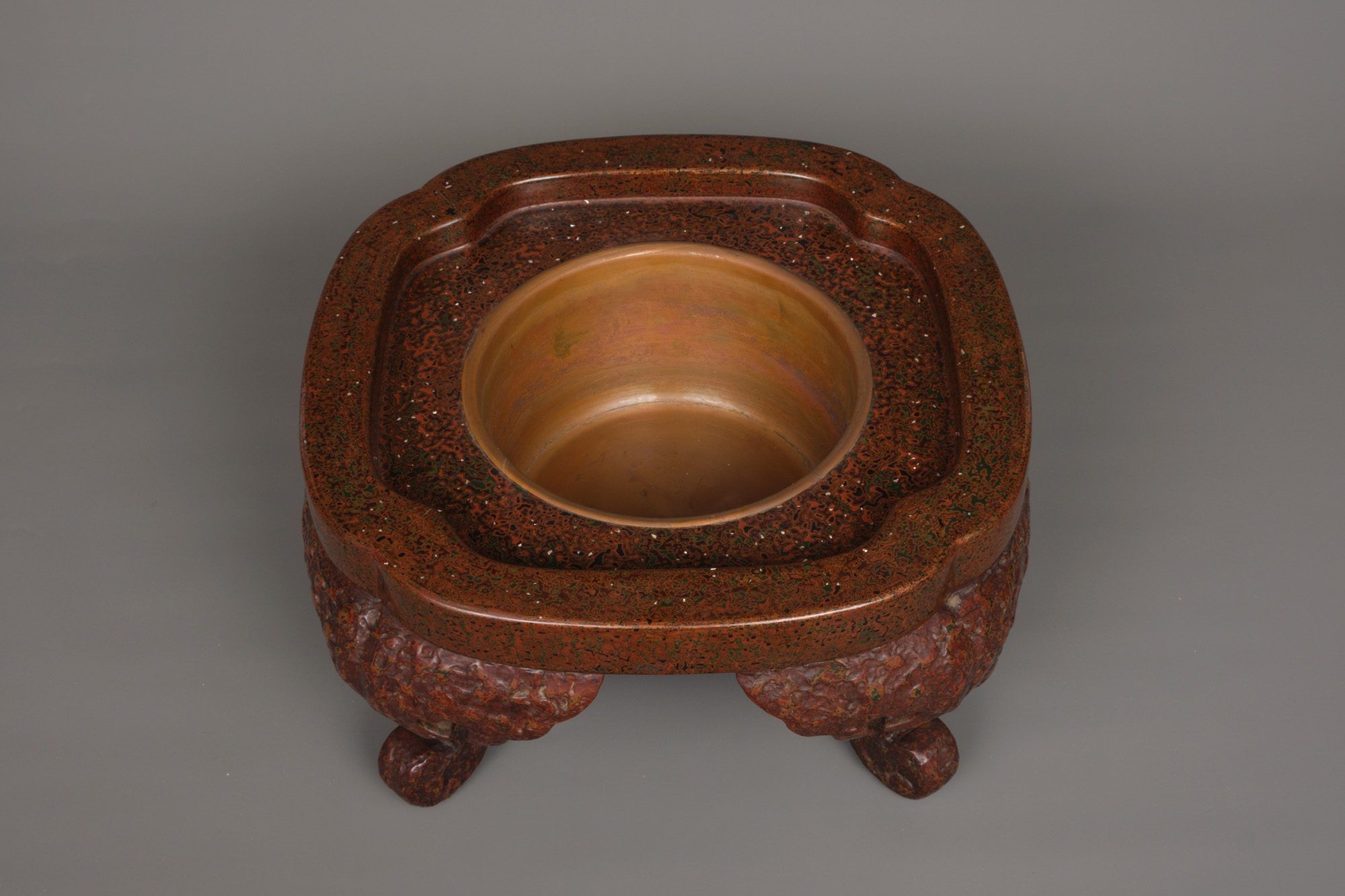
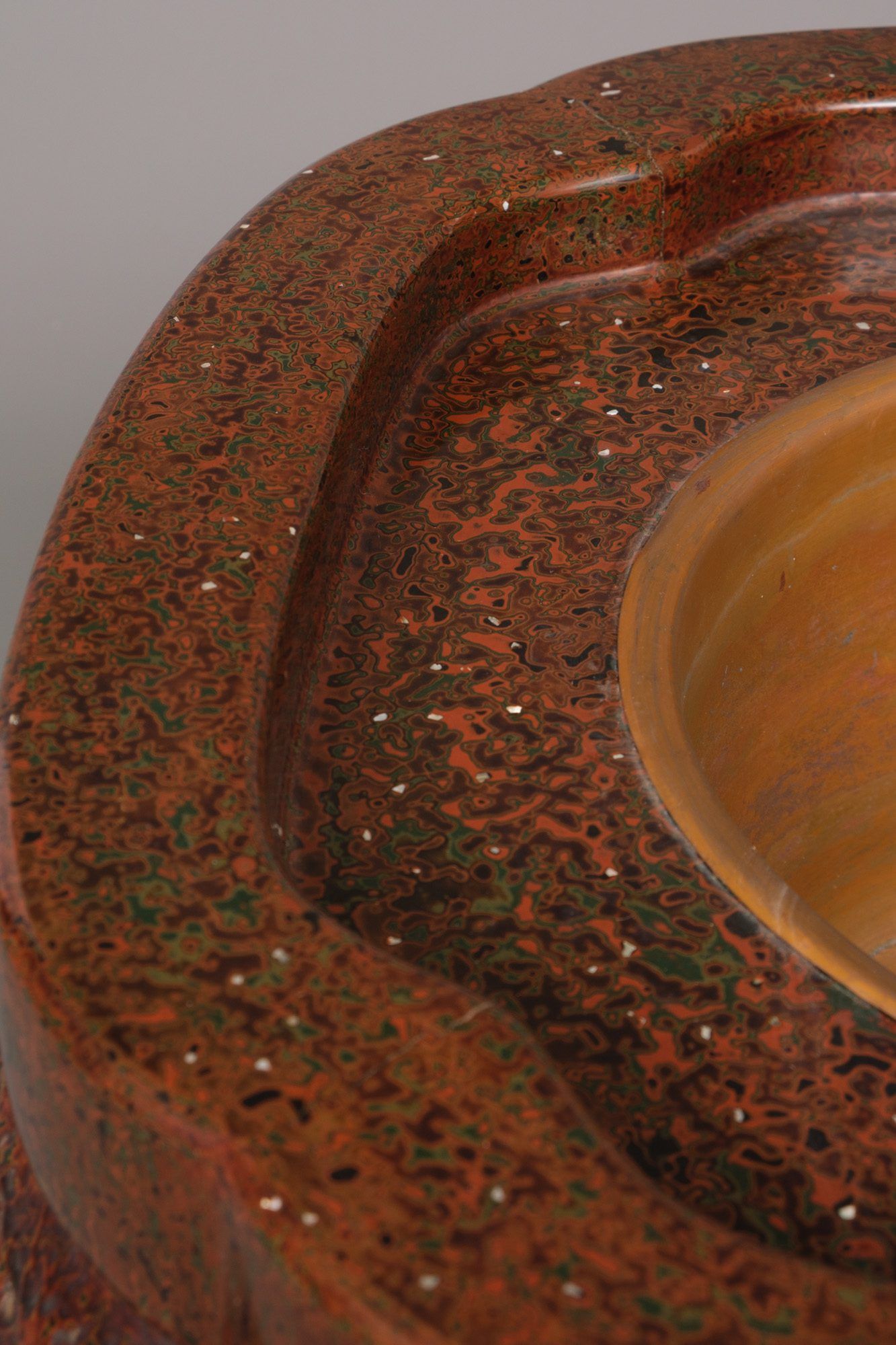
Striking large lacquer table-like stand for a hibachi 火鉢 (fire bowl/brazier) executed in fine Wakasa’nuri 若狭塗 lacquer. A technique creating an unique organic-like speckled design in hues of brown, red, green, and gold, accentuated by a few small pieces of inlaid mother-of-pearl 螺鈿 (raden).
The mokkô-shaped 木瓜 (melon) top surface surrounded by a thick raised edge with in the middle the copper hibachi. Raised by four console-shaped feet with a rock-like texture. Such a more elaborate type of hibachi is also called a ‘goten’hibachi’ 御殿火鉢 which translates as ‘palace’ or ‘court’ brazier.
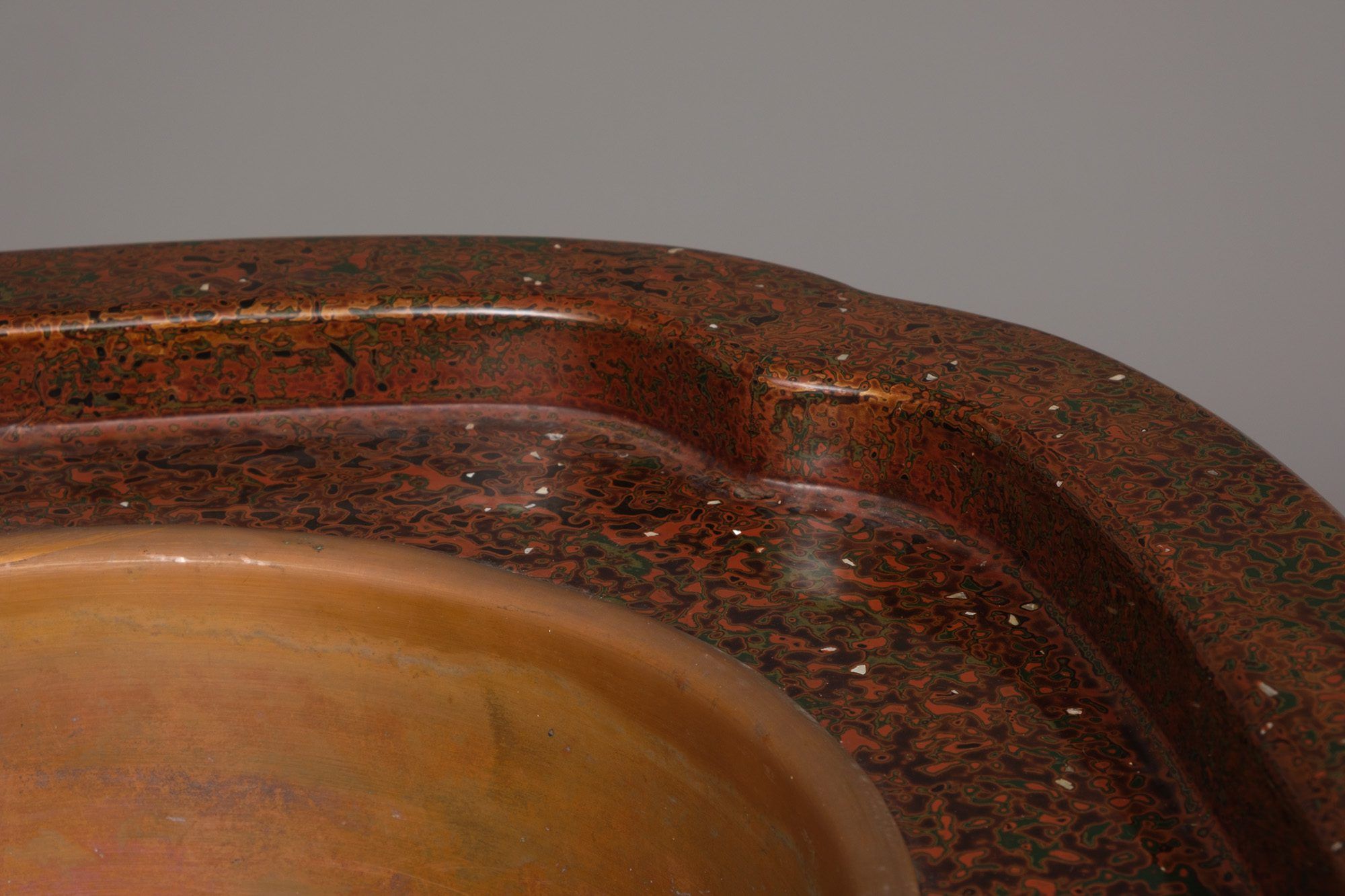
The hibachi in a very good condition with some traces of wear conform age and use, like three lacquer cracks in the corners on top, which is more common with this type of hibachi due to the elements of the heat of the brazier.
The copper with a good patina of age and use. Please look at the photos for a clear condition reference.
Dimensions:
Height 30.8 cm, Width & Depth 47 cm.
Period: Japan – Late Meiji period/Taishô period (First quarter 20th century).
The hibachi 火鉢, holds a significant place in traditional Japanese culture. Functioning as a heating device, this versatile brazier comes in various shapes and is made from heatproof materials such as ceramics, metals, or wood. Burning charcoal rests at the center, surrounded by incombustible ash. Originally used for heating purposes, the hibachi gradually evolved to accommodate additional functions, such as boiling water for tea or even simple cooking. Despite its historical significance, the hibachi’s usage declined with the advent of more convenient heating methods. However, it remains cherished as a collector’s item and can be seen in gardens serving as decorative planters or ornamental pieces.